How Many Letters Are in the English Language?
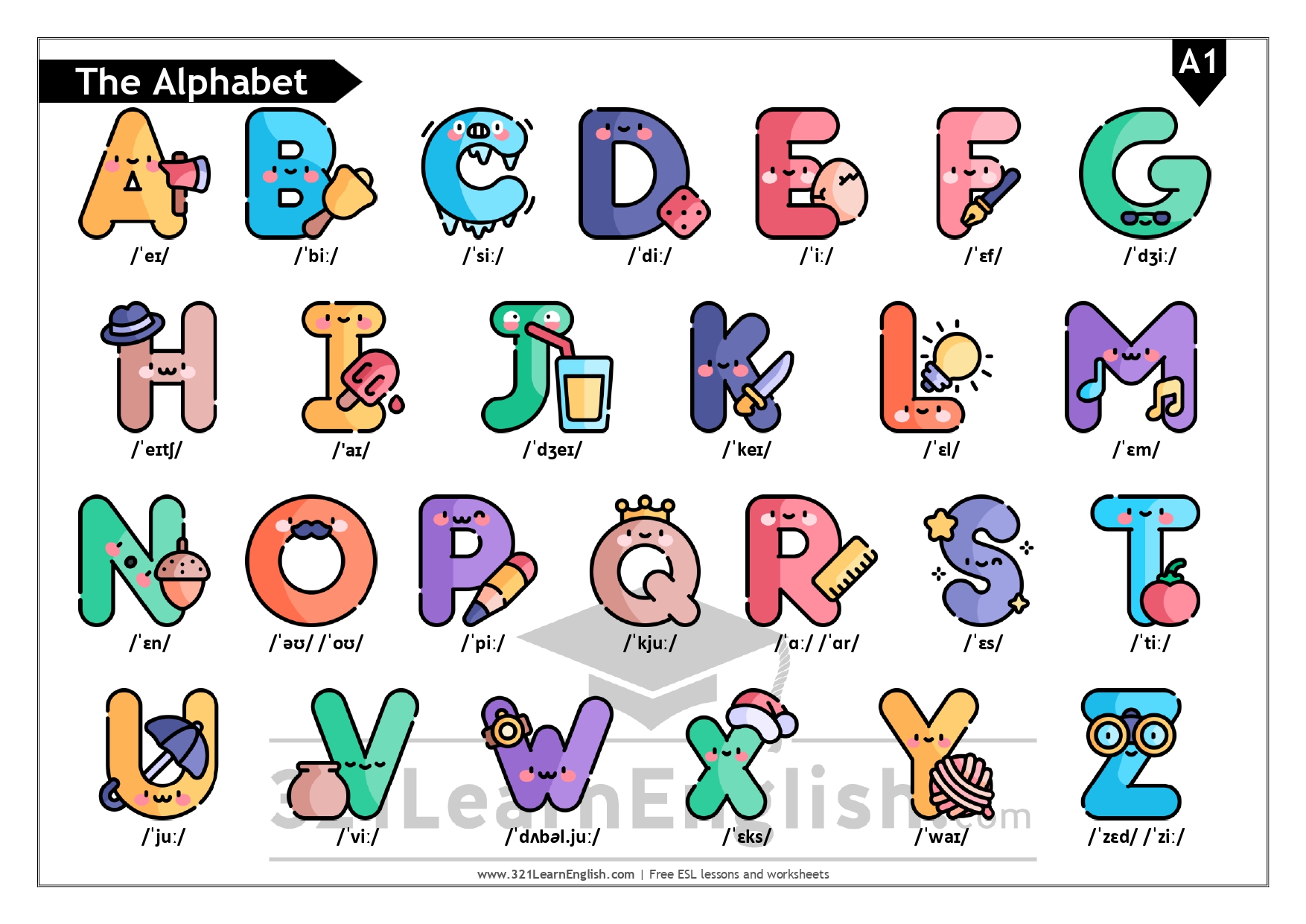
The modern English alphabet consists of 26 letters: A, B, C, D, E, F, G, H, I, J, K, L, M, N, O, P, Q, R, S, T, U, V, W, X, Y, and Z. This standardized set includes 5 vowels (A, E, I, O, U) and 21 consonants, though the letter Y often...
The modern English alphabet consists of 26 letters: A, B, C, D, E, F, G, H, I, J, K, L, M, N, O, P, Q, R, S, T, U, V, W, X, Y, and Z. This standardized set includes 5 vowels (A, E, I, O, U) and 21 consonants, though the letter Y often functions as both.
Contents
While the answer "26" is factually correct for the modern Latin-based script used today in 2026, the story of how we arrived at this number is a complex journey through history, linguistics, and the evolution of sounds. Understanding the English alphabet requires looking beyond the basic list to explore how these letters represent a much larger array of sounds and how the alphabet itself has expanded and contracted over the centuries.
The Modern Standard: A Breakdown of the 26 Letters
The 26 letters we use today are the foundation of written communication across the English-speaking world. These letters are divided into two primary categories based on how they are produced by the human vocal tract: vowels and consonants.
Vowels: The Core of the Syllable
There are five traditional vowels in the English alphabet: A, E, I, O, and U. Linguistically, a vowel is a speech sound produced by a relatively open configuration of the vocal tract. Every English word must contain at least one vowel sound, and vowels are the "peaks" of syllables.
In modern English instruction, Y is frequently referred to as a "semi-vowel" or a letter that "sometimes" acts as a vowel. For example, in the word "sky," the Y functions as a vowel, while in "yellow," it functions as a consonant. This dual nature is a remnant of the English language's shifting phonetic history.
Consonants: The Structural Boundaries
The remaining 21 letters are consonants: B, C, D, F, G, H, J, K, L, M, N, P, Q, R, S, T, V, W, X, and Z. Consonants are sounds made by breaking or restricting the airflow using the tongue, teeth, or lips. While there are 21 consonant letters, they are responsible for producing significantly more consonant sounds when combined, such as "th," "sh," and "ch."
Letters vs. Sounds: The Phonetic Complexity
One of the most important distinctions in linguistics is the difference between graphemes (the letters we write) and phonemes (the sounds we make). While the English language has only 26 letters, it utilizes approximately 44 distinct sounds.
This discrepancy is why English is often considered difficult to learn for non-native speakers. A single letter can represent multiple sounds, and a single sound can be represented by various letter combinations.
- The Letter "C": It can sound like a "k" (cat) or an "s" (city).
- The Letter "G": It can be hard (goat) or soft (giraffe).
- Digraphs: These are pairs of letters that represent one sound. For example, "ph" makes the /f/ sound, and "th" can represent two different sounds (the voiced "the" and the unvoiced "think").
In 2026, linguists continue to use the International Phonetic Alphabet (IPA) to bridge the gap between our 26 letters and the actual sounds of the language. The IPA provides a unique symbol for every sound, ensuring that transcription is accurate regardless of the quirks of English spelling.
The Evolution of the Alphabet: Lost and Added Letters
The English alphabet has not always contained 26 letters. The version of English spoken over a thousand years ago, known as Old English, used a combination of the Latin alphabet and Germanic runes. Over time, letters were added, modified, or dropped entirely as the language evolved and the printing press standardized written forms.
The Letters We Lost
Early English included several letters that are no longer part of our standard 26-letter set. If you were reading a manuscript from the 10th century, you would encounter:
- Thorn (þ): This letter represented the "th" sound. It was eventually replaced by the "th" digraph, though it survived for a long time in a modified form that looked like a "y," leading to the common misconception that "Ye Olde" was pronounced with a "y" sound (it was actually pronounced "The").
- Eth (ð): Similar to Thorn, Eth also represented a "th" sound, specifically the voiced version found in "that."
- Ash (æ): This letter represented a short "a" sound, similar to the "a" in "cat." While no longer a standard letter, it is still used in some phonetic transcriptions and in certain other languages like Icelandic.
- Wynn (ƿ): Used to represent the "w" sound. It was eventually replaced by "uu," which evolved into our modern "w."
- Yogh (ȝ): This letter represented various sounds, including the "g" sound in "gate" or the "ch" sound in the Scottish "loch."
- Ethel (œ): A vowel sound that was eventually simplified into "e" or "o" in modern English.
The Newcomers: J, U, and W
Surprisingly, three of our most common letters—J, U, and W—were the last to be added to the official 26-letter lineup.
- The Letter J: Historically, "I" and "J" were the same letter. The "J" shape was originally just a decorative way to write "I" at the end of a Roman numeral. It wasn't until the mid-1600s that "J" became a distinct letter used to represent a consonant sound.
- The Letter U: For centuries, "U" and "V" were used interchangeably. "V" was generally used at the beginning of words, and "U" was used in the middle or end, regardless of the sound. They were officially recognized as separate letters in the 17th century.
- The Letter W: As mentioned, the "W" sound was originally written using the rune Wynn. When Latin-speaking scribes began writing English, they used "uu" to represent the sound, which literally became "double u."
The "27th Letter": The Story of the Ampersand
As recently as the mid-19th century, many school children were taught an alphabet that technically contained 27 characters. The character & (ampersand) followed the letter Z.
When students recited the alphabet, they would end with "X, Y, Z, and per se and." The phrase "and per se and" meant "and by itself, and." Over time, this phrase was slurred together to create the word ampersand. While it is no longer considered a letter of the alphabet, it remains one of the most recognizable and frequently used symbols in the English writing system.
Letter Frequency and Usage Statistics
Not all letters are created equal in the English language. Some are used in almost every sentence, while others are rare. This statistical data is vital for fields ranging from cryptography to the design of keyboard layouts.
| Letter | Frequency (%) | Commonality Rank |
|---|---|---|
| E | 12.02% | 1 |
| T | 9.10% | 2 |
| A | 8.12% | 3 |
| O | 7.68% | 4 |
| I | 7.31% | 5 |
| N | 6.95% | 6 |
| S | 6.28% | 7 |
| R | 6.02% | 8 |
| H | 5.92% | 9 |
| D | 4.32% | 10 |
| Z | 0.07% | 26 |
Data based on standard English corpus analysis updated for 2026 usage patterns.
The letter E is the most frequently used letter in English, largely because it appears in common words like "the," "he," "she," and many verb endings. Conversely, Z and Q are the least common, appearing in a very small percentage of the total vocabulary.
Comparison: English vs. Other Alphabets
To understand the scope of the 26-letter English alphabet, it is helpful to compare it to other languages that use different script systems.
- Rotokas: This language, spoken in Papua New Guinea, has one of the shortest alphabets in the world, with only 12 letters.
- Hawaiian: The Hawaiian alphabet consists of only 13 letters (5 vowels and 8 consonants).
- Spanish: The Spanish alphabet has 27 letters, including "ñ."
- Khmer: The Cambodian language Khmer holds the record for the largest alphabet, with 74 letters.
English sits roughly in the middle of this spectrum. Its 26 letters are efficient for printing and digital storage—a primary reason why the Latin script became the global standard for computing and Unicode encoding.
Common Misconceptions About English Letters
Is "Ch" or "Sh" a letter?
In some languages, certain letter combinations are considered single letters. In English, however, these are digraphs. They represent a single sound (phoneme), but they are not distinct characters in the 26-letter alphabet.
Are Uppercase and Lowercase Different Letters?
Technically, "A" and "a" are the same letter in the alphabet, representing the same linguistic concept. However, in digital systems (like ASCII or Unicode), they are treated as separate characters with different numerical codes. We use 52 distinct shapes (26 uppercase and 26 lowercase) to represent our 26 letters.
Does American English have different letters than British English?
No. While there are spelling differences (e.g., "color" vs. "colour"), both dialects use the exact same 26 letters. The differences lie in the arrangement of letters, not the alphabet itself.
FAQs
Why do we only have 5 vowels if there are so many vowel sounds?
The 5 vowel letters (A, E, I, O, U) must work double or triple duty because the English language has roughly 20 different vowel sounds. We achieve this by using vowel combinations (like "ea" in "read") or by using "silent" letters (like the "e" in "bike") to change the sound of the preceding vowel.
Which letter was the last to be added to the alphabet?
The letter J is widely considered the most recent addition to the English alphabet. It did not exist as a separate letter from "I" until the 16th century and did not see widespread, standardized use as a distinct consonant until the mid-1600s.
Are there any words that use all 26 letters?
A sentence that uses every letter of the alphabet is called a pangram. The most famous example is: "The quick brown fox jumps over the lazy dog." This is often used to test fonts and keyboards because it displays every character in the set.
How many letters were in the original Old English alphabet?
The Old English alphabet originally had 24 letters. It was a modified version of the Latin alphabet that included several runic characters to represent sounds that Latin didn't have.
Is the ampersand still considered a letter in 2026?
No, the ampersand (&) is classified as a logogram or a symbol representing the word "and." While it was historically recited as part of the alphabet in schools, it has not been an official member of the 26-letter English alphabet for over a century.
Practical Recommendation
If you are teaching the English alphabet or learning it as a second language, focus on the sounds rather than just the names of the 26 letters. Because English orthography (spelling) is not purely phonetic, memorizing the alphabet is only the first step. Understanding digraphs, the "silent E" rule, and the dual nature of the letter Y will provide a much more comprehensive grasp of how the language is written and spoken in 2026. For those interested in the deep history of these characters, visiting the British Library's digital archives offers an excellent look at how our letters appeared in ancient manuscripts.
Image Gallery