Average Cost of $65,000 Life Insurance in 2026
For a healthy individual in 2026, the average cost of a $65,000 life insurance policy typically ranges from $18 to $45 per month for a 10-year term policy, while a permanent whole life policy for the same amount can range from $110 to...
For a healthy individual in 2026, the average cost of a $65,000 life insurance policy typically ranges from $18 to $45 per month for a 10-year term policy, while a permanent whole life policy for the same amount can range from $110 to $260 per month. Prices vary significantly based on your age, gender, tobacco use, and the specific type of policy selected.
Contents
Life insurance policies valued at $65,000 occupy a unique "middle ground" in the insurance market. They are higher than the standard $10,000 to $25,000 "burial" or "final expense" plans, yet significantly lower than the $250,000+ policies typically used for primary income replacement or mortgage protection. In 2026, this death benefit amount is increasingly popular among seniors looking to cover rising funeral costs while leaving a modest legacy, or younger adults seeking to cover specific debts like student loans or a car note without overpaying for unnecessary coverage.
Primary Factors Influencing the Cost of a $65,000 Policy
When an underwriter evaluates your application for $65,000 in coverage, they are essentially calculating the statistical likelihood of paying out a claim. Because $65,000 is a relatively low face value for many national carriers, the administrative costs of the policy are spread across a smaller premium pool, which can sometimes make the "cost per thousand" slightly higher than a $500,000 policy.
Age and Gender
Age remains the single most impactful variable. In 2026, actuarial tables continue to show that for every year you delay purchasing coverage, the premium typically increases by 5% to 12%. Gender also plays a critical role; statistically, women have a longer life expectancy than men, resulting in lower monthly premiums for the same $65,000 benefit. For example, a 55-year-old male might pay 20% to 30% more than a 55-year-old female for an identical whole life policy.
Tobacco and Nicotine Use
The "smoker's penalty" remains severe in 2026. If you use cigarettes, e-cigarettes, or vaping products, you can expect your $65,000 life insurance quote to be two to three times higher than that of a non-smoker. This is due to the high correlation between nicotine use and cardiovascular or respiratory diseases. Even occasional "social" smoking is often classified under the standard smoker rate by most top-tier carriers.
Health Status and Medical Underwriting
For a $65,000 policy, you generally encounter three types of underwriting:
- Fully Underwritten: Requires a medical exam and blood work. This yields the lowest possible rates for those in excellent health.
- Simplified Issue: No medical exam, but you must answer a detailed health questionnaire. This is common for $65,000 policies and is slightly more expensive than fully underwritten plans.
- Guaranteed Issue: No health questions and no exam. These are the most expensive and are usually reserved for individuals with serious pre-existing conditions.
Comparing Costs: Term Life vs. Whole Life
Choosing the right structure for your $65,000 policy is a balance between your current budget and your long-term financial goals.
Term Life Insurance
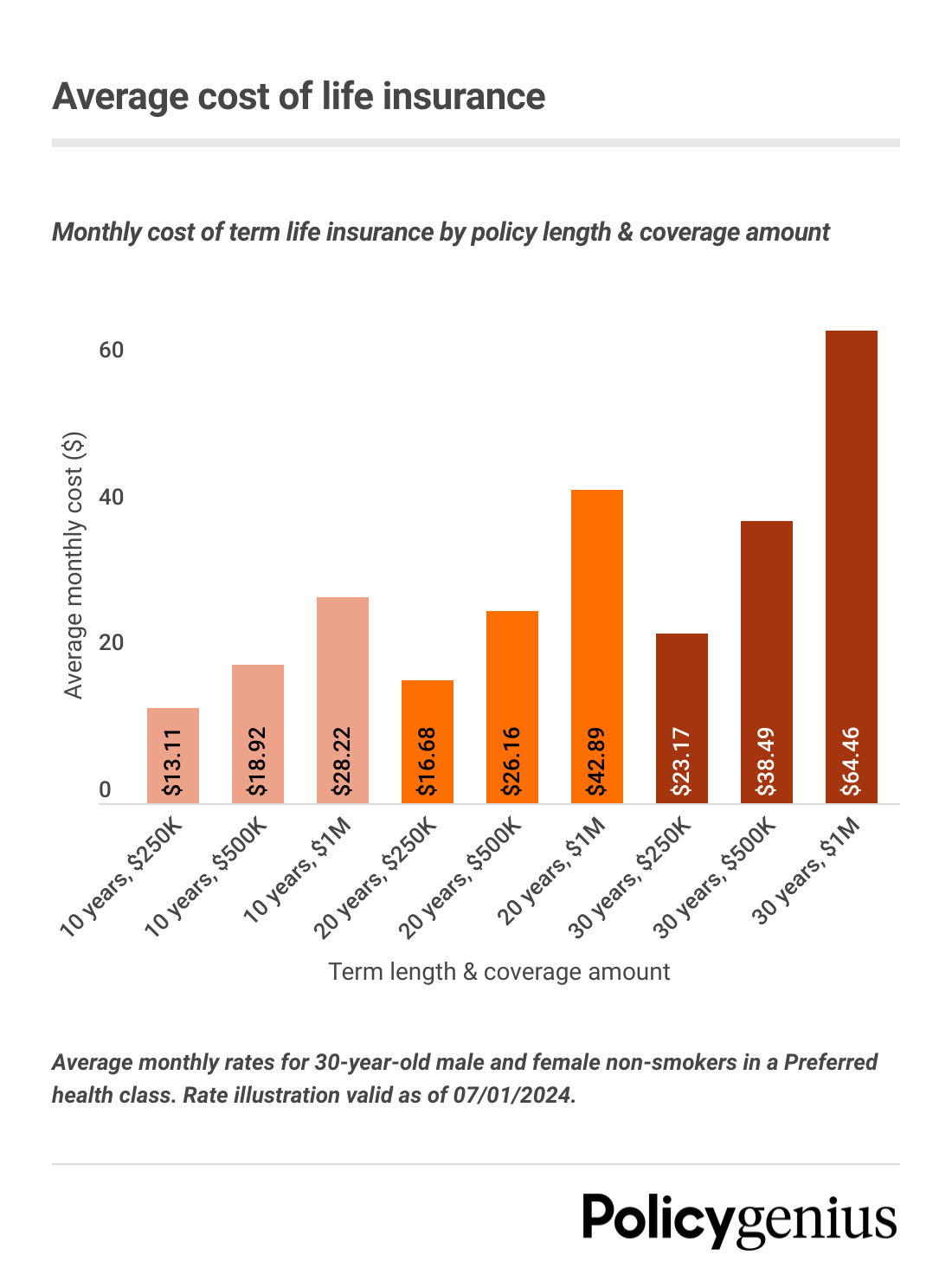
A $65,000 term policy provides coverage for a specific period, such as 10, 15, or 20 years. If the insured person passes away during this window, the beneficiary receives the $65,000 tax-free. If the term expires, the coverage ends. This is the most affordable way to secure $65,000 in protection, often used by those who only need to cover a debt that will eventually be paid off.
Whole Life Insurance
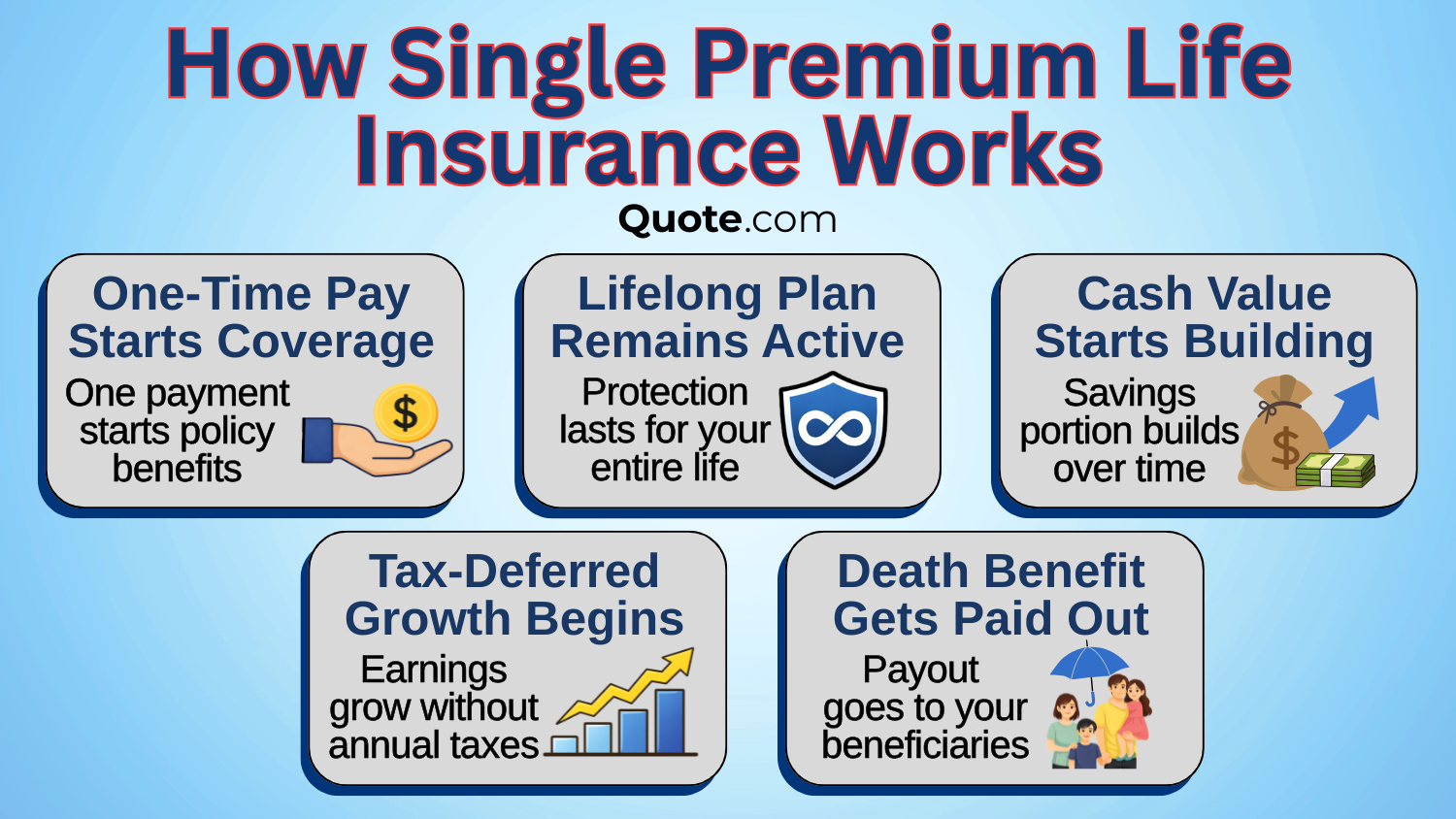
Whole life insurance is permanent. It does not expire as long as premiums are paid. In 2026, these policies are frequently marketed as "Final Expense Plus" plans. Beyond the $65,000 death benefit, these policies accumulate cash value, which is a tax-deferred savings component. Because the insurance company is guaranteed to pay the claim eventually (since everyone eventually passes away), the premiums are significantly higher than term insurance.
2026 Estimated Monthly Premiums for $65,000 Coverage
The following table provides estimated monthly premiums for a $65,000 policy for non-smokers in "Standard" health. These figures represent an average across several major national carriers as of early 2026.
| Age | Gender | 10-Year Term (Monthly) | Whole Life (Monthly) |
|---|---|---|---|
| 30 | Male | $14.50 | $72.00 |
| 30 | Female | $12.75 | $61.00 |
| 40 | Male | $19.00 | $98.00 |
| 40 | Female | $16.50 | $84.00 |
| 50 | Male | $31.00 | $145.00 |
| 50 | Female | $24.00 | $122.00 |
| 60 | Male | $68.00 | $235.00 |
| 60 | Female | $49.00 | $195.00 |
| 70 | Male | $155.00 | $390.00 |
| 70 | Female | $110.00 | $315.00 |
Note: Rates are illustrative. Individual quotes depend on specific health history and carrier guidelines.
Why Choose a $65,000 Death Benefit?
In 2026, the cost of a standard funeral, including burial, vault, and headstone, has reached an average of $11,500 to $15,000 in many urban areas of the United States. A $65,000 policy provides a substantial buffer beyond these immediate costs.
Covering Final Expenses and Debt
Many families find that a $15,000 burial policy is insufficient once they account for outstanding medical bills, credit card balances, and legal fees associated with settling an estate. A $65,000 policy covers the funeral and leaves approximately $50,000 for the surviving spouse or children to handle these lingering liabilities.
The "Legacy" Component
For grandparents or retirees on a fixed income, a $65,000 policy is often the maximum amount they can comfortably afford while still achieving the goal of leaving a financial gift to their heirs. In 2026, $50,000 (after funeral costs) is a meaningful amount that could jumpstart a grandchild’s college fund or serve as a down payment on a home.
Supplementing Employer Coverage
Many employees receive a basic life insurance benefit through their job, often equal to one year's salary. However, these policies are usually not portable—if you leave the job, you lose the coverage. A private $65,000 policy serves as a reliable "floor" of protection that stays with you regardless of your employment status.
Common Riders and Extra Costs
When looking for $65,000 in coverage, you may be offered "riders"—optional add-ons that customize your policy but increase the premium.
- Accidental Death Benefit: This doubles the payout (to $130,000) if the death is caused by an accident. While it sounds appealing, it often adds 10-15% to the cost and does not pay out for death by illness, which is statistically more likely.
- Waiver of Premium: If you become totally disabled and cannot work, the insurance company pays your premiums for you. This is highly recommended for younger policyholders.
- Accelerated Death Benefit: This is now standard on many 2026 policies. it allows you to access a portion of the $65,000 while you are still alive if you are diagnosed with a terminal illness. Most carriers include this at no additional cost, but some may charge a small administrative fee.
How to Secure the Lowest Rate for $65,000
To ensure you aren't overpaying for your $65,000 policy, follow these professional guidelines:
- Buy While You Are Healthy: Even a minor diagnosis like high blood pressure or elevated cholesterol can move you from a "Preferred" rate to a "Standard" rate, potentially increasing your premium by 25%.
- Annual vs. Monthly Payments: Most insurance companies charge a "modal fee" for monthly payments. If you can afford to pay the premium once a year, you can usually save between 5% and 8% on the total cost.
- Compare No-Exam vs. Exam Policies: While "no-exam" policies are faster to get, they are often priced with the assumption that the applicant might have a hidden health issue. If you are in good health, taking the medical exam can save you thousands of dollars over the life of the policy.
- Use an Independent Agent: Captive agents (who work for only one company) can only offer that company's rates. Independent agents can shop your application across dozens of carriers to find the one that views your specific health profile most favorably.
Verification and Regulation
In the United States, life insurance is regulated at the state level. Organizations like the National Association of Insurance Commissioners (NAIC) provide tools like the Life Insurance Policy Locator Service and ensure that carriers maintain sufficient reserves to pay out claims. Before purchasing a $65,000 policy, it is vital to check the financial strength rating of the company through agencies like A.M. Best or Standard & Poor’s. A rating of "A" or better is generally considered the gold standard for long-term stability.
Frequently Asked Questions
Can I get $65,000 in life insurance if I am over 75?
Yes, but you will likely be limited to a whole life or "final expense" policy. Term insurance becomes very difficult and expensive to acquire past age 75. For a 75-year-old, a $65,000 whole life policy could cost between $450 and $600 per month depending on health.
Is $65,000 enough coverage for a parent with young children?
Generally, no. If you have dependents, the standard recommendation is 10 to 15 times your annual income. However, $65,000 is better than no coverage at all and can be used as a "starter" policy until your budget allows for a larger term policy.
Does a $65,000 whole life policy build much cash value?
Because the face amount is relatively low, the cash value grows slowly. It may take 10 to 15 years before the cash value is significant enough to borrow against. If your primary goal is investment, $65,000 whole life is rarely the most efficient vehicle.
Are the payouts from a $65,000 policy taxable?
In almost all cases, the death benefit of a life insurance policy is paid out to beneficiaries income tax-free. However, if the policy is part of a very large estate that exceeds federal or state estate tax thresholds, it could be subject to estate taxes, though this is rare for a $65,000 payout.
Can I change my $65,000 term policy to a whole life policy later?
Most term policies issued in 2026 include a conversion rider. This allows you to switch to a permanent policy without taking a new medical exam, though your premium will increase to reflect the permanent rates for your age at the time of conversion.
Practical Recommendation
If you are looking for a $65,000 policy, start by determining your primary goal. If you need to cover a specific debt like a 15-year mortgage balance or a personal loan, choose a 15-year term policy to keep costs low. If your goal is to ensure your family is never burdened by funeral costs or final medical bills regardless of when you pass away, a whole life or guaranteed universal life policy is the better choice. Always request a "specimen policy" before signing to understand the exclusions, and ensure the carrier has an "A" rating for financial strength to guarantee your legacy is protected.
Image Gallery