Medical and Legal Analysis of the Baby P Injuries: Forensic Findings, Healthcare Failures, and Systemic Reforms
The injuries sustained by Peter Connelly, historically known in judicial proceedings and media reports as "Baby P," comprised over 50 documented physical traumas inflicted over an eight-month period, including a fractured spine, multip...
The injuries sustained by Peter Connelly, historically known in judicial proceedings and media reports as "Baby P," comprised over 50 documented physical traumas inflicted over an eight-month period, including a fractured spine, multiple broken ribs, facial lacerations, and severe soft-tissue damage. His death in August 2007 led to significant legal convictions, critical reviews of medical and social work practices, and sweeping reforms in national child protection protocols across the United Kingdom.
Contents
Background and Case Overview
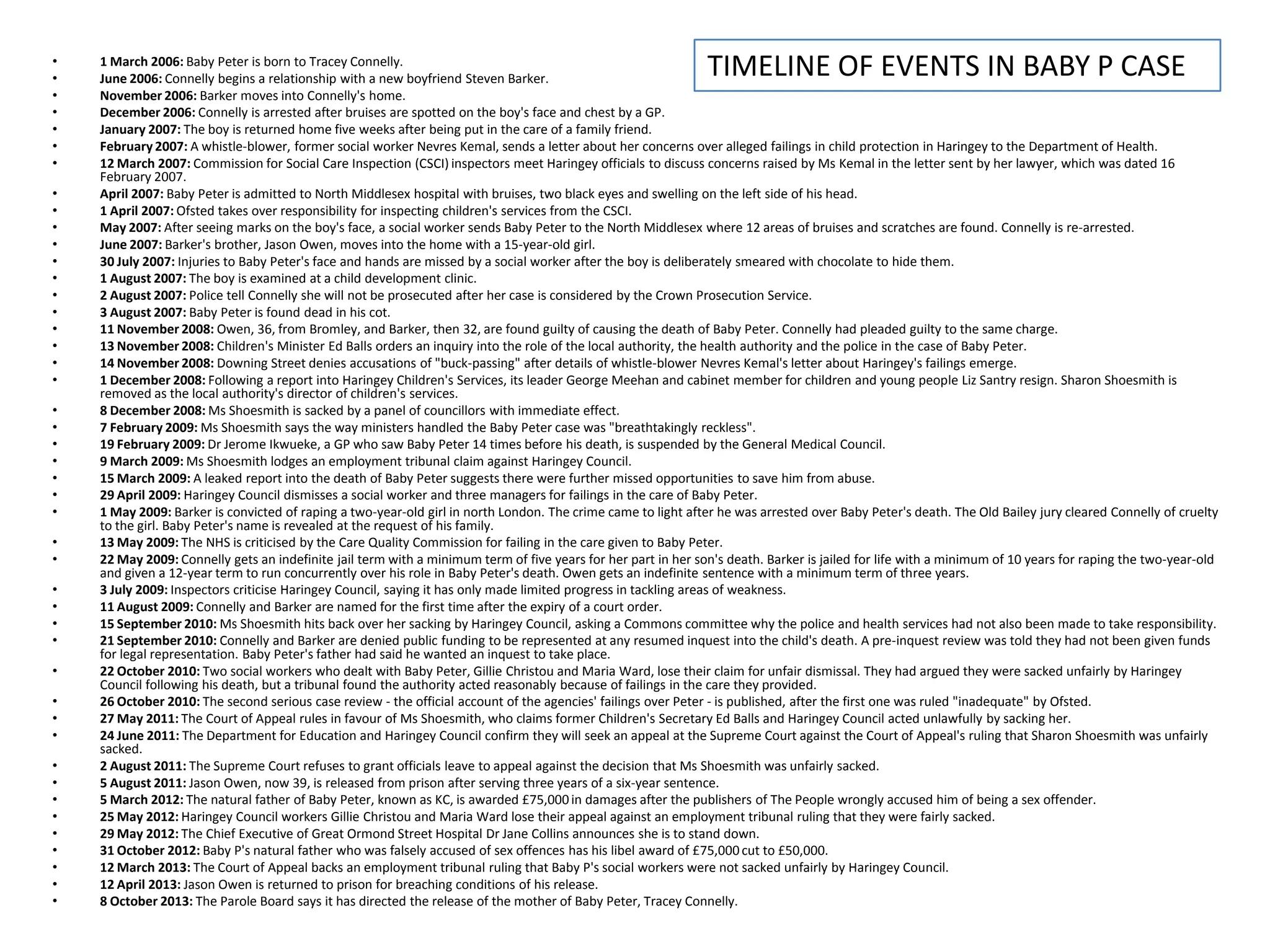
Peter Connelly was born on 1 March 2006 and resided in the London Borough of Haringey. Between December 2006 and his death on 3 August 2007, Peter was subject to severe, continuous physical abuse while under the care of his mother, Tracey Connelly, her boyfriend, Steven Barker, and Barker's brother, Jason Owen.
Despite being placed on the local child protection register and receiving dozens of visits from health visitors, social workers from Haringey Children's Services, and pediatric medical staff, Peter suffered catastrophic harm. The failure of public services to identify the true nature of the baby p injuries and remove the child from an abusive home environment became one of the most significant safeguarding failures in modern British legal and medical history.
Forensic and Clinical Analysis of the Injuries
Post-mortem examinations conducted by forensic pathologists revealed that Peter Connelly had suffered widespread, recurring physical abuse that resulted in acute and chronic internal and external trauma. Pathological reports demonstrated a pattern of severe non-accidental injury (NAI) across multiple anatomical systems.
| System / Category | Patterns of Trauma Identified |
|---|---|
| 1. SKELETAL SYSTEM | Vertebral fracture, multiple broken ribs |
| 2. FACIAL & ORAL | Swallowed tooth, torn frenulum, facial cuts |
| 3. DERMATOLOGICAL | Extrapolated bruising, missing fingernails |
| 4. SYSTEMIC IMPACT | Chronic physical stress & fatal cardiac arrest |
Skeletal System Fractures and Spinal Trauma
The most critical pathological finding was a fracture to Peter’s vertebral column (broken back), caused by severe hyperextension or direct high-force impact across the spine. Radiologic and post-mortem analysis revealed:
- Spinal Column Disruption: The nature of the spinal fracture indicated extreme force, rarely seen in pediatric cases outside of high-velocity motor vehicle collisions or severe falls from significant heights.
- Multiple Rib Fractures: Pathologists identified at least eight fractured ribs. These fractures were in varying stages of healing, proving that the physical abuse was not a single isolated event, but a sustained pattern of force over several months.
- Mechanism of Rib Fractures: Posterior rib fractures in infants are classic markers of non-accidental injury, typically caused by violent squeezing of the torso.
Oral, Facial, and Soft-Tissue Injuries
In addition to skeletal damage, Peter suffered severe trauma to the head, face, and mucosal membranes:
- Impact Trauma and Missing Tooth: Peter suffered severe blows to the face, one of which resulted in a tooth being knocked out. Pathological examination revealed that the tooth had been swallowed and was located within his digestive tract.
- Oral Cavity Lacerations: Damage to the labial frenulum and surrounding tissue indicated forceful blunt trauma to the mouth or forced feeding.
- Extensive Bruising and Abrasion: Bi-lateral bruising was present across the face, torso, extremities, and scalp. Evidence presented at trial showed that domestic perpetrators used cosmetic products, food items (such as chocolate), and crusts of bread to cover or mask facial bruises during official visits by health visitors and social workers.
- Mutilation of Extremities: The child had lost fingernails and suffered severe injuries to his fingertips, indicative of crushing trauma or deliberate torture.
Pathological Cause of Death
The official cause of death was attributed to a combination of severe blunt force trauma to the face and head, internal injuries, and asphyxiation caused by the swallowed tooth in conjunction with severe physical shock from the broken back and rib fractures. The accumulation of acute trauma superimposed on chronic tissue healing triggered fatal respiratory failure and cardiac arrest on 3 August 2007.
Inter-Agency Involvement and Healthcare Failures
During the eight-month period in which these injuries occurred, Peter was examined by multiple healthcare professionals and visited by child protection personnel over 50 times. A central focus of subsequent official reviews was how such extensive medical evidence of abuse was overlooked.
- Dec 2006: First admit to hospital with bruising; child placed on CPR.
- Jan–Jul 2007: Repeated social work visits and hospital visits; abuse masked.
- 1 Aug 2007: Paediatric exam fails to spot broken spine due to distress.
- 3 Aug 2007: Peter Connelly found deceased; post-mortem uncovers 50+ injuries.
The Clinic Examination of 1 August 2007
Two days before Peter’s death, on 1 August 2007, he was examined at St Ann’s Hospital in Tottenham by Dr. Sabah Al-Zayyat, a locum consultant pediatrician.
- Failure to Detect Fractures: During the appointment, Dr. Al-Zayyat did not complete a full physical examination or order immediate body imaging, citing that the child was uncooperative and distressed.
- Concealment: The underlying spinal fracture, rib fractures, and extensive body bruising went undetected during this key clinical opportunity.
- Professional Regulatory Action: Following an investigation by the General Medical Council (GMC), Dr. Al-Zayyat was found guilty of serious professional misconduct and subsequently struck off the medical register.
Communication Barriers Between Health and Social Care
The formal inquiries into the case identified severe breakdown in communication between the NHS Trust, Haringey Social Services, and the Metropolitan Police:
- Information Fragmentation: Observations made by health visitors regarding suspicious injuries were recorded in isolation rather than cross-referenced against social work case notes.
- Deception by Caregivers: The mother actively evaded medical oversight by canceling appointments, presenting alternative explanations for injuries (e.g., accidental bumps from siblings), and using physical concealment techniques on the infant.
Comparative Assessment: Safeguarding Evidence vs. Clinical Response
The following table summarizes the primary physical findings identified post-mortem, the clinical indicators present during life, and the corresponding systemic oversights documented in official reviews.
| Clinical / Injury Category | Post-Mortem & Forensic Finding | Pre-Mortem Clinical Sign | Systemic / Procedural Failure |
|---|---|---|---|
| Spinal Trauma | Fracture of the vertebral column due to force. | Severe distress upon movement, lethargy, immobility. | Full physical examination omitted on 1 Aug 2007 due to child distress. |
| Thoracic Trauma | At least 8 rib fractures in multiple stages of healing. | Breathing difficulty, pain during handling. | Lack of routine skeletal survey during hospital attendances. |
| Facial & Oral Trauma | Swallowed tooth, torn labial frenulum, deep bruising. | Cuts around mouth, refusal to eat, facial swelling. | Failure to challenge mother's claims of accidental falls or sibling activity. |
| Dermatological Trauma | Over 50 distinct bruises, abrasions, missing fingernails. | Recurring bruises across non-prominent bony areas. | Inadequate multi-agency communication regarding cumulative injury patterns. |
| Psychological / Neurological | Severe stress, systemic physical shutdown. | Extreme withdrawal, fear, prolonged distress. | Over-reliance on maternal self-reporting over objective clinical observation. |
Legal Proceedings and Judicial Findings
The criminal trial at the Old Bailey addressed both the severe physical injuries inflicted on Peter Connelly and the duty of care failures by his guardians.
Criminal Convictions
Because forensic evidence could not conclusively pinpoint which individual delivered the specific final blows that caused death, the defendants were prosecuted under legislation designed to address collective household responsibility:
- Tracey Connelly (Mother): Pleaded guilty to causing or allowing the death of a child under Section 5 of the Domestic Violence, Crime and Victims Act 2004.
- Steven Barker (Partner): Convicted of causing or allowing the death of a child, as well as separate severe offenses involving violent harm.
- Jason Owen (Lodger): Convicted of causing or allowing the death of a child.
The judiciary noted that the prolonged, extreme nature of the physical abuse suffered by Peter represented an extraordinary level of cruelty, made possible by deliberate deception and systemic oversight.
Impact on Child Safeguarding and Medical Protocols
The death of Peter Connelly led the UK Government to commission Lord Laming to conduct an urgent national review of child protection services. Published in March 2009, the Laming Report (The Protection of Children in England: A Progress Report) led to fundamental changes in how pediatric injuries are evaluated and how agencies share child protection information.
1. Revisions to Statutory Frameworks
The UK Government overhauled statutory guidance, culminating in updated editions of Working Together to Safeguard Children. The updated framework established strict mandatory timelines for inter-agency referrals, joint medical-social evaluations, and mandatory escalations when non-accidental injuries are suspected.
- Multi-Agency Safeguarding Hub (MASH)
- Health / NHS Diagnostic Protocols
- Police & Legal Protection
- Mandatory Joint Strategy Assessments & Radiological Skeletal Surveys (NAI)
2. Standardization of Pediatric Skeletal Surveys
Following the forensic findings of occult (hidden) fractures in Peter Connelly, clinical guidelines were updated across NHS Trusts:
- Mandatory Radiologic Screening: Standardized imaging protocols (including full-body skeletal surveys and follow-up nuclear medicine scans or MRIs) became standard requirement for any infant under two years presenting with unexplained bruising or suspected physical abuse.
- Sentinel Injury Identification: Small, minor injuries in non-ambulatory infants—such as minor bruising, frenulum tears, or blood spots—are now recognized as "sentinel injuries" requiring mandatory referral and specialist investigation.
3. Creation of Multi-Agency Safeguarding Hubs (MASH)
To eliminate information silos between social services, police forces, and healthcare providers, regional authorities established Multi-Agency Safeguarding Hubs (MASH). MASH units co-locate social workers, police officers, and health professionals in single offices to facilitate real-time information sharing and joint decision-making.
Professional Practice & Jurisdictional Notice
This analysis is provided for educational, legal history, and professional reference purposes only. Child protection statutes, medical management protocols, and criminal legal frameworks vary by jurisdiction and are subject to continuous updates. Health professionals, legal practitioners, and social workers should consult current national guidelines, such as the UK Department for Education safeguarding standards, relevant Royal College of Paediatrics and Child Health (RCPCH) clinical guidelines, or local statutory authorities for active clinical or legal cases.
Frequently Asked Questions
What were the specific injuries that caused Baby P's death?
Peter Connelly died from a combination of severe blunt force trauma, asphyxiation resulting from a swallowed tooth caused by facial blows, and physical shock due to a broken spine and multiple fractured ribs. Post-mortem examinations uncovered over 50 distinct physical injuries.
Why were the injuries not detected during medical examinations prior to his death?
Perpetrators actively concealed bruising using food and cosmetics, missed scheduled medical appointments, and offered plausible alternative explanations. Additionally, during a crucial clinical assessment on 1 August 2007, a full physical examination was not completed due to the child's distress, leaving the spinal fracture and internal trauma undetected.
What legal statutes were used to prosecute those responsible for Baby P's injuries?
The perpetrators were convicted under Section 5 of the Domestic Violence, Crime and Victims Act 2004 ("Causing or allowing the death of a child or vulnerable adult"). This legal mechanism applies when a child dies as a result of an unlawful act by a household member, and other household members failed to take reasonable steps to protect the child.
How did the Baby P case alter pediatric hospital procedures for suspected abuse?
The case established mandatory standards for pediatric imaging and physical evaluations. Modern protocols mandate comprehensive body skeletal surveys for non-ambulatory infants displaying unexplained bruises or fractures, alongside immediate multi-agency referrals upon the identification of any "sentinel injury."
What was the Laming Review, and what did it conclude regarding the case?
Lord Laming’s 2009 review was an independent report commissioned by the UK Government to assess national child protection systems following Peter Connelly's death. It concluded that while legal frameworks were largely sound, there were severe implementation failures, lack of inter-agency communication, inadequate training, and over-reliance on parental self-reporting over child-centered clinical facts.
Guidance for Child Safeguarding Practitioners
To prevent similar failures in child protection, medical practitioners, social workers, and law enforcement personnel must adhere to evidence-based safeguarding guidelines:
- Maintain Professional Curiosity: Never accept parental explanations for injuries on non-ambulatory infants without independent clinical verification.
- Recognize Sentinel Injuries: Treat minor unexplained marks, bruises, or intra-oral injuries in young infants as potential indicators of severe underlying abuse requiring urgent full-body evaluation.
- Ensure Complete Clinical Examinations: If an infant is too distressed to undergo a full physical examination, reschedule immediately within a secure setting or admit the child for observation; do not discharge without completing the assessment.
- Utilize Multi-Agency Information: Share clinical and observational data promptly across agencies via MASH frameworks to ensure patterns of harm are recognized collectively rather than viewed as isolated incidents.
Image Gallery