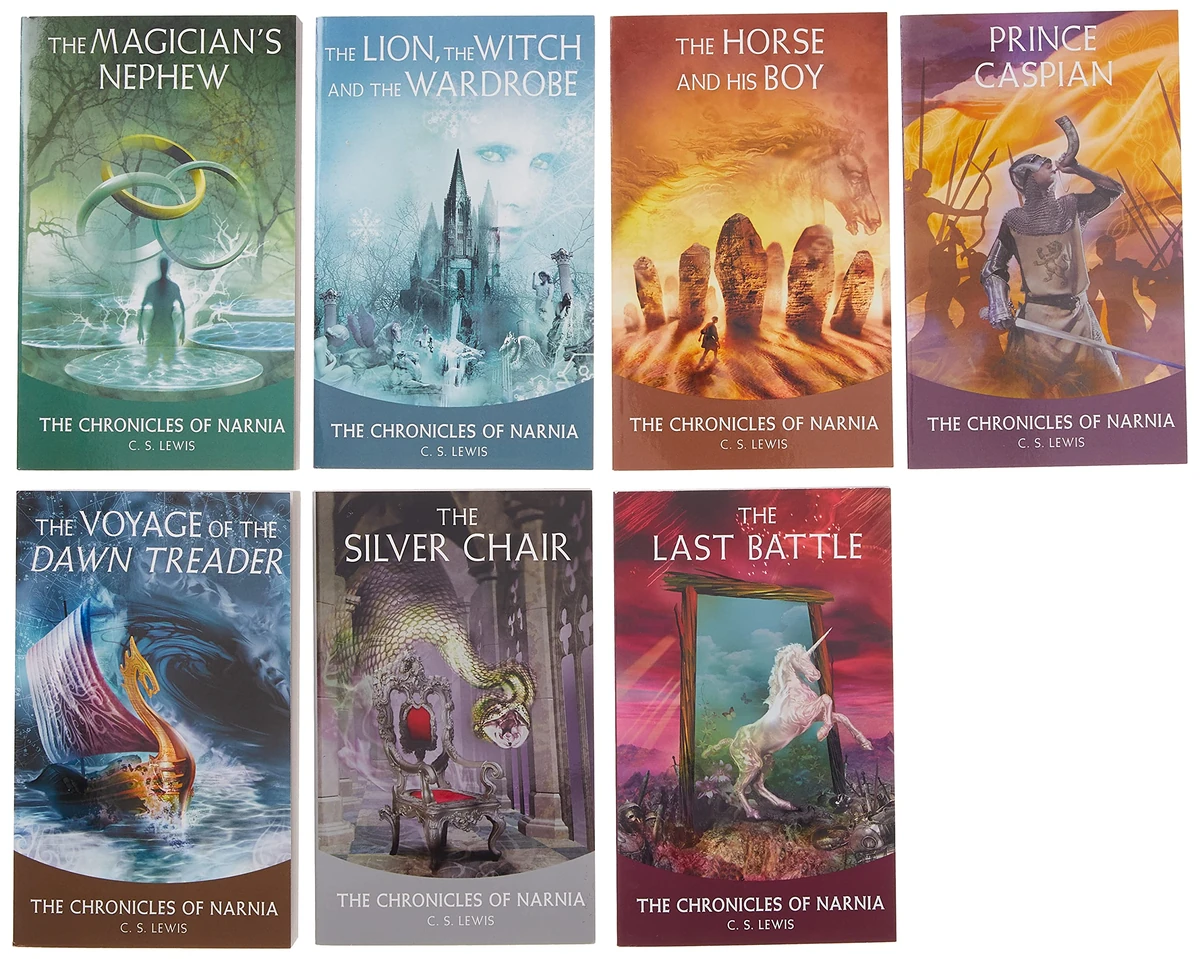
The Chronicles of Narnia: Complete Publication History and Narrative Scope
C.S. Lewis published The Chronicles of Narnia between 1950 and 1956, creating a seven-volume fantasy saga that spans the complete lifespan of a fictional universe. Although originally released out of chronological sequence starting wit...
C.S. Lewis published The Chronicles of Narnia between 1950 and 1956, creating a seven-volume fantasy saga that spans the complete lifespan of a fictional universe. Although originally released out of chronological sequence starting with The Lion, the Witch and the Wardrobe, the series encompasses over 2,550 Narnian years, tracing a grand arc from world creation to apocalyptic renewal.
Contents
The Origins and Writing of The Chronicles of Narnia
Clive Staples Lewis, a Fellow of Magdalen College, Oxford, and later Professor of Medieval and Renaissance English at Cambridge University, began developing the concept of Narnia long before writing the prose. As early as age sixteen, Lewis was haunted by a vivid mental image of a faun carrying an umbrella and parcels through a snowy wood. Decades later, during the World War II evacuations of British children to his countryside home outside Oxford in 1939, Lewis felt inspired to construct a story for young readers that combined mythic imagery with profound moral philosophy.
The writing process officially took shape between 1948 and 1953. Lewis drew heavily upon his vast knowledge of medieval literature, classical mythology, Norse sagas, and Christian theology. Rather than constructing a strict allegorical code, Lewis described the creative mechanism of Narnia as a "supposition": imagining what an incarnation of Jesus Christ might look like in a magical realm inhabited by talking beasts and mythical creatures.
- EARTH TIME: 1940 – 1949
- 1940: Pevensie evacuations - LWW events
- 1941: Return via railway platform - PC events
- 1942: Picture frame portal - VDT / SC events
- 1949: Train collision - LB events
- NARNIAN TIME: Year 1 – Year 2555
- Yr 1: Creation of Narnia (MN)
- Yr 1000–1014: Golden Age of Pevensies (LWW / HHB)
- Yr 2303–2306: Telmarine Restoration & Dawn Treader (PC / VDT)
- Yr 2356: Rescue of Prince Rilian (SC)
- Yr 2555: Shift's Deception & The End of Days (LB)
Lewis worked closely with artist Pauline Baynes, whose delicate pen-and-ink line drawings became intrinsic to the series' identity. Her illustrations captured the architectural and heraldic details Lewis described, establishing a visual standard that persists in modern print editions. While Lewis discussed his drafts with "The Inklings"—an informal literary discussion group at Oxford that included J.R.R. Tolkien—Tolkien famously expressed reservations about Narnia. Tolkien disliked Lewis's eclectic blending of disparate mythologies, such as placing Father Christmas in the same world as Greek fauns and dryads. Nevertheless, Lewis persevered, completing all seven books in rapid succession.
Publication History: The Seven Books in Release Order
The seven volumes were originally published in London by Geoffrey Bles (books one through five) and The Bodley Head (books six and seven). The initial release schedule proceeded annually:
| Year | Original Publication Timeline |
|---|---|
| 1950 | The Lion, the Witch and the Wardrobe (Geoffrey Bles) |
| 1951 | Prince Caspian: The Return to Narnia (Geoffrey Bles) |
| 1952 | The Voyage of the Dawn Treader (Geoffrey Bles) |
| 1953 | The Silver Chair (Geoffrey Bles) |
| 1954 | The Horse and His Boy (Geoffrey Bles) |
| 1955 | The Magician's Nephew (The Bodley Head) |
| 1956 | The Last Battle (The Bodley Head) |
1. The Lion, the Witch and the Wardrobe (October 16, 1950)
Published by Geoffrey Bles, the inaugural volume introduced readers to Peter, Susan, Edmund, and Lucy Pevensie. Evacuated from London during the Blitz, the children discover an enchanted wardrobe leading to Narnia, a land frozen in a hundred-year winter by the White Witch, Jadis. The narrative establishes Aslan the Lion, his sacrificial death on the Stone Table, and his resurrection, culminating in the fulfillment of prophecy and the Golden Age of Narnia.
2. Prince Caspian: The Return to Narnia (October 15, 1951)
The second published book brings the Pevensie siblings back to Narnia one Earth year later. However, 1,303 years have elapsed in Narnian time. Old Narnia has been conquered by the Telmarines, a human race descended from Earth pirates. The siblings assist Prince Caspian X in claiming his rightful throne from his tyrant uncle Miraz, restoring Old Narnia's talking beasts and magical inhabitants.
3. The Voyage of the Dawn Treader (September 15, 1952)
Lucy and Edmund Pevensie, accompanied by their cynical cousin Eustace Clarence Scrubb, enter Narnia through a painting of a ship. Joining King Caspian aboard the Dawn Treader, they sail eastward past the Lone Islands toward the edge of the world to search for seven missing lords of Narnia. The journey functions as an episodic sea odyssey, examining themes of temptation, redemption, and the boundaries of creation.
4. The Silver Chair (September 7, 1953)
The fourth volume is the first in which none of the Pevensie children appear as active protagonists. Eustace Scrubb returns to Narnia alongside his schoolmate Jill Pole. Tasked by Aslan to locate Prince Rilian, the kidnapped heir of an aging King Caspian, the children venture into the northern wildlands and the subterranean realm of the Underworld, guided by the Marsh-wiggle Puddleglum.
5. The Horse and His Boy (September 6, 1954)
Set entirely during the reign of High King Peter and his siblings (the Golden Age introduced in The Lion, the Witch and the Wardrobe), this novel takes place in the southern lands of Calormen and Archenland. It follows Shasta, an escaped Calormene orphan, and Aravis, a fleeing Calormene noblewoman, alongside their talking horses Bree and Hwin. The story presents a localized regional narrative within the broader world of Narnia.
6. The Magician's Nephew (July 3, 1955)
Published by The Bodley Head, this prequel addresses the origins of Narnia, the White Witch, and the magical wardrobe. Digory Kirke and Polly Plummer explore adjacent worlds using magic rings crafted by Digory's uncle Andrew. After accidentally releasing Jadis from the dying world of Charn, they witness Aslan singing Narnia into existence out of the void, establishing the cosmic history that underpins the entire series.
7. The Last Battle (September 4, 1956)
The final book depicts the tragic end of Narnia 2,555 Narnian years after its creation. An ape named Shift manipulates a donkey named Puzzle into wearing a lion's skin, leading Narnia into deception and invasion by Calormen. King Tirian, the last monarch of Narnia, fights alongside Eustace and Jill in a losing effort. The story concludes with the destruction of the physical world and the transition of the righteous into "Aslan's Country"—the true, eternal Narnia.
Narrative Scope and Internal Chronology
The narrative scope of The Chronicles of Narnia stretches across an entire cosmological cycle. While many fantasy series center on a single epoch, Lewis built a complete historical timeline spanning 2,555 years from creation to apocalypse.
- CREATION ERA (Year 1)
- Aslan sings Narnia into existence
- Entry of Jadis
- Planting of the Tree of Protection
- GOLDEN AGE (Years 1000-1014)
- Defeat of White Witch
- Reign of Kings/ Queens at Cair Paravel
- TELMARINE ERA (Years 2303-2356)
- Overthrow of Telmarine rule
- Voyage to the Eastern World
- Rescue of Prince Rilian
- LATER ERA & END (Year 2555)
- Fall of Narnia
- Shift & Puzzle's deception
- Transition to true Aslan's Country
Temporal Mechanics Between Earth and Narnia
A foundational principle of Lewis's secondary world is asymmetric temporal flow. Time in Narnia does not run parallel to time on Earth:
- Variable Elapse: A child can spend decades living out a full lifespan in Narnia, yet return to Earth at the exact moment they departed.
- Inconsistent Acceleration: The duration between Earth visits does not correlate linearly with Narnian time. One Earth year between The Lion, the Witch and the Wardrobe and Prince Caspian equates to 1,303 Narnian years, whereas three Earth years between The Silver Chair and The Last Battle span nearly two centuries in Narnia.
Four Major Historical Eras of Narnia
- The Age of Creation (Narnian Year 1): Aslan sings the flora, fauna, and geography of Narnia into being. Talking beasts are chosen and gifted with speech, establishing the original covenant of the land.
- The Golden Age (Narnian Years 1000–1014): Commencing with the defeat of the White Witch, High King Peter, Queen Susan, King Edmund, and Queen Lucy rule from Cair Paravel. Narnia experiences an era of peace, chivalry, and diplomatic engagement with Archenland and Calormen.
- The Telmarine Era and Restoration (Narnian Years 2303–2356): Following centuries of decline and foreign conquest by the Telmarines, Old Narnia retreats into myth until Prince Caspian X, aided by Earth children, re-establishes the rightful royal line.
- The Latter Days and Apocalypse (Narnian Year 2555): Internal corruption, political compromise, and foreign invasion bring about Narnia's final decline. The physical universe is dissolved by Aslan, revealing that the historical Narnia was merely a shadow of the real, unchanging Narnia beyond.
Publication Order vs. Chronological Order: The Great Debate
One of the most persistent discussions surrounding The Chronicles of Narnia concerns the proper reading sequence. When HarperCollins took over worldwide publishing rights in 1994, they re-numbered the series according to internal chronological order rather than original publication order.
- PUBLICATION ORDER (1950–1956)
- The Lion, the Witch and Wardrobe
- Prince Caspian
- The Voyage of the Dawn Treader
- The Silver Chair
- The Horse and His Boy
- The Magician's Nephew
- The Last Battle
- CHRONOLOGICAL ORDER (1994–PRESENT)
- The Magician's Nephew
- The Lion, the Witch and Wardrobe
- The Horse and His Boy
- Prince Caspian
- The Voyage of the Dawn Treader
- The Silver Chair
- The Last Battle
The Origins of the Renumbering
The change originated from a 1957 letter written by C.S. Lewis to an eleven-year-old reader named Laurence Krieg. The boy's mother favored reading the books chronologically, while Laurence advocated for publication order. Lewis wrote back:
"I think I agree with your order [chronological] for reading the books more than your mother’s. The series was not planned beforehand as she thinks... so perhaps it does not matter very much which order anyone reads them in."
Following Lewis's death, literary executor Walter Hooper supported re-numbering the books chronologically, leading to the standardized 1–7 numbering system used in most contemporary printings.
Arguments for Publication Order
Literary scholars and traditionalists argue that reading in publication order preserves the narrative's intended mystery and dramatic reveals:
- The Discovery of Aslan: The Lion, the Witch and the Wardrobe assumes the reader knows nothing of Narnia or Aslan. The majesty of the lion is revealed gradually. Reading The Magician's Nephew first neutralizes this introduction.
- The Mystery of the Lamp-post: The solitary lamp-post in the Narnian forest is an evocative, unexplained enigma in The Lion, the Witch and the Wardrobe. The Magician's Nephew explains its origin, which functions far better as a nostalgic payoff than a starting point.
- Narrative Progression: The themes expand organically from a simple fairytale format into complex cosmological structures.
Arguments for Chronological Order
Proponents of chronological sequence emphasize historical clarity and continuity:
- Linear History: Readers experience the birth, development, decline, and rebirth of Narnia in a smooth, chronological line.
- Immediate Context: The Magician's Nephew supplies the backstory for the White Witch and Professor Kirke before the Pevensie siblings arrive at his estate.
Comparative Overview of the Narnian Canon
The table below outlines the structural details of all seven books, showing the relationship between original publication dates, internal chronological positions, and primary narrative themes:
| Book Title | Original UK Release Date | Original Publisher | Internal Narnian Timeline | Primary Earth Timeframes | Core Narrative Arc |
|---|---|---|---|---|---|
| The Lion, the Witch and the Wardrobe | October 16, 1950 | Geoffrey Bles | Narnian Years 1000–1001 | 1940 (WWII Blitz) | The Pevensies enter Narnia, Aslan sacrifices himself, and the White Witch is defeated. |
| Prince Caspian | October 15, 1951 | Geoffrey Bles | Narnian Year 2303 | 1941 | The Pevensies return to aid Prince Caspian in restoring Old Narnia from Telmarine rule. |
| The Voyage of the Dawn Treader | September 15, 1952 | Geoffrey Bles | Narnian Year 2306 | 1942 | Caspian, Lucy, Edmund, and Eustace sail to the Eastern edge of the world. |
| The Silver Chair | September 7, 1953 | Geoffrey Bles | Narnian Year 2356 | 1942 | Eustace and Jill Pole search the Northern wildlands to rescue Prince Rilian. |
| The Horse and His Boy | September 6, 1954 | Geoffrey Bles | Narnian Year 1014 | Set during 1940 timeframe | Shasta and Aravis flee Calormen and save Archenland during Narnia's Golden Age. |
| The Magician's Nephew | July 3, 1955 | The Bodley Head | Narnian Year 1 | 1900 (Late Victorian Era) | Digory and Polly witness the creation of Narnia and the origin of the White Witch. |
| The Last Battle | September 4, 1956 | The Bodley Head | Narnian Year 2555 | 1949 | The fall of Narnia through internal corruption and the transition to Aslan's true kingdom. |
Mythological and Theological Scope
Beyond its historical publication record, The Chronicles of Narnia is recognized for its broad synthesis of mythological traditions and theological frameworks.
The Theological Framework
Lewis did not write Narnia as a direct one-to-one allegory like John Bunyan’s The Pilgrim’s Progress. Instead, he approached the world as a secondary creation exploring Christian theology through narrative imagination:
- Creation and Fall: The Magician's Nephew mirrors the Genesis narrative of creation, paired with the accidental introduction of evil (Jadis) by human hands.
- Substitutionary Atonement: The Lion, the Witch and the Wardrobe highlights the Deep Magic from the Dawn of Time, requiring Aslan to offer his life in place of the traitor Edmund.
- Eschatology: The Last Battle reflects apocalyptic literature, dealing with false prophets, judgment, the destruction of the old world, and the unclouded life of the world to come.
Mythological Syncretism
Lewis's background in classical and medieval literature led him to construct Narnia using diverse folklore traditions:
- Greco-Roman Elements: Fauns, satyrs, centaurs, dryads, and the god Bacchus appear alongside traditional fairy tale characters.
- Norse Elements: Frost giants, dwarfs, and the bleak winter imagery reflect the Scandinavian sagas Lewis studied throughout his life.
- Arthurian Romance: Chivalric codes, questing knights, and noble beasts drawn from medieval courtly literature define the political world of Cair Paravel.
Practical Reading Guidance
Determining the ideal sequence depends on your reading context and experience with the series.
Recommended Order for First-Time Readers
First-time readers—whether children or adults—should read the series in Original Publication Order:
- The Lion, the Witch and the Wardrobe
- Prince Caspian
- The Voyage of the Dawn Treader
- The Silver Chair
- The Horse and His Boy
- The Magician's Nephew
- The Last Battle
This sequence lets readers experience Narnia as C.S. Lewis originally revealed it, preserving narrative suspense and the wonder of discovering Aslan alongside the Pevensie children.
Recommended Order for Re-Readers and Literary Study
For re-readers, scholars, or book groups focused on world-building and history, the Internal Chronological Order provides a continuous historical narrative:
- The Magician's Nephew
- The Lion, the Witch and the Wardrobe
- The Horse and His Boy
- Prince Caspian
- The Voyage of the Dawn Treader
- The Silver Chair
- The Last Battle
Reading in this order illuminates the complete history of Narnia from its creation to its conclusion, clarifying how earlier historical events shape subsequent eras.
Frequently Asked Questions
In what order should a first-time reader approach The Chronicles of Narnia?
First-time readers should follow the original publication order, starting with The Lion, the Witch and the Wardrobe. This preserves the mystery of Narnia, introduces Aslan with his full dramatic impact, and builds the world as C.S. Lewis originally unveiled it.
Why were the books re-numbered in chronological order in 1994?
HarperCollins re-numbered the series based on a 1957 private letter from C.S. Lewis to a young reader, Laurence Krieg. In the letter, Lewis noted a mild personal preference for chronological order while acknowledging that the order of reading ultimately did not matter significantly.
How much Narnian time elapses across the seven books?
The internal Narnian timeline spans 2,555 years, from the world's creation in The Magician's Nephew to its end in The Last Battle. In contrast, only 49 years elapse on Earth between the Victorian setting of Digory's childhood (1900) and the train accident in The Last Battle (1949).
Did C.S. Lewis plan all seven books before publishing the first one?
No. Lewis initially wrote The Lion, the Witch and the Wardrobe as a standalone story. Its commercial success and his lingering imaginative ideas prompted him to write Prince Caspian, eventually expanding the work into a seven-volume series.
Are all seven books written about the same group of children?
No. While the four Pevensie children (Peter, Susan, Edmund, and Lucy) star in the initial books, later entries shift focus to their cousin Eustace Scrubb, his classmate Jill Pole, and original characters like Digory Kirke, Polly Plummer, and Shasta.
Next Recommended Action: If reading The Chronicles of Narnia for the first time, obtain an edition that allows you to read by original publication date, beginning with The Lion, the Witch and the Wardrobe. For further literary analysis, consult the collected letters of C.S. Lewis or scholarly works such as Michael Ward's Planet Narnia for insights into the structural design of the series.
Image Gallery