South Carolina Court Case Lookup: Comprehensive Public Records Access Guide 2026
Conducting a South Carolina court case lookup allows citizens, legal professionals, and researchers to access public judicial records across municipal, magistrate, circuit, and appellate courts. Because South Carolina maintains a decen...
Conducting a South Carolina court case lookup allows citizens, legal professionals, and researchers to access public judicial records across municipal, magistrate, circuit, and appellate courts. Because South Carolina maintains a decentralized judicial administration, finding specific case information requires understanding which court level holds jurisdiction and navigating the appropriate online portal or contacting the specific county clerk of court.
Contents
Understanding the South Carolina Judicial System Structure
To perform a successful South Carolina court case lookup, you must first understand how cases are distributed across the state's judicial tiers. South Carolina's court system is divided into appellate courts and trial courts, each handling specific types of civil, criminal, and family matters. Knowing the correct tier prevents wasted time searching statewide databases that may only index specific jurisdictions.
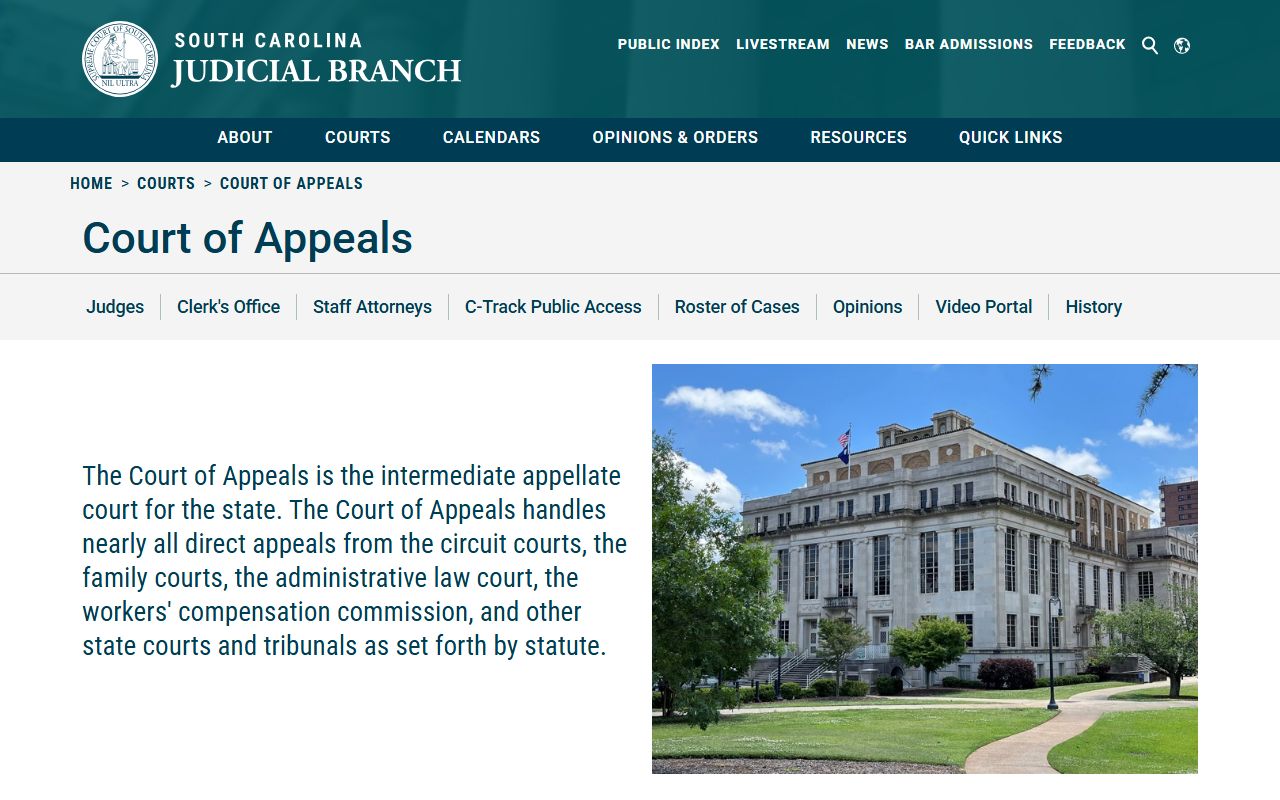
The appellate level consists of the Supreme Court of South Carolina and the Court of Appeals. These courts review decisions from lower tribunals rather than conducting new trials. Trial courts are split into several distinct categories:
- Circuit Courts: Handing major criminal matters (General Sessions) and civil cases involving substantial financial disputes (Common Pleas).
- Family Courts: Managing domestic issues including divorce, child custody, support, and juvenile delinquency.
- Magistrate Courts: Processing minor civil claims up to designated monetary limits, traffic violations, and minor criminal offenses.
- Municipal Courts: Handling city ordinance violations, local traffic infractions, and minor misdemeanors within specific municipal boundaries.
Online Portals for South Carolina Court Records
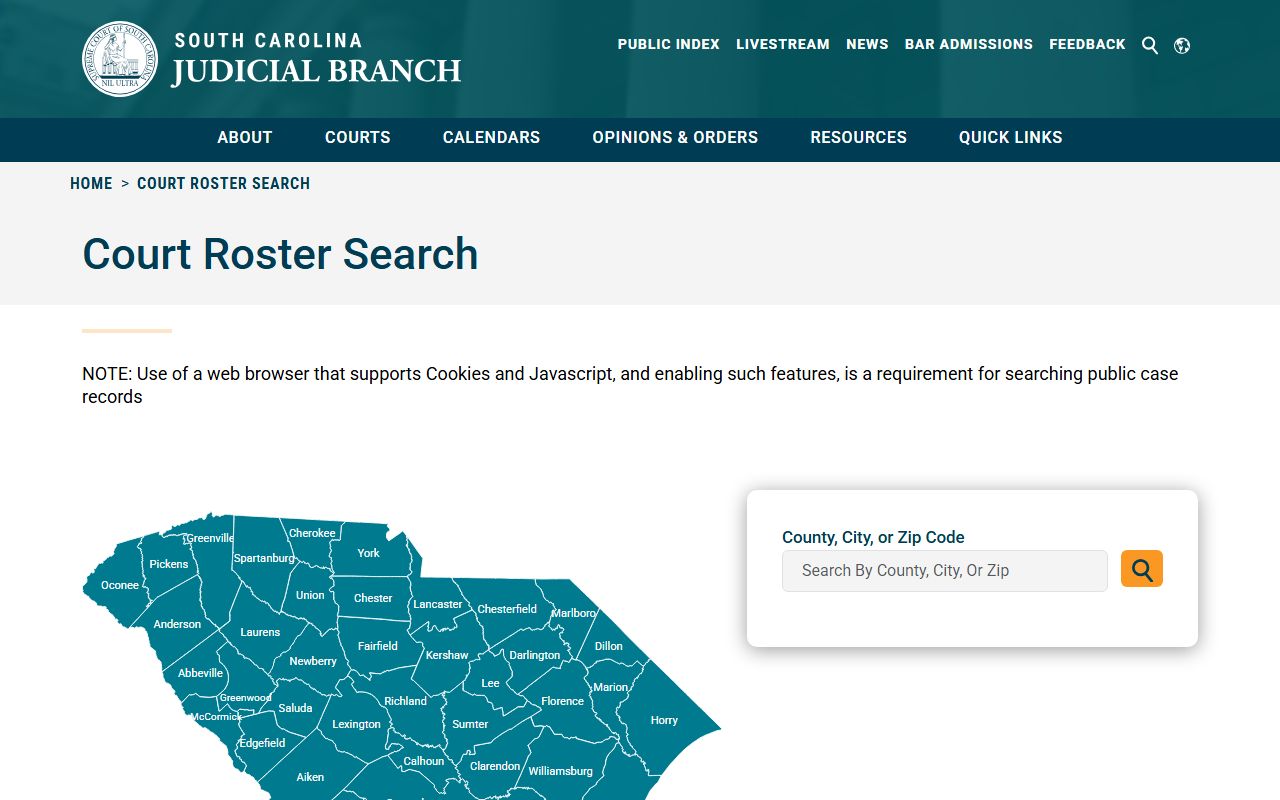
Most South Carolina counties provide public access to trial court case histories through the South Carolina Judicial Department's unified case management system or individual county web portals.
Statewide and County-Specific Search Tools
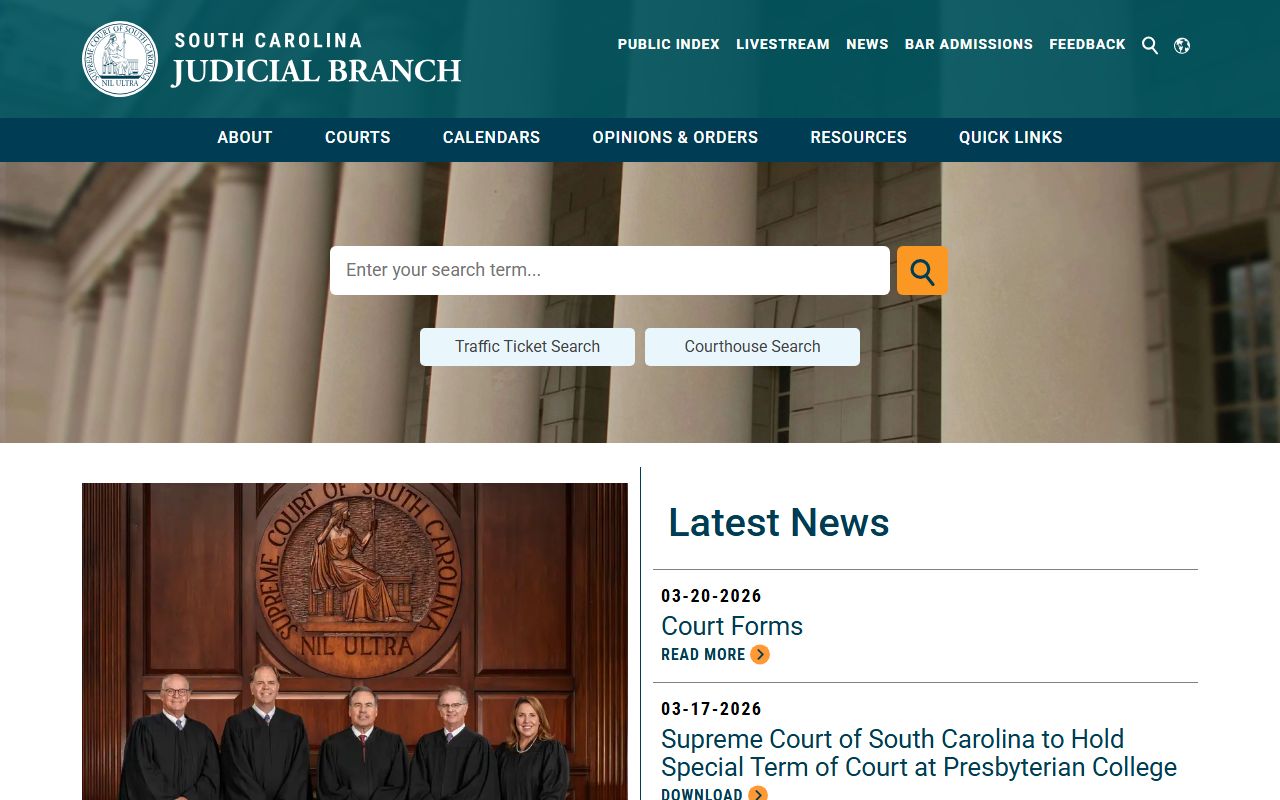
The primary entry point for many jurisdictions is the SC Judicial Department Public Index. This platform allows users to search for active and historical cases by name, case number, or filing date across participating counties. However, not all counties utilize the exact same database infrastructure.
| Court Level / Jurisdiction | Primary Record System | Typical Records Available | Access Method |
|---|---|---|---|
| Circuit Court (Common Pleas & General Sessions) | SC Judicial Department Public Index / County Clerk | Civil lawsuits, major criminal charges, indictments | Online portal or in-person terminal |
| Family Court | Restricted Public Access / County Clerk | Domestic relations, custody orders, protection orders | In-person at Clerk of Court or formal motion |
| Magistrate Court | County Magistrate Portals | Small claims, traffic tickets, local ordinance violations | County-specific court websites or clerk office |
| Appellate Courts | Supreme Court / Court of Appeals Docket Search | Briefs, appellate decisions, oral argument schedules | Statewide appellate portal online |
Step-by-Step Guide to Executing a Case Lookup
Navigating public records requires a structured methodology to ensure you retrieve accurate and complete files without missing related dockets or alias names. Follow these structured steps to execute a thorough search.
- Identify the Proper Jurisdiction: Determine the specific county, municipality, or appellate level where the legal action was initiated or appealed.
- Gather Essential Identifiers: Compile the full legal name of the individual or business, date of birth (if available), approximate filing date, or exact case docket number.
- Access the Authorized Portal: Navigate to the official South Carolina Judicial Department website or the specific county clerk of court portal.
- Input Search Parameters: Enter the party's name using standard formatting (Last Name, First Name) and apply filters for case type or year to narrow down common names.
- Review Docket Entries: Examine the chronological list of filings, hearings, motions, and final dispositions associated with the docket number.
- Request Certified Copies: If official documents are required for legal or administrative purposes, contact the local Clerk of Court office to obtain certified physical or digital copies.
Limitations, Privacy Restrictions, and Sealed Records
While South Carolina operates under the Freedom of Information Act (FOIA) and open-court principles, certain records are strictly restricted from public view to protect privacy, minors, or ongoing law enforcement investigations.
Statutory exemptions frequently apply to:
- Juvenile delinquency records and certain proceedings involving minors.
- Adoption and termination of parental rights files in Family Court.
- Expunged criminal records, which are legally erased from standard public visibility upon court order.
- Sensitive medical, financial, or personal identification data protected by state and federal privacy statutes.
- Mental health commitment proceedings and confidential mediation records.
Fees, Processing Times, and Official Contact Procedures
Obtaining physical copies or certified transcripts from a South Carolina court involves statutory fees set by the judicial administration or individual counties. Standard fees usually cover basic page copying, certification stamps, and archival retrieval for older records.
Operational Tip: Direct Clerk Contact When conducting historical research or attempting to locate records prior to digital integration (typically pre-1990s in smaller counties), calling the local Clerk of Court directly yields faster results than relying solely on online databases, as paper archives often require manual retrieval by court staff.
Frequently Asked Questions
Can I look up criminal records for free online in South Carolina?
Basic dockets and public indexes for Circuit and Magistrate courts can be searched online via the SC Judicial Department, but comprehensive statewide criminal history background checks require a formal request through the South Carolina Law Enforcement Division (SLED) for a fee.
How do I find a family court case in South Carolina?
Family court records are heavily restricted to protect sensitive domestic matters. While basic docket presence may be visible online, full case files and final orders generally require an in-person visit to the local County Clerk of Court or proof of legal standing in the case.
What information do I need to start a court case search?
Having the exact case number is ideal, but you can also search using the full legal name of the plaintiff, defendant, or business entity, combined with the filing year or county location.
Are magistrate court cases included in the statewide online index?
Many magistrate courts utilize independent software systems, meaning not all small claims or traffic tickets appear on the main SC Judicial Department public index, requiring a check of the specific county's magistrate portal.
What should I do if a record I am looking for shows no results?
Ensure you have checked neighboring counties or the specific municipal court where the incident occurred, as jurisdiction errors are the most common reason records do not appear in a search.
Navigating Legal Records Effectively
Performing an accurate South Carolina court case lookup depends heavily on targeting the correct judicial tier and verifying local county procedures. By utilizing official state portals, respecting privacy restrictions, and contacting local clerks when digital records are incomplete, researchers and citizens can successfully locate public judicial information across the state.
Image Gallery