The Advertising in Virtual Reality Landscape: A Comprehensive Guide for 2026
By 2026, the advertising in virtual reality landscape has matured into a multi-billion dollar spatial ecosystem. It centers on high-engagement, non-intrusive 3D experiences, leveraging biometrics like eye-tracking and spatial audio to...
By 2026, the advertising in virtual reality landscape has matured into a multi-billion dollar spatial ecosystem. It centers on high-engagement, non-intrusive 3D experiences, leveraging biometrics like eye-tracking and spatial audio to deliver hyper-personalized brand interactions within immersive social, gaming, and productivity environments across high-fidelity headsets and standalone devices.
Contents
The Evolution of Spatial Brand Integration
The journey of advertising within immersive media has transitioned from experimental 2D overlays to fully integrated 3D assets that respect the user’s presence. In the early 2020s, VR advertising was often viewed as intrusive—mimicking the "pop-up" culture of the mobile web. However, as we navigate 2026, the industry has embraced spatial harmony, where ads are designed as functional or aesthetic components of the virtual world.
This shift was driven by the widespread adoption of advanced hardware, such as the Meta Quest 4 and the Apple Vision Pro 3, which normalized spatial computing for the average consumer. Advertisers no longer view VR as a niche gaming peripheral but as a primary medium for "deep-time" engagement. Unlike traditional digital ads, which compete for a fraction of a user's attention on a flat screen, VR advertising commands a 360-degree field of view, allowing brands to tell stories through environment, sound, and interactive physics.
The current landscape is defined by native integration. This means a billboard in a virtual racing game isn't just a texture; it is a dynamic asset that can change based on the player's real-world location or preferences, without breaking the immersion of the game world.
Primary Ad Formats in the 2026 VR Ecosystem
Navigating the advertising in virtual reality landscape requires an understanding of the diverse formats currently available. Brands must choose between passive observation and active participation based on their campaign goals.
Native 3D Brand Placements
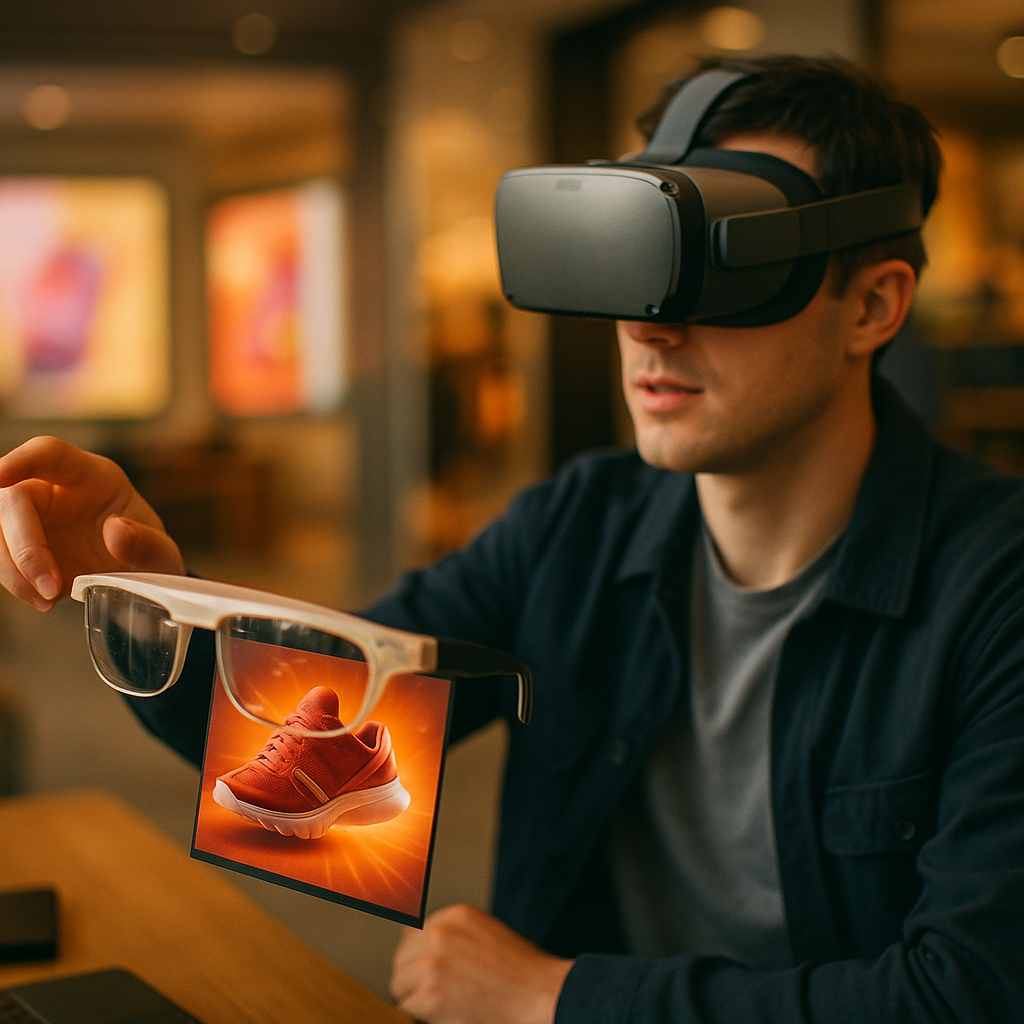
Native placements are the "product placements" of the virtual world. In a VR social hub like Horizon Worlds or VRChat, this could manifest as a branded soda machine that users can actually interact with. These objects are built using standard 3D file formats (such as USDZ or GLB) and are optimized for real-time rendering. The value here lies in utility; if a virtual item provides a benefit—such as a branded pair of sneakers that allows a user to jump higher in a game—the brand sentiment increases significantly.
Immersive Branded Worlds (Bespoke Environments)
Large-scale enterprises are increasingly moving away from third-party ad slots and instead building their own "Brand Worlds." These are persistent virtual spaces where users can experience a brand’s ethos. For example, an automotive brand might create a high-fidelity virtual showroom where users can customize a vehicle and drive it through a photorealistic simulation of the Swiss Alps. These environments serve as top-of-funnel discovery tools and deep-engagement loyalty programs.
Spatial Interstitials and Portals
Replacing the traditional video ad, "Spatial Portals" allow users to opt-in to a mini-experience. Instead of watching a 30-second clip, a user might step through a portal into a brief 3D scene related to a film release or a new product. This format respects the user's agency, a critical factor in maintaining high retention rates in VR.
Dynamic Eye-Tracking Ads
With eye-tracking now standard in mid-to-high-end headsets, advertisers use Gaze-Triggered Events. An ad might remain a subtle background element until the user's eyes rest on it for more than 1.5 seconds, at which point it might animate or offer more information. This ensures that the ad only "activates" when it has the user's conscious attention, reducing "ad blindness" and providing precise engagement data.
Technical Requirements and Integration Standards
For developers and marketers, the technical side of the advertising in virtual reality landscape is governed by a set of evolving standards designed to ensure cross-platform compatibility.
- OpenXR Compliance: To ensure ads run across Meta, HTC, Sony, and Apple devices, assets must be compliant with OpenXR. This API standardizes how 3D content interacts with hardware, preventing the need for device-specific ad builds.
- Light Probe Matching: To maintain immersion, virtual ads must match the lighting of the host environment. Modern VR ad SDKs (Software Development Kits) use dynamic light probing to adjust the shadows and reflections on a 3D ad asset so it doesn't look like an artificial overlay.
- Latency Management: VR users are sensitive to "judder" or frame-rate drops, which can cause motion sickness. Ad assets must be highly optimized—often requiring low polygon counts and compressed textures—to ensure they don't impact the performance of the host application.
| Ad Format | User Interaction Level | Typical Use Case | Tech Complexity |
|---|---|---|---|
| Static 3D Billboard | Low | Brand Awareness (e.g., Sports Stadiums) | Low |
| Interactive Asset | High | Product Trial (e.g., Virtual Apparel) | Medium |
| Branded Mini-Game | Very High | Engagement/Loyalty (e.g., Seasonal Promos) | High |
| Spatial Portal | Medium | Storytelling (e.g., Movie/Travel Teasers) | High |
| Reward-Based Video | Low | Currency Earn in F2P Games | Low |
Metrics and ROI: Measuring Success in 3D
The transition to VR has necessitated a move away from the "Click-Through Rate" (CTR) toward more nuanced, spatial metrics. In the advertising in virtual reality landscape, engagement is measured by how a user physically interacts with the content.
- Dwell Time and Gaze Duration: How long a user looked at an ad and which specific parts of the 3D model drew the most attention.
- Manipulation Rate: How many users picked up, rotated, or "used" a virtual branded object.
- Spatial Recall: Post-session surveys often show that VR ads have a 70% higher recall rate than mobile video ads because they are stored in the brain as "memories of an experience" rather than "observations of media."
- Biometric Sentiment (Restricted): In some jurisdictions, anonymous heart-rate variability and pupil dilation data are used to gauge emotional response, though this is heavily regulated.
Privacy, Ethics, and the "Spatial Data" Challenge
The most contentious part of the VR advertising landscape in 2026 is the management of biometric data. Because VR headsets track head movement, hand gestures, and often eye movement, they collect "Inferred Intent" data that is far more sensitive than traditional web browsing history.
Regulatory bodies, including the European Data Protection Board and various US state regulators, have implemented strict "Spatial Privacy" guidelines. Advertisers must now operate under a "Privacy by Design" framework. This involves:
- On-Device Processing: Processing eye-tracking data locally on the headset so that raw biometric signals are never sent to ad servers.
- Anonymized Aggregation: Marketers receive reports on "Heat Maps" showing where groups of users looked, rather than individual tracking.
- Explicit Consent: "Opt-in" is the default for any spatial data collection that exceeds basic impression counting.
Selecting the Right Platforms for VR Campaigns
Choosing where to place ads is as important as the creative itself. The landscape is currently divided into three main segments:
1. Social VR Platforms (The Metaverse)
Platforms like Meta Horizon Worlds and VRChat are the "social media" of VR. Advertising here is community-driven. Brands often find success by sponsoring community events or creating "wearables" that users can use to express their identity across the platform.
2. Immersive Gaming
Gaming remains the largest driver of VR hours. Integration here usually involves native placements within the game world. Unity and Unreal Engine have both integrated sophisticated ad-serving plugins that allow developers to bake "ad zones" directly into their levels, which are then filled dynamically by ad exchanges like Unity LevelPlay.
3. Productivity and Enterprise VR
With the rise of "Virtual Desktops," there is a growing market for subtle, non-distracting ads within productivity suites. These are often B2B-focused, such as a virtual coffee brand appearing in a digital co-working space or software tools advertised within a VR engineering simulation.
Common Pitfalls in VR Advertising
Despite the potential, many brands fail in the VR space by ignoring the unique psychology of the medium.
- Breaking Immersion: The fastest way to lose a user is to force a 2D video into a 3D space in a way that feels "stuck" to their face. This causes immediate discomfort and negative brand association.
- Ignoring Physics: If a user picks up a branded virtual object and it doesn't behave with realistic gravity or collision, the "uncanny valley" effect ruins the experience.
- Over-Complexity: Users in VR have a limited cognitive load. Ads that require complex instructions or long loading times are usually ignored.
FAQs About the VR Advertising Landscape
How much does it cost to run a VR ad campaign in 2026?
Costs vary significantly based on format. A basic 3D billboard placement in a popular VR game might have a CPM (Cost Per Mille) ranging from $15 to $30, while a custom-built branded world can cost anywhere from $50,000 to over $1,000,000 depending on complexity and the platform's hosting fees.
Is VR advertising effective for B2B brands?
Yes, particularly through "Utility-Based Integration." B2B brands often find success by providing virtual tools or environments that solve problems for professionals, such as a branded virtual meeting room with advanced whiteboarding features or specialized industrial simulation training modules.
How do I ensure my VR ads don't cause motion sickness?
Avoid "forced movement." Never move the user’s virtual camera or head position to look at an ad. Ads should be stationary within the world or move only in response to the user’s direct physical interaction. High frame-rate optimization (minimum 72Hz, preferably 90Hz+) is also essential for all ad assets.
Are there "ad blockers" for virtual reality?
Yes, several third-party "Spatial Firewalls" have emerged. These tools identify and hide ad-tagged 3D assets within environments. To counter this, many developers are moving toward "Sponsorship Models" where the ad is an inseparable, functional part of the game’s architecture, making it harder to block without breaking the app.
Can small businesses afford to advertise in VR?
Absolutely. Self-service ad platforms for VR now allow small businesses to buy localized placements in social hubs or popular indie games with budgets as low as a few hundred dollars per month, similar to how local ads work on social media.
Strategic Recommendation for Brands
For organizations looking to enter the advertising in virtual reality landscape, the most effective first step is to focus on asset creation over ad placement. Before buying "airtime" in the metaverse, invest in high-quality, optimized 3D models of your products. These assets are the "creative" of the future. Once you have a library of VR-ready products, start with small, native placements in established social VR platforms to gather data on how users interact with your brand in a 3D space. Prioritize user comfort and utility above all else; in the immersive world of 2026, a brand that adds value to the experience will always outperform a brand that simply demands attention.
Image Gallery