How Understanding Truck Tire Size Changes Your Fleet's Performance and Bottom Line
Understanding truck tire size involves decoding standardized alphanumeric strings to manage vehicle gearing, load capacity, and fuel efficiency. For fleet managers in 2026, mastering these specifications allows for optimized rolling re...
Understanding truck tire size involves decoding standardized alphanumeric strings to manage vehicle gearing, load capacity, and fuel efficiency. For fleet managers in 2026, mastering these specifications allows for optimized rolling resistance, accurate telematics reporting, and reduced total cost of ownership by matching specific tire dimensions to precise duty cycles and axle requirements.
Contents
The tires on a commercial vehicle are not merely rubber components; they are critical engineering variables that dictate the mechanical efficiency of the entire drivetrain. When a fleet manager understands how to "read" a tire and, more importantly, understands the physical implications of those numbers, they gain control over fuel spend, safety margins, and maintenance schedules. In the heavy-duty trucking industry, even a fractional change in tire diameter or width can cascade into significant operational shifts across a hundred-vehicle fleet.
Decoding the Language of Commercial Tire Sizing
To understand how tire size changes a fleet, one must first master the standardized metric and imperial systems used by manufacturers. While passenger vehicles almost exclusively use metric sizing, the commercial sector in 2026 still utilizes a blend of "Proportional" (Metric) and "Conventional" (Inch-based) systems.
The Metric System (e.g., 295/75R22.5)
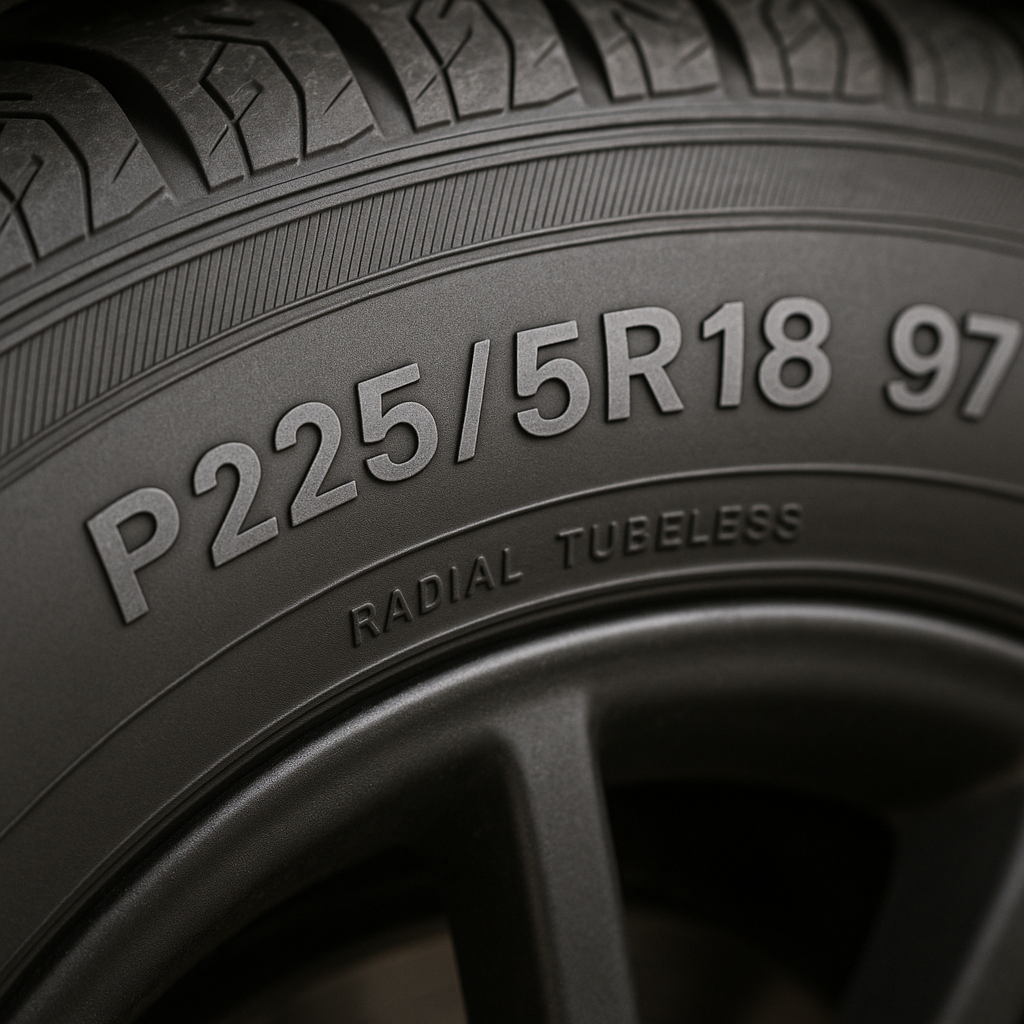
In this string, 295 represents the nominal section width in millimeters. This is the measurement from sidewall to sidewall when the tire is mounted on the correct rim and properly inflated. The 75 is the aspect ratio, indicating that the sidewall height is 75% of the section width. The R stands for radial construction, which is the industry standard for over-the-road (OTR) applications due to its heat dissipation and fuel-efficient properties. Finally, 22.5 is the diameter of the wheel rim in inches.
The Conventional System (e.g., 11R22.5)
Commonly referred to as "tall rubber," the 11 indicates the cross-section width in inches. In these traditional sizes, the aspect ratio is generally assumed to be around 88% unless otherwise specified. While these are becoming less common in high-efficiency long-haul fleets, they remain staples in vocational applications like construction and refuse due to their higher ground clearance and robust sidewall presence.
The Impact of Rolling Circumference on Drivetrain and Telematics
One of the most profound ways tire size changes fleet operations is through rolling circumference. This is the actual distance a tire travels in one complete revolution.
When a fleet switches from a standard 11R22.5 to a low-profile 295/75R22.5, the tire's outer diameter decreases. This change effectively alters the truck's final drive ratio. A smaller tire must rotate more times to cover the same mile than a larger tire.
Speedometer and Odometer Calibration
In 2026, fleet telematics and Electronic Logging Devices (ELDs) rely on precise mileage data for IFTA (International Fuel Tax Agreement) reporting and preventative maintenance scheduling. If a truck's Engine Control Module (ECM) is programmed for a tire that completes 490 revolutions per mile (RPM), but the fleet installs a tire that completes 510 RPM, the odometer will "over-report" the distance traveled. Over a 100,000-mile year, this 4% discrepancy results in 4,000 "phantom miles," leading to premature oil changes, warranty expirations, and inaccurate fuel tax filings.
Engine Efficiency and Gearing
Engines are designed to operate within a specific "sweet spot" for fuel economy, usually a narrow RPM band. By changing tire sizes, a fleet manager is essentially changing the truck’s gearing. A smaller tire increases the engine RPM at highway speeds. For a fleet looking to maximize MPG, selecting a tire size that keeps the engine in its most efficient range at 65 MPH is a critical technical lever.
Load Index and Speed Rating: The Safety and Compliance Factor
Tire size is inextricably linked to the Load Index and Speed Rating, usually found immediately following the size description (e.g., 144/141 L).
Weight Distribution and Legal Limits
The Load Index defines the maximum weight a tire can support at its rated inflation pressure. For Class 8 trucks, the difference between a load range G and a load range H tire can be several hundred pounds per tire. Using an undersized tire or one with an insufficient load index is a violation of Department of Transportation (DOT) standards and significantly increases the risk of a high-speed blowout. According to the Federal Motor Carrier Safety Administration (FMCSA), tire-related issues are a leading cause of mechanical-failure-related crashes.
Heat Management
Smaller tires generally rotate faster and flex more frequently than larger tires at the same vehicle speed. This increased flexing generates internal heat. If a fleet selects a tire size that is marginally too small for the weight it carries, the internal temperature of the casing may exceed the vulcanization limits, leading to tread separation. Understanding these ratings ensures that the fleet's tire choice matches its actual gross vehicle weight (GVW) requirements.
How Tire Width Influences Fuel Economy and Stability
The first number in the tire size—the width—directly impacts the contact patch, which is the area of rubber touching the road.
Rolling Resistance
A wider tire (e.g., a 315mm wide steer tire) provides a larger contact patch. While this improves lateral stability and braking performance, it generally increases rolling resistance. According to the EPA SmartWay program, rolling resistance accounts for approximately 30% of a truck’s fuel consumption at highway speeds. Fleet managers must balance the need for the stability provided by wider tires against the fuel savings of a narrower, more aerodynamic profile.
Aerodynamics and "Super Singles"
The shift toward wide-base singles (often sized as 445/50R22.5) replaces two dual tires with one wide tire. This changes the fleet's profile by reducing the weight by hundreds of pounds and improving airflow around the wheels. However, this change requires a complete shift in rim inventory and a specialized approach to roadside assistance, as a single tire failure results in an immediate "vehicle down" situation, unlike dual setups where a truck might limp to a safe location.
Operational Comparison: Common Fleet Tire Sizes
The following table compares standard tire dimensions used in 2026 fleet operations to illustrate how sizing choices impact vehicle geometry and performance.
| Tire Size | Typical Application | Approx. Diameter | Revolutions Per Mile | Primary Benefit |
|---|---|---|---|---|
| 11R22.5 | Vocational / Regional | 41.5 inches | 498 | High ground clearance, durability |
| 295/75R22.5 | Long-Haul Freight | 40.1 inches | 516 | Balanced fuel economy, lower center of gravity |
| 285/75R24.5 | Specialized / Heavy | 41.3 inches | 501 | High load capacity for heavy haul |
| 255/70R22.5 | Car Haulers / Lowboys | 36.6 inches | 565 | Low deck height for height-sensitive loads |
| 445/50R22.5 | Efficiency Focus | 39.5 inches | 524 | Significant weight savings, LRR optimized |
Note: Revolutions per mile (RPM) and diameter are approximate and vary by manufacturer and tread depth.
Maintenance Intervals and Retreadability
The physical size and "profile" of a tire determine its suitability for the retreading process, which is the cornerstone of fleet cost-saving strategies.
Casing Integrity
Taller tires (higher aspect ratios) typically have more sidewall "flex." While this provides a smoother ride and protects the cargo from road vibration, excessive flex can fatigue the steel cords within the casing. If a fleet manager chooses a tire size with an aspect ratio that is too high for high-torque applications, the casings may be rejected during the retread inspection process due to "sidewall bruising" or cord fatigue.
Matching Duals
A critical maintenance rule impacted by tire size is the requirement to match diameters in a dual assembly. If one tire is slightly smaller than its partner—even if they are the same nominal size—the larger tire will carry a disproportionate amount of the load, while the smaller tire will "scuff" across the pavement to keep up. This leads to rapid, irregular wear and increased fuel consumption. Understanding that a "295/75R22.5" from one manufacturer might be physically different in height than the same size from another manufacturer is vital for maintaining dual-assembly harmony.
Inventory Management and Standardization
Standardizing on a specific tire size across a fleet simplifies logistics and reduces capital tied up in "just-in-case" inventory.
- Bulk Purchasing Power: By sticking to a single size, such as 295/75R22.5, fleets can negotiate better rates with national accounts and tire service networks.
- Emergency Road Service (ERS): When a driver calls in a blowout, having a standardized fleet-wide size ensures the service truck brings the correct replacement, reducing downtime.
- Rim Compatibility: Standardizing size often means standardizing rim widths (e.g., 8.25-inch or 9.00-inch rims). This prevents the mechanical stress caused by mounting a tire on a rim that is too narrow or too wide, which can distort the tread face and cause rapid center or shoulder wear.
Frequently Asked Questions
Does changing tire size void my truck's warranty?
Generally, changing to a tire size not approved by the Original Equipment Manufacturer (OEM) can lead to warranty disputes, particularly regarding drivetrain components like axles and transmissions. Most OEMs provide a range of approved sizes. If you step outside this range without recalibrating the ECM, the altered torque loads on the transmission could be grounds for a claim denial.
How much can a different tire size affect fuel mileage?
The impact can be as high as 2% to 5%. This is driven by two factors: the rolling resistance coefficient of the specific size and the change in engine RPM at cruising speed. If a smaller tire size forces the engine out of its peak efficiency torque band, fuel consumption will rise regardless of the tire's rubber compound.
Can I mix different tire sizes on the same axle?
No. Mixing tire sizes on the same axle is dangerous and often illegal. It creates an imbalance in braking force, load distribution, and differential gear wear. On a drive axle, different diameters will cause the internal gears of the differential to work constantly, leading to overheating and premature failure.
Why do some fleets prefer 24.5-inch wheels over 22.5-inch wheels?
The 24.5-inch wheels (and tires) provide more ground clearance and are often preferred in "heavy haul" or off-road vocational use, such as logging or oil field work. They also offer a larger heat-sink area for the brakes, though they are heavier and generally less aerodynamic than 22.5-inch setups.
How does tire size affect Electronic Stability Control (ESC)?
Modern ESC and Collision Mitigation Systems (CMS) rely on wheel speed sensors. If the tire size is changed without updating the vehicle's software, the system may misinterpret the rotational speed of the wheels, leading to false activations of the brakes or a failure to intervene during a roll-over event.
Actionable Recommendation for Fleet Managers
To optimize your fleet through tire sizing, conduct a drivetrain audit. Identify the rear-axle ratio of your trucks and use a manufacturer’s RPM (revolutions per mile) chart to determine which tire size places your engine at its most efficient RPM at your fleet’s governed speed. Once a size is selected, update your ECM settings to ensure that your odometer, speedometer, and ELD data are 100% accurate. This single synchronization step can save thousands in avoided maintenance and fuel over-reporting.
Image Gallery