How to Watch the Planet of the Apes Movie Series in Order
To watch the Planet of the Apes movie series in chronological order—the sequence in which the events occur within the narrative timeline—you should begin with the modern "Reboot" trilogy, proceed to the 2024 film Kingdom of the Planet...
To watch the Planet of the Apes movie series in chronological order—the sequence in which the events occur within the narrative timeline—you should begin with the modern "Reboot" trilogy, proceed to the 2024 film Kingdom of the Planet of the Apes, and conclude with the original 1968 classic and its four direct sequels. This path aligns the history of the simian uprising with the eventual future depicted in the original films.
Contents
Understanding the Two Viewing Paths
The Planet of the Apes franchise is complex because it consists of multiple timelines and distinct production eras. Most viewers choose between two primary methods: the chronological order, which follows the internal history of the world, or the release order, which mirrors the evolution of filmmaking techniques and storytelling shifts.
The Chronological Timeline
The chronological approach offers the most immersive experience for those interested in the lore of Caesar and the subsequent evolution of ape society. In this timeline, the narrative starts with the rise of the intelligent ape population in the 21st century and concludes thousands of years later on a post-apocalyptic Earth.
- Rise of the Planet of the Apes (2011)
- Dawn of the Planet of the Apes (2014)
- War for the Planet of the Apes (2017)
- Kingdom of the Planet of the Apes (2024)
- Planet of the Apes (1968)
- Beneath the Planet of the Apes (1970)
- Escape from the Planet of the Apes (1971)
- Conquest of the Planet of the Apes (1972)
- Battle for the Planet of the Apes (1973)
Note: The 2001 film directed by Tim Burton is considered a standalone reimagining and does not fit neatly into either the original or the reboot continuity.
A Deep Dive into the Eras of the Franchise
The Modern Reboot Saga
The modern series, which began in 2011, focuses on the scientific advancement and subsequent societal collapse that leads to the apes' dominance. These films are grounded in heavy use of motion-capture technology to provide emotional depth to the apes, specifically the character Caesar.
- Rise (2011): This serves as the origin story. It illustrates how experimental neurological treatments intended to cure Alzheimer's disease inadvertently bestow human-level intelligence upon chimpanzees.
- Dawn (2014) & War (2017): These chapters explore the geopolitical consequences of an intelligent species vying for space alongside a crumbling human civilization. They are essential for understanding the transition from laboratory test subjects to a sovereign society.
- Kingdom (2024): Set generations after Caesar’s reign, this film explores the myth-making process within ape culture. It highlights how history is distorted over centuries, moving the franchise into a post-human landscape.
The Original Quintet
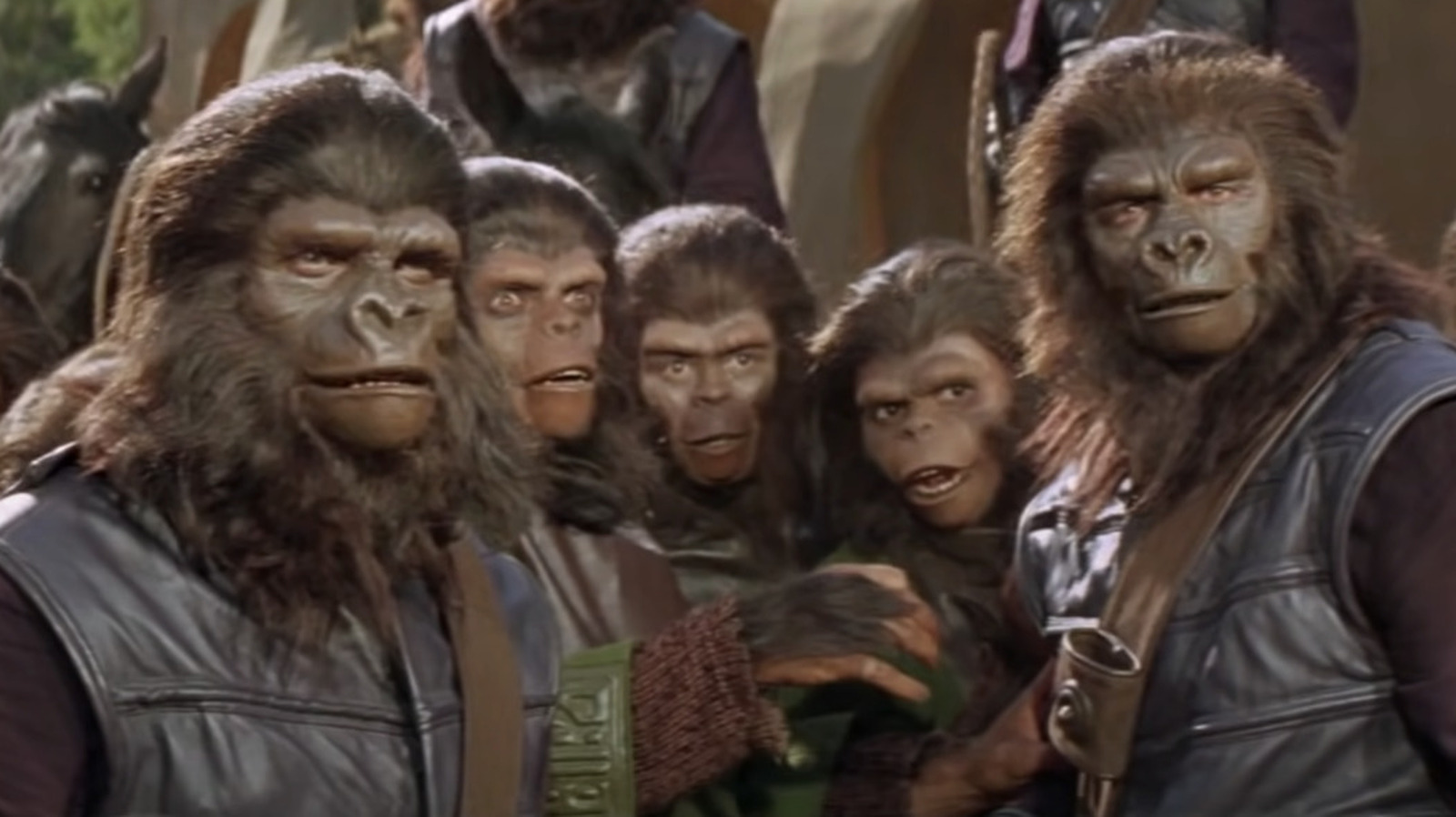
The original series represents a pinnacle of mid-century science fiction, focusing on themes of nuclear anxiety, social stratification, and the cyclic nature of history.
- Planet of the Apes (1968): This is the foundational text. An astronaut lands on a planet where apes rule and humans are treated as primitive beasts. It is essential to watch this first among the "Classic" era films to understand the cultural impact of the series.
- The Sequels (1970–1973): Beneath picks up immediately after the original, while Escape, Conquest, and Battle provide a complex, time-travel-heavy narrative that explains how the events of the original 1968 film became inevitable.
Comparison of Viewing Experiences
| Viewing Method | Benefits | Recommended For |
|---|---|---|
| Chronological | Consistent thematic narrative and lore. | Story-focused viewers who want a clear history. |
| Release Date | Shows the evolution of special effects. | Film history buffs and legacy fans. |
Technical Considerations and Availability
In 2026, the entire Planet of the Apes library is available across various major streaming platforms, though availability can fluctuate due to licensing agreements. Before starting your marathon, check your region's primary streaming aggregators.
Prerequisites for Viewing:
- Subscription Services: Most films are distributed by 20th Century Studios (now under the Disney umbrella). Consequently, they are frequently found on Disney+ or Hulu, depending on your territory.
- Physical Media: If you prefer the highest resolution, the 4K Ultra HD Blu-ray releases of the Reboot trilogy and the original 1968 film offer superior audio-visual fidelity compared to streaming bitrates.
- The "Burton" Outlier: The 2001 film is often categorized separately. If you wish to watch it, it is best viewed after finishing the original 1968 film to compare the stylistic differences in how the apes are represented.
Troubleshooting Your Marathon
If you find yourself confused by the time-travel elements in the original sequels (Escape and Conquest), you are not alone. The original series utilized a "closed-loop" time travel conceit that creates some narrative friction with the modern reboots. Do not attempt to link the two series as a single linear history; treat the 2011 Rise as a complete replacement for the origin story told in the 1970s films. The 2024 Kingdom film explicitly builds off the mythology of the modern reboot, confirming the separation of the two universes.
Frequently Asked Questions
Does the 2001 Planet of the Apes fit into the series? No. The 2001 version directed by Tim Burton is a standalone "reimagining." It does not share continuity with either the original 1968–1973 series or the 2011–2024 reboot series.
Can I skip the older films and start with the 2011 reboot? Yes. The 2011 Rise of the Planet of the Apes was designed as a soft reboot. It requires no prior knowledge of the 1968 film, although you will appreciate the subtle nods and "Easter eggs" referencing the original franchise if you choose to watch them later.
Why are there two different origins for the ape uprising? The two series are produced in different eras with different creative intentions. The 1970s films suggested an uprising caused by space-time paradoxes and the arrival of future apes in the past. The 2011 reboot opted for a grounded, science-based explanation involving viral engineering. They are separate creative visions.
Is Kingdom of the Planet of the Apes a sequel to War for the Planet of the Apes? Yes. Kingdom takes place roughly 300 years after War for the Planet of the Apes. It serves as a direct continuation of the world established by the reboot trilogy, focusing on the legacy of the character Caesar rather than his immediate life.
What is the best way to watch for a first-time viewer? For the most cohesive narrative experience, start with the 2011 Rise and work through the 2024 Kingdom. If you find yourself captivated by the world, watch the 1968 original afterward as a piece of influential cinematic history.
Recommendation
If you have never experienced the franchise, the most rewarding path is to commit to the modern reboot series first. These four films (Rise, Dawn, War, Kingdom) provide a continuous, high-budget emotional arc that is highly accessible to contemporary audiences. Once the modern saga is complete, transition to the 1968 original to witness the legendary performance and social commentary that defined the genre for generations. This ensures you grasp the evolution of the series while maintaining a strong thematic connection throughout your viewing marathon.
Image Gallery