Navigating Cloud Computing Cyber Security Companies: A Framework for Enterprise Selection
Choosing the right cloud computing cyber security company requires evaluating how providers align their specific security frameworks with your infrastructure, regulatory requirements, and risk tolerance. These organizations offer speci...
Choosing the right cloud computing cyber security company requires evaluating how providers align their specific security frameworks with your infrastructure, regulatory requirements, and risk tolerance. These organizations offer specialized services—ranging from Managed Security Service Provider (MSSP) models to Cloud Workload Protection Platforms (CWPP)—designed to secure data, applications, and identities within distributed cloud environments.
Contents
Defining the Role of Cloud Security Specialists
In the current 2026 enterprise landscape, the perimeter has largely dissolved. Cloud computing cyber security companies provide the essential guardrails for organizations operating in multi-cloud and hybrid environments. Unlike legacy on-premises security, cloud security focuses on shared responsibility models, API-based integration, and the protection of ephemeral workloads.
The dominant search intent for organizations seeking these services is risk mitigation. Whether an organization is using Infrastructure-as-a-Service (IaaS), Platform-as-a-Service (PaaS), or Software-as-a-Service (SaaS), the fundamental requirement is to regain visibility into traffic, ensure identity access control, and maintain compliance across geographically dispersed data centers. These companies act as both technology vendors, providing the software to automate these tasks, and service partners, offering the human expertise required to interpret threat intelligence and respond to incidents.
Core Service Models in Cloud Security
Before engaging a vendor, it is necessary to categorize the types of solutions on the market. Distinguishing between these allows you to match a company’s core competency with your specific technical deficit.
Cloud Workload Protection Platforms (CWPP)
CWPPs are designed to protect workloads regardless of where they are running. This is critical for companies utilizing containerized applications (such as those managed by Kubernetes) or serverless functions. These platforms look for vulnerabilities within the code during the deployment phase and continue to monitor for anomalous behavior once the workload is live.
Cloud Access Security Brokers (CASB)
A CASB sits between the user and the cloud application, acting as a gatekeeper. For organizations heavily reliant on SaaS productivity tools, a CASB is the primary method for enforcing security policies. It provides visibility into how data is being shared, prevents unauthorized data exfiltration, and monitors user behavior for signs of credential compromise.
Cloud Security Posture Management (CSPM)
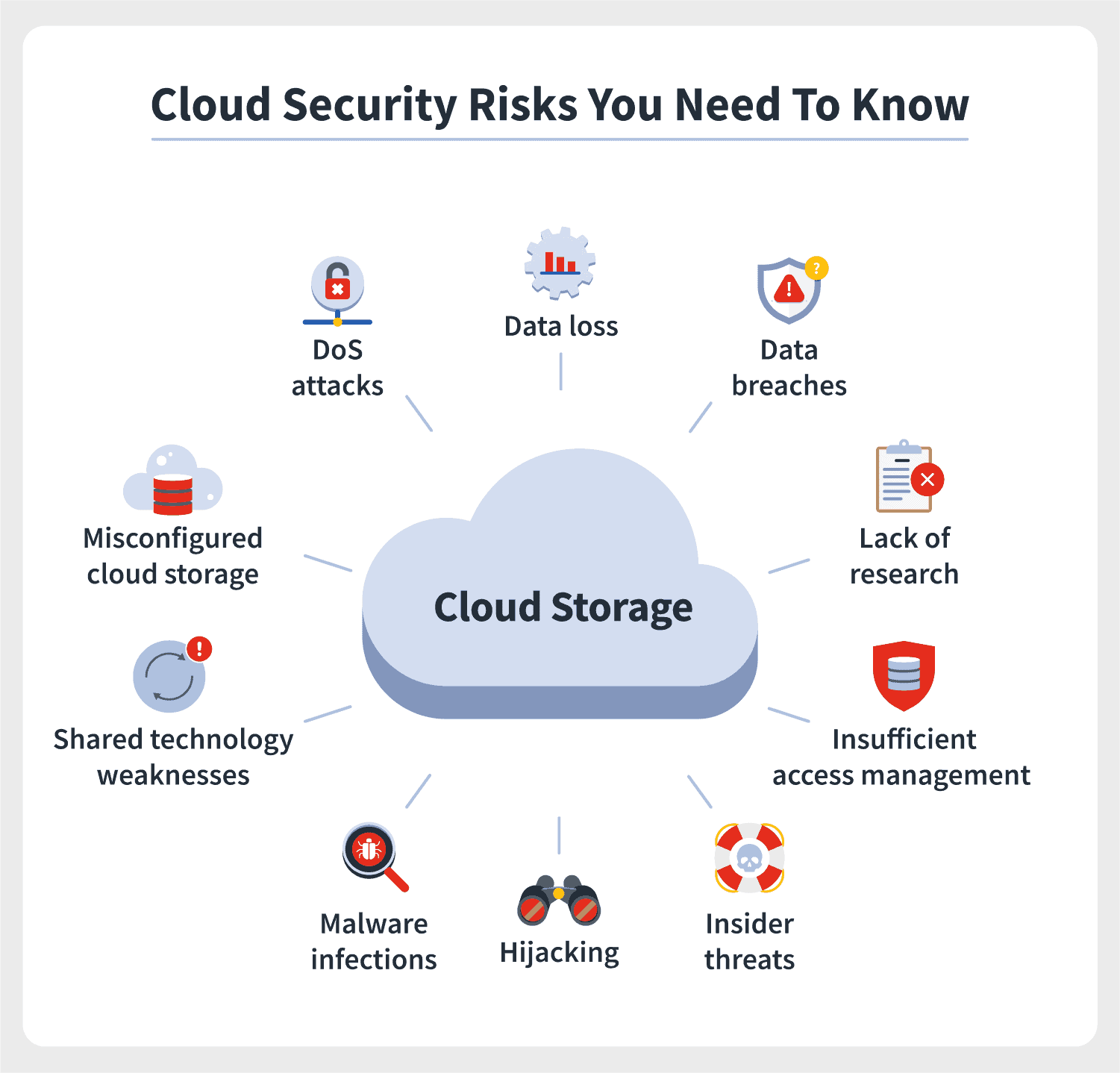
Misconfiguration remains one of the leading causes of cloud data breaches. CSPM tools continuously scan cloud environments against industry best practices and compliance frameworks (such as SOC2, HIPAA, or ISO 27001). Companies specializing in CSPM provide automated remediation to ensure that storage buckets, virtual networks, and access policies remain locked down according to policy.
Evaluation Criteria for Enterprise Selection
Selecting a partner is not merely a technical review; it is a long-term operational commitment. Use the following framework to assess candidates during your procurement process:
- Native Cloud Support: Determine if the company offers native integration with your primary cloud providers (e.g., AWS, Microsoft Azure, Google Cloud Platform). Third-party tools that rely on outdated monitoring techniques may introduce latency or fail to account for cloud-native API updates.
- Compliance Mapping: If your organization operates in a regulated industry, prioritize companies that provide automated reporting for your specific regulatory requirements. This shifts the burden of proof from your internal audit team to the vendor’s dashboard.
- Response and Support SLAs: In a security incident, the vendor’s response time is critical. Review the Service Level Agreements (SLAs) regarding incident response support, not just standard technical support.
- Scalability and Performance: The security stack must scale horizontally with your cloud usage. Verify how the solution handles sudden bursts in traffic or the rapid deployment of new virtual environments.
Comparison of Security Service Categories
| Security Category | Primary Goal | Best For | Typical Deployment |
|---|---|---|---|
| CWPP | Workload Integrity | DevOps/App Security | Agent-based or API-integrated |
| CASB | Data Governance | SaaS/Shadow IT Control | Proxy/API-based |
| CSPM | Compliance/Config | Multi-cloud Governance | API-based read/write |
| SIEM/SOAR | Threat Intelligence | Enterprise SOC teams | Log aggregation & automation |
The Role of Managed Security Service Providers (MSSP)
Many enterprises find that while they can purchase the software, they lack the internal headcount to maintain a 24/7 Security Operations Center (SOC). In these instances, an MSSP is the appropriate partner. These companies manage the security tools on your behalf, providing continuous monitoring and professional threat hunting.
When evaluating an MSSP, ensure they have documented experience in the cloud-native security tools you intend to deploy. Ask for specific examples of how they have managed incident response for cloud-based lateral movement—a technique where an attacker gains a foothold in one cloud service and attempts to move into higher-privilege environments.
Common Implementation Pitfalls
Even with the best tools, organizations often fail due to process errors rather than software defects.
- Neglecting Identity and Access Management (IAM): A common mistake is focusing on network security while leaving identity permissions overly permissive. Use the principle of least privilege, ensuring that every service account and human user has the absolute minimum access required for their task.
- Ignoring Shadow IT: Cloud services are easy to spin up, leading to departments deploying software without IT oversight. Your security strategy must include discovery mechanisms to identify these unauthorized cloud instances.
- Over-reliance on Automated Alerts: Security tools can generate an overwhelming volume of alerts. Without a strategy for alert fatigue, your team may miss critical warnings. Prioritize platforms that offer high-fidelity alerting with built-in contextual analysis.
Frequently Asked Questions
How does cloud security differ from traditional network security? Cloud security is based on software-defined perimeters and identity rather than physical hardware firewalls. It focuses on API security, virtualized workloads, and dynamic configurations that change in real-time, requiring continuous, automated monitoring rather than static policy enforcement.
Do I need a cloud security company if my provider offers built-in tools? Cloud providers like AWS, Azure, and GCP offer robust security suites. However, these are often limited to their specific ecosystem. If you operate in a multi-cloud environment, you will likely need a third-party security company to provide a "single pane of glass" view to ensure consistent policy across all platforms.
What is the "Shared Responsibility Model" in cloud security? It is the contractual division of security duties between the cloud provider and the customer. Generally, the provider secures the "cloud" (the hardware and global infrastructure), while the customer is responsible for security "in the cloud" (data, identity, access, and workload configurations).
Are cloud security services cost-effective for small businesses? Costs vary based on the scale of your infrastructure. Many vendors offer tiered pricing models based on the number of instances or user count. For small businesses, focusing on CSPM and automated identity management is usually more cost-effective than deploying a full-scale enterprise SOC.
Next Steps for Implementation
To begin your selection process, conduct a thorough audit of your current cloud footprint. List your active cloud services, your regulatory compliance obligations, and the size of your internal security team. Use this audit to request targeted demonstrations from vendors that specialize in your specific infrastructure type. Focus your evaluation on the platform’s ability to provide automated, continuous visibility rather than manual, reactive reporting.
Image Gallery