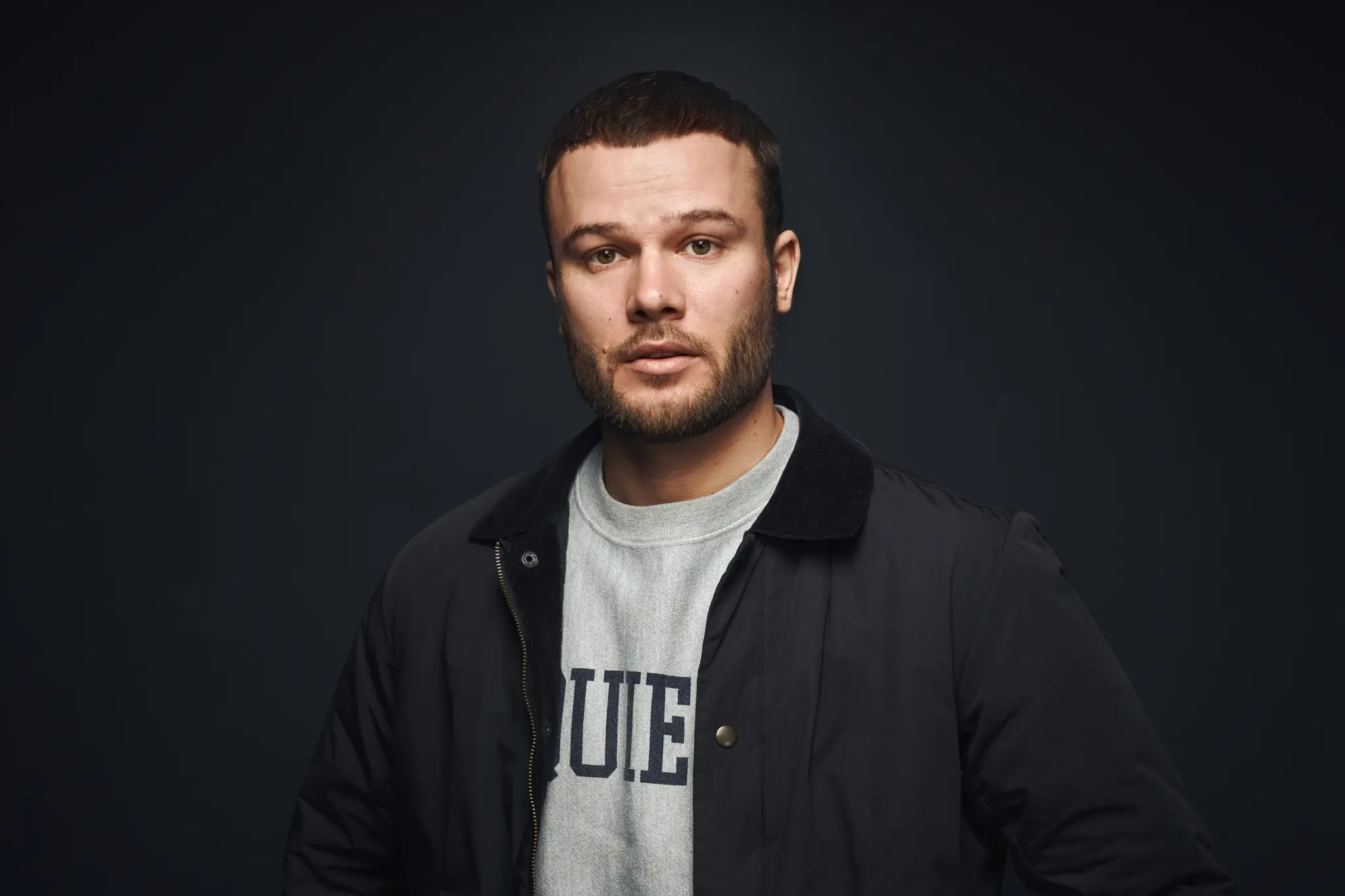
Max Korzh Net Worth Explained: Touring Power, Royalties, and Independent Wealth
Max Korzh has an estimated net worth of between $4 million and $6 million as of 2026. Unlike mainstream pop figures who rely heavily on corporate sponsorships, the Belarusian artist built his wealth primarily through massive, self-prom...
Max Korzh has an estimated net worth of between $4 million and $6 million as of 2026. Unlike mainstream pop figures who rely heavily on corporate sponsorships, the Belarusian artist built his wealth primarily through massive, self-promoted stadium concerts, high-volume digital streaming catalogs, and direct-to-consumer merchandise sales.
Contents
The Economics of a Post-Soviet Stadium Phenomenon
Maksim Anatolyevich Korzh, known professionally as Max Korzh, occupies a unique position in Eastern European music. Emerging from Luninets, Belarus, he evolved from a regional hip-hop act into one of the few independent Russian-language artists capable of selling out 35,000 to 45,000-capacity soccer stadiums across multiple countries. Understanding his net worth requires analyzing an unconventional business model defined by fierce independence, high ticket-to-revenue conversion, and the deliberate rejection of corporate brand deals.
Most contemporary music stars generate substantial percentages of their net worth from commercial brand endorsements, fashion partnerships, and private corporate gigs (zakazniki). Korzh has historically avoided almost all commercial brand alignments. His financial foundation rests on organic crowd engagement, where fans travel across borders to create massive, festival-scale stadium shows known as "flets." Consequently, his balance sheet mirrors that of a grassroots touring rock outfit rather than a conventional commercial rap artist.
Primary Wealth Engine: Stadium Touring and Live Gate Receipts
Live performance constitutes the single largest driver of Korzh’s career earnings. While mid-tier artists in Eastern Europe typically rely on club tours or municipal festival bookings, Korzh established a touring framework modeled after global arena acts.
- Gross Ticket Sales
- Production & Venue Rent
- Promoters & Tax
- Net Artist Take-Home (~30-40%)
The Scale of Live Productions
Between 2017 and the early 2020s, Korzh regularly headlined major venues, including Dinamo Stadium in Minsk, Olympic Stadium in Kyiv, Luzhniki and VTB Arena in Moscow, and the PGE Narodowy in Warsaw.
- Attendance scale: Single-night attendance figures for Korzh's headline shows frequently reach between 25,000 and 40,000 attendees.
- Gross box office: With average ticket prices historically ranging between $30 and $60 (varying by sector, from general admission dance floors to VIP seating), a single sold-out stadium date can generate between $1.2 million and $2.5 million in gross ticket sales.
- Net margins: Because stadium staging requires massive investments in pyrotechnics, sound engineering, multi-tiered security, insurance, and venue rental fees, production costs routinely consume 50% to 60% of gross receipts. Nevertheless, an independent headliner retaining their own promotional rights typically walks away with 30% to 40% of the net concert proceeds, yielding between $350,000 and $700,000 per major stadium outing.
Diaspora Touring in the European Market
Following the political instability in Belarus in 2020 and the outbreak of war in Ukraine in 2022, Korzh halted performances inside Russia and Belarus. While this decision eliminated two historically lucrative markets, it did not freeze his live earning potential. Instead, his live operations pivoted entirely toward European hub cities with dense Eastern European diaspora populations—most notably Warsaw, Riga, and Prague.
These international shows feature ticket prices denominated in Euros, often yielding higher per-ticket gross revenue than domestic CIS dates. Fans from across the continent travel by bus and rail to these destination events, allowing Korzh to maintain seven-figure single-event box offices despite operating outside his original home market.
Streaming Royalties and Catalog Valuation
Streaming revenue represents the artist’s most stable recurring income stream. Korzh’s extensive discography—including multi-platinum foundational albums such as Zhit V Kafe (2012), Zhirny 2 (2013), Domashny (2014), Maly Povzroslel (Parts 1 & 2), and Psihi Popadaut v Top (2021)—maintains high engagement years after release.
- Platform Streams (Spotify, Apple, VK, Yandex)
- Aggregator / Distribution
- Direct Royalties (~$0.0025 - $0.004/stream)
Digital Metrics and Streaming Platforms
Korzh commands millions of monthly listeners across global and regional platforms:
- Spotify and Apple Music: Supported by listeners throughout Western Europe, Central Europe, the United States, and the global diaspora.
- YouTube: His official channel has accumulated billions of lifetime views across hit singles like "Gory Po Koleno," "Maly Povzroslel," and "Enikei Benikei." YouTube monetization on long-form music videos, coupled with official content-ID royalties, delivers reliable ad-revenue distributions.
- Regional Platforms (VK Music, Yandex Music): Prior to catalog disruptions and shifting licensing agreements, regional platforms drove immense volume, compensating for lower per-stream payout rates ($0.001 to $0.002 per stream) through sheer market saturation.
On aggregate, a catalog generating hundreds of millions of annual streams across all digital audio and video services yields an estimated $400,000 to $750,000 annually in mechanical and performance royalties, net of distributor cuts.
Masters Ownership and Publishing
Early in his career, Korzh partnered with the independent Russian hip-hop label Respect Production. Unlike major corporate labels that often absorb life-long master recording rights, Respect Production operated on more artist-friendly terms. Over time, Korzh leveraged his market dominance to secure favorable royalty splits and maintain long-term ownership stakes in his underlying songwriting and publishing assets. Retaining master and publishing equity preserves high-margin equity value, shielding his net worth against shifts in annual tour scheduling.
Direct-to-Consumer Merchandising
Merchandising is often an afterthought for conventional pop performers, but Korzh treats apparel as an independent lifestyle extension. His brand identity revolves around street-level solidarity, youth culture, and outdoor recreation, making apparel a natural financial pillar.
- Product Range: Rather than basic screen-printed promotional tees, Korzh releases specialized streetwear collections, technical jackets, hoodies, tracksuits, flags, and travel gear tailored to fans attending his high-intensity outdoor shows.
- Limited Drop Strategy: Merchandise is typically sold directly through his official online storefront or exclusively on-site at stadium venues. By manufacturing in limited runs and controlling fulfillment, the operation avoids retail markups and middleman cuts.
- Profit Margins: High-end branded streetwear models can yield gross margins between 50% and 70%. During major stadium weekends, merchandise booths at the venue can generate hundreds of thousands of dollars in high-margin sales within a 48-hour window.
Rejection of Corporate Sponsorships
To understand why Max Korzh's net worth sits in the single-digit millions rather than higher celebrity tiers, one must examine what he refuses to do. Many Russian-language pop and hip-hop acts regularly earn between $500,000 and $1.5 million annually by fronting advertising campaigns for:
- Commercial banks and payment systems
- Telecommunications giants
- Online betting, gambling, and sportsbooks
- Fast-moving consumer goods (energy drinks, alcohol, snack brands)
Korzh has consistently declined lucrative corporate sponsorships, brand ambassadorships, and private corporate sets (zakazniki), which are traditionally the easiest source of instant liquidity for Eastern European musicians. His subcultural standing depends entirely on authenticity and peer-to-peer connection with his audience. Commercializing his image through mobile carrier ads or sports betting sponsorships would compromise the cultural capital that drives his stadium ticket sales. While this posture leaves significant short-term cash off the table, it ensures the longevity and resilience of his primary live revenue engine.
Financial Profile and Revenue Breakdown
The following table outlines the estimated distribution of Max Korzh's lifetime and ongoing revenue channels, providing a structural view of his financial composition.
| Revenue Stream | Estimated Annual Share | Key Financial Drivers | Margin Profile | Risk & Volatility Factors |
|---|---|---|---|---|
| Stadium & Arena Touring | 50% – 60% | Live gate receipts, multi-city European tours, 25k–40k venue capacity | Moderate (30%–40% net artist take) | Geopolitical disruption, visa regulations, venue insurance |
| Digital Royalties & Masters | 20% – 25% | Streaming catalogs (Spotify, Apple, YouTube), mechanical rights | Very High (70%–85% net of distribution) | Platform payouts, shifting licensing across regional services |
| Merchandise & Streetwear | 15% – 20% | Direct-to-consumer apparel drops, on-site stadium concert merchandise | High (50%–65% gross margins) | Supply chain costs, inventory risk, event-dependent sales |
| Commercial Brand Sponsorships | < 2% | Minimal presence; selective cultural projects only | Exceptionally High (90%+ net) | Intentionally suppressed to protect independent artist authenticity |
Asset Distribution, Cost Structure, and Deductions
A celebrity's net worth is not identical to total career earnings. High revenue figures must be balanced against substantial operating expenses, living costs, tax allocations, and real estate investments.
Tour Overhead and Crew Operations
Producing stadium-grade live music independently requires carrying significant working capital. Korzh employs a permanent team consisting of sound engineers, lighting technicians, video designers, stage directors, logistical coordinators, and private security. Transporting stage equipment, pyrotechnics, and crew members across international borders requires upfront investments that can exceed $200,000 per production hub before a single ticket is scanned.
Real Estate and Asset Allocation
Unlike celebrities who purchase luxury real estate in high-visibility enclaves like Dubai or Los Angeles, Korzh has maintained a private, low-profile lifestyle.
- He has historically maintained residential property in Belarus, along with logistical and residential footprints in European transit centers.
- His lifestyle expenditures focus on travel, outdoor motor sports, creative production, and personal mobility rather than high-depreciation luxury assets such as exotic car fleets or superyachts.
- A disciplined expenditure profile preserves personal cash flow, keeping his debt levels minimal and allowing him to maintain financial stability even during extended performance hiatuses.
Methodology Challenges in CIS Celebrity Wealth Estimation
Estimating the net worth of an artist from the post-Soviet music market presents distinct challenges that differ significantly from analyzing Western artists whose financial metrics are documented by the SEC, trade publications like Pollstar, or standard Billboard Boxscore reports.
- Absence of Public Financial Disclosures: In Eastern Europe, concert promoters and independent label holding structures rarely release audited box office reports to third-party databases.
- Multi-Jurisdictional Tax and Corporate Entities: Artists who tour internationally often route revenue through holding companies located across various legal jurisdictions (such as Cyprus, Poland, the Baltics, or the United Kingdom) to manage withholding taxes, international currency conversion, and global performance liabilities.
- Currency Volatility: Substantial historical portions of Korzh’s revenues were transacted in Belarusian Rubles, Russian Rubles, and Ukrainian Hryvnia, alongside modern receipts in Euros and US Dollars. Shifts in foreign exchange rates historically impacted net-dollar conversions.
Consequently, responsible net-worth estimates rely on verified stadium attendance counts, average ticket pricing tiers, digital platform streaming volumes, standard distribution margin standards, and direct operational deductions.
Frequently Asked Questions
What is Max Korzh's estimated net worth in 2026?
Max Korzh's net worth is estimated to be between $4 million and $6 million. This figure reflects accumulated earnings from sold-out stadium performances, an extensive and actively streamed back catalog, high-margin merchandise collections, and conservative personal spending habits.
Why doesn't Max Korzh take corporate brand sponsorships?
Korzh protects his brand identity and connection with his fanbase by deliberately avoiding commercial sponsorships, corporate private gigs, and betting advertisements. Maintaining an authentic, anti-commercial image allows him to sell out massive stadiums purely through grassroots word-of-mouth.
How did touring cancellations in Russia and Belarus affect his finances?
Halting shows in his two largest historical markets undeniably closed off immediate high-volume touring hubs. However, Korzh adapted by staging massive destination concerts in major European capitals like Warsaw and Riga, where cross-border travel from fans across the diaspora allowed him to retain substantial live-performance income.
Who owns the rights to Max Korzh’s music?
Korzh started his career working with the independent label Respect Production, negotiating artist-favorable agreements that allowed him to retain significant ownership over his master recordings and publishing rights. This ownership ensures that the vast majority of digital streaming income flows directly to him rather than being absorbed by a major international record conglomerate.
Does Max Korzh own any major business ventures outside music?
Beyond his proprietary merchandise and streetwear lines, Korzh does not operate public commercial conglomerates, venture funds, or retail chains. His primary business focus remains centered on music production, intellectual property, and live event staging.
Summary and Analytical Perspective
Max Korzh's financial standing illustrates how an independent artist can build sustainable, multi-million-dollar wealth outside the conventional corporate music machine. By leveraging a uniquely loyal audience into sold-out stadium attendance across European transit hubs, retaining equity in his streaming catalog, and managing operational expenses prudently, Korzh has insulated his wealth against both industry trends and regional disruptions. For analysts studying the economics of non-English music, Korzh remains a prime case study in the power of grassroots ownership over commercial compromise.
Image Gallery