What the Calamari and Squid Difference Means: A Culinary and Biological Guide
While all calamari are technically squid, not all squid are calamari. The difference primarily distinguishes specific species within the Loliginidae family—noted for their side fins running the length of the body and more tender flesh—...
While all calamari are technically squid, not all squid are calamari. The difference primarily distinguishes specific species within the Loliginidae family—noted for their side fins running the length of the body and more tender flesh—from the broader category of squid, which often features tougher meat and shorter, terminal fins.
Contents
Understanding the Relationship Between Squid and Calamari
To understand what the calamari and squid difference means, one must first look at the biological hierarchy of cephalopods. Squid belong to the order Teuthida, which comprises over 300 distinct species found throughout the world's oceans. Within this vast order, "calamari" is not a separate animal in a different class, but rather a subset of species that possess specific anatomical and culinary traits.
In many English-speaking culinary markets, the term "calamari" is used as the Italian word for squid, often applied to any dish featuring breaded and fried rings. However, for seafood wholesalers, marine biologists, and high-end chefs in 2026, the distinction remains more technical. True calamari refers to members of the genus Loligo (or the family Loliginidae). These are often called "inshore squids." They are physically distinct from the larger, more common "arrow squids" or "flying squids" (Ommastrephidae) that make up the bulk of the global industrial squid catch.
The distinction matters because it dictates the price, the texture, and the optimal cooking method. When a menu lists "calamari," a consumer should ideally be receiving a more premium, tender species. If the menu simply says "squid," it may refer to larger, tougher species like the Jumbo Flying Squid (Dosidicus gigas), which requires more intensive processing to become palatable.
Anatomical Distinctions: Fins and Body Shape
The most reliable way to tell the difference between a squid intended for general processing and a true calamari species is to look at the fins. Cephalopod fins are the fleshy appendages on the mantle used for stability and propulsion.
Calamari (Loliginidae) Fins
In species categorized as calamari, such as the Longfin Inshore Squid (Doryteuthis pealeii), the fins are long and flap-like. They typically extend at least half the length of the mantle (the main body tube), and in some species, they run nearly the entire length. This anatomical feature provides these squids with greater maneuverability in coastal reef environments. Because these fins are integrated so deeply into the body, the muscle structure of the mantle tends to be more delicate.
Common Squid (Ommastrephidae) Fins
In contrast, many common commercial squids—often referred to simply as "market squid" or "arrow squid"—have shorter, triangular fins located at the very tip of the mantle. These species are built for speed in the open ocean. Their mantle walls are usually thicker and denser to support powerful jet propulsion over long distances. While these squids are perfectly edible, their muscle fibers are more tightly packed, leading to a "rubbery" texture if they are not handled with precision.
The Culinary Experience: Texture and Flavor Profiles
What the calamari and squid difference means for the diner is primarily a matter of "mouthfeel" and sweetness. The culinary world prizes calamari for its tender, almost velvety texture.
- Texture: Calamari has a finer grain in its muscle tissue. When cooked correctly, it offers a "snap" that gives way easily to a soft interior. Traditional squid, particularly larger species, can be quite chewy. To make large squid species palatable, processors often use a process called "mechanical tenderization" or chemical treatments to break down the tough connective tissues.
- Flavor: Calamari species generally possess a higher concentration of natural sugars and amino acids, giving them a subtle sweetness. Common squid tends to have a more neutral, "oceanic" flavor, which acts as a blank canvas for heavy sauces or spices but lacks the inherent complexity of true calamari.
By 2026, culinary standards have shifted toward transparency. High-end Mediterranean and Asian fusion restaurants now frequently specify the species of squid on the menu (e.g., "Mediterranean Loligo") to justify the price premium associated with the more tender calamari varieties.
Global Market Economics and Mislabeling
The economic difference between squid and calamari is substantial. Because Loligo species are harder to catch in massive industrial quantities compared to open-ocean flying squid, they command a higher market price. This price gap has historically led to widespread mislabeling in the seafood industry.
In many jurisdictions, there are no strict legal requirements to distinguish between species on a menu. A restaurant can legally sell fried rings of Jumbo Flying Squid under the name "Calamari." For the consumer, this means that the "calamari" you buy at a fast-food outlet is almost certainly a different biological species than the "calamari" served at a Michelin-starred seafood restaurant.
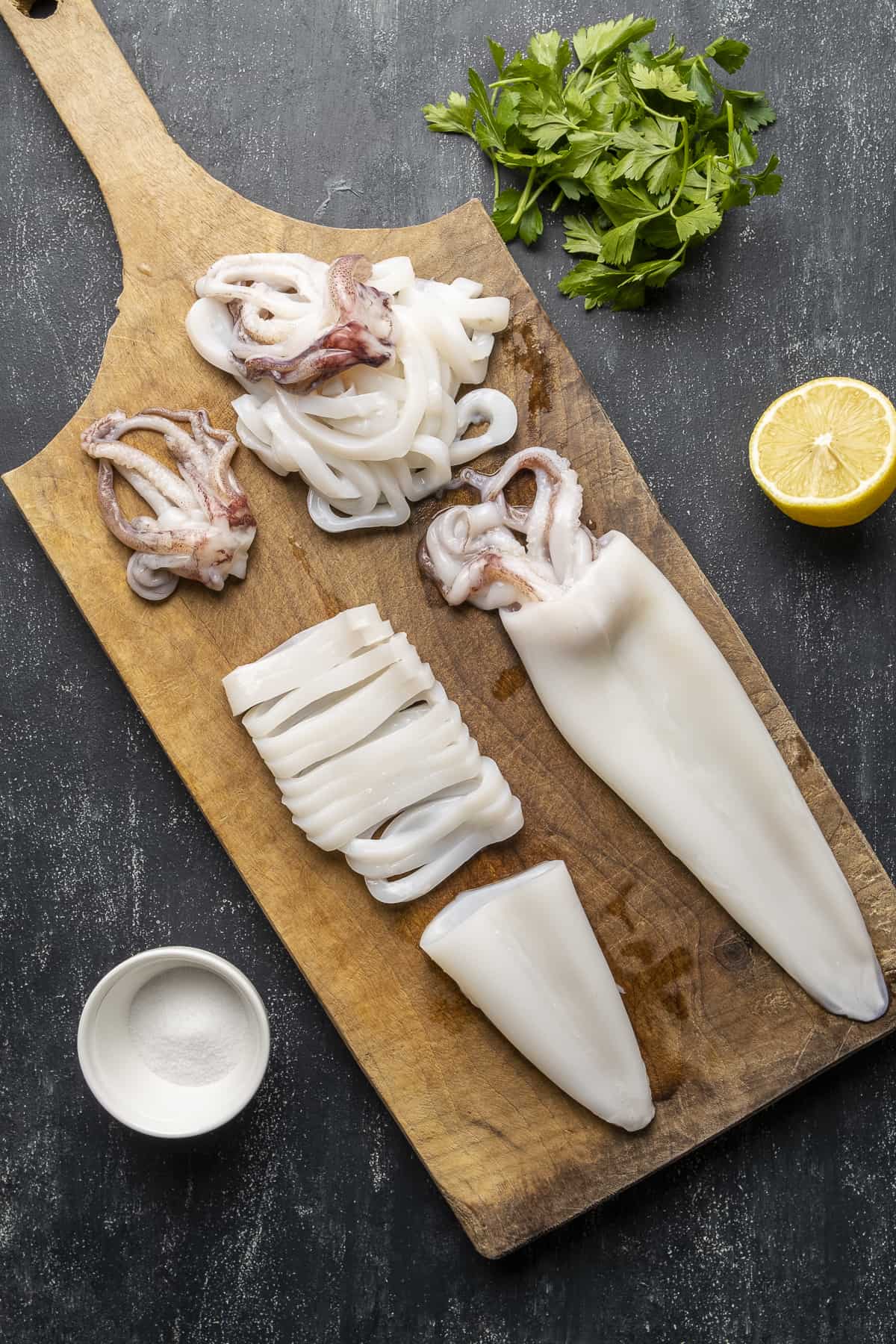
The industrial processing of squid also involves the "pen" or gladius—a clear, feather-shaped internal shell. In calamari, this pen is often more flexible. During cleaning, the removal of the skin, beak, and pen is identical for both, but the yield of high-quality "tubes and tentacles" is generally higher and more consistent in true calamari species.
Comparison of Calamari vs. Common Squid
The following table highlights the primary technical and culinary differences between the two categories as recognized in the 2026 seafood market.
| Feature | Calamari (e.g., Loligo) | Common Squid (e.g., Illex or Dosidicus) |
|---|---|---|
| Fin Length | Usually 50% to 90% of mantle length. | Usually 25% to 33% of mantle length. |
| Habitat | Inshore, coastal waters, and reefs. | Open ocean, deep-sea, or pelagic zones. |
| Average Size | Small to medium (8–12 inches). | Can vary from small to giant (up to 4 feet). |
| Meat Texture | Naturally tender and thin-walled. | Tougher, thicker, and more fibrous. |
| Market Value | High (Premium pricing). | Moderate to Low (Commodity pricing). |
| Common Uses | Grilling, light frying, sautéing. | Heavy breading, stews, fermented products. |
| Flavor Profile | Sweet and mild. | Neutral and slightly briny. |
Sustainability and Sourcing in 2026
As of 2026, the sourcing of both squid and calamari is under increased scrutiny. Cephalopods are fast-growing and short-lived, which makes them more resilient to fishing pressure than many finfish. However, they are highly sensitive to environmental changes.
The Marine Stewardship Council (MSC) and Monterey Bay Aquarium Seafood Watch provide ratings that help consumers determine if their squid or calamari was caught sustainably. Inshore calamari fisheries often use "jigging"—a method involving lures and lights—which has very low bycatch compared to the large-scale trawling used for deep-sea squid. When choosing between the two, consumers often find that "calamari" sourced from local, jig-caught fisheries is the more ecologically responsible choice, albeit at a higher cost.
Best Cooking Practices for Both
Regardless of whether you have purchased premium calamari or standard market squid, the "Golden Rule" of cephalopod cookery remains the same: Cook it for two minutes or two hours.
- High Heat (The Flash Method): This is ideal for tender calamari. Searing, grilling, or deep-frying at high temperatures (above 350°F / 175°C) for 60 to 120 seconds prevents the proteins from tightening into a rubbery mass.
- Low and Slow (The Braising Method): This is the best approach for tougher, thicker-walled squid. Simmering the meat in a tomato-based broth or wine for 45 to 60 minutes allows the collagen to break down into gelatin, resulting in a fork-tender texture.
If you attempt to cook squid somewhere in the middle—say, for 10 or 15 minutes—the result will almost certainly be tough and unappealing.
Frequently Asked Questions
Is calamari just fancy squid?
Biologically, yes, calamari refers to specific species of squid that are naturally more tender. However, in the culinary world, "calamari" is often just the Italian word for any squid used in cooking. You are essentially paying for the specific species' quality and the preparation style.
Why is calamari so much more expensive than squid?
The cost difference is due to supply and demand. Calamari species (like Loligo) live closer to shore and are caught in smaller batches, often using more labor-intensive methods. Common squid are caught by the ton in the open ocean by massive industrial trawlers, making them a much cheaper commodity.
Can I substitute squid for calamari in a recipe?
Yes, but with caution. If a recipe calls for calamari and you use common market squid, you may find the result tougher. To compensate, you can marinate the squid in lemon juice or kiwi fruit enzymes for 20 minutes before cooking to help tenderize the fibers.
Is "imitation calamari" real?
There have been persistent urban legends about "imitation calamari" made from hog rectums. However, food safety experts and industry reports from agencies like the U.S. Food and Drug Administration (FDA) have found no evidence of this being a widespread or verified practice in the commercial food supply. Real squid is generally inexpensive enough that creating a substitute would not be economically beneficial.
Which is healthier: squid or calamari?
Nutritionally, they are virtually identical. Both are excellent sources of lean protein, Vitamin B12, and selenium. The health profile changes based on preparation; grilled calamari is a low-calorie superfood, whereas deep-fried calamari rings are high in saturated fats and sodium.
Final Recommendation
When shopping for seafood, do not rely solely on the label "calamari." Instead, examine the physical product or ask the fishmonger about the species and origin. For quick-cooking methods like frying or grilling, look for smaller tubes with long, integrated side fins—this indicates a true calamari species that will remain tender. For hearty stews or pasta sauces where the seafood will simmer for a long time, the more affordable "market squid" is a perfectly acceptable and cost-effective choice.
Image Gallery