What Changed for the Tasigna 150 mg Capsule?
The most significant change for the Tasigna 150 mg capsule is the transition from a single-source brand-name medication to the availability of multiple generic nilotinib alternatives. As of 2026, the expiration of key patents has allow...
The most significant change for the Tasigna 150 mg capsule is the transition from a single-source brand-name medication to the availability of multiple generic nilotinib alternatives. As of 2026, the expiration of key patents has allowed for the market entry of lower-cost generic versions, significantly improving patient access and reducing the financial burden for those with newly diagnosed Philadelphia chromosome-positive chronic myeloid leukemia (Ph+ CML).
Contents
The Arrival of Generic Nilotinib 150 mg
For over a decade, Tasigna (nilotinib) was available exclusively through Novartis. However, the landscape for chronic myeloid leukemia (CML) treatment shifted dramatically between 2024 and 2026. The 150 mg dose, primarily indicated for the treatment of adult and pediatric patients (1 year and older) with newly diagnosed Ph+ CML in the chronic phase (CP), faced patent challenges and eventual expirations that paved the way for generic competition.
The entry of generic nilotinib 150 mg capsules has addressed one of the most significant barriers to treatment: cost. In the early 2020s, the list price for brand-name Tasigna reached several thousand dollars per month, often resulting in high out-of-pocket costs for patients even with insurance. In 2026, the presence of multiple manufacturers has introduced competitive pricing, which has forced many insurance formularies to shift their preferred status from the brand-name capsule to the generic equivalent.
Despite these market changes, the biological equivalence remains strictly regulated. Any generic 150 mg nilotinib capsule must demonstrate to the FDA that it delivers the same amount of active ingredient into the bloodstream at the same rate as the original Tasigna formulation. Patients switching to the generic should expect the same therapeutic efficacy, though the inactive ingredients (binders and fillers) and the physical appearance of the capsule may differ.
Updated Clinical Indications and Dosing Protocols
While the 150 mg dosage strength has historically been the "first-line" dose for newly diagnosed patients, the clinical understanding of how to use this dose has evolved. In 2026, clinicians are more focused on "precision dosing" and the potential for dose modification based on molecular response.
The standard adult dose for newly diagnosed Ph+ CML-CP remains 300 mg orally twice daily (two 150 mg capsules in the morning and two 150 mg capsules in the evening). What has changed is the rigor of monitoring. With more long-term data available from the ENESTnd clinical trials, the medical community has refined the criteria for what constitutes a "deep molecular response" (DMR). If a patient achieves a stable MR4.5 (a specific deep level of remission) on the 150 mg dosage regimen, they may now be evaluated for Treatment-Free Remission (TFR) programs more systematically than in previous years.
Furthermore, the 150 mg capsule's role in pediatric CML has been solidified. Adjustments for body surface area in children often require the 150 mg or 200 mg strengths, and the newer safety data from 2024–2025 has provided clearer guidelines for managing growth and development in pediatric patients taking these capsules long-term.
Safety and Monitoring: The 2026 Standards
The safety profile of the nilotinib 150 mg capsule remains a critical area of focus, with updated monitoring requirements reflecting a decade of post-marketing surveillance. The most critical "Black Box Warning" remains in place, but the management of these risks has become more standardized.
QTc Prolongation and Sudden Death
Tasigna 150 mg can prolong the QT interval, a measure of the heart's electrical cycle. If the QT interval becomes too long, it can lead to fatal arrhythmias. In 2026, the protocol for monitoring has shifted toward more frequent baseline and periodic ECGs, especially in patients with pre-existing cardiovascular conditions. Clinicians are now more aggressive in correcting electrolyte imbalances (hypomagnesemia and hypokalemia) before prescribing the 150 mg capsule.
Ischemic Cardiovascular Events
There has been an increased emphasis on monitoring for peripheral arterial occlusive disease (PAOD) and other ischemic events. Data analyzed through 2025 showed that patients on long-term nilotinib therapy, even at the lower 150 mg dose, are at a higher risk for vascular complications than those on other tyrosine kinase inhibitors (TKIs) like imatinib. Consequently, modern guidelines now suggest a cardiovascular risk assessment (including lipid profiles and glucose monitoring) every 3 to 6 months while on the 150 mg dose.
Dietary Restrictions and Absorption Changes
One thing that has not changed—but has been reinforced through new patient education initiatives in 2026—is the strict requirement for taking the capsule on an empty stomach. The 150 mg nilotinib capsule has a significant "food effect." Taking the medication with food, especially a high-fat meal, can lead to a dangerous increase in the concentration of the drug in the blood, which heightens the risk of cardiotoxicity.
The rule remains: No food for at least 2 hours before the dose and at least 1 hour after the dose. In recent years, pharmacy counseling has become more intensive regarding this rule, as many "sudden death" events associated with nilotinib were linked to improper administration or drug-drug interactions involving the CYP3A4 enzyme system.
Comparing Brand-Name Tasigna and Generic Nilotinib (2026)
| Feature | Brand-Name Tasigna (150 mg) | Generic Nilotinib (150 mg) |
|---|---|---|
| Manufacturer | Novartis | Various (e.g., Sun, Apotex, Dr. Reddy's) |
| Cost (Estimated) | High / Premium | 40%–80% lower than brand |
| Active Ingredient | Nilotinib 150 mg | Nilotinib 150 mg |
| FDA Approval Basis | Original NDA (New Drug Application) | ANDA (Abbreviated New Drug Application) |
| Availability | Specialty Pharmacies | Specialty & Retail Pharmacies |
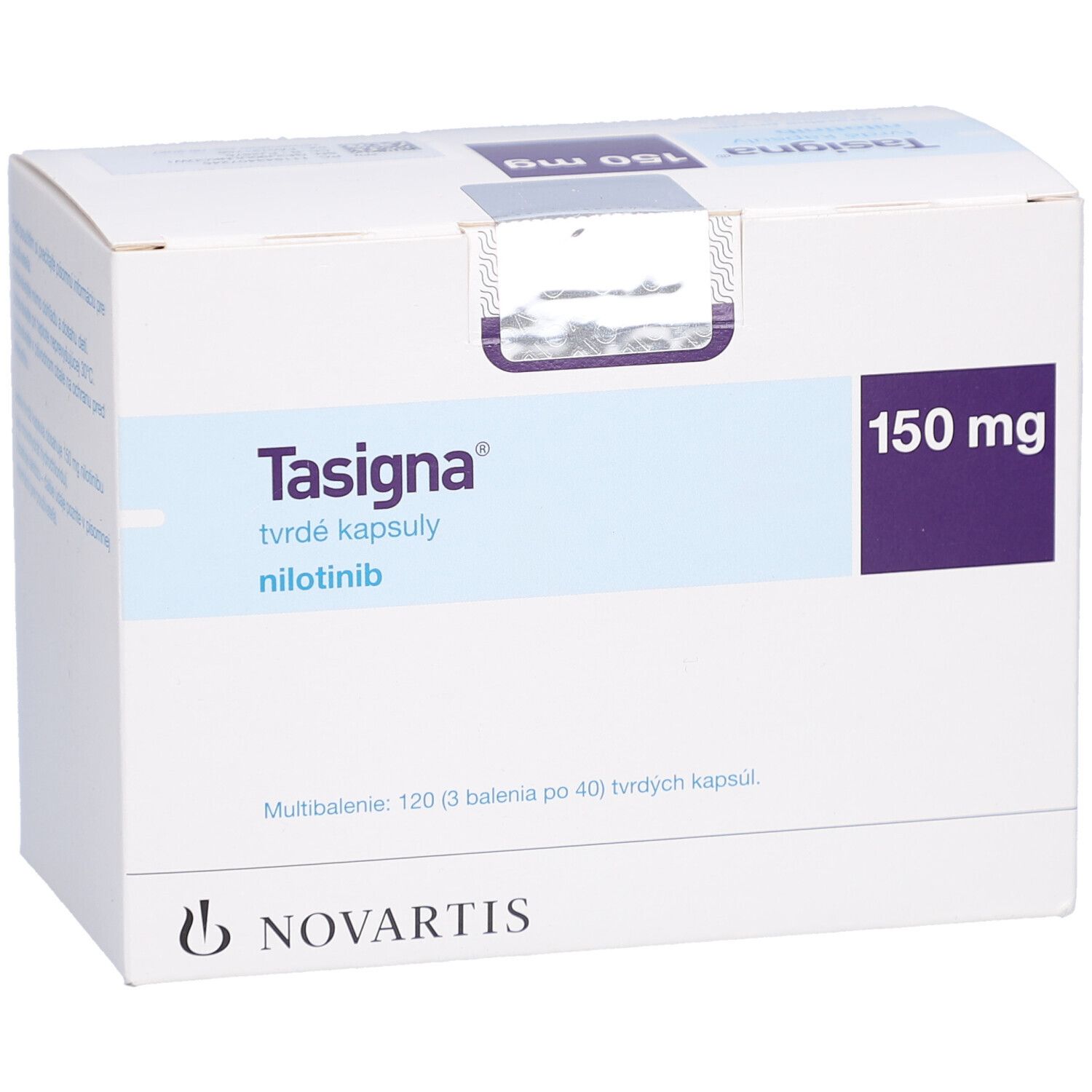
| Appearance | Red opaque capsule with "NVR/BCR" | Varies by manufacturer |
| Indications | Newly diagnosed Ph+ CML-CP | Bioequivalent to brand indications |
Treatment-Free Remission (TFR) Eligibility
One of the most positive changes for patients taking the 150 mg capsule is the increased success rate of Treatment-Free Remission. TFR refers to the ability of a patient to stop taking their TKI medication while maintaining a deep molecular response.
By 2026, the "Tasigna TFR" protocol has been refined. For a patient taking the 150 mg capsules, the general requirements for attempting TFR include:
- Duration of Therapy: At least 3 years of continuous TKI therapy.
- Depth of Response: Achievement of MR4.5 (BCR-ABL1 ≤ 0.0032% on the International Scale).
- Stability: Maintaining that deep response for at least one year before discontinuation.
The 150 mg dose is particularly favorable for this because it is often better tolerated than the 200 mg dose used in second-line therapy, allowing more patients to stay on the medication long enough to reach the stable DMR required for a successful "stop" attempt.
Drug-Drug Interactions and Contraindications
In 2026, the list of contraindicated medications for patients on nilotinib 150 mg has been updated to include newer anti-fungals and certain heart medications that have entered the market. Because nilotinib is metabolized by the liver enzyme CYP3A4, any other drug that inhibits this enzyme will increase the levels of nilotinib, potentially leading to toxicity.
Conversely, strong inducers of CYP3A4 (such as St. John’s Wort or certain anti-seizure medications) can reduce the effectiveness of the 150 mg capsule, leading to treatment failure. Patients are now frequently given digital interaction checkers by their specialty pharmacies to ensure that any new prescription from a different doctor—such as an antibiotic or an acid-reflux medication—does not interfere with their CML treatment.
Common Side Effects and Management in 2026
While the 150 mg capsule is generally better tolerated than higher doses, several side effects remain common. Clinical management of these side effects has improved, focusing on quality of life:
- Rash and Pruritus: Often managed with topical steroids or antihistamines; usually transient.
- Nausea and Fatigue: Improved by ensuring the "empty stomach" rule is followed correctly, which prevents absorption spikes.
- Electrolyte Changes: Regular blood work is now mandatory to monitor for low phosphorus, calcium, or magnesium.
- Myelosuppression: Platelet and white blood cell counts are monitored closely, especially during the first two months of therapy.
FAQ: Frequently Asked Questions
Is the generic 150 mg capsule as effective as brand-name Tasigna?
Yes. The FDA requires generic manufacturers to prove bioequivalence. This means the generic 150 mg capsule must deliver the same amount of nilotinib to the blood as Tasigna. In clinical terms, the effectiveness in controlling CML should be identical.
Why is the 150 mg dose used instead of 200 mg or 400 mg?
The 150 mg capsule (taken as two capsules twice daily for a total of 600 mg/day) is the standard approved dose for newly diagnosed patients. The 200 mg capsule (taken as two capsules twice daily for 800 mg/day) is reserved for patients who have already tried other treatments (like imatinib) and failed or could not tolerate them.
What should I do if I miss a dose of my 150 mg capsule?
If you miss a dose, you should skip it and take the next dose at your regularly scheduled time. Do not take a double dose to make up for the missed one, as this increases the risk of heart rhythm problems.
Can I take acid-reducing medications with my 150 mg capsule?
You must be careful with proton pump inhibitors (PPIs) like omeprazole, as they can interfere with the absorption of nilotinib. In 2026, many doctors recommend using H2 blockers (like famotidine) or antacids, provided they are taken at least 2 hours before or 2 hours after the nilotinib dose.
Has the "Black Box Warning" for Tasigna changed?
The core warning regarding QTc prolongation and sudden death remains. However, the 2026 guidelines emphasize more frequent cardiovascular screening (such as checking for peripheral artery disease) than previous versions of the label.
Recommendations for Patients
If you are currently taking or starting the Tasigna 150 mg capsule or its generic equivalent in 2026, several actions can ensure your safety and treatment success:
- Verify the Formulation: If your pharmacy switches you to a generic, confirm that the dosage is still 150 mg and check for any new inactive ingredients if you have severe allergies.
- Strict Schedule: Maintain a rigorous "fasting" schedule around your doses to prevent dangerous spikes in drug concentration.
- Cardiovascular Health: Work with a cardiologist or a primary care provider to manage blood pressure and cholesterol, as nilotinib increases the risk of vascular issues over time.
- Monitor Molecular Response: Ensure you are getting your BCR-ABL1 PCR tests every 3 months. This is the only way to know if the 150 mg dose is working and if you are moving toward Treatment-Free Remission.
The evolution of the Tasigna 150 mg capsule from a high-cost exclusive drug to a more accessible generic-led therapy represents a major win for patient advocacy and long-term CML management.
Image Gallery