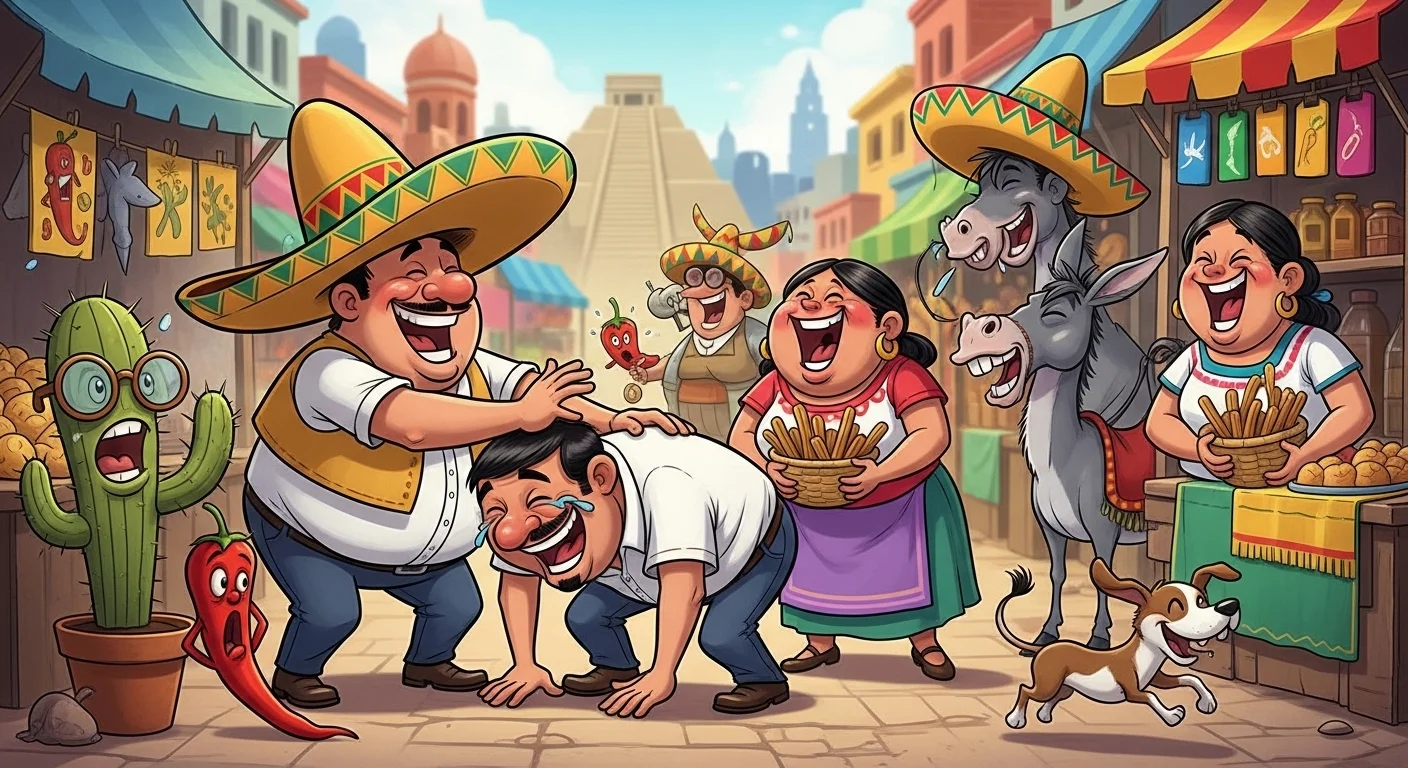
Funny Mexican Jokes and the Cultural Art of Humor in 2026
Funny Mexican jokes offer a vibrant window into the rich traditions of wit, wordplay, and affectionate satire deeply embedded in Hispanic culture. These comedic expressions frequently rely on clever puns, classic storytelling archetype...
Funny Mexican jokes offer a vibrant window into the rich traditions of wit, wordplay, and affectionate satire deeply embedded in Hispanic culture. These comedic expressions frequently rely on clever puns, classic storytelling archetypes, and relatable family dynamics that resonate across generations while celebrating the warmth and resilience of Mexican heritage.
Contents
Humor serves as a foundational pillar of communication and social bonding within Mexican communities. Understanding the structure, nuances, and cultural context behind these jokes allows audiences to appreciate not just the punchline, but the linguistic dexterity and communal joy that drive traditional comedic storytelling.
The Linguistic Foundations of Traditional Mexican Humor
Mexican humor frequently leverages the richness of the Spanish language, utilizing double entendres, regional slang, and rapid-fire wordplay. A major component of this linguistic art form is the albur, a sophisticated duel of double meanings where participants exchange seemingly innocent phrases that carry hidden, often risqué or clever subtexts.
Beyond verbal duels, traditional jokes often employ hyperbole and colorful metaphors to describe everyday situations. This linguistic agility transforms mundane occurrences—such as traffic on the Periférico in Mexico City or waiting for a relative who operates on "Mexican time"—into engaging comedic narratives.
- Puns and Homophones: Words with multiple meanings across different Latin American regions provide endless opportunities for comedic misunderstandings.
- Exaggeration: Amplifying character traits or physical reactions creates vivid mental imagery.
- Affectionate Satire: Poking fun at common archetypes, such as strict grandmothers (abuelitas), overprotective mothers, or resourceful handymen (maestros).
Classic Archetypes and Recurring Characters in Mexican Jokes
Many popular jokes revolve around standardized cultural figures that audiences instantly recognize. These archetypes allow storytellers to establish context immediately, focusing the humor on the absurd interactions between familiar personalities rather than spending time on character development.
One enduring character template is Pepito, the quintessential mischievous schoolboy whose innocent yet brutally honest observations constantly baffle his teachers. Another common framework involves intergenerational dynamics, highlighting the witty wisdom of elders contrasting with the modern impatience of youth.
| Archetype / Character | Primary Trait | Typical Comedic Role |
|---|---|---|
| Pepito | Unfiltered honesty, clever resourcefulness | The schoolboy who outwits teachers or parents through literal interpretations of rules. |
| The Abuelita | Infinite wisdom combined with fierce culinary demands | The matriarch who insists everyone is too thin and solves every crisis with a home remedy. |
| Don Fermín | Stubborn traditionalist | The older neighbor or rancher navigating modern technology or bureaucracy with deadpan resistance. |
| El Norteño | Proud regional identity | Characters from northern states known for straightforwardness, cowboy boots, and love for carne asada. |
Family Dynamics, Folklore, and Everyday Situations
Family is the core of social life in Mexico, and domestic life provides an endless wellspring of comedic material. Jokes frequently center around the immense authority of mothers, the relentless teasing among siblings, and the universal experience of large family gatherings where privacy is virtually nonexistent.
Superstitions and folklore also receive lighthearted treatment. Stories involving traditional healers (curanderos), local legends like La Llorona, or encounters with stubborn local bureaucracy highlight the ability to laugh through stress. This shared laughter acts as a psychological buffer, turning daily frustrations into communal bonding moments.
The Cultural Role of Coping Through Comedy
Resilience and Joy: Humor in Mexican culture functions as an essential coping mechanism. By finding the absurd or lighthearted angle in difficult circumstances, storytellers transform hardship into shared endurance, reinforcing community ties and maintaining optimism.
Comparing Regional Styles of Hispanic Humor
While Mexican humor shares a broad linguistic base with other Spanish-speaking nations, it possesses distinct characteristics shaped by history, geography, and pop culture influences. Understanding these variations clarifies why certain jokes resonate particularly well within specific communities.
| Region / Culture | Primary Comedic Style | Key Linguistic Feature |
|---|---|---|
| Central Mexico (CDMX) | Rapid wordplay, urban satire, self-deprecating wit | Heavy reliance on local slang (chilangismos) and albures. |
| Northern Mexico | Direct, deadpan, frontier-style exaggeration | Shorter punchlines, frequent references to ranch life and the US border. |
| Caribbean Hispanic | Musical cadence, highly expressive physical comedy | Fast-paced delivery with rhythmic phrasing and unique idioms. |
| Andean South America | Subtle irony, situational absurdity, gentle pacing | Focused on rural vs. urban contrasts and polite understatement. |
Frequently Asked Questions About Mexican Jokes
What makes Mexican jokes unique compared to other comedic styles?
Mexican jokes are distinct for their heavy reliance on clever wordplay, linguistic double meanings, and affectionate satire targeting everyday family dynamics and social archetypes. They often blend warmth with sharp observational wit.
Are Mexican jokes appropriate for all ages?
Many traditional jokes, particularly those featuring characters like Pepito or family-oriented situations, are entirely family-friendly. However, some verbal duels or regional puns rely on adult subtexts and double entendres intended strictly for mature audiences.
How does the albur function in Mexican humor?
An albur is a verbal duel of double entendres where participants exchange polite-sounding phrases that contain hidden, clever, or risqué meanings. Mastery of the albur requires quick thinking and extensive knowledge of linguistic nuances.
Why are mothers and grandmothers featured so often in these jokes?
Mothers and grandmothers hold positions of immense respect and authority in the household, making them relatable subjects for affectionate humor that highlights their unmatched intuition, culinary standards, and protective instincts.
Where can someone find authentic examples of contemporary Mexican humor?
Authentic contemporary humor appears across Mexican stand-up comedy specials, popular telenovela parodies, social media content creators, and traditional print humor magazines like the historic El Chamuco.
Embracing the Spirit of Joy and Laughter
Exploring funny Mexican jokes offers far more than simple entertainment; it provides a cultural immersion into a society that values community, linguistic creativity, and the power of laughter to bridge gaps. Whether through the innocent antics of Pepito or the clever twists of a well-crafted pun, this comedic tradition remains a testament to the enduring warmth and wit of Mexican culture. Share a smile, appreciate the linguistic craftsmanship, and keep the tradition of joyful storytelling alive.
Image Gallery