Best Refi Mortgage Rates: A Practical Comparison
Securing the best refinance mortgage rates in 2026 requires comparing the Annual Percentage Rate (APR) across different lender categories, including national banks, credit unions, and digital-first lenders. Beyond the headline interest...
Securing the best refinance mortgage rates in 2026 requires comparing the Annual Percentage Rate (APR) across different lender categories, including national banks, credit unions, and digital-first lenders. Beyond the headline interest rate, a practical comparison evaluates closing costs, break-even timelines, and the specific loan structure to ensure long-term financial benefit.
Contents
Understanding the Refinance Landscape in 2026
The mortgage market in 2026 has transitioned into a period of relative stability following the volatility seen in the early 2020s. For homeowners, this means that while the era of near-zero interest rates is a historical relic, the current environment offers predictable opportunities for those looking to optimize their monthly payments or tap into home equity.
When searching for the best refi mortgage rates, it is crucial to distinguish between the advertised interest rate and the APR. The interest rate represents the cost of borrowing the principal, whereas the APR provides a more comprehensive view by incorporating origination fees, points, and other prepaid costs. In a practical comparison, the APR is the most reliable metric for determining the actual cost of the loan over its entire duration.
Lenders in 2026 have become increasingly granular in their risk pricing. This means that "best" is a subjective term that depends heavily on your specific financial profile. A borrower with a credit score above 780 and significant home equity will see vastly different offers than a borrower with a 660 score. Therefore, a practical comparison must account for these personal variables rather than just looking at generic market averages.
Key Factors Influencing Refi Rates Today
Several macroeconomic and individual factors dictate the rates you will encounter during your comparison. Understanding these allows you to time your application more effectively and negotiate from a position of knowledge.
Federal Reserve Policy and Treasury Yields
While the Federal Reserve does not set mortgage rates directly, its management of the federal funds rate influences the 10-year Treasury yield, which serves as a benchmark for 30-year fixed-rate mortgages. In 2026, the Fed's stance on inflation continues to act as a primary driver for mortgage pricing. When Treasury yields rise, lenders typically raise refinance rates to maintain their profit margins.
Credit Score and Loan-to-Value (LTV) Ratio
Your credit score remains the most influential personal factor. Lenders use "risk-based pricing," where borrowers with lower scores pay a premium. Additionally, your Loan-to-Value (LTV) ratio—the amount of the loan compared to the appraised value of the home—dictates whether you will be required to pay Private Mortgage Insurance (PMI). In 2026, many lenders prefer an LTV of 80% or lower for the most competitive refinance terms.
Lender Competition and Technology
The rise of fintech and automated underwriting has compressed margins among lenders. Digital-first platforms often have lower overhead than traditional brick-and-mortar banks, allowing them to offer slightly lower rates or reduced origination fees. However, traditional banks may offer "relationship discounts" for existing customers, which can sometimes beat the digital competition.
Practical Comparison of Refinance Lender Categories
To find the best rates, you must look across various sectors of the lending market. Each category has distinct advantages and disadvantages depending on your financial situation.
| Lender Category | Typical Rate Profile | Best For | Potential Drawback |
|---|---|---|---|
| National Banks | Moderate to High | Existing customers with high balances | Slower closing times; rigid requirements |
| Credit Unions | Low to Moderate | Localized service and lower fees | Membership requirements; limited tech |
| Online Lenders | High Variability | Speed and transparency; tech-savvy users | May lack personalized guidance |
| Mortgage Brokers | Competitive | Comparing multiple wholesale rates at once | Broker fees can be baked into the rate |
| Direct Lenders | Moderate | Streamlined, specialized refi products | Limited to their own proprietary products |
Analyzing Different Refinance Loan Structures
The "best" rate is only half the battle; the loan structure must align with your financial goals. A lower rate on a 30-year term might save you money monthly, but a 15-year term could save you hundreds of thousands in interest over the life of the loan.
Rate-and-Term Refinance
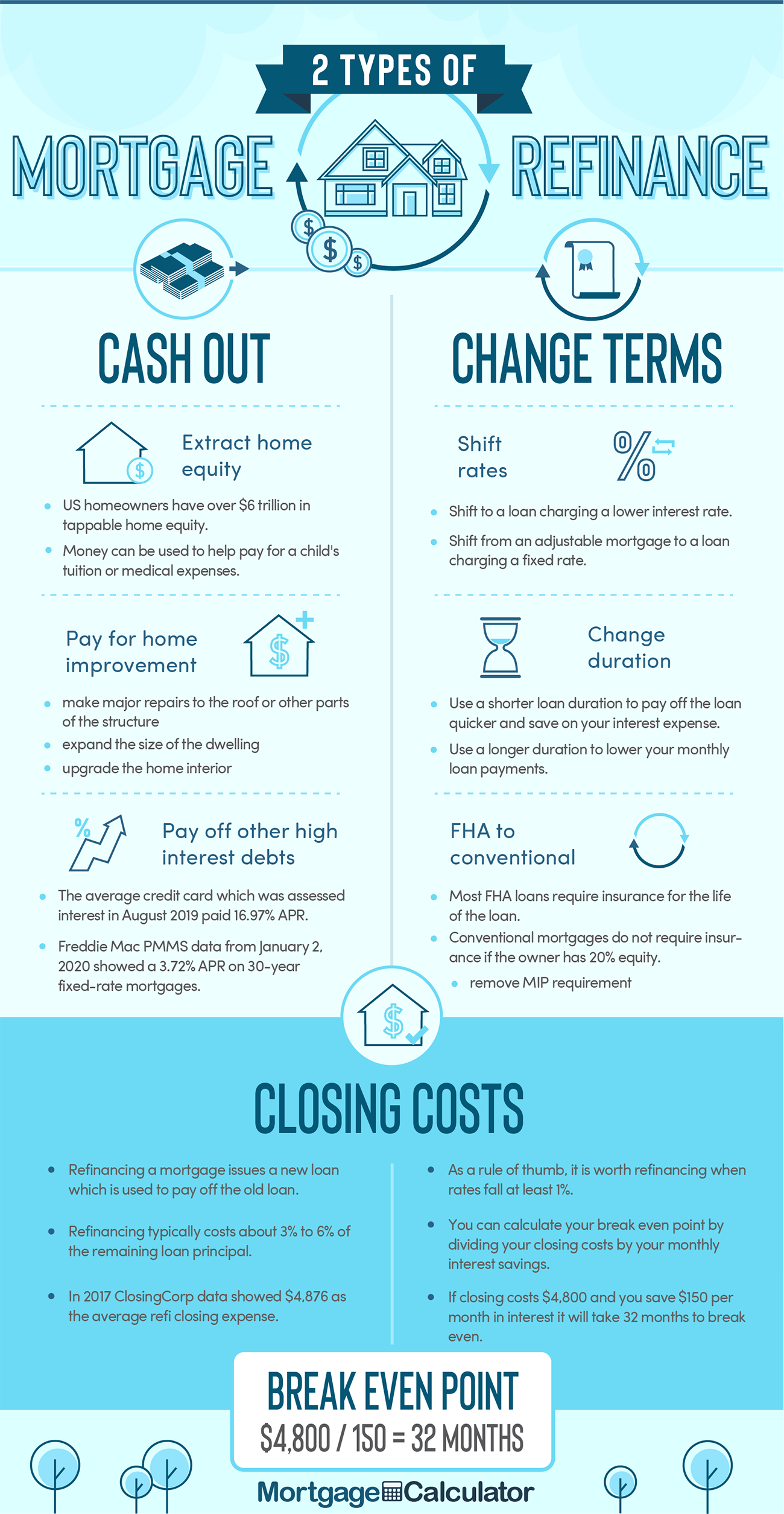
This is the most common type of refinance. The primary goal is to lower the interest rate or change the loan term (e.g., moving from a 30-year to a 15-year mortgage) without taking cash out. This option typically offers the lowest interest rates because it represents the lowest risk to the lender.
Cash-Out Refinance
In a cash-out refinance, you take out a new loan for more than you owe on your current mortgage and pocket the difference. While this provides liquidity for home improvements or debt consolidation, the interest rates are generally 0.25% to 0.50% higher than a standard rate-and-term refinance. In the 2026 market, lenders are particularly cautious about LTV ratios for cash-out loans, often capping them at 75% to 80%.
Adjustable-Rate Mortgage (ARM) Refinance
If you plan to move within 5 to 7 years, an ARM might offer a significantly lower introductory rate than a 30-year fixed-rate mortgage. However, you must account for the risk of rate resets later. A practical comparison should always calculate the "worst-case scenario" for an ARM to see if the initial savings outweigh the potential future costs.
Calculating the Break-Even Point
The most critical step in a practical comparison is the break-even analysis. This calculation determines how many months it will take for the monthly savings from your lower rate to offset the closing costs of the new loan.
The Formula:
Total Closing Costs / Monthly Savings = Months to Break Even
For example, if your refinance costs $6,000 in fees and you save $200 per month, your break-even point is 30 months. If you plan to sell the home in two years (24 months), the refinance is a net loss despite the lower rate. In 2026, with closing costs averaging between 2% and 5% of the loan amount, calculating this accurately is essential for a sound financial decision.
Step-by-Step Guide to Comparing Refi Rates
- Check Your Credit Score: Obtain your current FICO score. If it is on the cusp of a higher tier (e.g., 735), taking a few months to boost it above 740 can result in significantly better rate offers.
- Gather Official Loan Estimates: The Consumer Financial Protection Bureau (CFPB) requires lenders to provide a standard Loan Estimate form. This document makes it easy to compare the "Total Interest Percentage" and "Total Costs Over 5 Years" across different lenders.
- Evaluate Points vs. Credits: Some lenders offer a lower interest rate in exchange for "discount points" paid upfront. Conversely, you can choose "lender credits" where the lender pays your closing costs in exchange for a higher interest rate. Use your expected duration in the home to decide which is better.
- Negotiate Closing Costs: Many fees, such as origination charges and application fees, are negotiable. Third-party fees like title insurance can also be shopped around.
- Verify the Lock-In Period: Rates fluctuate daily. Ensure the rate you are comparing is "locked" for at least 30 to 45 days to allow for the appraisal and underwriting process.
Common Pitfalls in Refinance Comparisons
A common mistake is focusing solely on the monthly payment. Some lenders "buy down" the rate by rolling high fees into the principal of the loan. While this lowers your monthly payment, it increases your total debt and extends your break-even period.
Another pitfall is "resetting the clock" on a 30-year mortgage. If you have already paid ten years into a 30-year mortgage and you refinance into a new 30-year term, you are extending your debt obligation significantly. Even with a lower rate, you may end up paying more in total interest over the remaining life of the loan. A practical comparison should always look at the Total Interest Paid from the current date until the loan is extinguished.
FAQ
Are refinance rates higher than purchase rates in 2026? Generally, yes. Lenders often view refinances—particularly cash-out refinances—as slightly higher risk than a purchase mortgage where the borrower is putting their own down payment on the line. Expect refinance rates to be approximately 0.125% to 0.375% higher than purchase rates for similar credit profiles.
Can I refinance if my home value has decreased? Refinancing requires a certain amount of equity. If your home value has dropped and your LTV is above 97%, you may struggle to find a conventional refinance. However, programs like the FHA Streamline Refinance or VA Interest Rate Reduction Refinance Loan (IRRRL) may be available regardless of current equity, provided your existing loan is FHA or VA-backed.
Is it worth refinancing for a 0.5% difference in rate? It depends on the loan balance and how long you stay in the home. On a $400,000 mortgage, a 0.5% drop in rate could save roughly $120 to $150 per month. If the closing costs are low, the break-even point could be reached in 2 to 3 years, making it a viable option.
What are the typical closing costs for a refinance in 2026? Average closing costs currently range from 2% to 5% of the loan amount. On a $300,000 loan, this equates to $6,000 to $15,000. These costs include the appraisal, title search, insurance, origination fees, and credit report fees.
Practical Recommendation
To find the best refinance mortgage rates, begin by requesting Loan Estimates from at least three different types of lenders: a national bank, an online lender, and a local credit union. Focus your comparison on the APR and the Break-Even Point. If you plan to stay in your home for more than five years, paying points for a lower long-term rate is often the superior financial move. Conversely, if you may sell within three years, look for a "no-closing-cost" refinance where the fees are covered by a slightly higher interest rate.
Image Gallery