Why Northwestern Mutual Tops Whole Life Insurance with Cash Return
Northwestern Mutual consistently leads the whole life insurance market because its mutual company structure prioritizes policyholder dividends over shareholder profits. By combining top-tier financial strength ratings with a dividend p...
Northwestern Mutual consistently leads the whole life insurance market because its mutual company structure prioritizes policyholder dividends over shareholder profits. By combining top-tier financial strength ratings with a dividend payout history dating back to 1872, the company provides a reliable environment for significant cash value accumulation and long-term cash returns.
Contents
Whole life insurance is often criticized for its high premiums compared to term life, but for those seeking a "cash return" component—technically known as cash value—Northwestern Mutual (NM) frequently emerges as the top choice. In 2026, the landscape of permanent life insurance remains focused on stability and internal rates of return (IRR). Northwestern Mutual’s dominance is not based on a single feature but on a synergistic combination of institutional longevity, a robust dividend scale, and a specific corporate structure that benefits the insured.
The Mechanics of Cash Return in Whole Life Insurance
To understand why Northwestern Mutual is positioned at the top, one must first distinguish between the two primary components of "cash return" in a whole life policy: the guaranteed cash value and the non-guaranteed dividends.
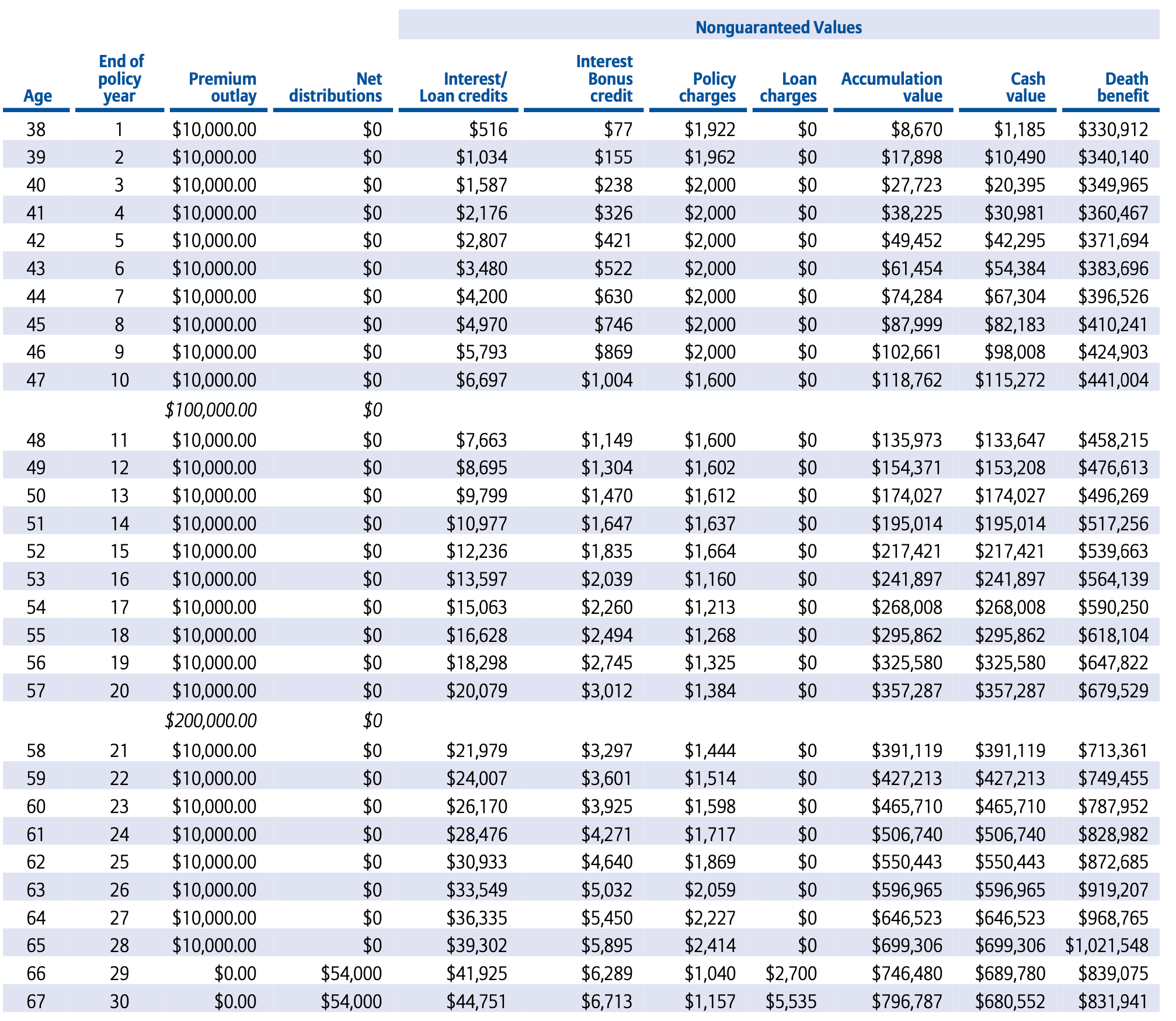
Guaranteed Cash Value: Every whole life policy has a schedule of cash value that grows over time. By law, this value must eventually equal the death benefit when the policy matures (usually at age 100 or 121). Northwestern Mutual’s policies are structured to build this equity steadily, providing a "floor" that the policyholder can rely on regardless of market conditions.
Dividends: This is where Northwestern Mutual separates itself from "stock" insurance companies. As a mutual company, NM is owned by its policyholders. When the company experiences better-than-expected mortality rates, lower operating expenses, or superior investment returns, it distributes a portion of those profits back to policyholders as dividends. While dividends are never guaranteed, Northwestern Mutual has paid them every year since the mid-19th century. In the 2024-2025 period, the company announced record-breaking dividend payouts exceeding $7 billion, a trend that continues to influence the 2026 outlook.
The Mutual Advantage: Policyholder Ownership
The primary reason Northwestern Mutual "tops" the competition in cash return is its mutual structure. In a publicly-traded insurance company (a stock company), management must balance the needs of policyholders with the demands of Wall Street shareholders. Dividends in a stock company are paid to investors who own shares.
In contrast, Northwestern Mutual has no external shareholders. When you purchase a participating whole life policy from NM, you become a member of the company. The "cash return" via dividends is essentially a return of excess premium plus a share of the company's investment success. This alignment of interests ensures that the company’s long-term investment strategy is designed to maximize the value for those who hold the policies, rather than meeting quarterly earnings targets for the stock market.
Financial Strength and Investment Strategy
A company can only provide a high cash return if it manages its underlying assets effectively. Northwestern Mutual maintains the highest possible financial strength ratings from the major agencies:
- A.M. Best: A++ (Superior)
- Fitch Ratings: AAA (Exceptionally Strong)
- Moody’s Investors Service: Aaa (Exceptional)
- S&P Global Ratings: AA+ (Very Strong)
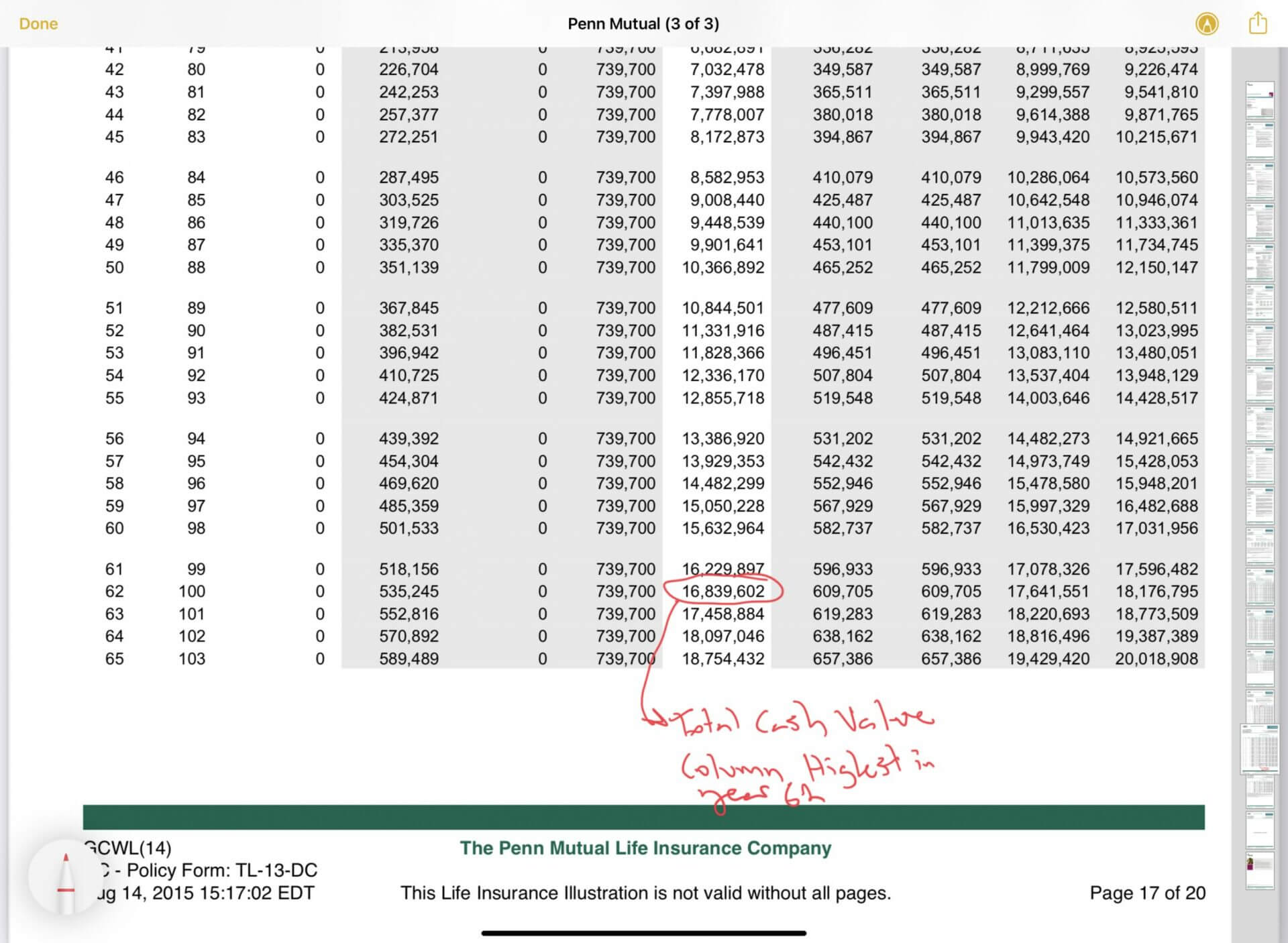
These ratings are critical because a whole life policy is a multi-decade contract. The "cash return" you see in year 30 of a policy depends on the company's ability to remain solvent and profitable over that entire period.
The General Account Portfolio
Northwestern Mutual manages a massive "General Account" where premium dollars are invested. Their strategy is traditionally conservative but highly diversified. As of 2026, their portfolio remains heavily weighted in high-quality corporate bonds, commercial mortgages, and real estate. However, unlike smaller insurers, NM has the scale to invest in private equity and direct credit markets, which often provide a premium over public market returns. These superior "yields on assets" are the engine that drives the dividend interest rate (DIR) higher than many competitors.
Maximizing Cash Value with Paid-Up Additions (PUA)
For many investors, the goal of a whole life policy is to maximize the cash return as quickly as possible. Northwestern Mutual facilitates this through a specific mechanism called the Paid-Up Additions (PUA) Rider.
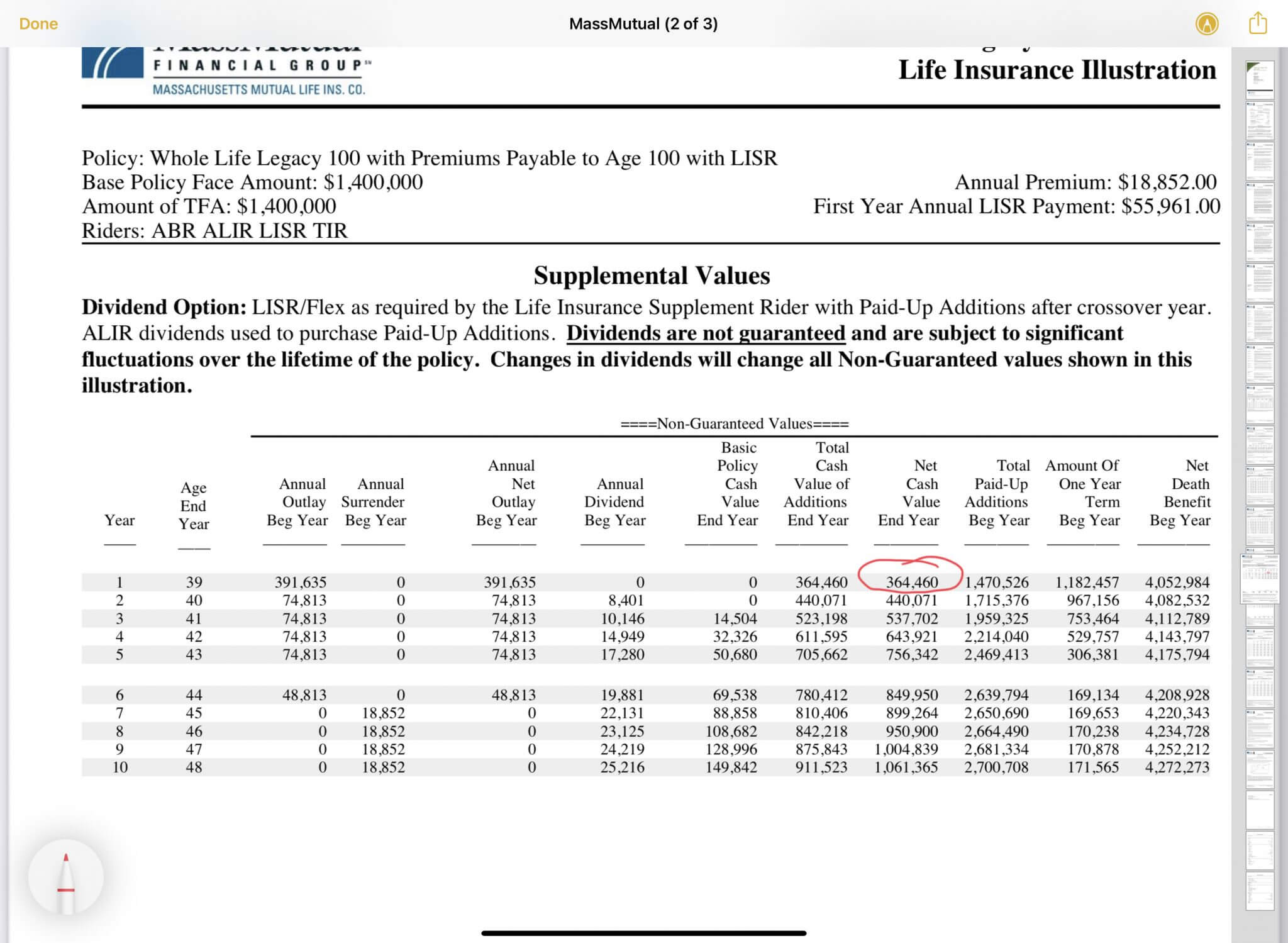
Standard whole life premiums are split between the cost of insurance, company expenses, and the cash value. By adding a PUA rider, a policyholder can contribute additional funds into the policy. These "extra" dollars buy small "slices" of fully paid-up insurance. Because these slices are already paid for, they immediately have a high cash value and begin earning dividends right away.
This strategy effectively "turbo-charges" the cash return. Instead of waiting 10 to 15 years for the policy's cash value to equal the total premiums paid (the break-even point), a well-structured NM policy using PUAs can significantly shorten that duration, sometimes reaching a break-even point in as little as 7 to 9 years, depending on the dividend scale and the amount of PUA funding.
Comparative Analysis: Northwestern Mutual vs. The Industry
When comparing Northwestern Mutual to other "Big Four" mutual companies—MassMutual, New York Life, and Guardian—the differences often come down to the dividend scale and policy flexibility.
| Feature | Northwestern Mutual | Industry Standard (Stock Cos) | Peer Mutuals (Mass/NYL) |
|---|---|---|---|
| Ownership | Policyholders (Mutual) | Shareholders (Stock) | Policyholders (Mutual) |
| Dividend History | Uninterrupted since 1872 | Often sporadic or none | Long-standing traditions |
| Max Financial Ratings | 4 out of 4 agencies | Varies (often lower) | 3 or 4 out of 4 |
| Cash Value Access | Direct recognition loans | Varies | Direct/Non-direct options |
| Primary Advantage | High total dividend payout | Lower initial premiums | Product-specific niches |
One technical nuance where NM often leads is its Direct Recognition policy for loans. When a policyholder takes a loan against their cash value, Northwestern Mutual adjusts the dividend rate on the portion of the cash value used as collateral. While some prefer "non-direct recognition" (where the dividend stays the same regardless of loans), NM's method often results in a higher overall dividend for the majority of policyholders who do not take large, long-term loans, as the company doesn't have to "subsidize" the borrowers at the expense of the savers.
Tax Advantages of the Cash Return
The "cash return" in a Northwestern Mutual whole life policy is not just about the raw percentage; it is also about tax efficiency. Under Internal Revenue Code Section 7702, the growth of cash value within a life insurance policy is tax-deferred.
If the policyholder accesses the cash return through policy loans, those funds are generally received tax-free, provided the policy remains in force. Furthermore, withdrawals of cash value are treated on a "First-In, First-Out" (FIFO) basis. This means you can withdraw your basis (the total premiums you paid) without owing any income tax, and only withdrawals exceeding that basis are taxable. This makes Northwestern Mutual’s whole life a powerful "volatility buffer" in a retirement portfolio, allowing retirees to pull tax-free cash during market downturns instead of selling depreciated stocks.
Potential Drawbacks and Considerations
While Northwestern Mutual tops the list for many, whole life insurance is a complex financial product that is not suitable for everyone. To achieve the high cash returns discussed, policyholders must be aware of the following:
- High Initial Cost: Premiums are significantly higher than term insurance. If you cannot commit to the premium for at least 10–20 years, you risk losing money in the early years of the policy.
- Long-Term Horizon: The "cash return" is a marathon, not a sprint. The real power of Northwestern Mutual’s dividend compounding is most visible in years 20 through 50 of the policy.
- Complexity: Properly structuring a policy with PUA riders requires an experienced financial advisor. An "off-the-shelf" policy may focus too much on death benefit and not enough on cash accumulation.
Frequently Asked Questions
Is the dividend from Northwestern Mutual guaranteed?
No, dividends are never guaranteed. They are a distribution of the company’s divisible surplus. However, Northwestern Mutual has a historical track record of paying a dividend every year since 1872, which includes the Great Depression, both World Wars, and the 2008 financial crisis.
How does the "cash return" compare to the S&P 500?
The cash return in a whole life policy is not meant to compete directly with equities. Instead, it is a low-volatility asset class comparable to high-quality bonds or cash alternatives. While the S&P 500 will likely outperform a whole life policy over 30 years, the policy provides a guaranteed floor and tax-free access that stocks do not offer.
Can I withdraw my cash value at any time?
Yes, you can access your cash value through withdrawals (surrenders) or policy loans. However, withdrawals reduce the death benefit and may have tax implications if they exceed the premiums paid. Policy loans are generally tax-free but accrue interest that must be managed to prevent the policy from lapsing.
Why is 2026 a significant year for Northwestern Mutual?
In 2026, Northwestern Mutual continues to benefit from the higher interest rate environment established in the mid-2020s. As their older, lower-yielding bonds mature and are replaced by higher-yielding instruments in the General Account, the company's ability to maintain or increase its dividend scale remains strong compared to the "low-for-long" interest rate era of the 2010s.
Final Recommendation
For individuals seeking a permanent life insurance solution that emphasizes cash accumulation, Northwestern Mutual remains a premier choice. Its status as a mutual company ensures that the "cash return" is driven by a commitment to policyholders rather than outside investors.
To maximize the benefits, focus on a "limited-pay" structure (like a 65 Life or 90 Life policy) and utilize Paid-Up Additions to accelerate cash growth. Always consult with a qualified financial representative to ensure the policy is "non-MEC" (Modified Endowment Contract) to preserve its tax-free loan status. When used as a foundational piece of a broader financial plan, Northwestern Mutual’s whole life insurance provides a unique combination of protection, tax-advantaged growth, and historical stability.
Image Gallery