How to Play Bass Notes for Beginners: A Complete Step-by-Step Guide
Learning how to play bass notes is the fundamental bridge between the rhythmic drive of drums and the harmonic color of guitars and keyboards. Whether you are holding down the groove in a rock band, laying down a walking jazz line, or...
Learning how to play bass notes is the fundamental bridge between the rhythmic drive of drums and the harmonic color of guitars and keyboards. Whether you are holding down the groove in a rock band, laying down a walking jazz line, or locking into an electronic dance beat, the low-end notes provide the structural weight of music. For a beginner, mastering bass notes requires developing physical mechanics, understanding fretboard geography, and learning how single notes drive chord progressions. This guide covers everything you need to start playing clean, punchy bass notes with confidence.
Contents
Understanding the Role of the Bass Guitar
The bass guitar occupies a unique sonic space in any musical arrangement. While a lead guitar or keyboard plays complex chords and high melodies, the bass primarily plays single notes—often called bass notes—that define the root of a chord. When a guitarist plays a C major chord, the bass player typically anchors the entire band by playing a C note on the downbeat. This tells the listener's ear where the harmonic center lies.
Beyond anchoring harmony, the bass creates rhythm. It acts as a bridge between the percussive pulse of the drums and the melodic elements of the song. Playing bass notes successfully is not just about hitting the right pitch; it is about timing, consistency, and dynamics. Every note you pluck contributes to the groove, making the listener want to move, tap their foot, or dance. Before looking at scales or advanced techniques, a beginner must understand that simplicity and precise timing always outperform speed and complexity on the bass.
Essential Equipment and Physical Setup
Before playing your first note, you must set up your bass guitar and your body correctly. Poor posture leads to physical fatigue, hand cramps, and potential repetitive strain injuries such as tendonitis.
Adjusting Your Stance and Strap
Whether you sit or stand, your bass should be held at a comfortable height. While modern styles sometimes dictate wearing the bass low near the knees, beginners should start with the bass positioned at a moderate height—roughly where you would hold an acoustic guitar. This keeps your fretting wrist straight and reduces strain on your joints.
The Fretting Hand Technique
Your fretting hand—the hand that presses strings against the fretboard—requires specific mechanics to produce clean notes without buzzing:
- Thumb Placement: Rest your thumb roughly in the middle of the back of the neck. Do not hook your thumb over the top of the neck unless you are muting strings or playing a specific blues style. Keeping your thumb centered creates leverage for your fingers.
- Finger Curvature: Curve your fingers so that you press the strings down using the tips of your fingers (just behind the metal frets), rather than laying your fingers flat across the strings.
- Fret Placement: Place your finger just behind the fretwire, not on top of it. Pressing directly on the fretwire requires too much force and can bend the pitch sharp, while pressing too far behind it causes the string to buzz against the frets.
The Plucking Hand Technique
Your plucking hand (or picking hand) creates the sound. While some players use a plastic pick, fingerstyle playing is the standard approach for most genres:
- The Anchoring Fingers: Rest your thumb firmly on the pickup of your bass or on the top string (E string) if you are playing lower strings. This serves as your anchor.
- Alternating Fingers: Alternate between your index (i) and middle (m) fingers when plucking. Avoid using only one finger, as alternating allows for greater speed and even volume.
- Plucking Motion: Pluck across the string parallel to the body of the bass, rather than pulling the string away from the fretboard (which creates a loud snapping sound against the frets).
| Plucking Hand Element | Proper Technique | Common Beginner Mistake |
|---|---|---|
| Thumb Anchor | Rest steadily on a pickup or a lower string. | Floating in the air without a stable anchor point. |
| Finger Alternation | Alternate cleanly between index and middle fingers. | Using only the index finger for every note. |
| Plucking Motion | Pull across the string parallel to the body. | Pulling the string upward away from the bass body. |
| String Muting | Rest unused flesh of the hand lightly on silent strings. | Allowing open strings to ring out unintentionally. |
Anatomy of the Bass Fretboard
A standard electric bass features four strings tuned from lowest pitch to highest pitch: E, A, D, and G. A helpful mnemonic device for remembering this standard tuning from thickest string to thinnest string is Eddie Ate Dynamite, Good-bye.
The Open Strings and Frets
When you pluck a string without pressing any metal frets down, you are playing an open string. Each metal bar embedded in the neck is called a fret. Moving one fret higher (toward the body) raises the pitch of the note by one half-step (semitone). Moving two frets higher raises the pitch by a full step (two semitones).
Finding Natural Notes
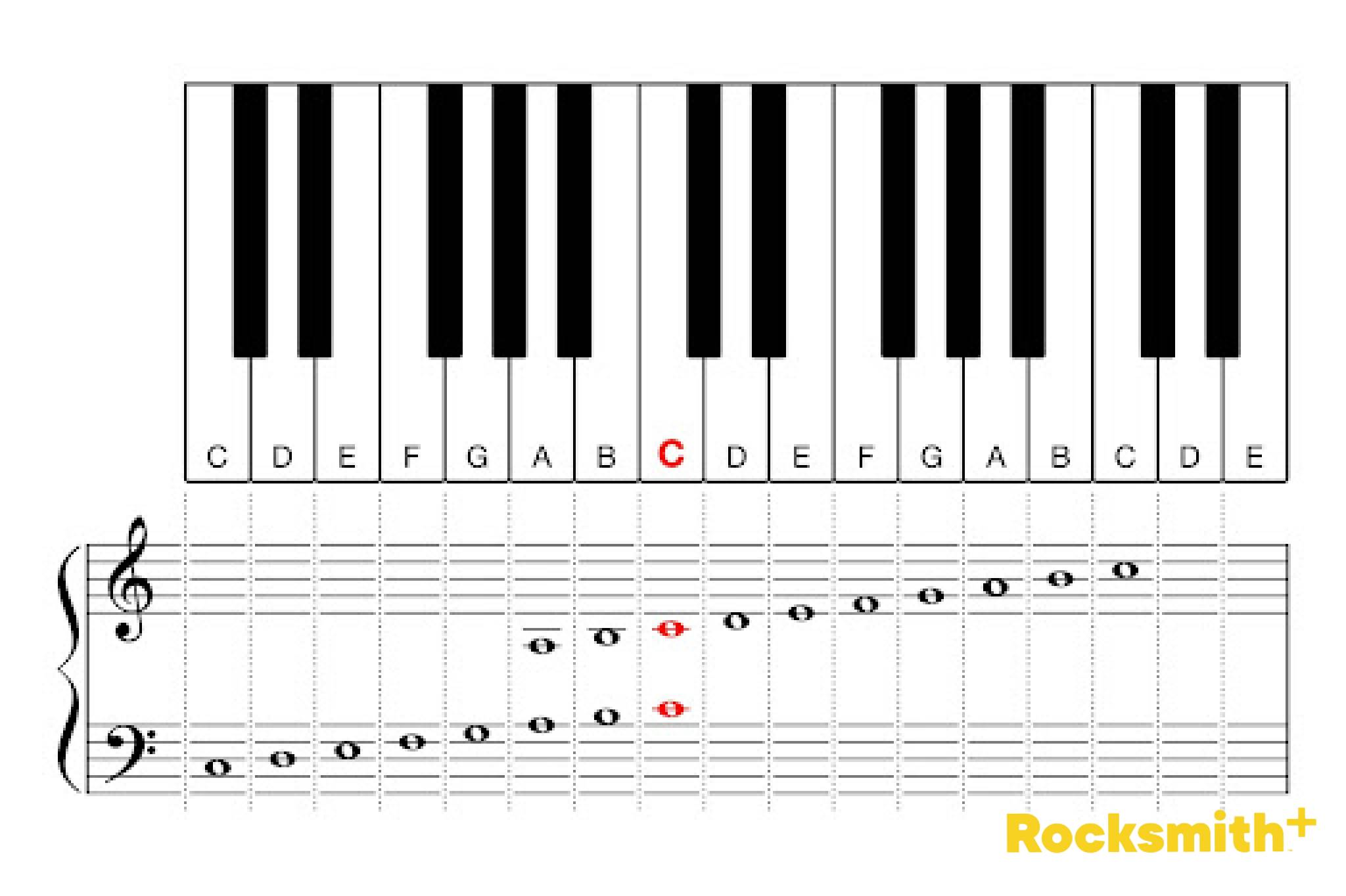
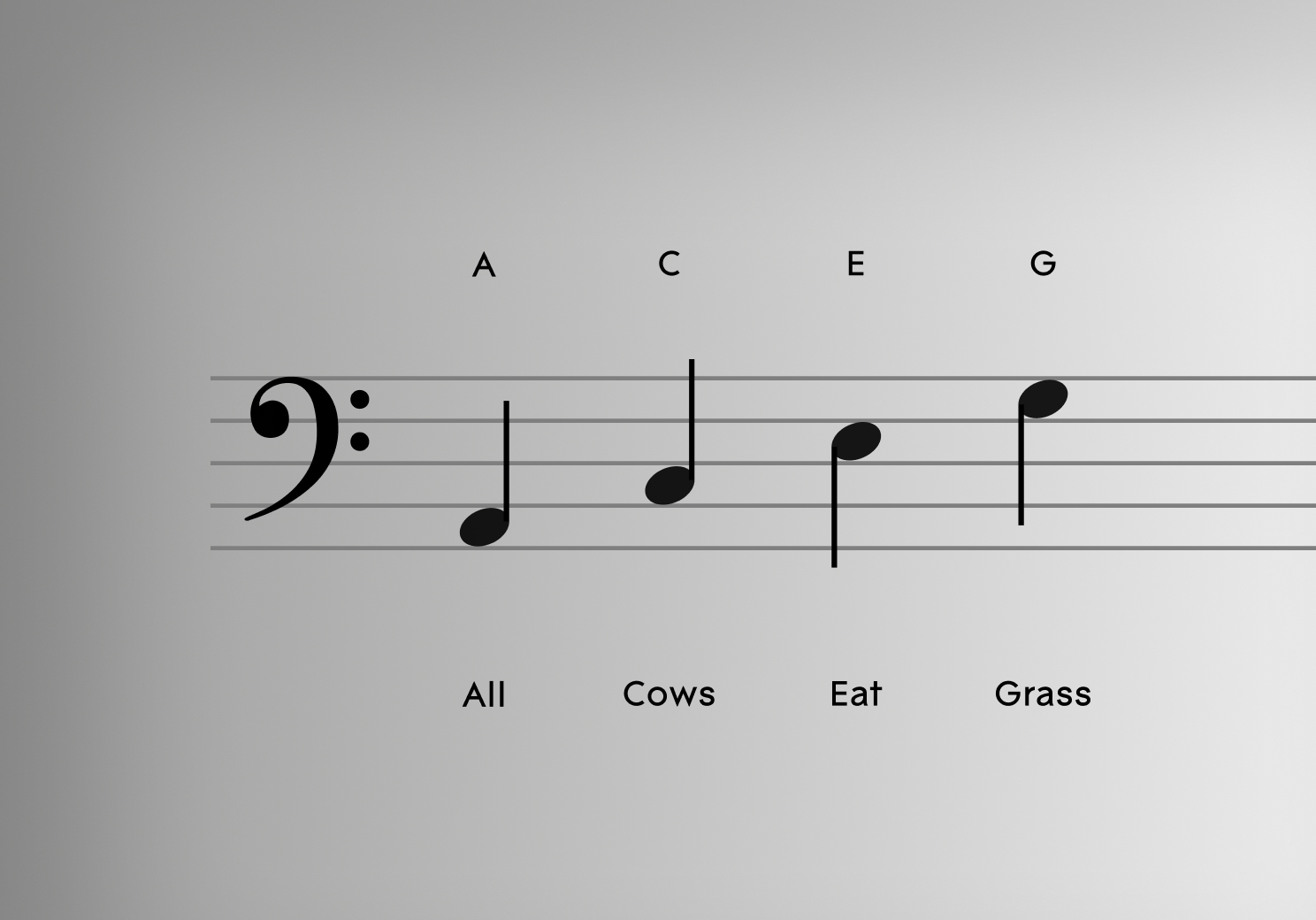
Learning how to play bass notes requires memorizing the natural notes (A, B, C, D, E, F, G) across the fretboard. On the thickest string (the E string), the notes follow the musical alphabet sequentially as you move up the frets:
- Open: E
- 1st Fret: F
- 3rd Fret: G
- 5th Fret: A
- 7th Fret: B
- 8th Fret: C
- 10th Fret: D
- 12th Fret: E (one octave higher than the open string)
Between notes like F and G, or G and A, lie sharps ($\sharp$) and flats ($\flat$). For example, the note between the 1st fret (F) and the 3rd fret (G) is located at the 2nd fret and is called F$\sharp$ (F-sharp) or G$\flat$ (G-flat).
Step-by-Step Exercise: Playing Your First Bass Notes
Let's put theory into practice with a structured exercise designed to build finger independence, timing, and note clarity. You will need a bass guitar, an amplifier (or headphone amp), and ideally a metronome set to a slow tempo, such as 60 beats per minute (BPM).
- Set Up Your Metronome: Turn on your metronome to 60 BPM. Each click represents one beat.
- Anchor Your Thumb: Place your thumb securely on top of the E string or the bass pickup.
- Play the Open E String: Pluck the open E string cleanly on every click of the metronome using your index finger. Aim for a consistent, solid volume on every single click.
- Introduce Alternating Fingers: Switch to alternating between your index and middle fingers on each click (Index on beat 1, Middle on beat 2, Index on beat 3, Middle on beat 4).
- Add Fretted Notes: Move to the A string. Play the open A string on beat 1, the 2nd fret (B) on beat 2, the 3rd fret (C) on beat 3, and the 5th fret (D) on beat 4.
- Check for Buzzing: If a note buzzes or sounds muted, check your fretting hand. Ensure your fingertip is right behind the fretwire and that you are applying firm, steady pressure.
Playing Bass Notes in Chord Progressions
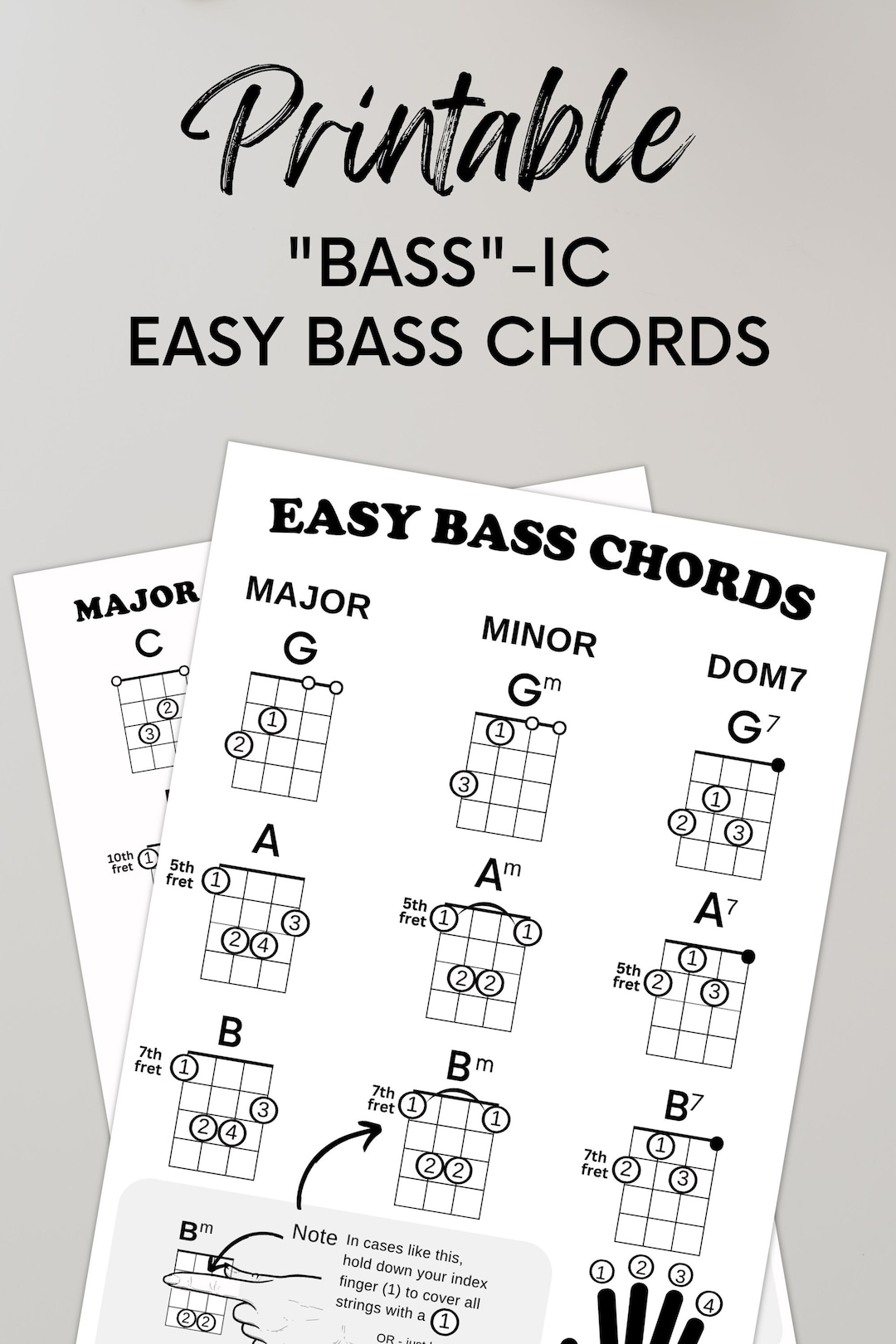
In real-world music, bass notes rarely exist in isolation. They form a narrative that supports a chord progression. When a guitarist or pianist plays a chord progression—such as C - Am - F - G—the bass player's primary job is to play the root note of each respective chord at the start of each measure.
The Root-Fifth Pattern
One of the most common ways to play bass notes in popular music is the root-fifth pattern. Every major and minor chord contains a root note and a fifth note (which is seven semitones higher than the root).
- For a C chord, the root is C (3rd fret on the A string) and the fifth is G (5th fret on the D string).
- Alternating between the root and the fifth creates an immediate, driving rhythm found in country, classic rock, and folk music.
Walking Bass Lines
In jazz and blues, bass players use walking bass lines. Instead of staying on a single root note, the player "walks" up and down the fretboard using consecutive quarter notes, connecting one chord root to the next using scales and chromatic passing tones. This keeps the harmonic momentum moving forward without stopping.
Common Beginner Mistakes and Troubleshooting
Every beginner encounters physical and technical hurdles when learning how to play bass notes. Recognizing these pitfalls early saves weeks of frustration.
- String Buzzing: Caused by insufficient finger pressure on the fretting hand or plucking the string too aggressively away from the fretboard. Solution: Press closer to the fretwire and ensure your finger arches properly.
- Unwanted Open String Noise: When playing on the D or G strings, the thicker E and A strings often vibrate sympathetically or get brushed by your fingers, creating a low muddy hum. Solution: Use the floating thumb technique or rest the unused fingers of your plucking hand lightly across the lower strings to mute them.
- Rushing or Dragging the Beat: Beginners often rush when playing fast passages or drag when moving to a difficult fret position. Solution: Always practice with a metronome, starting at extremely slow tempos (50–60 BPM) before increasing speed.
- Hand Fatigue and Pain: Experiencing sharp pain in your wrist usually indicates improper posture or squeezing the neck far too tightly. Solution: Take frequent breaks, stretch your fingers, and rely on the natural weight of your arm rather than pure grip strength to press the strings.
Frequently Asked Questions
Do I need a heavy-gauge pick to play bass notes?
Most bass players play fingerstyle because it provides a warmer, rounder tone and greater control over dynamics. However, using a pick is entirely valid and widely used in punk, rock, and metal music for a sharp, aggressive attack. If you use a pick, choose a thick, stiff pick (1.0mm or heavier) so it does not bend wildly against thick bass strings.
How many hours a day should a beginner practice?
Consistency matters far more than total duration. Practicing for 20 to 30 minutes every single day yields much better physical muscle memory and cognitive retention than practicing for three hours once a week. Focus on slow, deliberate exercises rather than rushing through songs.
Can I practice an electric bass without an amplifier?
Yes, you can hear an electric bass acoustically at a very low volume without an amplifier, which is fine for practicing finger mechanics or memorizing fretboard notes late at night. However, you should practice with an amp (or headphones) regularly. An amplifier reveals string buzz, unwanted noise, and dynamic inconsistencies that are inaudible when playing acoustically.
What is the difference between a 4-string and a 5-string bass?
A standard bass has four strings tuned to E-A-D-G. A 5-string bass adds a lower B string below the E string (B-E-A-D-G). Beginners should generally start on a 4-string bass because the narrower neck is easier to navigate, and standard music arrangements rarely require notes lower than the standard low E.
Next Actions for Your Bass Journey
To build on what you have learned, establish a daily practice routine focusing on three pillars: physical technique, fretboard memorization, and rhythm. Start by running simple finger exercises with a metronome for five minutes, spend ten minutes memorizing natural notes on the E and A strings, and finish by playing root notes along with your favorite simple backing tracks. Consistency is the ultimate key to mastering the low end.
Image Gallery