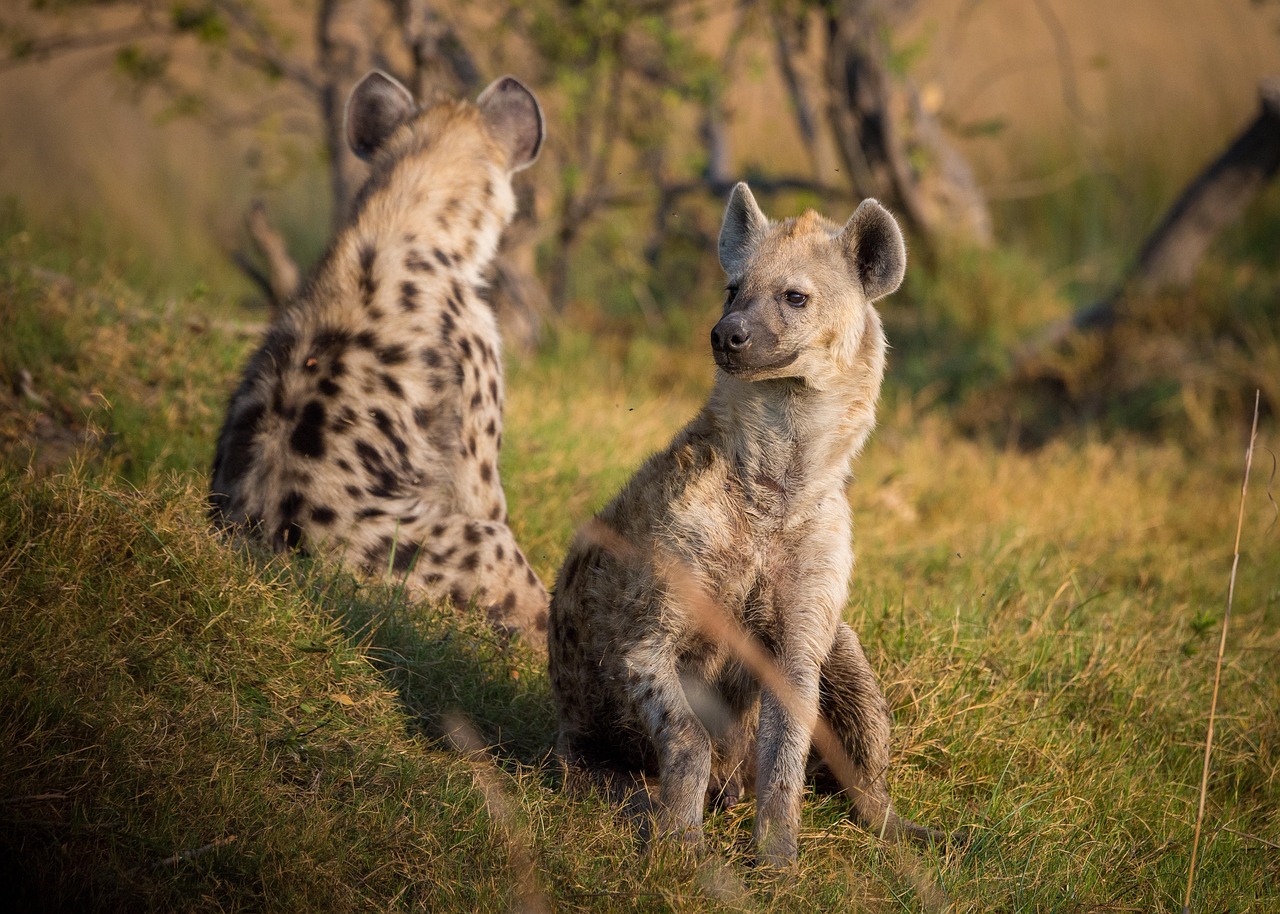
Why the Hyena Population Matters for Global Ecosystem Stability
The hyena population serves as a critical linework of ecological health by acting as primary scavengers and apex predators. They prevent the spread of infectious diseases by removing decaying organic matter, cycle vital nutrients like...
The hyena population serves as a critical linework of ecological health by acting as primary scavengers and apex predators. They prevent the spread of infectious diseases by removing decaying organic matter, cycle vital nutrients like calcium back into the soil, and maintain the genetic fitness of herbivore populations through selective hunting practices.
Contents
Hyenas are often among the most misunderstood animals in the wild, frequently depicted as mere scavengers or opportunistic thieves. However, as we observe the state of biodiversity in 2026, the scientific consensus has shifted toward viewing them as "ecosystem engineers." There are four distinct species—the spotted hyena, the brown hyena, the striped hyena, and the aardwolf—each playing a specialized role in their respective habitats across Africa and parts of Asia. Without these animals, the structural integrity of these environments would likely collapse, leading to increased disease outbreaks and a decrease in plant diversity.
The Apex Scavenger: Nature’s Sanitization Squad
The most immediate benefit of a healthy hyena population is the removal of carrion from the landscape. Unlike many other predators that only consume fresh meat, hyenas are equipped with biological adaptations that allow them to process carcasses in various states of decay. This "cleanup" service is not merely a matter of tidiness; it is a vital public health function for the entire animal kingdom.
Hyenas possess an incredibly acidic digestive system, with stomach pH levels often dropping below 1.0. This extreme environment allows them to safely ingest and neutralize pathogens that would be fatal to other species, including anthrax, rabies, and bovine tuberculosis. When a large herbivore dies from a contagious disease, a hyena pack can consume the remains within hours, effectively "locking" the pathogen within their digestive tracts and preventing it from leaching into the soil or water supplies.
In 2026, as habitat fragmentation brings wildlife into closer contact with livestock and human settlements, the hyena's role in disease mitigation has become even more economically significant. By preventing the spread of zoonotic diseases, hyenas indirectly protect agricultural sectors and human health. Without them, carcasses would remain on the landscape for longer periods, facilitating the breeding of flies and the proliferation of bacteria that can devastate both wild and domestic populations.
Bone Processing and the Calcium Cycle
A unique ecological niche held primarily by the spotted hyena is the ability to consume and digest bone. While other scavengers like vultures or jackals may pick meat from a skeleton, they often leave the bones behind. Hyenas use their massive jaw muscles—capable of exerting pressure exceeding 1,100 pounds per square inch—to crush even the largest bones of elephants and buffalo.
This consumption is the primary driver of the calcium cycle in African savannas. Bones are rich in calcium and phosphate, minerals that are otherwise slow to return to the earth. When hyenas digest these bones, they produce a distinct, white, calcium-rich fecal matter often referred to as "white scat." As this waste decomposes, it returns concentrated minerals to the soil, creating localized "hotspots" of fertility. These minerals are then absorbed by grasses, providing essential nutrients for the next generation of grazing herbivores. This process ensures that the landscape remains productive and capable of supporting high densities of life.
Influence on Herbivore Dynamics and Vegetation
While their scavenging is well-documented, spotted hyenas are also highly efficient apex predators. In many regions, they hunt up to 70% of their own food. This predatory pressure is essential for maintaining the "landscape of fear," a behavioral ecology concept where herbivores change their movement patterns to avoid predation.
By preying on the old, weak, or sick individuals within a herd, hyenas ensure that only the fittest animals survive to reproduce. This keeps herbivore populations genetically robust. Furthermore, the presence of hyenas prevents herbivores like zebras and wildebeests from overgrazing a single area. When herbivores are constantly on the move to avoid predators, the vegetation has time to recover. This prevents desertification and maintains the diverse floral architecture required by smaller mammals and insects.
Research published by the African Wildlife Foundation highlights that in areas where hyena populations have declined, there is often a corresponding increase in "sickly" herbivore populations and a noticeable degradation in grasslands due to sedentary grazing habits.
Species Diversity: Not All Hyenas are Scavengers
To understand why the hyena population matters, one must distinguish between the four extant species. Each fills a specific gap in the environment that no other animal occupies quite as effectively.
| Species | Primary Diet | Key Ecological Contribution |
|---|---|---|
| Spotted Hyena | Ungulates, Carrion | Apex predator; large-scale bone processing; disease control. |
| Brown Hyena | Carrion, Marine life | Beach cleaning in coastal regions; nutrient transport inland. |
| Striped Hyena | Carrion, Fruit, Insects | Generalist scavenger in arid regions; seed dispersal. |
| Aardwolf | Harvester Termites | Insect population control; consumes up to 300,000 termites/night. |
The Aardwolf (Proteles cristata) represents a fascinating deviation from the family norm. Unlike its bone-crushing cousins, the aardwolf is almost entirely insectivorous. By specializing in harvester termites, they prevent these insects from over-consuming grasses, which are vital for livestock and wild grazers. A single aardwolf can protect hectares of grassland from termite-driven depletion, showcasing how hyenas contribute to ecosystem stability even at the microscopic level.
The Brown Hyena and Striped Hyena serve as "rare-resource" scavengers. They often inhabit more arid or mountainous regions where food is scarce. Their ability to find and utilize ancient carcasses or fallen fruit means that energy which would otherwise be "lost" to the system is recycled back into the food web.
Competitive Interactions: The Lion-Hyena Dynamic
Hyenas play a pivotal role in the "inter-guild" competition among carnivores. Their relationship with lions is one of the most complex in nature. While they are often viewed as rivals, this competition drives the evolutionary adaptations of both species.
Hyenas limit the dominance of any single predator species. By engaging in "kleptoparasitism" (stealing kills), they force other predators like leopards or cheetahs to hunt more frequently or in different areas, which further distributes the impact of predation across the landscape. This prevents any one prey species from being targeted to the point of extinction in a specific micro-habitat. This constant shifting of pressure is what allows high-biodiversity ecosystems like the Serengeti or the Kruger National Park to function.
Economic and Human Impacts in 2026
As of 2026, the value of the hyena population is increasingly measured in economic terms through ecotourism and ecosystem services. In many African nations, the presence of the "Large Carnivore Guild"—of which the hyena is a central member—is a primary draw for international tourists. The revenue generated by these visits funds conservation efforts for entire ecosystems, including endangered species like rhinos and elephants.
Furthermore, hyenas are becoming central to "coexistence" models in conservation. Unlike lions, which require massive, undisturbed territories, hyenas are relatively adaptable. They can exist on the fringes of human development, serving as a buffer that cleans up livestock remains and reduces the likelihood of feral dog populations growing out of control. Since feral dogs are a primary vector for rabies in humans, the presence of hyenas can actually lower the risk of rabies transmission in rural communities.
Common Misconceptions and Threats
Despite their importance, hyena populations face significant threats from human-wildlife conflict, habitat loss, and illegal poisoning. The misconception that they are "cowardly" or "vermin" often leads to retaliatory killings when livestock go missing. However, data from the IUCN Red List suggests that in many cases, hyenas are blamed for kills actually made by stray dogs or leopards.
Addressing these threats is essential because the loss of hyenas is rarely a localized issue. Because they are wide-ranging animals, their disappearance triggers a "trophic cascade"—a series of downward effects where herbivore numbers spike, vegetation declines, and disease spreads unchecked.
Frequently Asked Questions
Are hyenas more like dogs or cats?
Phylogenetically, hyenas are more closely related to cats (Feliformia) than dogs (Caniformia). However, they have evolved many dog-like traits, such as non-retractable claws and high-stamina running capabilities, due to convergent evolution. Their unique family, Hyaenidae, occupies its own distinct branch of the tree of life.
Can an ecosystem survive without hyenas?
While an ecosystem might not "die" immediately, it would become significantly less resilient. Without hyenas, the rate of nutrient cycling (especially calcium) slows down, and the risk of catastrophic disease outbreaks among herbivores increases. The landscape would likely support fewer species and become more susceptible to drought and overgrazing.
Do all hyena species hunt in packs?
No. The spotted hyena is the only species that lives in large, complex social groups called clans and hunts cooperatively. Brown and striped hyenas are largely solitary or live in small family units, and the aardwolf is mostly solitary, coming together only to mate or raise young.
Why is the aardwolf considered part of the hyena family?
The aardwolf shares the same skeletal structure and evolutionary lineage as other hyenas. Although its teeth have evolved into small pegs suited for eating termites rather than crushing bone, its DNA and basic anatomy firmly place it within the Hyaenidae family.
How does the hyena population impact climate change?
By maintaining healthy grasslands through the regulation of herbivore populations, hyenas indirectly support carbon sequestration. Healthy, ungrazed or moderately grazed grasslands have deeper root systems that store more carbon in the soil than degraded or overgrazed lands.
Practical Recommendation for Conservation Support
To ensure the continued stability of these ecosystems, conservation efforts must focus on "connectivity." This involves creating wildlife corridors that allow hyena clans to move between protected areas without coming into conflict with human settlements. Supporting organizations that provide "predator-proof" bomas (livestock enclosures) to local farmers is one of the most effective ways to reduce retaliatory killings and preserve hyena populations. By protecting the hyena, we protect the biological "engine" that keeps the wilderness clean, healthy, and productive.
Image Gallery