How Much Life Insurance Do I Need?
To determine how much life insurance you need, a common baseline is to multiply your annual gross income by 10 to 15. However, a more precise calculation involves adding your total outstanding debts, mortgage balance, and estimated fut...
To determine how much life insurance you need, a common baseline is to multiply your annual gross income by 10 to 15. However, a more precise calculation involves adding your total outstanding debts, mortgage balance, and estimated future costs—such as college tuition—then subtracting your existing liquid assets like savings and current policies.
Contents
Determining the appropriate amount of life insurance is one of the most critical financial decisions a head of household or primary earner will make. As of 2026, the economic landscape reflects higher living costs and increased education expenses, making a "one size fits all" approach riskier than ever. If you are underinsured, your family may struggle to maintain their standard of living; if you are overinsured, you may be wasting thousands of dollars in unnecessary premiums over the life of the policy.
The Core Purpose of Life Insurance Coverage
Life insurance is primarily designed as a financial safety net that replaces your economic value to your survivors. It is not merely a "death benefit" to cover funeral costs; it is a tool for capital preservation and income replacement. When calculating your needs, you must account for three distinct phases of financial impact: immediate expenses, ongoing lifestyle maintenance, and long-term goals.
Immediate expenses include funeral costs, which in 2026 can range between $8,000 and $15,000, as well as any immediate medical bills or legal fees associated with settling an estate. The secondary, and often more substantial, phase is the replacement of your annual salary. This ensures that your spouse or dependents can continue to pay for groceries, utilities, transportation, and healthcare without your paycheck. Finally, the long-term phase addresses specific goals like paying off a 30-year mortgage or funding a child’s university education.
Common Calculation Methods
Financial planners typically use several standardized formulas to help individuals estimate their coverage needs. Each method offers a different level of granularity.
The Multiplier Method (10x to 15x Rule)
This is the most straightforward approach. You take your current annual salary and multiply it by a factor, usually between 10 and 15. For example, if you earn $80,000 per year, you would seek a policy between $800,000 and $1.2 million. While simple, this method is often criticized for being too blunt. it does not account for specific debts, the number of children you have, or the assets you already possess. It assumes that every family with an $80,000 income has the same financial obligations, which is rarely the case.
The DIME Formula
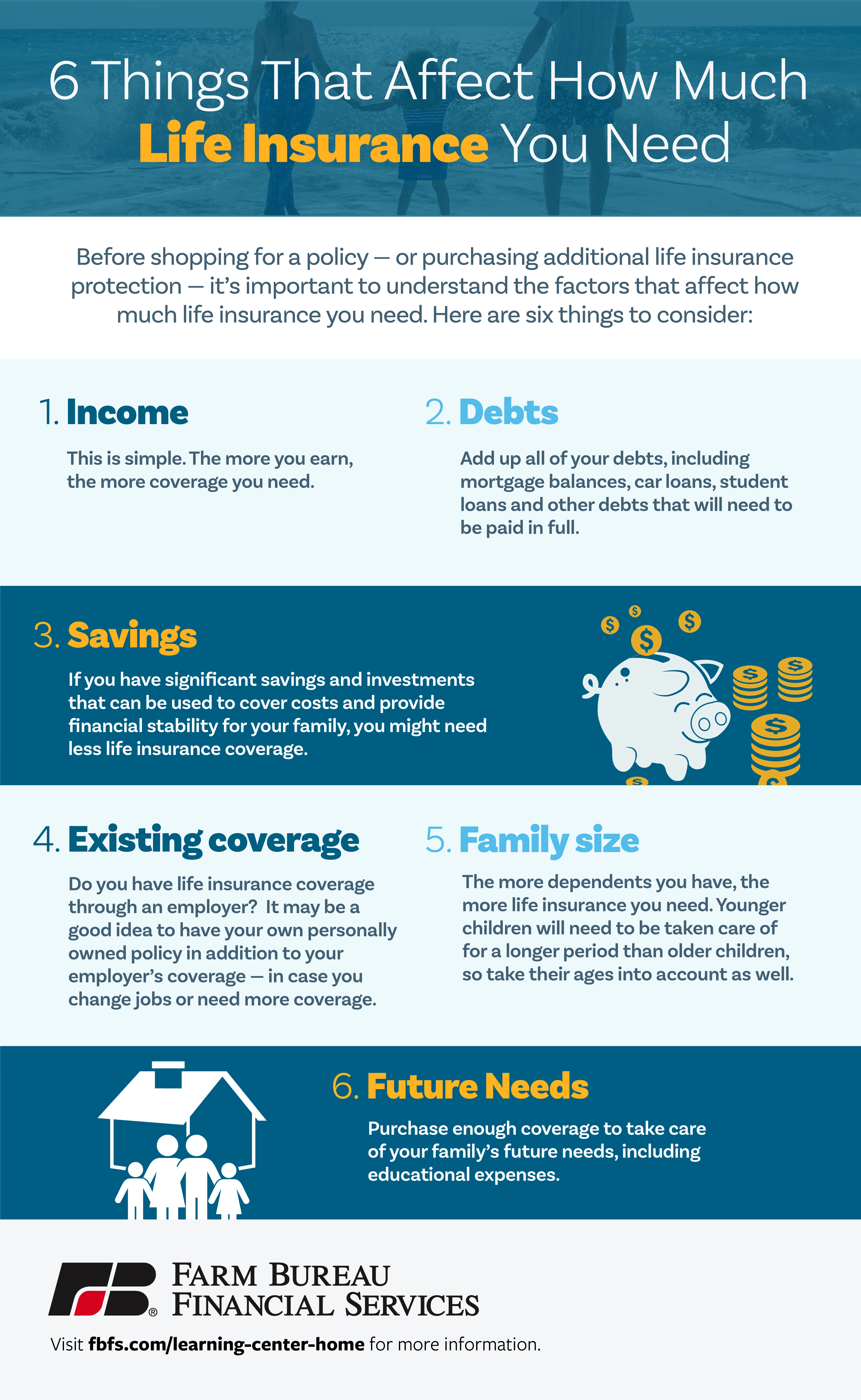
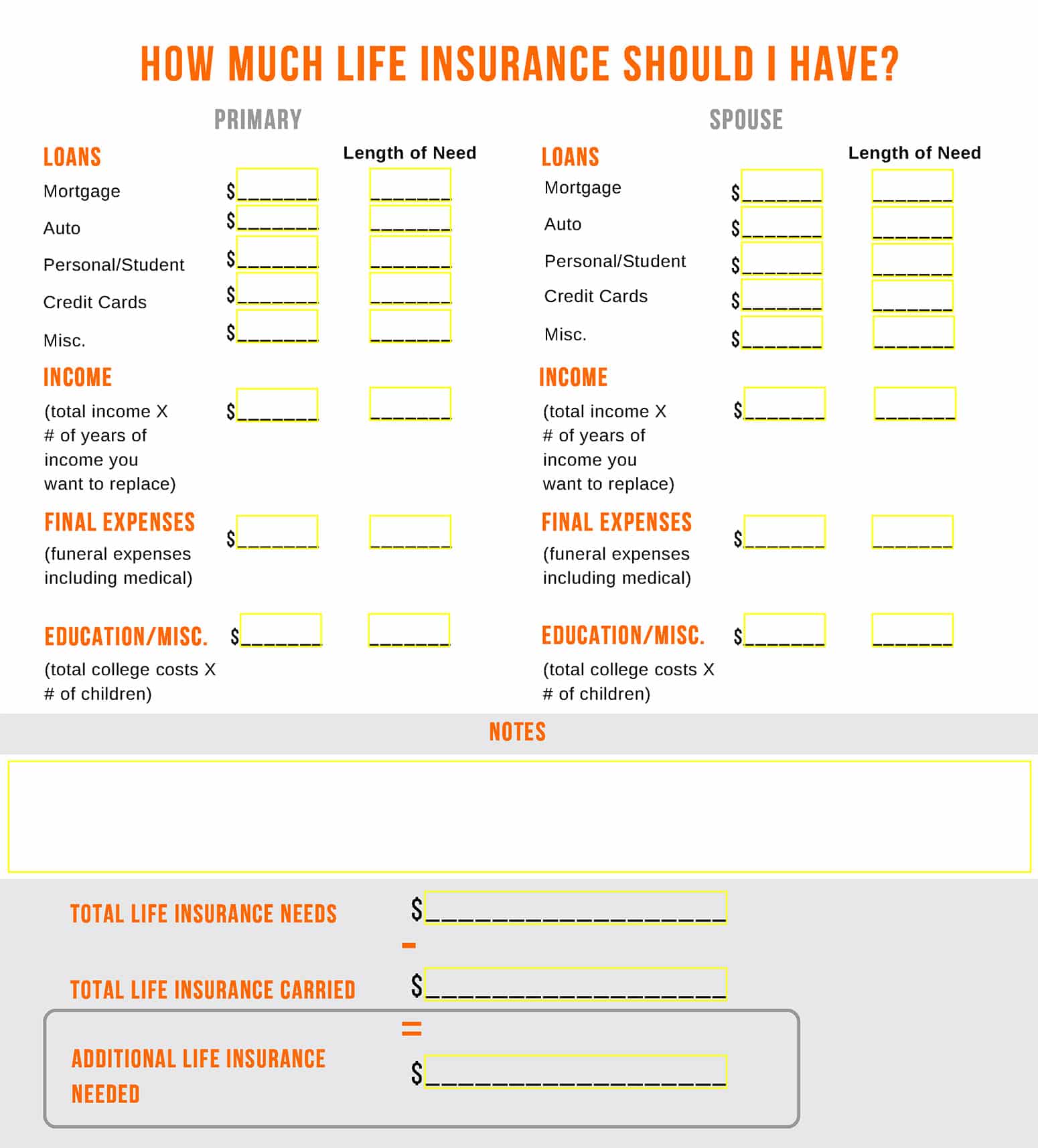
The DIME method is a more comprehensive way to look at your financial footprint. DIME stands for Debt, Income, Mortgage, and Education.
- Debt: Sum up all your non-mortgage debts, including credit cards, student loans, and auto loans.
- Income: Determine how many years your family will need to replace your income. If you have young children, you might want to replace your income until the youngest reaches age 18 or 22.
- Mortgage: Include the total payoff amount for your primary residence and any other real estate holdings.
- Education: Estimate the future cost of college for each of your children. In 2026, many families factor in at least $100,000 to $200,000 per child for a four-year degree at a public institution, including room and board.
The Human Life Value (HLV) Approach
This method calculates the total amount of money you are expected to earn during your remaining working years. It considers your current age, your planned retirement age, and projected salary increases. This is particularly useful for younger professionals who have decades of earning potential ahead of them. If a 30-year-old expects to work until 65 and earns $100,000 annually, their "human life value" is significantly higher than a 60-year-old nearing retirement, even if the older individual has a higher current salary.
Factors That Influence Your Coverage Needs
Your specific life stage and family structure are the most significant variables in the insurance equation. A single individual with no dependents has vastly different requirements than a married parent of three.
Current Debt Obligations High-interest debt can quickly erode a family’s savings if the primary earner passes away. When calculating coverage, ensure that your death benefit is large enough to wipe the slate clean. This allows survivors to use the remaining funds for daily living rather than debt service.
The Role of the Stay-at-Home Parent A common mistake is failing to insure a non-working or stay-at-home spouse. While they may not bring in a direct salary, the services they provide—childcare, household management, transportation—are expensive to replace. If a stay-at-home parent passes away, the surviving spouse may need to pay for professional help to maintain the household. Experts suggest that coverage for a stay-at-home parent should still be substantial, often 50% to 100% of the working spouse’s coverage.
Inflation and Cost of Living In 2026, the purchasing power of a dollar is a critical factor. A $500,000 policy purchased ten years ago may no longer provide the same level of security it once did. When calculating your "Income" portion of the DIME formula, it is wise to add an inflation buffer—typically 3% per year—to ensure the money lasts as long as intended.
Comparison of Calculation Strategies
The following table compares the most common methods to help you identify which aligns best with your financial complexity.
| Method | Best For | Pros | Cons |
|---|---|---|---|
| Multiplier (10x-15x) | Quick estimates | Simple to calculate; provides a high-level baseline. | Ignores individual debt and specific family goals. |
| DIME Formula | Families with debt/children | Detailed; accounts for specific large expenses like college. | Requires more time to gather financial data. |
| Human Life Value | Young professionals | Captures the total economic loss to the family. | Does not account for current liquid assets or savings. |
| Standard of Living | High-net-worth individuals | Focuses on maintaining a specific lifestyle indefinitely. | Often results in very high premiums. |
Evaluating Existing Assets and Policies
Before you purchase a new policy, you must audit what you already have. Many employers provide "group life insurance" as a benefit. This is often equal to one or two times your annual salary. While this is a helpful addition, it is rarely enough to serve as a standalone solution. Furthermore, group life insurance is typically not portable; if you leave your job, you lose the coverage.
You should also subtract your liquid assets from your total insurance need. If you have $200,000 in a dedicated brokerage account or a high-yield savings account that your family can access immediately, you can potentially reduce your life insurance coverage by that same amount. However, do not subtract retirement accounts like 401(k)s or IRAs if those funds are intended for your spouse's retirement, as using them early may trigger tax penalties or leave the survivor short-handed in their later years.
When to Re-evaluate Your Coverage
Life insurance is not a "set it and forget it" product. Significant life events should trigger a review of your policy limits.
- Marriage or Divorce: Changes in your legal partner status often change your financial obligations and beneficiaries.
- Birth or Adoption: Adding a dependent is the most common reason to increase coverage.
- Buying a Home: A larger mortgage requires a larger death benefit to ensure the family can stay in the home.
- Major Career Change: A significant raise in salary usually means your family has adapted to a more expensive lifestyle that requires more insurance to maintain.
- Inheritance or Windfall: If you suddenly become "self-insured" through a large inheritance, you may be able to reduce or cancel your term life insurance.
Common Pitfalls in Coverage Estimation
One of the most frequent errors is underestimating the "Income" replacement period. Many people calculate the need based on five years of income, assuming their spouse will "get back on their feet." However, if there are young children involved, the surviving parent may choose to work less or may face increased costs for years to come.
Another pitfall is ignoring the impact of taxes. While life insurance death benefits are generally income-tax-free to the beneficiary under Internal Revenue Code Section 101(a), the interest earned on those proceeds if they are held by the insurance company is taxable. Additionally, if the estate is large enough, the policy could be subject to federal or state estate taxes if not structured correctly within a trust.
Professional Advice Limitation
This article provides general information for educational purposes and does not constitute financial, legal, or tax advice. Life insurance needs are highly individualized. You should consult with a certified financial planner (CFP) or a licensed insurance professional to discuss your specific situation, jurisdictional requirements, and policy types.
Frequently Asked Questions
Is it possible to have too much life insurance? Yes. While being underinsured is a greater risk, being overinsured means you are paying "opportunity cost" premiums. Every dollar spent on an unnecessary death benefit is a dollar that could have been invested in a retirement account or used to pay down high-interest debt.
How does age affect how much insurance I should buy? Generally, the older you get, the less life insurance you need. This is because your "Human Life Value" decreases as you approach retirement, your mortgage gets paid down, and your children become financially independent. This concept is often called the "decreasing responsibility" theory.
Should I include my mortgage if I have a separate mortgage protection policy? No. If you have a specific policy that pays off your mortgage balance upon death, you do not need to include that amount in your general life insurance calculation. However, general life insurance is often more flexible and cheaper than specific mortgage protection insurance.
Does my health status change how much coverage I should get? Health status doesn't change the need, but it does change the cost. If you have a chronic condition that makes insurance expensive, you might prioritize covering "must-have" debts like the mortgage and education, while scaling back on the "nice-to-have" lifestyle replacement goals.
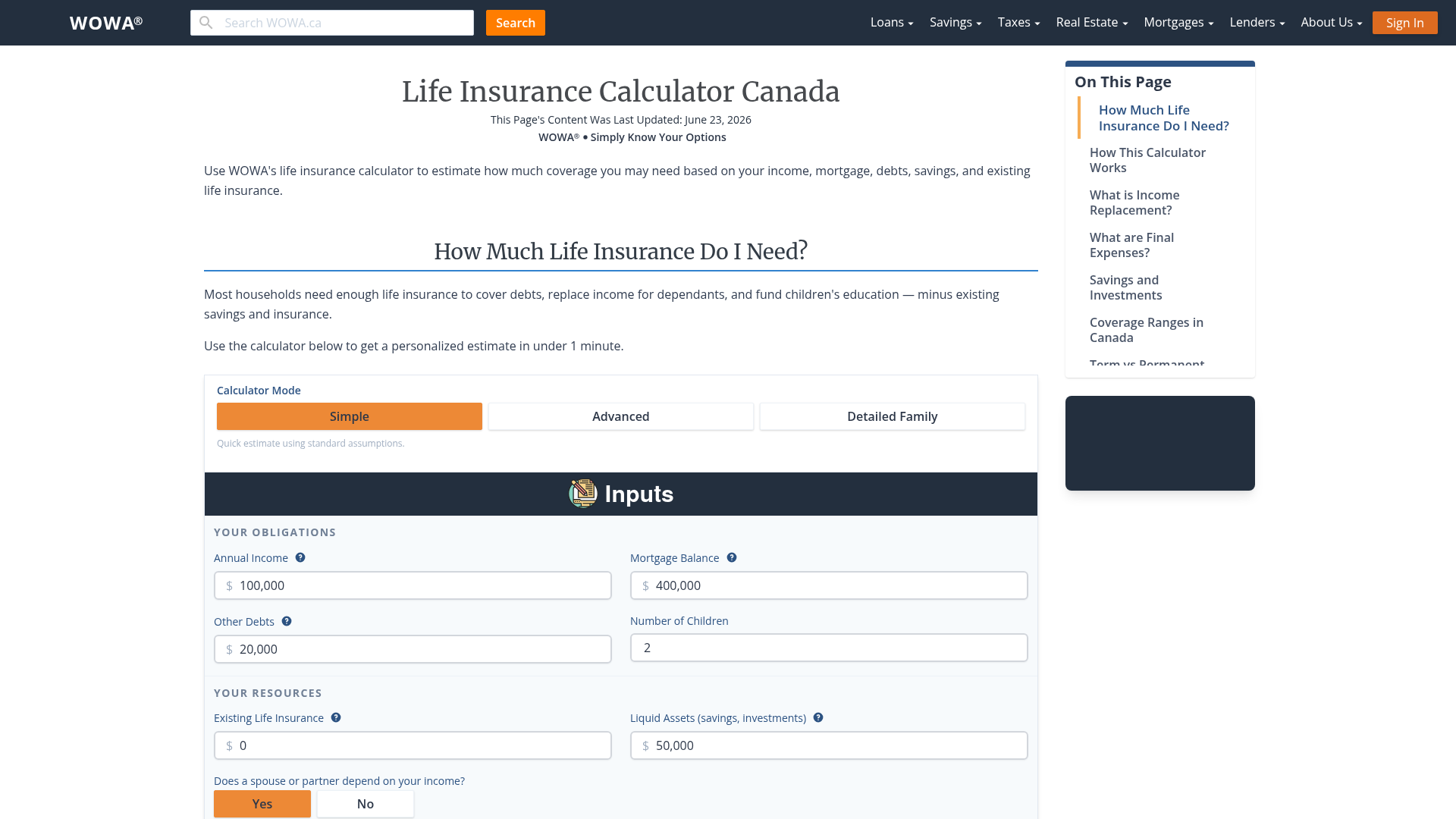
Can I use an online calculator to find the exact number? Online calculators are excellent starting points, but they often lack the nuance of a personal balance sheet. Use them to get a ballpark figure, then refine that figure by looking at your actual bank statements, debt balances, and long-term financial goals for 2026 and beyond.
Final Recommendation
To get an accurate figure, start with the DIME formula. Add up your total debt, your mortgage payoff, and the estimated cost of your children’s education. Then, add 10 years of your current salary to that total. Subtract any existing savings or employer-provided coverage. This final number provides a robust safety net that accounts for both immediate liabilities and long-term family stability. Review this number every three years or after any major life change to ensure your protection remains aligned with your reality.
Image Gallery