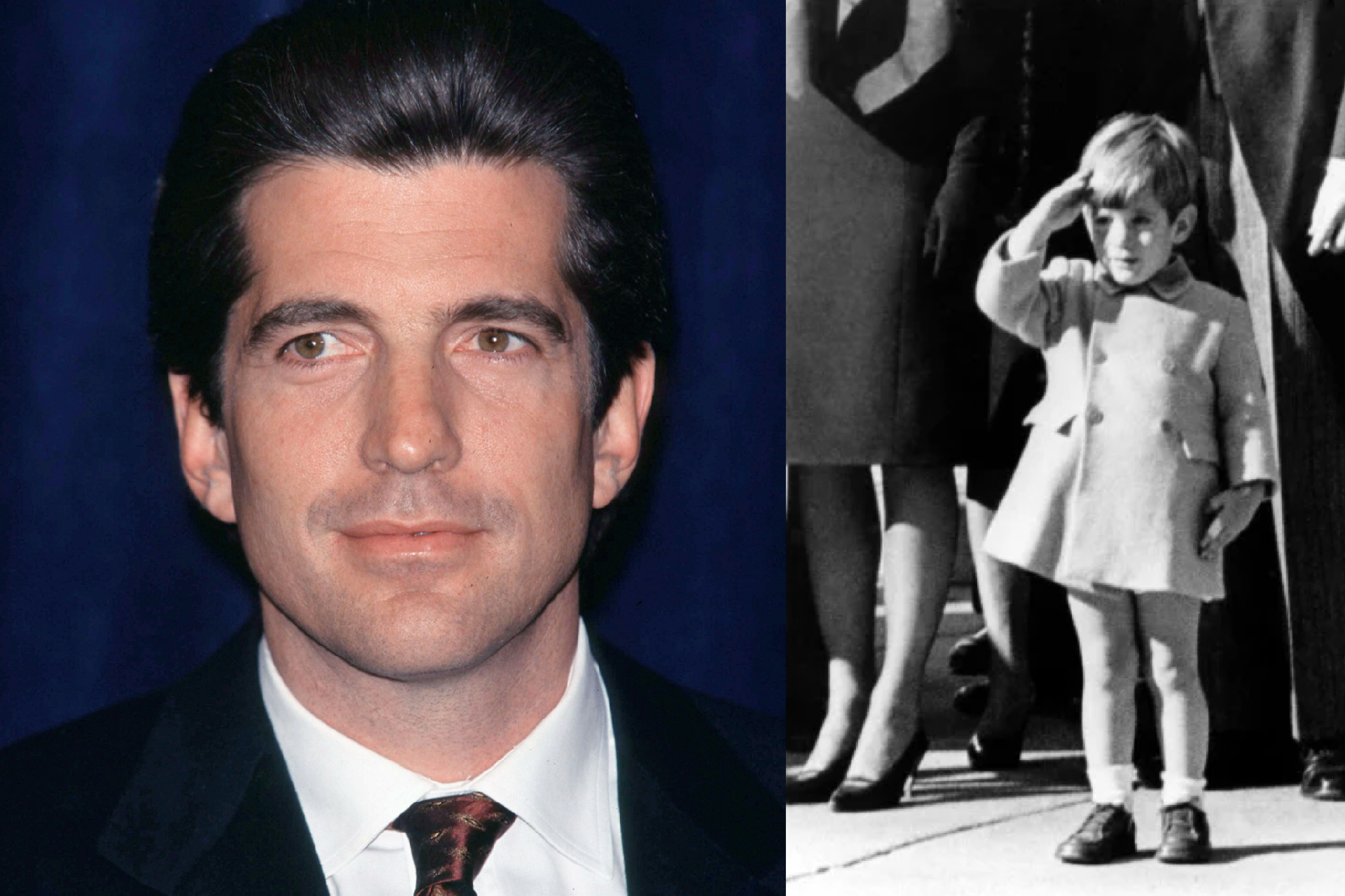
John F. Kennedy Jr. Net Worth at Death: Estate Value, Inheritance, and Financial Legacy
At the time of his unexpected death on July 16, 1999, John F. Kennedy Jr. had an estimated net worth between $30 million and $50 million. His wealth primarily derived from trust funds established by his family, a significant inheritanc...
At the time of his unexpected death on July 16, 1999, John F. Kennedy Jr. had an estimated net worth between $30 million and $50 million. His wealth primarily derived from trust funds established by his family, a significant inheritance from his mother, Jacqueline Kennedy Onassis, and personal investments in media and real estate.
Contents
- John F. Kennedy Jr. Estate (Estimated Net Worth: $30M - $50M)
- Family Trusts & Inheritance (Joe Kennedy Sr. & JFK Sr. Trusts)
- Jackie Estate Inheritance (1994 Estate & Sotheby's Sale)
- Personal Assets & Investments (Tribeca Loft, George, Cash)
Overview of JFK Jr.’s Wealth at the Time of His Death
When John F. Kennedy Jr. tragically died at age 38 alongside his wife, Carolyn Bessette-Kennedy, and sister-in-law, Lauren Bessette, in a plane crash off the coast of Martha's Vineyard, public interest focused heavily on his estate. As the son of President John F. Kennedy and pop culture icon Jacqueline Kennedy Onassis, JFK Jr. was born into one of the most prominent families in American history. However, calculating his precise net worth at the time of his passing requires analyzing multi-generational trust structures, private real estate holdings, and legal estate filings.
Financial historians and probate records estimate JFK Jr.'s net worth at death to have been between $30 million and $50 million in 1999 dollars. Adjusted for inflation into present-day value, this fortune represents well over $60 million to $90 million. Unlike corporate executives whose net worth is heavily tied to public equities, the vast majority of JFK Jr.’s wealth resided in inherited family trusts, private investment vehicles, and valuable real estate interests.
His financial profile was distinct from that of a self-made entrepreneur. While he earned a standard salary during his early career as an Assistant District Attorney in Manhattan and later drew compensation as co-founder and editor-in-chief of George magazine, his primary financial security rested on institutional capital protected by sophisticated estate planning mechanisms spanning three generations.
Sources of Inheritance and Family Trust Funds
Understanding JFK Jr.’s net worth requires examining the financial architecture created by his grandfather, Joseph P. Kennedy Sr., and preserved by subsequent generations.
The Joseph P. Kennedy Sr. Family Trusts
The foundation of the Kennedy family fortune was built by Joseph P. Kennedy Sr. through stock trading, real estate holdings, liquor distribution, and Hollywood movie production. In the late 1920s and 1930s, Joseph Kennedy established complex, irrevocable trust funds for his children and grandchildren.
These trusts were designed with spendthrift provisions and multi-generational income distribution rules:
- Principal Protection: Grandchildren, including JFK Jr. and his sister Caroline, were designated as trust beneficiaries receiving income distributions rather than immediate lump-sum access to core trust principal during their early lives.
- Tax Efficiency: The trust instruments minimized estate and generation-skipping transfer taxes, shielding the family capital across decades.
- Corporate Management: The assets were overseen by Park Agency Inc., a private family office located in New York City responsible for managing the Kennedy family's private equity investments, real estate holdings, and liquid portfolios.
President John F. Kennedy’s Estate Provisions
Following the assassination of President John F. Kennedy in November 1963, his estate was divided among his widow and his two surviving children, Caroline and John Jr. Under the terms of President Kennedy’s will and related trust arrangements, substantial assets were held in trust for John Jr. until he reached designated age milestones (typically ages 21, 25, 30, and 35).
By the time of his death in 1999, JFK Jr. had surpassed these major age distributions, granting him direct access to significant capital allocations, though substantial underlying assets remained held within multi-beneficiary family structures.
The Estate of Jacqueline Kennedy Onassis (1994)
The single largest influx of direct wealth into JFK Jr.’s personal estate came following the death of his mother, Jacqueline Kennedy Onassis, in May 1994. Jackie Kennedy had amassed a considerable personal fortune, expanded substantially through her second marriage to Greek shipping magnate Aristotle Onassis. Following litigation and settlements regarding Onassis's estate, Jackie received an estimated $20 million to $26 million.
When Jacqueline Kennedy Onassis passed away, her total gross estate was valued between $40 million and $50 million. Her will directed that the bulk of her estate be split between her two children, Caroline Kennedy and John F. Kennedy Jr., after accounting for specific bequests, taxes, and expenses.
Key aspects of the Jackie Kennedy estate distribution included:
- Sotheby’s Auction (1996): In April 1996, Sotheby's conducted a famous four-day auction of Jacqueline Kennedy Onassis’s personal property, estate furniture, art, and historical memorabilia. The auction generated over $34 million in gross proceeds—far exceeding initial projections of $5 million. The net proceeds were distributed to John Jr. and Caroline, substantially boosting their liquid reserves.
- Real Estate Assets: Jackie’s estate included high-value real estate, notably Red Gate Farm—a 340-acre oceanfront estate in Aquinnah on Martha’s Vineyard. John Jr. and Caroline inherited joint ownership of this property.
Business Ventures and Personal Income
While inheritance formed the bedrock of his wealth, JFK Jr. pursued a professional career that generated independent earning power and professional identity.
Manhattan Assistant District Attorney (1989–1993)
After earning his Juris Doctor from New York University School of Law in 1989, JFK Jr. spent four years serving as an Assistant District Attorney in Manhattan under District Attorney Robert Morgenthau. During this period, his annual civil service salary ranged from approximately $30,000 to $45,000. This standard public-sector income had little material impact on his net worth, but it established his legal credentials prior to entering publishing.
Launching and Funding George Magazine
In 1995, JFK Jr. partnered with public relations executive Michael J. Berman to launch George, a glossy monthly magazine covering politics, pop culture, and media. The venture was backed by publishing giant Hachette Filipacchi Media U.S., which provided distribution, advertising support, and institutional capital.
| Feature | George Magazine Structure |
|---|---|
| Founders | John F. Kennedy Jr. & Michael J. Berman |
| Media Partner / Publisher | Hachette Filipacchi Media U.S. |
| Initial Circulation Peak | ~500,000 copies (1996–1997) |
| JFK Jr.'s Operational Role | Editor-in-Chief & Co-Publisher |
George achieved early commercial success, reaching a peak monthly circulation of roughly 500,000 copies behind famous cover features. However, by 1998 and early 1999, the publication faced serious financial headwinds:
- Declining Advertising Sales: As political commentary shifted toward early digital media platforms, print ad sales contracted across the industry.
- Executive Friction: Co-founder Michael Berman sold his interest back to Hachette in 1997, leaving JFK Jr. as the primary editorial driver.
- Financial Standing at Death: By mid-1999, Hachette was weighing whether to exit the partnership. JFK Jr. spent his final months actively seeking private investors and alternative funding sources to buy out Hachette's stake and restructure the publication.
While George was not a major source of personal net worth expansion—and represented a financial liability for its publisher by 1999—JFK Jr.’s equity stake and executive position were central to his active business life. Following his death, Hachette officially folded the magazine in early 2001.
Real Estate Holdings and Personal Assets
JFK Jr.’s asset portfolio included high-value residential property, private security holdings, and shared family real estate.
Tribeca Loft (20 N. Moore Street, New York City)
JFK Jr. owned a spacious loft apartment located at 20 N. Moore Street in Manhattan's historic Tribeca neighborhood. Purchased in the 1990s as Tribeca was emerging as one of NYC’s premier residential enclaves, the property represented a core personal asset. Following his death, the loft was subsequently sold by his estate for several million dollars, reflecting rapid real estate appreciation in Lower Manhattan.
Red Gate Farm Interest (Martha’s Vineyard)
Following his mother's death in 1994, John Jr. shared equal ownership of Red Gate Farm on Martha's Vineyard with his sister Caroline. The 340-acre beachfront estate was valued in the tens of millions of dollars. After JFK Jr.’s passing, his interest in the estate transferred according to the provisions of his will, with Caroline Kennedy ultimately consolidating control over the family compound.
Breakdown of Estate Value and Asset Allocation
The following table synthesizes historical estate tax disclosures, probate filings, and financial reporting regarding John F. Kennedy Jr.’s financial status at death in 1999.
| Asset Category | Description / Source | Estimated Value range (1999 USD) | Key Beneficiaries / Disposition |
|---|---|---|---|
| Trust Fund Distribution | Principal and income trusts from Joe Kennedy Sr. & JFK Sr. | $15,000,000 – $25,000,000 | Kennedy family trusts / Residual estate |
| Jackie Onassis Estate Share | Liquid distributions, Sotheby’s auction proceeds, investments | $10,000,000 – $15,000,000 | Formed primary liquid portion of personal estate |
| Real Estate Holdings | Tribeca Loft (NYC) & shared interest in Martha’s Vineyard | $5,000,000 – $8,000,000 | Sold / Absorbed by sister Caroline Kennedy |
| Business Equity & Personal Prop. | Equity in George, vehicles, art, cash accounts, personal items | $2,000,000 – $4,000,000 | Cash settled; George closed in 2001 |
| Total Estimated Net Worth | Combined Gross Estate Valuation | $30,000,000 – $50,000,000 | Distributed via 1997 Will and legal settlements |
JFK Jr.’s Will, Legal Settlements, and Final Estate Distribution
Because John F. Kennedy Jr. died without direct surviving children, the distribution of his estate involved specific legal protocols under New York probate law.
Terms of the 1997 Last Will and Testament
JFK Jr. executed his last will and testament on April 19, 1997. Under its primary terms:
- Primary Beneficiaries: In the event that he died without surviving children, the bulk of his personal property and residual estate was bequeathed to his sister Caroline Kennedy’s three children: Rose Schlossberg, Tatiana Schlossberg, and John "Jack" Schlossberg.
- Personal Bequests: JFK Jr. left specific personal effects, memorabilia, and financial bequests to close personal friends, godchildren, and longtime assistants, including his personal assistant Rosemarie Terenzio.
- Charitable Donations: The will designated financial contributions to charitable organizations supported by the Kennedy family, including the John F. Kennedy Library Foundation.
Settlement with the Bessette Family
The simultaneous deaths of John F. Kennedy Jr., Carolyn Bessette-Kennedy, and her sister Lauren Bessette created complex legal relationships between their respective estates. The National Transportation Safety Board (NTSB) determined the probable cause of the crash to be pilot error associated with spatial disorientation during night flight over open water.
Because JFK Jr. was piloting the Piper Saratoga aircraft at the time of the accident, the estate of Carolyn Bessette and Lauren Bessette (represented by their mother, Ann Freeman) possessed potential legal claims for wrongful death.
To avoid prolonged public litigation, the executors of the JFK Jr. estate reached an out-of-court financial settlement with the Bessette family in 2001:
- Settlement Amount: The JFK Jr. estate paid a reported $15 million out-of-court settlement to the Bessette family.
- Funding Source: A substantial portion of this settlement was covered by aviation insurance policies held by JFK Jr., with the remainder paid out of estate liquid reserves.
- Legal Release: The agreement provided full liability release for the Kennedy estate, allowing probate distributions to finalize cleanly.
Legal and Estate Planning Disclaimers
Historical financial evaluations of high-net-worth individuals rely on public court filings, probate records, tax disclosures, and contemporary investigative journalism. Many private trust instruments established in jurisdictions such as Delaware or Massachusetts remain sealed from public review. The figures presented reflect historical consensus estimates verified against public probate records and official legal reporting.
Frequently Asked Questions
What was John F. Kennedy Jr.’s net worth at the time of his death?
John F. Kennedy Jr.’s net worth at death in July 1999 was estimated between $30 million and $50 million. This was comprised of trust distributions, liquid funds from his mother's estate, real estate, and personal investments.
Did Carolyn Bessette-Kennedy inherit JFK Jr.’s money?
No. Carolyn Bessette-Kennedy died in the same plane crash as JFK Jr. on July 16, 1999. Because she passed away simultaneously without surviving descendants, JFK Jr.’s assets passed to his named beneficiaries—primarily his sister Caroline Kennedy's children—pursuant to his 1997 will.
How much did the Bessette family receive from JFK Jr.’s estate?
In 2001, the executors of JFK Jr.’s estate reached an out-of-court wrongful death settlement with the estate of Carolyn and Lauren Bessette reported to be approximately $15 million, funded largely through aviation liability insurance and estate assets.
Who inherited JFK Jr.’s estate?
The principal beneficiaries of JFK Jr.’s residual estate were his three nieces and nephew: Rose, Tatiana, and Jack Schlossberg (the children of Caroline Kennedy). Specific personal items and monetary gifts were also left to close friends, godchildren, and charitable entities.
Was George magazine profitable when JFK Jr. died?
No. While George was a major cultural phenomenon at its 1995 launch, it faced declining advertising revenue and falling circulation by 1999. At the time of his death, JFK Jr. was actively seeking new equity partners to buy out publisher Hachette Filipacchi Media. The magazine ceased publication in early 2001.
Summary of Financial Legacy
John F. Kennedy Jr.'s financial standing at death reflected a balanced stewardship of inherited American dynastic wealth alongside targeted personal business endeavors. His estate structure highlights the efficacy of multi-generational asset protection trusts established by Joseph P. Kennedy Sr. and Jacqueline Kennedy Onassis. For estate historians and researchers, JFK Jr.'s estate remains a clear example of modern high-net-worth probate management, multi-party legal risk mitigation, and generational wealth transfers.
Image Gallery