Comprehensive Guide to Grants and Loans for Felons in 2026
Securing financial assistance with a felony conviction is possible through federal programs, non-profit initiatives, and specialized lending institutions. While certain restrictions apply to traditional bank loans, individuals can acce...
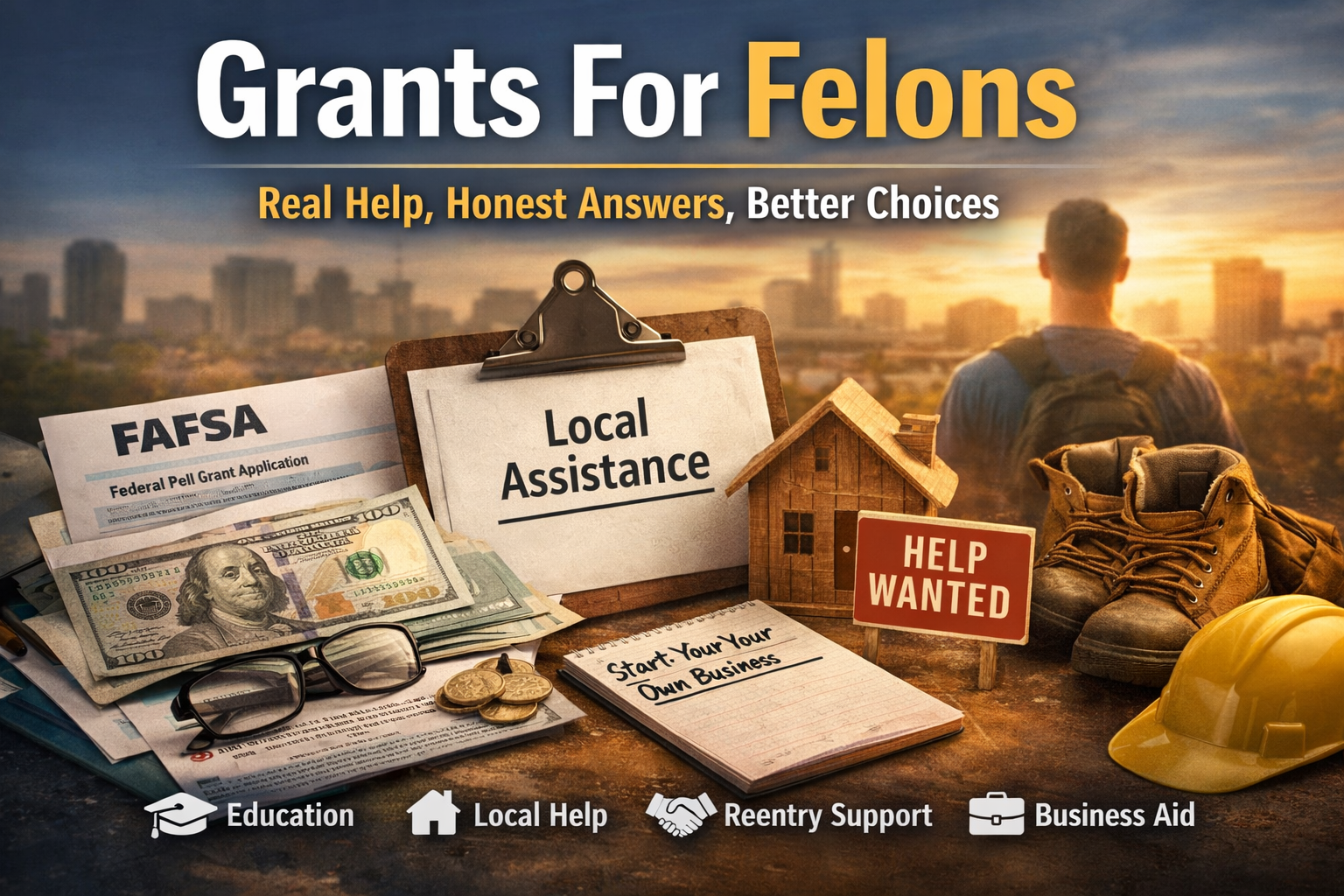
Securing financial assistance with a felony conviction is possible through federal programs, non-profit initiatives, and specialized lending institutions. While certain restrictions apply to traditional bank loans, individuals can access Pell Grants for education, SBA-backed microloans for business, and re-entry grants designed to support successful community reintegration and economic independence.
Contents
Accessing capital or educational funding after a felony conviction requires a clear understanding of which barriers are statutory and which are merely institutional policies. In 2026, the landscape for re-entry financing has shifted toward "Second Chance" initiatives, focusing on reducing recidivism by providing formerly incarcerated individuals with the tools needed for self-sufficiency. This guide explores the specific pathways for education, entrepreneurship, and personal stability.
Educational Grants and Financial Aid
For many years, a drug-related felony conviction significantly hindered an individual’s ability to receive federal student aid. However, major legislative shifts, including the FAFSA Simplification Act, have fundamentally changed these rules. As of 2026, the primary focus for educational funding is the Federal Pell Grant, which is now accessible even to those currently incarcerated in qualifying programs or those with past convictions.
The Federal Pell Grant Program
The Pell Grant is the cornerstone of educational funding because it does not require repayment. For formerly incarcerated individuals, the removal of the drug-conviction restriction means that eligibility is primarily determined by financial need rather than criminal history. To apply, students must complete the Free Application for Federal Student Aid (FAFSA).
When applying in 2026, applicants should ensure their records are clear of any "student aid fraud" convictions, which remain one of the few absolute bars to federal funding. The grant can be used at accredited community colleges, four-year universities, and many vocational schools.
Federal Supplemental Educational Opportunity Grant (FSEOG)
In addition to the Pell Grant, the FSEOG provides extra funding for students with exceptional financial need. Because these funds are limited and managed directly by the financial aid offices of participating schools, it is crucial for applicants with a criminal record to apply as early as possible in the academic year. Early application increases the likelihood of securing these campus-based funds before the institution’s annual allocation is exhausted.
Small Business Loans and Entrepreneurship
Starting a business is often the most viable path to employment for felons who face "ban the box" hurdles in corporate hiring. While traditional commercial banks may remain hesitant to lend to those with a criminal record, federal guarantees and community-based lenders provide alternative routes.
SBA Microloan Program
The U.S. Small Business Administration (SBA) does not typically lend money directly to entrepreneurs. Instead, it provides guarantees to intermediaries. The SBA Microloan Program is particularly well-suited for felons because it works through community-based non-profit organizations. These lenders often take a more holistic view of an applicant, considering their business plan and character alongside their criminal history.
To qualify, an applicant must usually demonstrate that the business is viable and that any "crimes involving moral turpitude" are sufficiently in the past. While the SBA still conducts a character evaluation (often involving Form 1919), a felony is not an automatic disqualification for a Microloan in the same way it might be for a large 7(a) commercial loan.
Community Development Financial Institutions (CDFIs)
CDFIs are private financial institutions that are 100% dedicated to delivering responsible, affordable lending to help low-income, low-wealth, and other disadvantaged people and communities join the economic mainstream. Because their mission is social impact, CDFIs are often more willing to work with formerly incarcerated entrepreneurs. They provide not just capital, but also "technical assistance," which includes help with business planning and credit building.
The Work Opportunity Tax Credit (WOTC)
While not a direct loan to the individual, the Work Opportunity Tax Credit is a powerful tool for a felon starting a business or seeking employment. This federal tax credit is available to employers who hire individuals from certain target groups, including "qualified ex-felons." If you are starting a business and hiring other formerly incarcerated individuals, you can claim this credit. Conversely, you can use your eligibility for this credit as a bargaining chip when applying for jobs or seeking partnerships.
Comparison of Funding Options for Felons
The following table compares the primary financial resources available to individuals with a felony record in 2026.
| Funding Type | Source | Primary Use | Repayment Required? | Eligibility Notes |
|---|---|---|---|---|
| Pell Grant | Federal Government | College/Vocational School | No | Based on financial need; few criminal restrictions. |
| SBA Microloan | SBA Intermediaries | Small Business Start-up | Yes | Requires business plan; character evaluation applies. |
| CDFI Loans | Local Non-profits | Community Business | Yes | More flexible than banks; includes mentoring. |
| Second Chance Grants | State/Local Agencies | Re-entry & Housing | No | Varies by state; focuses on immediate needs. |
| FHA Loans | HUD/Lenders | Home Purchase | Yes | Convictions don't bar entry, but credit score matters. |
Housing and Personal Stability Assistance
Finding a place to live is often the first and most difficult step after release. While "grants" for personal use are rare, there are specific subsidized programs and non-profit funds designed to bridge the gap.
HUD and Section 8 Housing
The U.S. Department of Housing and Urban Development (HUD) oversees the Housing Choice Voucher Program (Section 8). Contrary to popular belief, a felony conviction is not a lifetime ban from public housing, with two exceptions: being a registered sex offender for life or being convicted of manufacturing methamphetamine in federally assisted housing. For all other felonies, local Public Housing Authorities (PHAs) have the discretion to set their own look-back periods, often ranging from three to five years.
USDA Rural Development Loans
For those living in or moving to rural areas, the USDA Section 502 Direct Loan Program provides a pathway to homeownership for low-income individuals. These loans have no specific prohibition against felons, though the applicant must demonstrate repayment ability and meet credit requirements. Like the SBA, the USDA focuses more on the timeframe since the conviction and evidence of rehabilitation.
Non-Profit and Private Support Organizations
Beyond government programs, several national and local non-profits provide "micro-grants" or low-interest loans specifically for the re-entry community.
- Inmates to Entrepreneurs: This organization provides free education on how to start a business. While they do not provide direct grants, they connect graduates with potential funding sources and mentors who understand the specific challenges of the justice-involved community.
- Defy Ventures: Operating in multiple states, Defy Ventures provides entrepreneurship training and occasionally hosts "pitch competitions" where formerly incarcerated "EITs" (Entrepreneurs in Training) can win seed capital for their businesses.
- The Lionheart Foundation: Focuses on providing resources and emotional literacy, which are often prerequisites for the stability required to successfully apply for and manage financial aid.
Strategic Steps for a Successful Application
Securing funding requires more than just meeting eligibility; it requires preparation and documentation to overcome the stigma often associated with a criminal record.
1. Obtain a Clean Copy of Your Record
Before applying for any federal loan or grant, obtain an official copy of your criminal record. This allows you to speak accurately about your history. If you are eligible for expungement or sealing of records in your jurisdiction, prioritize this process, as it can automatically clear many institutional hurdles.
2. Build or Repair Credit
Most loans—even those from CDFIs—will require some form of credit check. If your credit was damaged during your incarceration, start by opening a secured credit card or a credit-builder loan. Consistent, small payments over 12 months can significantly improve your chances of loan approval.
3. Develop a Robust Business Plan
For business loans, your business plan is your resume. It must be professional, include clear financial projections, and address how you will mitigate risks. Lenders are more likely to overlook a past conviction if the current business proposition is financially sound and well-researched.
4. Leverage Letters of Recommendation
In "character evaluation" processes (like those for the SBA), letters of recommendation from parole officers, employers, or community leaders are invaluable. These documents provide the "evidence of rehabilitation" that many grant and loan committees look for when reviewing an applicant with a felony.
Frequently Asked Questions
Can I get a Pell Grant if I have a drug-related felony?
Yes. As of the 2023-2024 academic year and continuing through 2026, drug-related convictions no longer disqualify a student from receiving federal student aid, including Pell Grants. The only remaining criminal disqualification for federal aid is a conviction for a sexual offense that resulted in involuntary civil commitment or specific types of student loan fraud.
Does the SBA automatically deny loans to felons?
No. While the SBA requires a background check and a "Character Evaluation," a felony is not an automatic bar to entry. The SBA looks at the nature of the offense, how long ago it occurred, and whether it involved financial dishonesty (like embezzlement). Many felons successfully receive SBA-guaranteed Microloans through community-based lenders.
Are there specific grants for felons to buy a house?
There are very few grants (money you don't pay back) for homeownership for anyone, regardless of their record. However, there are "down payment assistance" programs at the state and local levels that felons can qualify for. Additionally, FHA loans are accessible to those with criminal records, provided they meet the standard credit and income requirements.
How do I find "Second Chance" employers who offer financial help?
Many companies that participate in the Second Chance Business Coalition offer specialized training and sometimes tuition reimbursement or emergency financial assistance for their employees. You can find these employers by searching for "Second Chance" job fairs or using platforms that highlight fair-chance hiring practices.
What is the "Look-Back Period" for most loans?
While there is no universal rule, many private and federal entities use a 5-to-10-year look-back period. If your felony occurred more than a decade ago and you have had no legal trouble since, many lenders will treat your application the same as any other, provided you are transparent about your history.
Professional Advice and Next Steps
Securing financial assistance with a felony record is a process of persistence rather than a single transaction. It is important to note that financial laws and internal lending policies change frequently. This information is for educational purposes and does not constitute legal or financial advice.
Your most effective next step is to contact a local Small Business Development Center (SBDC) or a re-entry specialist at a community college. These professionals can provide one-on-one guidance tailored to your specific jurisdiction and conviction type. By focusing on "Second Chance" friendly institutions like CDFIs and utilizing the restored access to Pell Grants, you can build a stable financial future regardless of your past.
Image Gallery