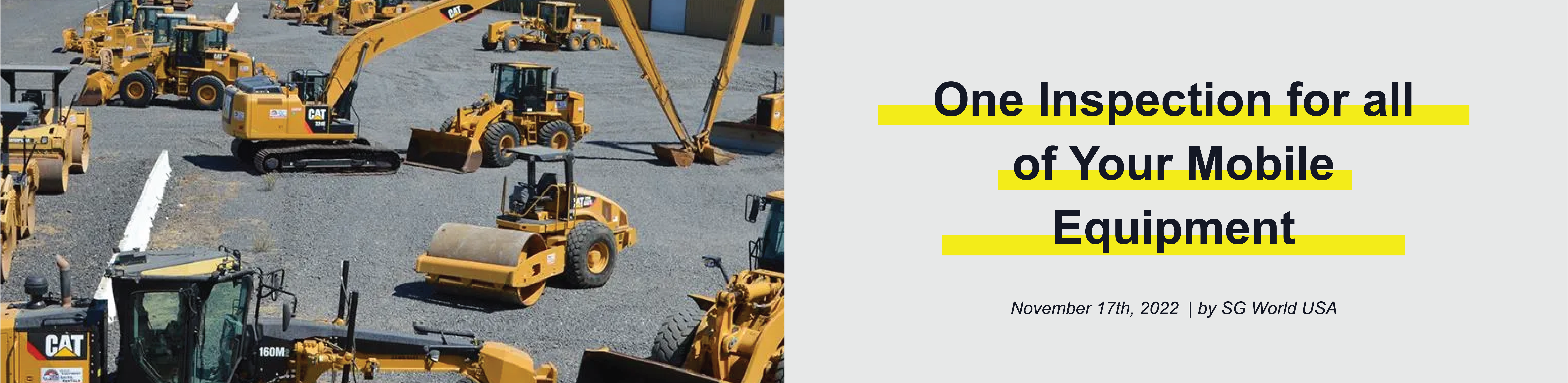
Understanding Mobile Equipment in Commercial Auto Insurance
Mobile equipment is a specific classification of self-propelled, tractor-type, or trailer-mounted machinery that is designed for use principally off public roads. In the context of commercial auto insurance, recognizing whether a piece...
Mobile equipment is a specific classification of self-propelled, tractor-type, or trailer-mounted machinery that is designed for use principally off public roads. In the context of commercial auto insurance, recognizing whether a piece of machinery qualifies as "mobile equipment" or a "motor vehicle" is critical, as it determines which policy form—the Business Auto Policy (BAP) or the Commercial General Liability (CGL) policy—provides the primary coverage for liability and physical damage.
Contents
The Distinction Between Mobile Equipment and Autos
The definition of "mobile equipment" is a cornerstone of risk management for businesses operating construction, agricultural, or industrial machinery. Insurance carriers utilize precise definitions to eliminate coverage gaps or unintended overlaps. Generally, a motor vehicle is designed for travel on public roads, whereas mobile equipment is designed for work at a site.
Under standard industry definitions, mobile equipment includes, but is not limited to:
- Bulldozers, farm machinery, and forklifts.
- Vehicles maintained for use solely on or next to premises you own or rent.
- Vehicles that travel on crawler treads.
- Vehicles maintained primarily to provide mobility to permanently mounted power cranes, shovels, loaders, diggers, or drills.
- Vehicles not described above that are not self-propelled and are maintained primarily to provide mobility to permanently attached equipment, such as air compressors, pumps, or generators.
If a vehicle is intended for public road use, such as a pickup truck or a standard dump truck, it is classified as an "auto" and must be scheduled under a commercial auto policy. Conversely, mobile equipment is typically covered under a General Liability policy for liability exposure while working.
Why Classification Matters for Liability Coverage
The fundamental reason for this distinction is the nature of the risk. A vehicle traveling at highway speeds presents a vastly different exposure than a stationary crane or a crawler-tracked excavator.
When mobile equipment is transported by an auto (e.g., a trailer towed by a truck), the "auto" policy typically covers the vehicle doing the pulling, while the liability arising from the "mobile equipment" itself may shift to the CGL policy. If a business misclassifies a piece of machinery—labeling a road-legal truck as mobile equipment—they may find themselves without coverage during a transit accident because the auto policy was never triggered to include that vehicle.
Operational Risks and Physical Damage
Beyond liability, physical damage coverage—often referred to as Inland Marine coverage for contractors—is frequently used for mobile equipment. Because mobile equipment is not licensed for highway use, standard auto policies often exclude it from "comprehensive" or "collision" coverage.
Business owners must verify that their equipment is properly scheduled on either a Commercial Inland Marine policy or as an endorsement to the CGL policy to ensure protection against fire, theft, vandalism, and operator-related accidents. The following table outlines how different equipment types are generally treated under insurance guidelines.
| Equipment Type | Typical Classification | Primary Policy Coverage |
|---|---|---|
| Pickup Truck | Auto | Commercial Auto |
| Crawler-Tread Excavator | Mobile Equipment | General Liability / Inland Marine |
| Towable Air Compressor | Mobile Equipment | General Liability / Inland Marine |
| Dump Truck (Road-Legal) | Auto | Commercial Auto |
| Forklift (Used in Warehouse) | Mobile Equipment | General Liability |
| Cherry Picker (Mounted on Truck) | Auto (usually) | Commercial Auto |
Determining Coverage for Transferred Risk
One of the most common areas of confusion involves equipment that travels on roads occasionally. Insurance contracts often contain specific clauses regarding "self-propelled" vehicles. If the equipment is designed for use on public roads and is subject to compulsory financial responsibility laws (like mandatory state registration), it will almost always fall under the "auto" definition regardless of its primary function.
Business owners must consider the following when auditing their coverage:
- Registration Requirements: Is the machinery required by the Department of Motor Vehicles to be licensed? If yes, it is likely an auto.
- Primary Function: Is the equipment designed to transport people or property, or is the transport of materials/personnel merely incidental to its function as a tool?
- Transit: How does the equipment move between job sites? Equipment that is towed is treated differently than equipment that is self-propelled under its own power.
Addressing Common Coverage Gaps
A frequent mistake is assuming that "General Liability covers everything." While CGL policies cover bodily injury and property damage, they often exclude damage to the equipment itself. If an operator flips an excavator, the CGL policy may cover the damage to the site (liability), but it will not pay to repair the excavator. This is why specialized equipment coverage—frequently under an Inland Marine form—is essential.
Furthermore, if mobile equipment is being transported by an auto, an accident occurring during the loading or unloading process can create a "gray area." It is essential to ensure that the Commercial Auto policy includes "loading and unloading" provisions that clearly link to the mobile equipment coverage.
FAQ: Common Questions on Mobile Equipment
Does my Business Auto Policy cover my forklift? Generally, no. A forklift is typically classified as mobile equipment and is intended for use on premises. It should be covered under your General Liability or Inland Marine policy. If the forklift is used on public roads, you may need to speak with your agent about specific endorsements or a different classification.
What happens if I drive my mobile equipment on a public road? If you operate mobile equipment on a public road, you may inadvertently trigger an "auto" definition for that specific moment, or you may be violating the terms of your insurance policy. Some policies provide limited coverage for transit between sites, but you must ensure your policy specifically authorizes this use to avoid a denial of claims.
Is a trailer considered mobile equipment? A trailer is generally defined as an auto, not mobile equipment, particularly if it is designed to be towed by an auto on public roads. However, if the trailer is designed to move specialized equipment and is rarely on the road, your insurer may categorize it differently. Always review the "Definitions" section of your specific policy.
Can I get mobile equipment coverage under my existing auto policy? Some insurance carriers allow for "mobile equipment" to be added as an endorsement to a Commercial Auto policy. This is common when the equipment is closely tied to the operation of a fleet. You must provide the serial numbers and value of the equipment to ensure it is properly scheduled.
Taking Action: Next Steps for Business Owners
If you utilize heavy machinery, tractors, or specialized site equipment, conduct an annual audit of your insurance portfolio.
- Request a Schedule: Obtain a list of all vehicles and equipment currently listed on your Commercial Auto and CGL policies.
- Verify Licensing: Check which pieces of equipment have active state road registrations.
- Consult Your Agent: Present this list to your insurance professional. Ask specifically: "Which of these items are classified as mobile equipment, and is there any equipment that falls into a 'gray area' regarding road usage?"
- Review Limits: Ensure that the limits for your Inland Marine or equipment coverage reflect the 2026 replacement cost of your machinery, not the depreciated book value.
Proper classification is not just a paperwork exercise; it is the difference between a covered claim and a catastrophic financial loss. Ensure your policies reflect how you actually conduct business, rather than relying on standard interpretations that may not match your specific operational needs.
Image Gallery