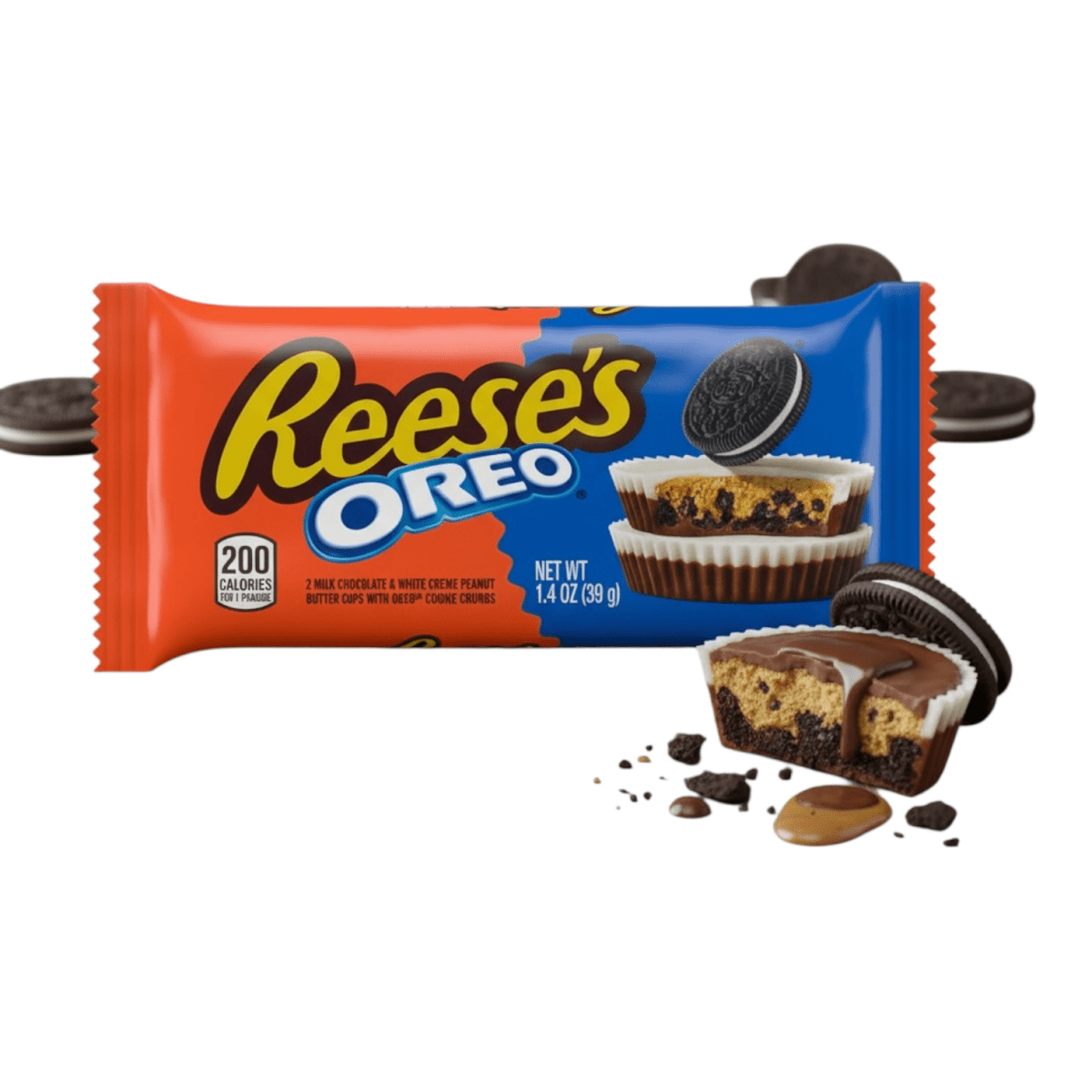
Why the Oreo Reese's Candy Trend Matters for the Future of CPG Marketing
The Oreo Reese’s candy trend signifies a structural shift in consumer packaged goods (CPG) strategy, where market rivals collaborate to maximize brand equity. By combining two iconic flavor profiles, brands generate high-margin hype, d...
The Oreo Reese’s candy trend signifies a structural shift in consumer packaged goods (CPG) strategy, where market rivals collaborate to maximize brand equity. By combining two iconic flavor profiles, brands generate high-margin hype, dominate physical shelf real estate, and trigger social media virality, setting a new benchmark for cross-category product innovation.
Contents
Anatomy of the Crossover: Deconstructing the Trend
The phenomenon of blending Oreo biscuits with Reese’s Peanut Butter Cup elements is not merely an isolated product launch; it represents a high-water mark in contemporary snack engineering and co-branding strategy. Owned respectively by rival food industry giants Mondelēz International and The Hershey Company, these flagship brands historically competed for identical impulse-buy dollars in grocery checkout lanes and convenience store displays.
The convergence of these two entities demonstrates how legacy brands can systematically inject novelty into mature product portfolios without redesigning their core identities. Rather than releasing a subtle line extension—such as a generic peanut-butter-flavored cookie or a chocolate-biscuit-infused candy bar—the strategic decision to explicitly co-brand leverages the established emotional resonance of both logos.
- Consumer Equity Flywheel
- Oreo Equity (Crunch/Chocolate)
- Sensory Crossover (Textural/Flavor Fusion)
- Reese's Equity (Smooth/Peanut Butter)
- Shared Retail Dominance
- High Social Virality (TikTok/Instagram Unboxings)
- Dual End-Cap Placement (Candy + Cookie Aisles)
- Premium Price Realization (LTO Scarcity Model)
This trend matters because it signals a transition from passive brand maintenance to aggressive "co-opetition"—a strategic model where competing market leaders temporarily pool intellectual property to capture consumer attention in an increasingly fragmented retail environment.
The Business Logic of Co-Opetition in CPG Marketing
For decades, consumer packaged goods manufacturers operated under a strict playbook: protect core brand assets, execute modest flavor extensions, and acquire smaller challenger brands to capture niche market growth. The trend of direct mashups between market-leading competitors disrupts this traditional paradigm for several strategic reasons.
1. Mitigating Innovation Risk
Developing entirely new product lines carries immense capital expenditure, high R&D failure rates, and prolonged retail onboarding timelines. By fusing two existing megabrands that possess near-universal market recognition, manufacturers virtually eliminate the friction of consumer discovery. The consumer already knows what an Oreo tastes like, and they know what Reese’s peanut butter tastes like; the value proposition is instantaneous.
2. Doubling Retail Distribution and Shelf Dominance
Retail placement is a zero-sum game. Category managers allocate finite linear feet of shelf space based on sales velocity per square foot. Co-branded products create a unique leverage point with retail buyers:
- Dual Placement Potential: The item can be stocked simultaneously in the cookie aisle, the candy aisle, and seasonal end-cap displays.
- Incremental Basket Value: Shoppers who usually buy only sweet biscuits or only chocolate confectionery are incentivized to add the crossover product to their cart alongside their routine staples.
3. Lowering Customer Acquisition Cost (CAC)
In an environment where digital ad costs remain volatile, co-branding operates as an organic amplification engine. Both parent companies leverage their respective marketing infrastructure, social media followings, and promotional budgets. The combined reach creates an omnichannel marketing effect that significantly lowers the net customer acquisition cost compared to launching an unproven sub-brand.
Sensory Engineering: Why Flavor Profile Crossovers Work
Behind the commercial success of the Oreo-Reese's trend lies a deliberate application of food science and sensory profiling. The human palate responds to specific textural contrasts and flavor interactions, a concept food scientists refer to as "dynamic contrast."
| Oreo Characteristics | Reese's Characteristics |
|---|---|
| Dark Cocoa Bitterness | Sweet Milk Chocolate |
| Dry, Crispy Crumb Texture | Salty, Creamy Peanut Butter Core |
| High Mechanical Structural Integrity | Malleable, Low-Melt Matrix |
- Optimized Dynamic Contrast: Combines brittle crunch with smooth fat melt, balancing sweet and salty sensory receptors to delay sensory-specific satiety.
Textural Balancing
The signature characteristic of an Oreo is its firm, brittle cocoa wafer, which provides an audible snap and mechanical crunch. Conversely, the Reese's Peanut Butter Cup relies on a dense, slightly granular, smooth peanut paste encased in soft milk chocolate. Blending these distinct structural matrices presents a complex food-engineering challenge:
- Maintaining the moisture barrier so the cocoa cookie fragments retain crispness inside a oil-rich peanut butter matrix.
- Preventing oil migration from the peanut butter paste, which can soften the cookie crumb or cause fat bloom on the exterior chocolate casing.
Flavor Profile Synergies
The combination targets the primary gustatory receptors for sweetness, saltiness, and cocoa bitterness. The salty-sweet contrast of peanut butter combined with dark cocoa creates an addictive flavor loop. Food scientists leverage this balance to delay "sensory-specific satiety"—the psychological phenomenon where a consumer grows tired of a single, uniform taste profile.
Social Media Economics: The Hype Cycle and LTO Dynamics
The rise of the Oreo Reese's trend cannot be separated from the mechanics of digital virality. Modern snack marketing relies heavily on Limited-Time Offerings (LTOs) engineered specifically for social media shareability.
The Lifecycle of a Viral Food Trend
Leaks and Teasers: Unofficial images of packaging mockups emerge on forums and specialized snack-tasting social media accounts months prior to production runs.
Influencer Seeding: Micro-influencers and food reviewers receive advance product kits, generating early unboxing content and taste-test reactions.
Scarcity-Driven Retail Drops: The product hits shelves in limited quantities, triggering "FOMO" (Fear Of Missing Out) among consumers who track down specific retail locations.
Consumer-Generated Content (UGC): Everyday consumers post review videos on platforms like TikTok, Instagram Reels, and YouTube Shorts, generating millions of unpaid impressions.
Secondary Market Hype: Highly limited runs occasionally end up listed on resale marketplaces, amplifying media coverage regarding the product's extreme demand.
Phase 1: Product Leak
Phase 2: Seeding & PR Drops – Generates Early Buzz
Phase 3: Scarcity Drop – Triggers Retail "FOMO"
Phase 4: UGC Virality – Drives High Organic Impressions
Phase 5: Retail Velocity Peak – Converted to High-Margin Sales
This cycle allows major food conglomerates to behave with the agility of direct-to-consumer street-wear brands. By treating food launches as drops, companies build cultural relevance among Gen Z and millennial demographics who are traditionally harder to reach through linear television or print advertising.
Comparative Breakdown: Strategic Brand Collaboration Models
To understand why the Oreo Reese’s model is so impactful, it is helpful to contrast high-impact rival crossovers against other common CPG growth strategies.
| Collaboration Strategy | Operational Complexity | Brand Equity Risk | Potential Sales Velocity | Typical Target Audience |
|---|---|---|---|---|
| Rival Mega-Mashup (e.g., Oreo x Reese's) | High: Complex licensing, co-manufacturing, and dual-brand compliance standards. | Medium: High exposure if executed poorly; risk of brand dilution. | Extremely High: Instant nationwide consumer adoption driven by mutual legacy recognition. | Broad demographic (Gen Z to Boomers); heavy social media focus. |
| Standard Brand Licensing (e.g., Cereal-Flavored Protein Powder) | Low to Medium: Single manufacturer licenses logo/flavor profile from IP owner. | Low: Insulated within a niche consumer segment; low impact on core brand. | Moderate: Niche demand focused primarily on novelty or specific functional needs. | Specific sub-segments (e.g., fitness enthusiasts, gamers). |
| In-House Line Extension (e.g., Mint Oreo, White Chocolate Reese's) | Low: Internal R&D, existing supply chains, single corporate sign-off. | Very Low: Standard brand iteration; minimal disruption to baseline equity. | Steady/Predictable: Dependable incremental volume; rarely generates organic viral buzz. | Existing brand loyalists seeking minor flavor variation. |
| CPG x Non-Food Lifestyle Crossover (e.g., Snack Brand x Apparel) | Medium: Product sourcing outside standard manufacturing channels. | Low to Medium: Purely novelty-based; low risk to core food products. | Low (Volume): Generates brand awareness and press mentions rather than tonnage sales. | Super-fans, cultural trendsetters, street-wear collectors. |
Behind the Scenes: Licensing, IP, and Supply Chain Realities
Executing a crossover of this magnitude is not merely a creative exercise; it requires negotiating dense legal frameworks and managing intricate supply chain logistics between competing corporate entities.
- Cross-Licensing & Royalty Structuring
- Revenue sharing formulas based on manufacturing origin.
- Strict guidelines on logo dominance, color matching, and packaging.
- Quality Control & Ingredient Standardization
- Confidentiality agreements governing proprietary formulations.
- Shared sourcing specifications for primary raw materials.
- Manufacturing & Co-Packing Logistics
- Retrofitting facilities for cross-ingredient processing.
- Implementation of stringent allergen management protocols.
- Retail Distribution Coordination
- Synchronized nationwide drop dates to maximize marketing impact.
- Shared category management data between corporate sales teams.
Intellectual Property and Royalty Frameworks
When two distinct corporate entities collaborate on a single Stock-Keeping Unit (SKU), corporate legal teams must resolve complex operational details:
- Revenue-Sharing Models: How net sales, slotting fees, and trade promotions are split between the brand owner and the manufacturing partner.
- Packaging Hierarchy: Defining exact visual guidelines—such as logo sizing, primary color dominance (e.g., Reese’s orange versus Oreo’s blue), and trademark placements.
- Quality Assurance Audits: Ensuring that third-party manufacturing plants meet the sensory and safety standards of both parent organizations without exposing proprietary recipes.
Manufacturing and Allergen Management Protocols
Integrating nut-based ingredients (peanut butter) into historically nut-free processing facilities—or managing cookie-crumb inclusions within candy manufacturing plants—requires strict operational oversight.
- Allergen Isolation: Adding peanut ingredients to lines that produce standard chocolate or biscuit SKUs necessitates dedicated facilities or rigorous allergen wash-down protocols to avoid cross-contamination.
- Ingredient Shelf-Life Synchronization: Peanut oil oxidation rates differ significantly from those of dry shelf-stable biscuits. Formulators must ensure the combined SKU maintains quality throughout its intended distribution window.
Actionable Lessons for Marketers and Business Leaders
The Oreo Reese's trend offers clear insights for executives, brand strategists, and product development teams across industries.
1. Identify Unconventional Synergies
Look beyond traditional industry silos. Identify potential partners who share your target demographic but offer non-competing, complementary products. The key to a successful crossover is immediate clarity: the market should instantly grasp why the two brands belong together.
2. Design for Textural and Sensory Contrast
Whether developing physical consumer goods, software user experiences, or service packages, contrast drives engagement. Combining unexpected elements—soft and hard, fast and slow, traditional and modern—creates a more memorable customer experience than incremental improvements to a single feature.
3. Treat Product Launches as Media Events
Shift focus from evergreen product launches toward orchestrated, high-velocity Limited-Time Offerings. Use scarcity, early-access drops, and digital-first seeding to build consumer demand prior to full retail distribution.
4. Optimize Supply Chain Flexibility
Cross-brand innovation requires flexible, responsive supply chains. Organizations must invest in agile manufacturing capabilities, rapid prototyping setups, and pre-packaged legal licensing templates that allow them to bring co-branded ideas to market before the cultural hype window closes.
Frequently Asked Questions
Why do competing brands like Oreo and Reese's collaborate?
Competing brands collaborate to leverage mutual brand equity, lower marketing costs, capture immediate consumer interest, and secure premium shelf space in retail stores. These co-branded products create high-velocity sales drops that benefit both parent companies without permanently combining their business operations.
What is the sensory reason behind the success of peanut butter and chocolate-biscuit crossovers?
The success relies on "dynamic contrast"—the combination of crispy, bitter cocoa cookie layers with smooth, salty-sweet peanut butter. This contrast balances sweetness and saltiness, activating multiple taste receptors simultaneously while delaying sensory satiety.
Are co-branded snack trends permanent catalog additions or limited-time offerings?
Most co-branded mashups are launched as Limited-Time Offerings (LTOs). This model creates scarcity, fuels social media engagement, and drives rapid sell-through. If an LTO demonstrates high ongoing sales velocity without cannibalizing core products, it may be integrated into the permanent product catalog.
How do manufacturers handle peanut allergen contamination in co-branded products?
Manufacturers enforce strict allergen containment protocols. Co-branded products containing peanut elements are produced either in dedicated manufacturing facilities or on segregated lines subjected to validated sanitation procedures to protect nut-free product lines.
Does co-branding risk diluting the individual equity of iconic brands?
Yes, excessive or poorly executed co-branding can confuse consumers and dilute brand equity. However, when two high-equity brands with clear, complementary profiles collaborate, the partnership typically reinforces both brand identities while expanding their reach to adjacent audiences.
Strategic Next Steps for Brand Innovators
To apply the strategic principles of the Oreo Reese's trend within your organization:
- Audit Brand Assets for Crossover Potential: Map out your product lines alongside complementary products across your industry to identify potential high-impact co-branding opportunities.
- Develop a Rapid LTO Framework: Establish standardized legal, R&D, and marketing protocols designed to concept, test, and release co-branded or limited-time offerings within a 6-to-9-month window.
- Align Packaging with Digital-First Aesthetics: Design physical or digital packaging to stand out on mobile screens, optimizing products for social media unboxings and visual reviews.
EDITORIAL CATEGORY METADATA:
Image Gallery