How to Choose a Bicycle Accident Attorney in Tampa
Choosing the right bicycle accident attorney in Tampa requires a focused assessment of the lawyer’s specific litigation experience, knowledge of Florida’s comparative negligence laws, and their track record with vulnerable road user ca...
Choosing the right bicycle accident attorney in Tampa requires a focused assessment of the lawyer’s specific litigation experience, knowledge of Florida’s comparative negligence laws, and their track record with vulnerable road user cases. Prioritize firms that demonstrate a deep understanding of local infrastructure, insurance claim protocols, and the physical recovery needs unique to cyclists.
Contents
Understanding the Legal Landscape for Cyclists in Tampa
Florida law treats bicycles as vehicles, meaning cyclists have the same rights and responsibilities as motorists on public roadways. However, when an accident occurs, the disparity in protection between a motor vehicle and a bicycle often leads to catastrophic injuries. Tampa, characterized by its mix of historic corridors and high-speed arterial roads, presents specific challenges regarding right-of-way and road maintenance.
When searching for legal representation, you are not merely looking for a general personal injury lawyer. You need an advocate who understands the nuances of Florida Statute 316.2065, which governs bicycle regulations. An attorney with specific experience in this niche will be familiar with common defense tactics, such as claims that a cyclist was not riding in the correct position on the road or failed to use proper lighting during low-visibility hours. Their ability to counter these arguments is what often distinguishes a successful claim from a denied one.
Evaluating Firm Expertise and Track Record
The most effective way to begin your vetting process is to review the firm's history of handling bicycle-specific cases. General personal injury lawyers handle thousands of car accidents, but the mechanics of a bicycle crash—and the associated medical damages—are distinct.
- Dedicated Practice Areas: Look for firms that explicitly list bicycle accidents as a core area of practice rather than a secondary category.
- Case Results: Review published case results. While past performance does not guarantee future outcomes, it indicates whether the firm has navigated trials and settlements involving complex cycling injury claims, such as head trauma, orthopedic fractures, or permanent disability.
- Local Knowledge: A Tampa-based attorney will be familiar with the local court system, the specific adjusters representing major insurance companies in the region, and the typical congestion patterns on local roads that may have contributed to your accident.
Assessing the Initial Consultation
Most reputable personal injury attorneys in Florida operate on a contingency fee basis. This means they only receive payment if they secure a settlement or court award on your behalf. During your initial consultation, evaluate the attorney based on the following criteria:
- Communication Style: Does the attorney explain the process in plain language, or do they rely heavily on jargon? You need a partner who keeps you informed.
- Case Assessment: A professional will provide an honest assessment of the strengths and weaknesses of your claim. Be wary of attorneys who promise a specific dollar amount or guarantee a win; legal outcomes are inherently uncertain.
- Staff Accessibility: You will likely be communicating with paralegals and legal assistants. Ensure the office environment appears organized and responsive.
Key Factors in Selecting Your Representation
| Factor | What to Look For | Why It Matters |
|---|---|---|
| Experience | Specific history with bike injury litigation | Navigates unique statutes and cyclist-specific insurance issues |
| Fee Structure | Contingency-based agreements | Eliminates upfront costs, aligning the lawyer's incentive with your success |
| Resources | Ability to hire accident reconstructionists | Proves fault when the driver disputes the chain of events |
| Local Presence | Physical office in the Tampa Bay area | Ensures availability for meetings and knowledge of local jurisdiction |
The Role of Accident Reconstruction and Evidence
In many bicycle accidents, the driver of the motor vehicle may deny fault or blame the cyclist for the collision. A highly qualified attorney will have the resources to consult with accident reconstruction experts. These experts use data from the crash site—such as skid marks, traffic signal timing, and witness statements—to create a visual or mathematical representation of the event.
For cases involving severe injury, the cost of these experts can be significant. A well-resourced law firm will often front these costs as part of the case expenses, which are then recovered from the final settlement. If a firm lacks the financial capacity or the network to bring in these experts, your ability to prove liability in a disputed claim may be compromised.
Medical Understanding and Damage Calculation
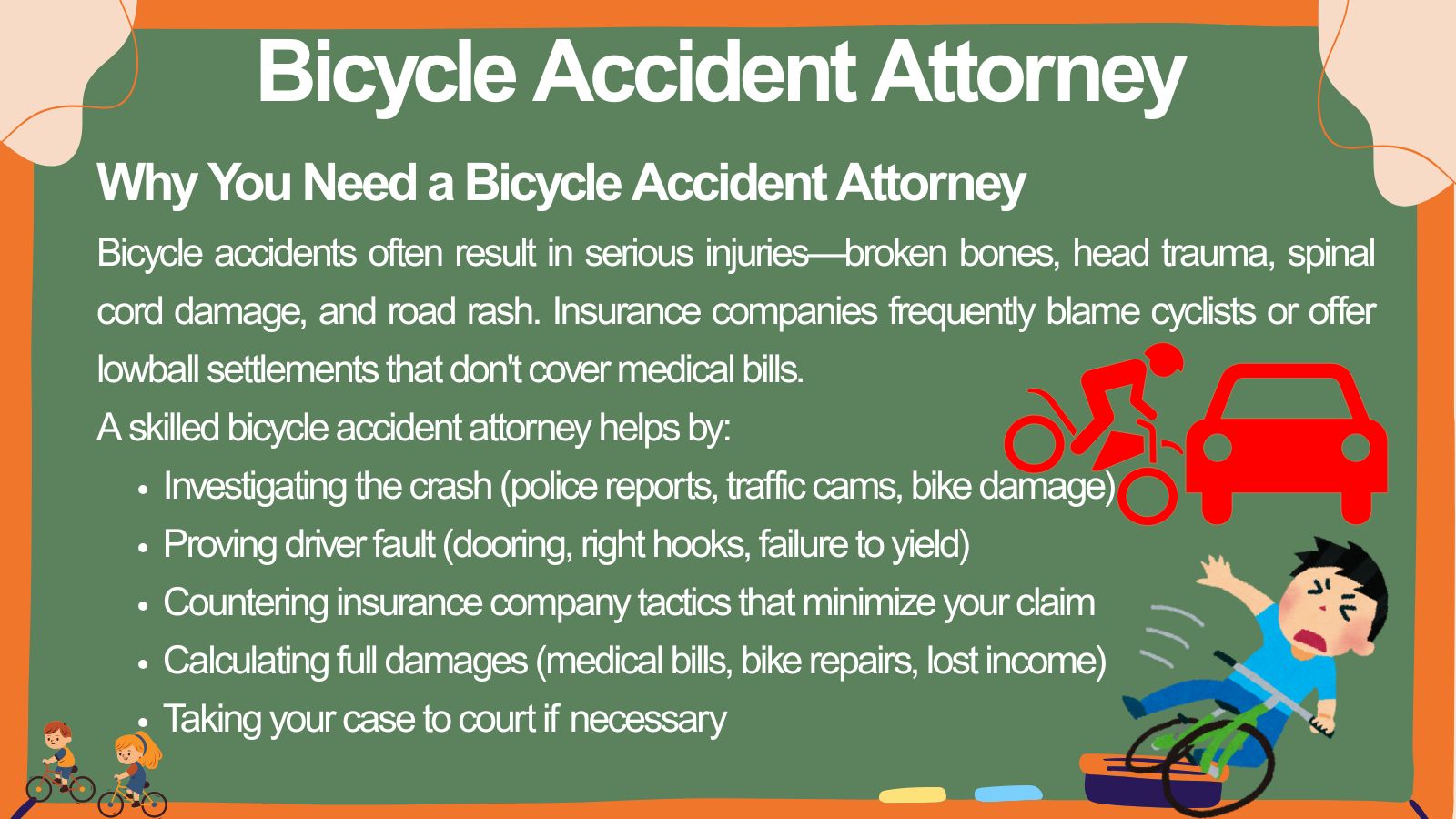
Bicycle accidents often result in injuries that require long-term care, such as traumatic brain injuries (TBIs) or complex fractures. A competent attorney must be able to calculate not just your current medical bills, but the future cost of medical care, lost wages, and loss of earning capacity.
Ask potential attorneys how they work with medical professionals. Do they have experience working with life-care planners? Do they understand how to present evidence of "pain and suffering" to an insurance adjuster or a jury? An attorney who views your case merely as a collection of receipts will fail to secure the compensation you deserve for the long-term impact on your quality of life.
Navigating Insurance Challenges
Florida is a no-fault insurance state, but the application of Personal Injury Protection (PIP) in bicycle accidents is nuanced. Depending on the circumstances—whether you own a car, whether the driver has sufficient liability coverage, or whether you have uninsured/underinsured motorist (UM) coverage—the path to recovery can be complex.
Your attorney must be adept at maximizing every available source of insurance. For instance, if the at-fault driver's policy limit is insufficient to cover your damages, a skilled lawyer will explore secondary policies or excess coverage options. This level of strategic analysis is essential for severe cases where medical costs quickly exceed standard policy limits.
Common Mistakes to Avoid
When choosing counsel, avoid these common errors:
- Selecting based on TV commercials: High marketing volume does not equal high legal skill. Evaluate based on results and direct communication.
- Delaying the decision: Evidence disappears quickly. Skid marks fade, surveillance footage from local businesses gets overwritten, and witness memories blur. Secure representation as early as possible.
- Failing to disclose information: Be completely transparent with your attorney about your health history and the details of the crash. Hiding facts can be used against you during the discovery phase of litigation.
Frequently Asked Questions
How much does a bicycle accident attorney in Tampa cost? Most Tampa personal injury attorneys work on a contingency fee basis. This means they receive a percentage of the final recovery—typically 33% to 40% depending on whether the case settles or goes to trial—and you pay nothing unless they win.
What if I was partially at fault for the accident? Florida follows the rule of "comparative negligence." This means that even if you were partially responsible for the accident, you may still recover damages, though your award will be reduced by your percentage of fault. An attorney helps ensure this percentage is calculated fairly.
Do I need an attorney if the insurance company offered a settlement? Yes. Initial settlement offers from insurance companies are often far lower than the true value of your case. An attorney will evaluate the long-term medical and financial impacts to ensure the settlement actually covers your needs.
How long do I have to file a lawsuit in Florida? Under Florida law, there is a statute of limitations for personal injury claims. As of 2026, you generally have two years from the date of the accident to file a lawsuit. Failure to file within this window usually results in the permanent loss of your right to sue.
What should I bring to my first meeting? Bring the police report, photos of the scene and your injuries, medical records, insurance policy information, and any correspondence you have received from the at-fault driver's insurance company.
Next Steps
Once you have identified two or three potential firms, schedule consultations with each. Use the opportunity to ask about their specific plan for handling your case and how they intend to gather evidence. Select the firm that provides the clearest answers, demonstrates the most relevant experience, and makes you feel confident in their ability to advocate for your recovery. Your focus should remain on healing; let a qualified professional handle the technicalities of the legal process.
Image Gallery