Most Pleasurable Sexual Positions for Women: A Data-Driven Look
The quest to identify the "most pleasurable" sexual positions for women often centers on the physiological mechanics of clitoral and vaginal stimulation. Data-driven research, including findings from the Journal of Sexual Medicine and...
The quest to identify the "most pleasurable" sexual positions for women often centers on the physiological mechanics of clitoral and vaginal stimulation. Data-driven research, including findings from the Journal of Sexual Medicine and various surveys on sexual satisfaction, indicates that there is no singular position that works for everyone. Instead, the highest reported pleasure often correlates with positions that allow for simultaneous clitoral stimulation, physical intimacy, and control over the depth and angle of penetration.
Contents
Understanding the Physiological Basis of Pleasure
To analyze sexual pleasure through a data-driven lens, one must first distinguish between the two primary modes of stimulation: vaginal and clitoral. Physiological studies consistently show that the vast majority of women (approximately 75% to 80%) require clitoral stimulation to achieve orgasm. Consequently, the most effective sexual positions are those that facilitate this, either through direct physical contact between partners, manual stimulation, or the use of external aids.
The "pleasure" reported in clinical studies is subjective but often measured using the Female Sexual Function Index (FSFI), which evaluates desire, arousal, lubrication, orgasm, and satisfaction. When participants report higher satisfaction levels, it frequently involves positions that optimize the anatomical alignment of the clitoris and the partner’s pelvis or extremities.
Examining High-Satisfaction Positions
While individual preferences vary, data-driven inquiries and surveys frequently highlight specific positions that balance comfort and efficacy.
The Coital Alignment Technique (CAT)
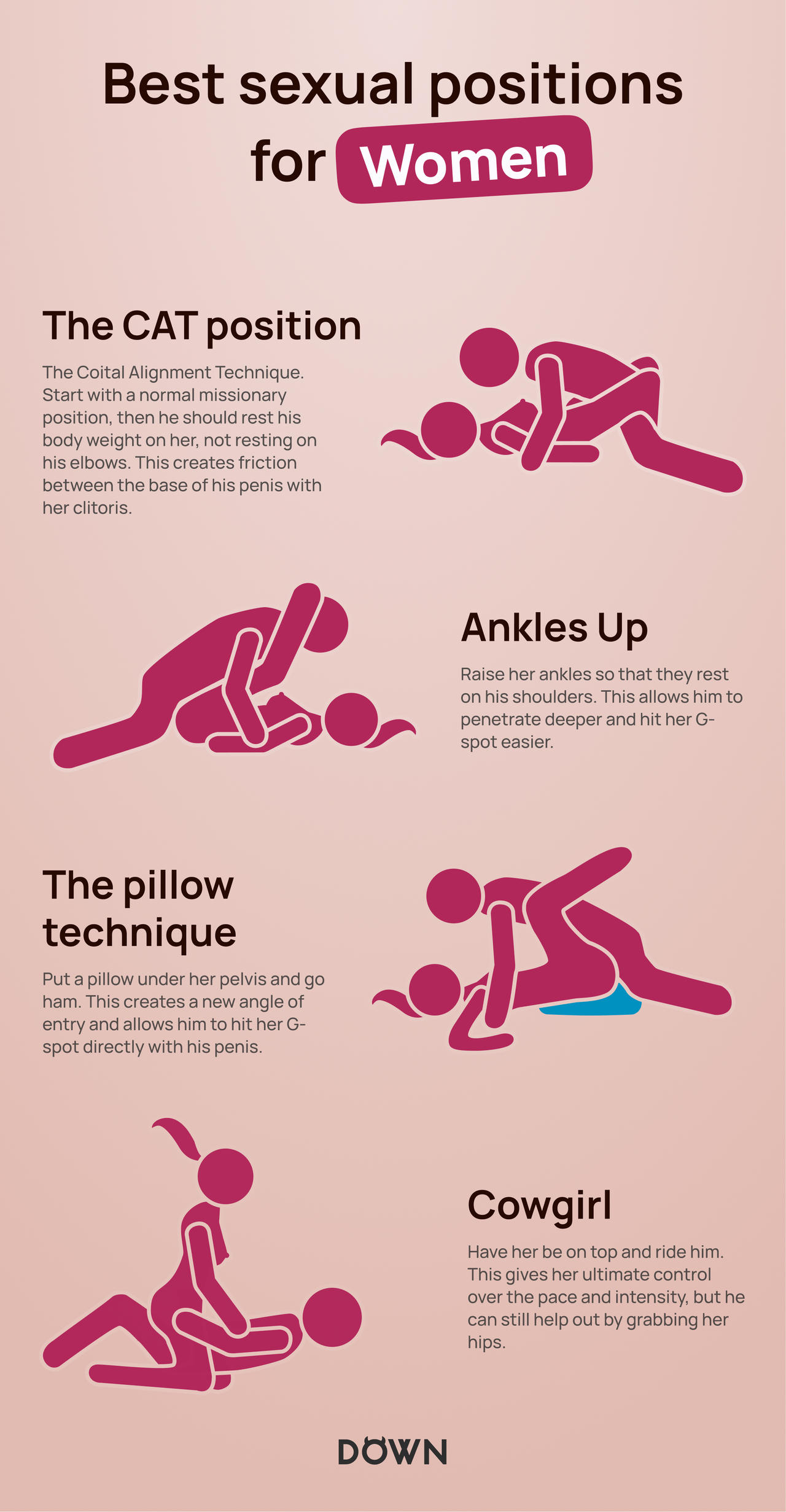
The Coital Alignment Technique is a variation of the missionary position designed specifically to maximize clitoral stimulation. Unlike traditional missionary, where the movement is primarily thrusting, the CAT involves a rhythmic grinding or rocking motion. By keeping the pelvises in constant contact, the base of the penis or the partner’s pelvis provides consistent pressure against the clitoral glans. Studies suggest this position is highly rated for its ability to integrate penetration with sustained clitoral contact.
Woman-on-Top (Superior Position)
The woman-on-top position is frequently cited in self-reported satisfaction surveys as a top choice. The mechanical advantage here is two-fold: it allows the woman to control the depth, speed, and angle of penetration, and it keeps the clitoris easily accessible for manual stimulation or contact with the partner’s body. This position empowers the individual to adjust their movement to match their specific physiological needs, which contributes to higher levels of reported sexual agency and satisfaction.
Side-Lying (Spooning)
The side-lying position is often praised for its ability to facilitate intimacy while remaining physically low-exertion. It allows for deep, slow penetration and, crucially, leaves both partners' hands free. This makes it an ideal position for incorporating manual stimulation or the use of vibrators, which can bridge the gap if vaginal penetration alone is insufficient for reaching climax.
Comparative Overview of Sexual Positions
| Position | Primary Benefit | Clitoral Accessibility | Depth Control |
|---|---|---|---|
| Coital Alignment | Constant pressure | High | Low |
| Woman-on-Top | User-controlled depth/speed | Very High | High |
| Side-Lying | Intimacy and comfort | High (with hands) | Moderate |
| Rear-Entry | Deep penetration | Low (requires aids) | Moderate |
The Role of External Aids and Communication
A data-driven look at sexual pleasure would be incomplete without acknowledging the impact of external factors. Clinical outcomes are significantly improved when partners communicate about specific preferences. Furthermore, the use of vibrators—often referred to as "assistive devices" in sexual health literature—has shown a high correlation with reported sexual satisfaction.
When a position is structurally limited in terms of clitoral contact (such as rear-entry, which is often rated highly for its psychological or physical intensity but lower for clitoral stimulation), the integration of a vibrator can negate the deficit. The data suggests that "pleasure" is not a static property of a position, but rather a dynamic result of combining the right geometry with the right type of stimulation.
Common Obstacles to Pleasure
Research into sexual health identifies several factors that can impede pleasure, regardless of the position chosen:
- Anatomical Variation: Every individual has unique nerve density and sensitivity. What works for one person may cause discomfort for another.
- Performance Anxiety: High levels of psychological pressure to reach an "ideal" orgasm can ironically lead to decreased arousal and physiological response.
- Lubrication and Tissue Health: Sexual pleasure is heavily dependent on comfort. Insufficient lubrication can lead to friction and pain, which inhibits the nervous system's ability to facilitate an orgasmic response.
- Lack of Foreplay: The "plateau" phase of arousal takes time. Data indicates that longer, more deliberate arousal sessions significantly increase the likelihood of achieving peak sexual satisfaction.
Frequently Asked Questions
Is there one "best" sexual position?
No. Data indicates that sexual satisfaction is highly individual. While certain positions are more conducive to clitoral stimulation, the "best" position is defined by the unique physiological needs and personal preferences of the individuals involved.
Why do some positions feel good for some but not for others?
Differences in anatomical structure, such as the position of the clitoris relative to the vaginal opening, dictate how much stimulation is received during penetration. Additionally, variations in pelvic floor muscle tension and individual sensitivity play significant roles.
Does the frequency of sex impact the effectiveness of these positions?
There is no direct correlation between the frequency of sex and the inherent "pleasure" of a position. However, regular communication between partners about what feels best in various positions often leads to improved sexual satisfaction over time.
Can positions be used to increase intimacy?
Yes. Positions that allow for face-to-face contact and consistent physical proximity, such as the Coital Alignment Technique or side-lying, are frequently reported as being as much about emotional connection as they are about physical pleasure.
Should I consult a professional if I am not finding these positions pleasurable?
If you are experiencing consistent pain or a complete lack of sexual satisfaction that causes distress, it is recommended to speak with a sexual health professional or a gynecologist. They can help rule out underlying medical conditions or provide guidance based on your specific health profile.
Next Steps for Exploration
If you are looking to enhance your sexual experience, begin by focusing on the mechanics of your specific needs. Start by identifying whether you require direct clitoral pressure, and experiment with the positions mentioned above—specifically the Coital Alignment Technique or the woman-on-top position. Incorporating a vibrator into these sessions can provide a measurable boost in satisfaction by providing the steady, consistent stimulation that manual contact alone may not offer. Always prioritize comfort and communication, as these are the most reliable indicators of a fulfilling sexual experience.
Image Gallery