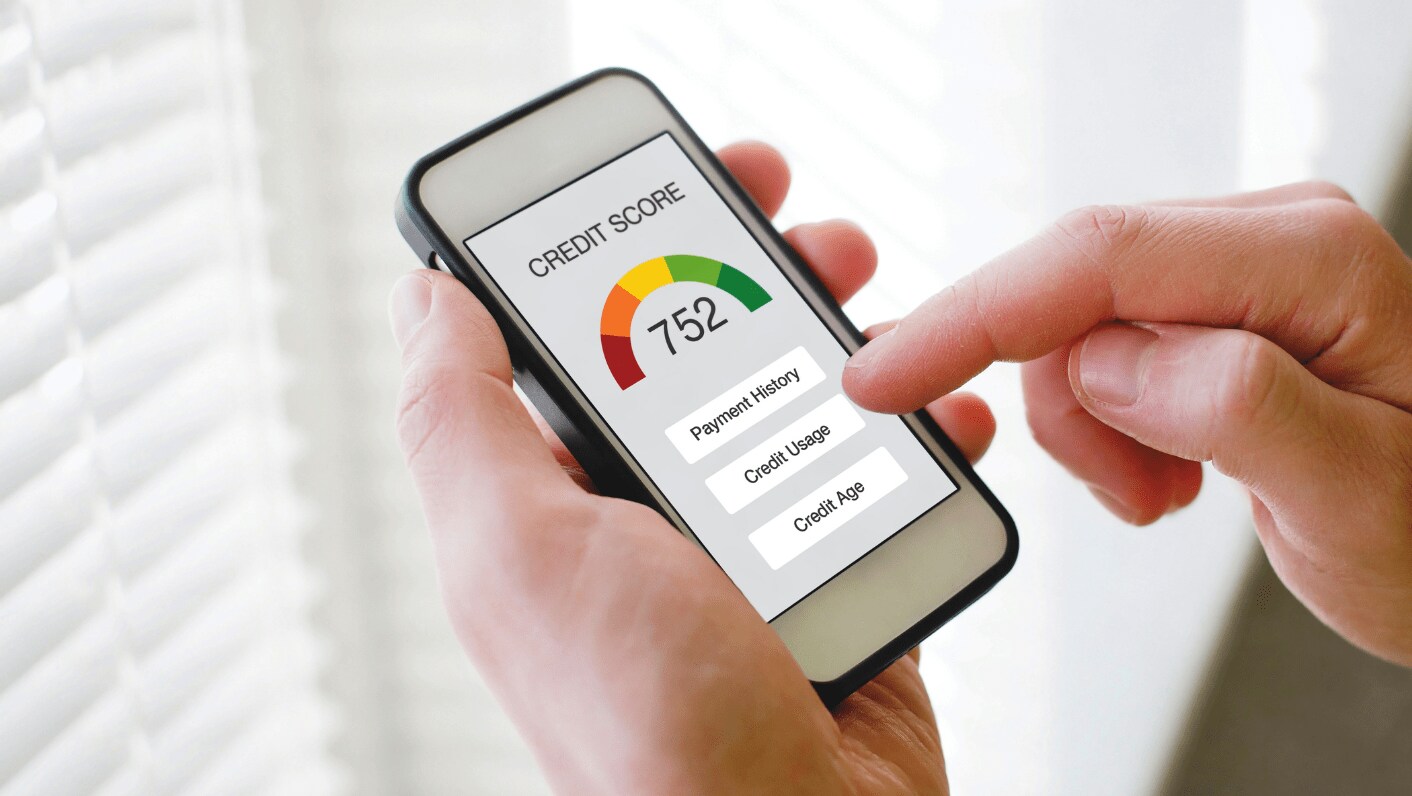
The Most Accurate Way to Check Your Credit Score
The most accurate way to check your credit score is to access your FICO Score directly through myFICO.com or your bank’s official portal, ensuring it is based on data from all three major bureaus: Experian, Equifax, and TransUnion. Bec...
The most accurate way to check your credit score is to access your FICO Score directly through myFICO.com or your bank’s official portal, ensuring it is based on data from all three major bureaus: Experian, Equifax, and TransUnion. Because 90% of top lenders use FICO models, these scores provide the most reliable reflection of your creditworthiness.
Contents
Understanding the Concept of Accuracy in Credit Scoring
When consumers ask for the "most accurate" credit score, they are often surprised to learn that they don't have just one score. Accuracy in the world of credit is not about a single "true" number; rather, it is about which scoring model and which credit bureau’s data a specific lender is looking at during a specific moment in time.
A credit score is a mathematical snapshot of your credit report. If the data on your report changes—such as a balance being paid down or a new late payment being recorded—your score changes instantly. Furthermore, different scoring models weigh data differently. A score from a third-party "free" app might be 100% accurate according to the VantageScore 3.0 model, but if your mortgage lender uses FICO Score 5, the number you see in the app is essentially irrelevant to your loan application.
To achieve maximum accuracy, you must align the score you are viewing with the score your lender will use. In 2026, the industry remains dominated by the Fair Isaac Corporation (FICO), but the specific version of that score (e.g., FICO 8, FICO 9, or FICO 10T) varies by industry.
FICO vs. VantageScore: Which One Matters?
The divide between FICO and VantageScore is the primary cause of confusion regarding "accurate" scores. Most free credit monitoring services provide a VantageScore. While VantageScore is a legitimate model developed by the three major credit bureaus, it is far less commonly used by lenders for high-stakes credit decisions like mortgages or auto loans.
Why FICO is the Gold Standard
FICO has been the industry leader for decades. As of 2026, the FICO Score 8 remains the most widely used version for general credit cards and small personal loans. However, the mortgage industry has transitioned toward more advanced models. Following mandates from the Federal Housing Finance Agency (FHFA), lenders are now utilizing FICO 10T and VantageScore 4.0, both of which incorporate "trended data." Trended data looks at your credit behavior over the last 24 months—such as whether you pay off your balances in full or only make minimum payments—rather than just a single monthly snapshot.
If you are checking your score to prepare for a major purchase, a VantageScore from a free app may provide a "ballpark" figure, but only a FICO score provides the accuracy required to predict a lender's decision.
The Most Reliable Sources for Your Credit Score
To find the most accurate representation of your credit health, you should prioritize sources that offer FICO scores and access to data from all three bureaus.
1. Official Bank and Credit Card Portals
Many major financial institutions now provide customers with free access to their actual FICO scores. For example, American Express, Citi, and Discover typically provide FICO Score 8 based on Experian or Equifax data. This is highly accurate because it is the same score these institutions use to manage your account. Always check your bank's mobile app first, but verify which model they are showing you in the "fine print" or "about this score" section.
2. myFICO.com
This is the consumer division of Fair Isaac Corporation. It is arguably the most accurate source because it provides access to almost every version of your FICO score. While it often requires a paid subscription, it allows you to see your FICO Auto Scores, FICO Bankcard Scores, and the specific versions used for mortgage lending (FICO 2, 4, and 5, as well as the newer 10T).
3. Experian, Equifax, and TransUnion Directly
The three bureaus themselves offer credit monitoring. Experian, for instance, provides a free FICO Score 8 updated every 30 days. This is highly accurate for that specific bureau’s data. However, remember that your Equifax and TransUnion reports might contain different information, leading to different scores. Accuracy requires checking all three.
The Role of the Three Major Credit Bureaus
The "accuracy" of your score is entirely dependent on the "accuracy" of the underlying data at the bureaus. Credit bureaus are private companies that collect data from lenders; they do not always share information with each other.
- Experian: Often used for credit card applications and personal loans.
- Equifax: Frequently used in the southeastern United States and for many telecommunications and utility accounts.
- TransUnion: Widely used for auto loans and identity verification.
Because a lender might pull your report from only one of these bureaus, your score is only "accurate" if you are looking at the data from the specific bureau that the lender chooses. For the highest level of certainty, you should use a "3-Bureau" monitoring service that aggregates data from all three.
| Feature | FICO Score (General) | VantageScore 3.0/4.0 | Official Credit Report |
|---|---|---|---|
| Lender Adoption | ~90% of top lenders | Growing, but secondary | Foundation of all scores |
| Best For | Mortgages, Auto, Credit Cards | General monitoring | Identifying errors/fraud |
| Cost | Often paid (via myFICO) or free via banks | Usually free (Credit Karma, etc.) | Free (AnnualCreditReport.com) |
| Data Source | Usually one or three bureaus | Usually one or two bureaus | All three bureaus |
| Accuracy Level | High (Industry standard) | Moderate (Educational) | Highest (Raw data) |
Steps to Ensure You Are Seeing the Most Accurate Data
To get a complete and accurate picture of your credit status in 2026, follow this sequence:
Step 1: Get Your Raw Credit Reports
Before worrying about the three-digit score, you must verify the data. Under federal law, you are entitled to free credit reports from each of the three bureaus. Use AnnualCreditReport.com. In 2026, this service remains the only federally authorized source for free reports. Review these for inaccuracies, as a single typo in a balance or an incorrect "late" status will render any credit score inaccurate.
Step 2: Identify the Scoring Model
Look for the label on your score. If it says VantageScore, treat it as an educational tool. If it says FICO Score 8, it is a highly accurate reflection of your general creditworthiness. If you are applying for a mortgage, seek out your FICO 10T or the older "Classic" FICO scores (2, 4, and 5) specifically.
Step 3: Check for Data Latency
Credit scores are not real-time. Lenders typically report data to the bureaus once a month. If you paid off a large credit card balance yesterday, your "accurate" score today will not reflect that change until the bank reports the new balance and the bureau updates your file. For the most accurate "current" score, wait until 3–5 days after your monthly statement closing date.
Step 4: Use a Multi-Bureau Comparison
Since you don't always know which bureau a lender will use, the most accurate approach is to know all three. Services like Experian Premium or myFICO provide side-by-side comparisons. If your Experian score is 740 but your Equifax score is 680, the 680 is the "accurate" one for a lender who only pulls Equifax.
Common Myths About Credit Score Accuracy
Myth: Checking my own score lowers it.This is false. When you check your own score through a monitoring service or bank app, it is a "soft inquiry." Soft inquiries have zero impact on your credit score. Only a "hard inquiry"—which occurs when a lender reviews your credit to make a lending decision—can lower your score.
Myth: All free scores are inaccurate.Free scores are not "wrong"; they are simply different models. A VantageScore is a mathematically accurate calculation of your credit report using the VantageScore formula. It only feels "inaccurate" because most lenders don't use that specific formula.
Myth: My score is the same everywhere.Because there are dozens of FICO versions and three different bureaus, you actually have hundreds of different "accurate" credit scores at any given time.
Practical Recommendations for 2026
For consumers navigating the financial landscape in 2026, accuracy is a matter of preparation. If you are simply maintaining your health, the free FICO score provided by your credit card issuer or Experian's free app is sufficient.
However, if you are preparing for a major life event—such as buying a home or a vehicle—invest in a one-month subscription to myFICO or a similar premium 3-bureau service. This allows you to see the exact FICO versions used in those industries. Simultaneously, visit the Consumer Financial Protection Bureau (CFPB) website to stay updated on current consumer rights regarding credit reporting and dispute processes.
The most accurate score is ultimately the one the lender sees. By monitoring your FICO scores across all three bureaus and ensuring your underlying credit reports are error-free, you remove the guesswork from your financial future.
Frequently Asked Questions
Why is my FICO score different from my VantageScore?
FICO and VantageScore use different algorithms to calculate risk. For example, VantageScore may give more weight to recent credit behavior, while FICO might prioritize your total length of credit history. Additionally, VantageScore 3.0 ignores paid collection accounts, whereas older FICO models may still penalize you for them.
Which credit score do mortgage lenders use in 2026?
Following the 2025-2026 transition mandated by the FHFA, most mortgage lenders now use FICO 10T and VantageScore 4.0. These models are more accurate than older versions because they include "trended data," showing how you manage debt over time rather than just your current balances.
How often should I check my credit score for accuracy?
You should check your credit score at least once a month to monitor for major fluctuations. However, you should check your full credit reports at AnnualCreditReport.com at least once a year—or before any major loan application—to ensure there are no fraudulent accounts or reporting errors.
Can I dispute an inaccurate credit score?
You cannot dispute the score itself, as it is just a mathematical result. However, you can and should dispute the underlying data on your credit report with the bureaus (Equifax, Experian, and TransUnion) and the Federal Trade Commission (FTC) if you find errors. Once the errors are corrected, your score will automatically update to reflect the accurate information.
What is the most accurate free way to see my FICO score?
The most accurate free FICO score is typically found through your bank or credit card provider (such as Discover's Credit Scorecard or American Express's MyCredit Guide). Additionally, Experian offers a free service that provides your FICO Score 8 based specifically on Experian data.
Image Gallery