How the Postcard Code Is Evolving for Senders: Navigating Modern Mail Logistics
For professional senders, the "postcard code" refers to the evolving set of Intelligent Mail barcode (IMb) specifications and postal design requirements that determine how mail pieces are processed, tracked, and priced. As of 2026, the...
For professional senders, the "postcard code" refers to the evolving set of Intelligent Mail barcode (IMb) specifications and postal design requirements that determine how mail pieces are processed, tracked, and priced. As of 2026, the evolution focuses on higher data density, tighter integration with digital tracking dashboards, and stricter compliance with automated sorting machine (AFSM 100) specifications to maintain postage discounts.
Contents
Understanding the Modern Postcard Mailstream
The traditional postcard has moved beyond a simple rectangular piece of cardstock. For businesses utilizing direct mail, the "postcard code" is the mechanism that bridges the physical object with digital automation. The evolution of this field is driven by the United States Postal Service (USPS) mandate to minimize manual handling.
The Intelligent Mail barcode—a 65-bar height-modulated code—is the backbone of this evolution. Senders are no longer just printing a destination ZIP code; they are embedding a unique identifier that tracks the piece from the induction point to the individual carrier's route. For 2026, the focus has shifted toward "Full-Service" automation, where the technical requirements for barcode placement, ink contrast, and clear zone integrity have become the deciding factors between standard commercial rates and the more expensive manual processing fees.
Prerequisites for Compliance and Postage Optimization
To qualify for current commercial postage rates, senders must adhere to rigid technical standards. The evolution here is defined by precision; even minor deviations in barcode print quality or placement can trigger "non-automation" surcharges.
- Clear Zone Integrity: The area around the address and the barcode must remain free of extraneous printing. As of 2026, automated scanners have higher sensitivity, meaning even faint background designs or bleed-through from the back of the card can lead to scanning errors.
- Aspect Ratio Requirements: A postcard must remain rectangular. The evolution of "code" also includes the physical specifications: a height-to-length ratio between 1.3 and 2.5 is mandatory. Violations of this aspect ratio result in the piece being classified as a letter or flat, which significantly alters the required Intelligent Mail barcode structure.
- IMb Serialization: Senders are now required to use a unique serial number for every piece within a mailing. The days of using static barcode strings are over; modern tracking requires granular data that links the individual mail piece to the specific customer record in your CRM.
The Shift Toward Predictive Tracking
The most significant evolution for senders is the integration of Informed Delivery and real-time tracking data. In 2026, the postcard code is not just a routing tool; it is a marketing intelligence asset. When the barcode is scanned at a sorting facility, it triggers a digital notification.
For the sender, this means the postcard code now serves as a trigger for digital omnichannel marketing. When a piece is scanned, the sender’s back-end systems can automatically launch a complementary email or social media advertisement, creating a synchronized "touch" sequence. The evolution of this code lies in the ability to bridge the physical-digital divide with lower latency than in previous years.
Comparison of Processing Standards
The following table summarizes the technical constraints senders must navigate to ensure their postcard mailings remain within the automation-ready category, which is the primary driver of postage cost-efficiency in 2026.
| Feature | Standard (Manual) | Automation-Ready (IMb) | Impact on Sender |
|---|---|---|---|
| Barcode | None/OCR | Intelligent Mail (IMb) | Essential for discounts |
| Sorting | Manual/Hand-sorted | Automated (AFSM 100) | Higher speed/lower cost |
| Tracking | None | Full-Service Visibility | Enables digital triggers |
| Design | Flexible | Rigid Clear Zones | Requires graphic oversight |
| Pricing | Higher (Non-auto) | Commercial Base/Plus | Primary cost reduction |
Common Technical Challenges and Troubleshooting
Despite the move toward automation, many senders face hurdles that prevent their mailings from qualifying for the best rates. The most common issue remains "barcode contrast." Using a light ink color—or a color that does not provide sufficient reflectance—will cause the USPS automated scanners to fail.
Another frequent failure point is the "Quiet Zone." If a sender includes decorative borders or text too close to the barcode, the scanning machine cannot distinguish the start and end of the barcode sequence. Senders must ensure that at least 1/8 inch of white space surrounds the barcode on all sides.
If your mailings are being flagged for manual processing, the first step is to request a "Mailpiece Design Analyst" (MDA) review through the official USPS Business Customer Gateway. This service is available to all commercial senders and provides a verified assessment of your layout against current 2026 specifications before you go to press.
The Role of Metadata in Modern Mailings
The evolution of the postcard code has turned the mail piece into a data packet. By utilizing the Serial Number field within the Intelligent Mail barcode, senders can perform A/B testing on their physical mail campaigns with the same precision as a digital campaign.
By assigning specific serial number ranges to different creative designs, you can monitor exactly which postcards are being processed and when they are delivered to the recipient’s mailbox. This allows for precise attribution. When a customer makes a purchase, the sender can correlate the timestamp of the sale with the scan data provided by the USPS, essentially closing the loop on direct mail ROI.
Regulatory Guidelines and Future-Proofing
As a sender in 2026, you must ensure your mailing software is updated to the latest standards provided by the USPS. The "code" is not static; it is subject to biannual updates that reflect changes in sorting equipment and postal capacity.
- Software Certification: Use only PAVE (Presort Accuracy Validation and Evaluation) certified software. This software ensures that your addresses are CASS-certified (Coding Accuracy Support System) and that your barcodes are generated in compliance with the current IMb specifications.
- Documentation: Maintain digital records of your "Postage Statement" and your "Qualification Report." These documents prove that your mailings met the automation requirements at the time of induction, serving as your primary defense if you are charged an unexpected surcharge by a local post office.
Frequently Asked Questions
Why does my postcard receive a non-automation surcharge even though it has a barcode? Often, this occurs because the barcode does not meet the "Full-Service" requirements or the physical mail piece failed the "Clear Zone" test. Even if a barcode is present, it must be scannable and placed in the correct location according to the current USPS layout guidelines.
How does the 2026 postcard code affect my ability to track mail? The modern IMb allows for "Full-Service" tracking. This means you receive automated updates as the postcard moves through the network. This is vastly different from historical methods, where tracking was essentially non-existent for standard postcard mailings.
Do I need a special printer to generate these barcodes? No, you do not need special hardware, but you do need specialized mailing software. Standard document printers are sufficient as long as they can output at a high-enough DPI (dots per inch) to maintain barcode crispness.
What is the minimum volume required to utilize these barcode discounts? While you can print a single postcard, the commercial discounts and the ability to use the Intelligent Mail barcode effectively generally require a minimum of 200 pieces for a standard mailing to qualify for automation-presort rates.
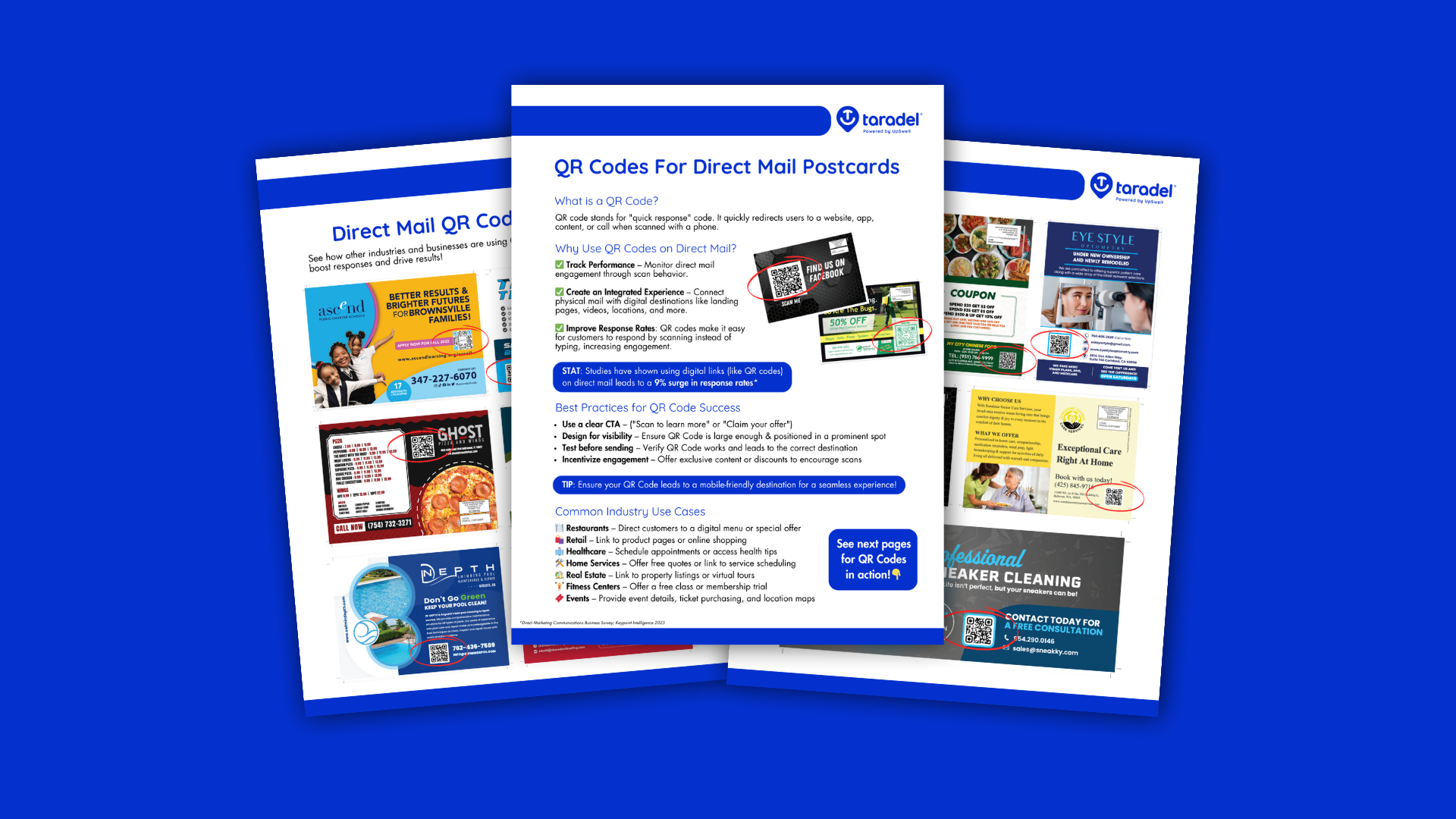
Can I include a QR code next to the Intelligent Mail barcode? Yes, but you must be careful. The QR code must be placed at least 1/2 inch away from the Intelligent Mail barcode and the address block to ensure the sorting machine does not confuse the two.
Strategic Next Steps
To succeed with modern postcard mailings in 2026, begin by auditing your current mailing software. Ensure it is fully updated to support the latest Intelligent Mail barcode requirements. Next, perform a mock-up of your design and run it through a certified Mailpiece Design Analyst to confirm that your clear zones and aspect ratios meet current thresholds. Finally, implement a tracking dashboard that pulls the scan data from the USPS Business Customer Gateway, allowing you to synchronize your physical mailings with your digital sales funnel.
Image Gallery