The Meaning Behind Tread on Tires: Patterns, Depth, and Vehicle Safety
Tire tread patterns are not merely cosmetic designs; they are meticulously engineered surface features that dictate how a vehicle interacts with the road, manages moisture, and maintains friction under various environmental conditions....
Tire tread patterns are not merely cosmetic designs; they are meticulously engineered surface features that dictate how a vehicle interacts with the road, manages moisture, and maintains friction under various environmental conditions. Understanding the meaning behind tread on tires involves recognizing how groove depth, block patterns, and siping channel water away, reduce hydroplaning, and provide crucial traction during acceleration, cornering, and braking.
Contents
The Core Functions of Tire Tread
At its foundation, a tire tread is the rubber exterior that comes into direct contact with the road surface. While a smooth tire (known as a slick) provides maximum dry-pavement traction due to a larger contact patch—which is why race cars use them on dry tracks—it becomes dangerously hazardous on public roads. Public roadways are subject to rain, snow, mud, and uneven surfaces, which necessitate a complex system of grooves and rubber blocks.
The primary responsibilities of tire tread include water evacuation, heat dissipation, noise reduction, and grip generation. Without tread patterns, a thin layer of water between the tire and the pavement would lift the vehicle, causing a total loss of steering and braking control known as hydroplaning. By channeling water through circumferential and lateral grooves, the tread allows the rubber to maintain direct contact with the asphalt.
Furthermore, the rubber compounds and block layouts are structured to handle the mechanical stresses of driving. As the wheel rotates, the tread blocks flex slightly as they meet the asphalt and snap back as they leave it. This continuous cycle generates heat, and modern tread designs incorporate elements that help dissipate this thermal energy to prevent premature structural degradation of the tire.
Anatomy of a Tire Tread Pattern
A comprehensive look at tire tread requires examining its distinct structural components. Every pattern is an assembly of specific geometric features designed to balance performance characteristics such as wet grip, dry handling, road noise, and fuel efficiency.
Ribs and Blocks
The raised sections of rubber that contact the road are known as tread blocks or lugs. These blocks are separated by channels called grooves. In many passenger car tires, these blocks are arranged into continuous rows called ribs around the circumference of the tire. Ribs help maintain directional stability and straight-line tracking on highways.
Grooves and Channels
The deep channels running around the tire (circumferential grooves) and across the tire (lateral grooves) are responsible for fluid evacuation. When driving through standing water, the circumferential grooves act as primary drainage pipes, holding the displaced water temporarily while the tire rolls forward, while lateral grooves push the water out to the sides of the contact patch.
Sipes
Sipes are the microscopic slits cut across individual tread blocks. These tiny cuts allow the rubber blocks to flex independently, creating additional biting edges that grip loose surfaces like snow, ice, and wet asphalt. As a tire rolls, the sipes open up to capture and squeeze out thin films of moisture, significantly enhancing winter and wet-weather traction.
Shoulders
The shoulder refers to the outer edge of the tread where it transitions into the sidewall. The design of the shoulder is critical during cornering, as it supports the lateral forces exerted on the vehicle when turning. Stiff shoulder blocks improve cornering stability and steering response.
Major Types of Tire Tread Patterns
Tire manufacturers engineer different tread layouts to suit specific driving environments, vehicle types, and weather conditions. Choosing the correct pattern ensures optimal safety and performance.
Symmetric Tread Patterns
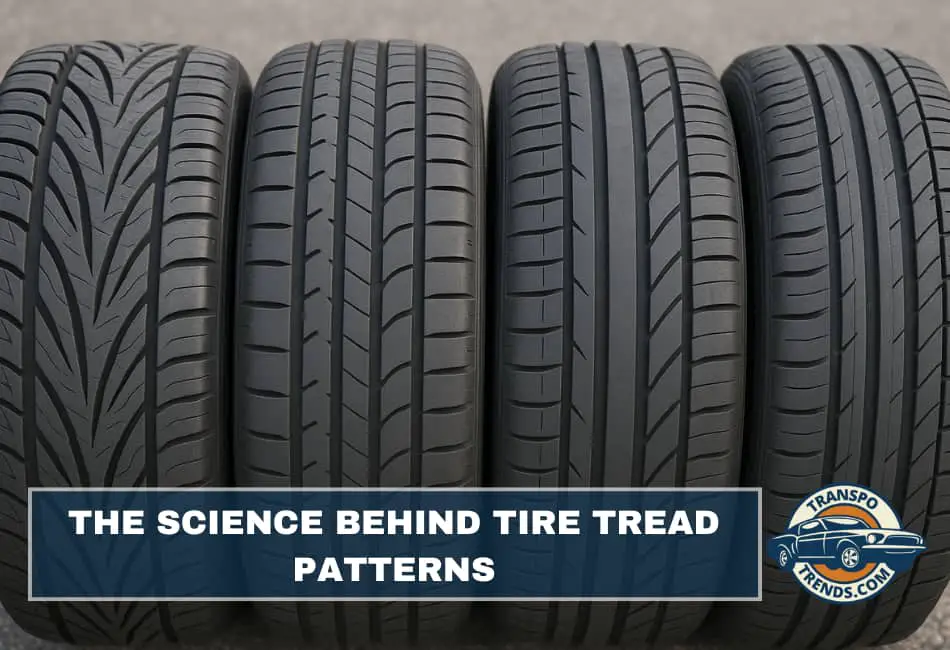
Symmetric treads feature continuous ribs or independent tread blocks across the entire face of the tire with the same pattern design on both the inner and outer halves. These tires can be rotated in any direction (front-to-back, side-to-side, or diagonally) and typically offer a quiet, comfortable ride with low rolling resistance. They are commonly found on standard passenger cars and commuter vehicles.
Asymmetric Tread Patterns
Asymmetric tires feature different tread designs on the inner and outer halves of the tire. The outer side usually features larger, stiffer blocks to maximize dry cornering grip and stability, while the inner side contains more grooves and sipes to channel water and improve wet traction. These tires must be mounted correctly, with the designated "outside" sidewall facing outward. They provide a versatile balance of dry handling, wet performance, and cornering stability.
Directional (Unidirectional) Tread Patterns
Directional treads are designed to roll in only one specific direction, indicated by an arrow on the sidewall. The V-shaped or arrow-like lateral grooves are engineered to pump water away from the center of the contact patch with high efficiency, greatly reducing the risk of hydroplaning at highway speeds. They are popular on high-performance sports vehicles and dedicated winter tires.
| Tread Pattern Type | Primary Characteristics | Best Suited For | Rotation Flexibility |
|---|---|---|---|
| Symmetric | Uniform blocks, low noise, long wear | Standard commuting, everyday passenger cars | High (Cross-rotation permitted) |
| Asymmetric | Dual-design face, optimized inner/outer grip | Performance sedans, crossovers, sports cars | Moderate (Side-to-side restricted by mounting) |
| Directional | V-shaped grooves, high water displacement | Wet climates, winter driving, high-speed performance | Low (Must rotate front-to-back on same side) |
| All-Terrain / Mud-Terrain | Deep voids, aggressive shoulder lugs, stone ejectors | Off-road trucks, SUVs, utility vehicles | Moderate (Requires strict alignment maintenance) |
Understanding Tread Depth and Wear Indicators
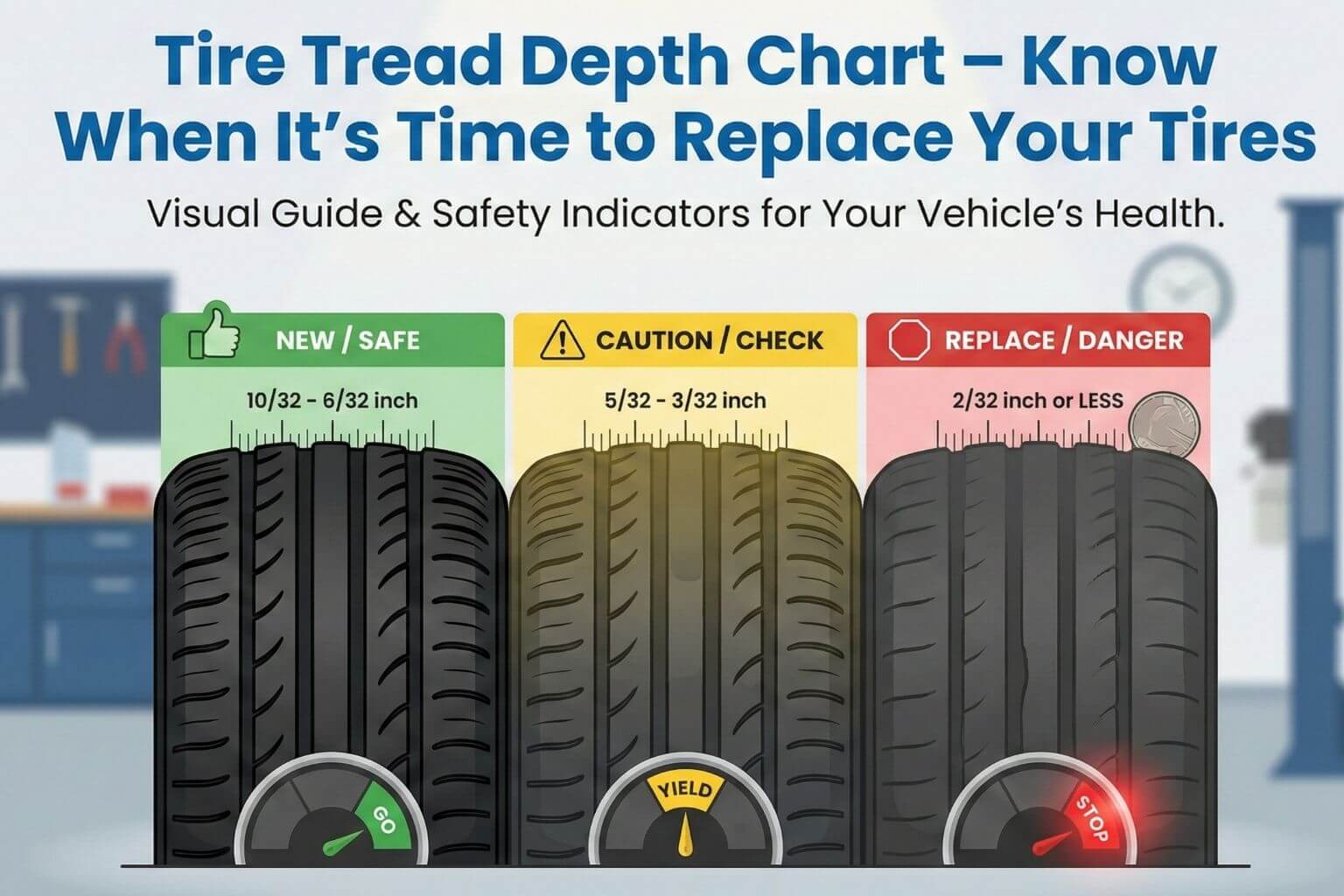
The physical depth of the tread grooves determines how effectively a tire can perform its functions as it ages. New passenger tires typically start with a tread depth of 10/32 to 11/32 of an inch. As the vehicle is driven, friction gradually wears away this rubber.
Tread Wear Indicators (TWT)
Modern tires feature built-in Tread Wear Indicators, commonly referred to as wear bars. These are narrow, horizontal rubber strips molded into the bottom of the main circumferential grooves, spaced evenly around the tire. When the surrounding tread has worn down to the same level as these bars—reaching a depth of 2/32 of an inch—the tire is legally bald in most jurisdictions and must be replaced immediately. At this depth, the tire loses virtually all ability to channel water, creating extreme hydroplaning hazards.
The Penny Test and Quarter Test
Drivers can manually check tread depth using simple physical indicators:
- The Penny Test (US): Insert a US penny into the tread groove with Abraham Lincoln's head pointing down into the rubber. If the top of his head is visible, your tread depth is less than 2/32 of an inch, signaling an urgent need for replacement.
- The Quarter Test (US): Insert a quarter into the groove with George Washington's head facing down. If the tread touches or covers the top of Washington's head, your tread depth is at least 4/32 of an inch, indicating the tire is still safe for wet weather.
- The Canadian Penny Test: Insert a Canadian penny with the maple leaf pointing down. If the visible space above the leaf is equal to the rim, depth is approximately 2/32 of an inch.
How Wear Patterns Reveal Mechanical Issues
The way a tire wears down often tells a detailed story about the health of the vehicle's suspension, alignment, and inflation habits. Examining irregular wear patterns can prevent premature tire failure and costly mechanical repairs.
Center Wear
If the center ribs of the tire are wearing out significantly faster than the shoulders, the tire has likely been consistently over-inflated. Excessive air pressure causes the center of the tread to bulge outward and bear the majority of the vehicle's weight.
Shoulder Wear (Both Edges)
If both the inner and outer shoulders show accelerated wear while the center remains deep, the tire has been under-inflated. Low pressure causes the outer edges to bear excessive loads while the center sags, increasing rolling resistance and generating high friction heat.
One-Sided Edge Wear
If a single shoulder (either inner or outer) wears out prematurely, the vehicle's wheel alignment is out of specification. Excessive camber (wheels tilting inward or outward) or incorrect toe angles cause the tire to drag across the pavement rather than roll smoothly.
Cupping or Scaloping (Patchy Wear)
Cupping appears as localized patches of missing rubber or scalloped dips around the circumference of the tread. This irregular wear is almost always caused by worn-out shock absorbers, struts, or loose suspension components that allow the wheel to bounce up and down while in motion.
Frequently Asked Questions
What does the depth of a tire tread actually measure?
Tire tread depth measures the vertical distance from the top of the rubber tread blocks down to the deepest part of the drainage grooves. It is typically measured in 32nds of an inch in the United States and millimeters in metric regions. Maintaining adequate depth is essential for safe water evacuation and surface friction.
Why do some tires have directional arrows on the sidewall?
Directional tires are engineered with V-shaped tread patterns designed to rotate in only one direction. This specific orientation maximizes water displacement and reduces hydroplaning risks at high speeds. Installing them backward impairs wet-weather performance and increases road noise.
Can low tread depth cause a car to fail inspection?
Yes. Most state and national motor vehicle inspection programs enforce a legal minimum tread depth limit, typically 2/32 of an inch. If a vehicle's tires fail to meet this threshold during an inspection, the vehicle will not be cleared for road use until the tires are replaced.
How often should tire tread depth be checked?
Drivers should inspect their tire tread depth at least once a month, as well as before embarking on long road trips. Regular inspections help catch alignment issues, uneven wear patterns, and progressive degradation before they compromise driving safety.
What is siping and why is it important for winter driving?
Siping consists of tiny, narrow slits cut into the individual tread blocks of a tire. When the tire rolls over snow or ice, these sipes open up to create additional biting edges and wipe away microscopic layers of water, significantly improving traction in cold and slippery conditions.
Conclusion and Next Actions
Tire tread is a sophisticated engineering system designed to maintain safety, stability, and control across unpredictable road environments. Regularly checking tread depth, monitoring wear patterns, and understanding the role of grooves and siping will extend tire life and protect against hazardous road conditions. Inspect your tires using a depth gauge or reliable manual test today, and consult a professional technician immediately if you notice irregular wear or depths approaching 2/32 of an inch.
Image Gallery