Auto Insurance in Fort Totten, Upper Northeast D.C.: Coverage Rules, Rates, and Local Guide
Drivers in Fort Totten and throughout Upper Northeast Washington, D.C. must maintain minimum District auto insurance of $25,000 per person and $50,000 per accident for bodily injury, $10,000 for property damage, and mandatory uninsured...
Drivers in Fort Totten and throughout Upper Northeast Washington, D.C. must maintain minimum District auto insurance of $25,000 per person and $50,000 per accident for bodily injury, $10,000 for property damage, and mandatory uninsured motorist protection. Given local traffic density and street-parking risks in Ward 5, selecting adequate coverage requires balancing legal minimums with localized physical damage protections.
Contents
Mandatory Auto Insurance Requirements in Washington, D.C.
Operating a motor vehicle in Washington, D.C. requires compliance with strict insurance mandates established by District law and overseen by the D.C. Department of Insurance, Securities and Banking (DISB). Every vehicle registered with the District of Columbia Department of Motor Vehicles must carry continuous coverage from an insurance carrier licensed to operate within the District.
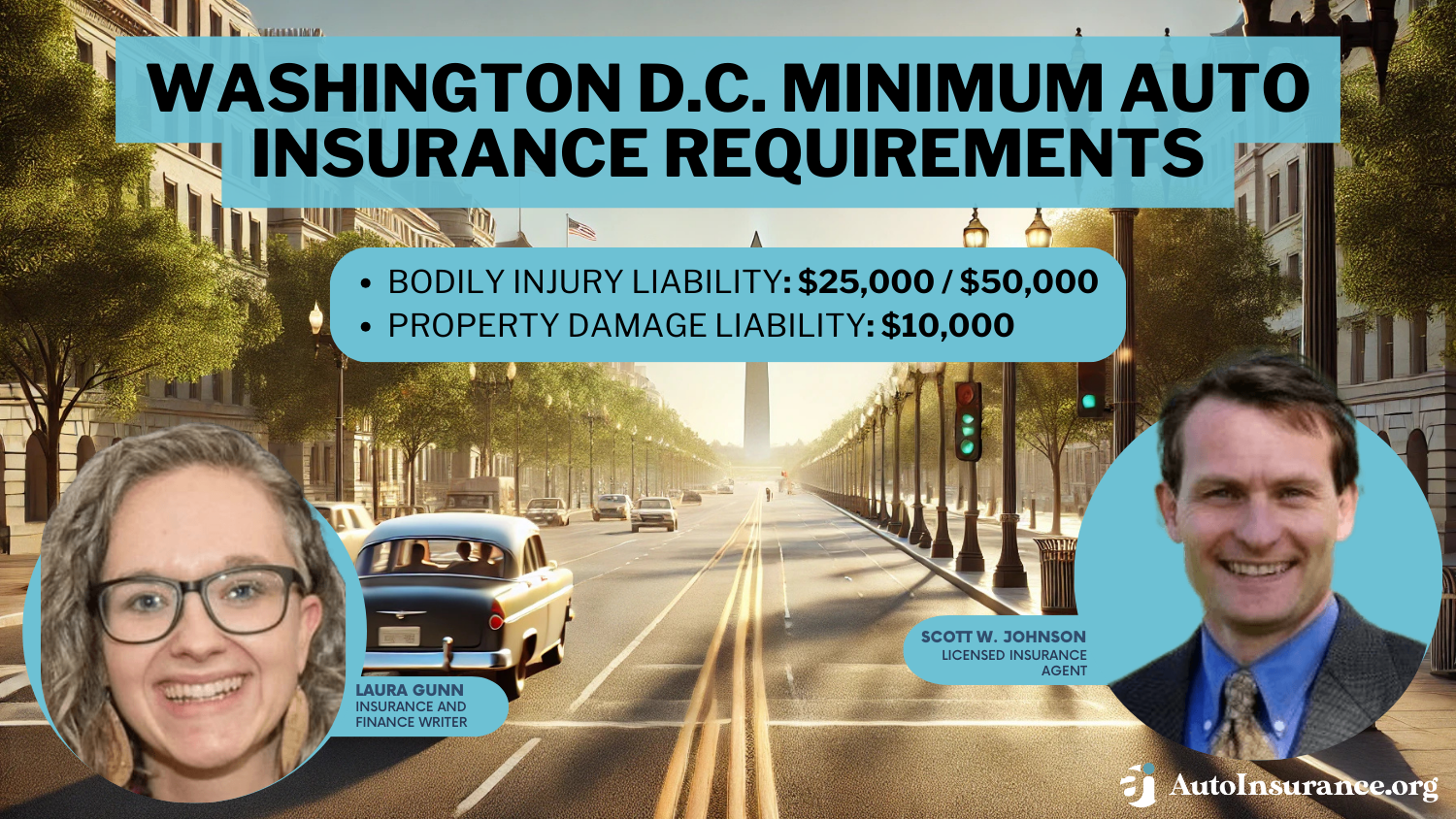
The legal minimum coverage limits for Washington, D.C. drivers are structured as follows:
- Bodily Injury Liability: $25,000 per person / $50,000 per accident maximum. This covers medical costs, lost wages, and legal defense fees for individuals injured in an accident where you are determined to be at fault.
- Property Damage Liability: $10,000 per accident. This pays for structural damage, vehicle repairs, or property destruction caused to third parties in an accident.
- Uninsured Motorist Bodily Injury (UMBI): $25,000 per person / $50,000 per accident. District law mandates this coverage to protect you and your passengers if you are struck by a driver who lacks liability insurance or flees the scene of an accident.
- Uninsured Motorist Property Damage (UMPD): $5,000 per accident, typically subject to a statutory $200 deductible. This covers damage to your vehicle caused by an identified uninsured driver or hit-and-run motorist.
Washington, D.C. operates under a unique hybrid system regarding personal injury protection and liability claims. Under the D.C. Compulsory/No-Fault Motor Vehicle Insurance Act, insurers offering policies in the District must offer Personal Injury Protection (PIP) to applicants. PIP covers medical expenses, work loss, and funeral costs regardless of who caused the collision.
However, drivers retain the option to accept or reject PIP coverage in writing. Electing PIP coverage provides fast reimbursement without proving fault, but under D.C. Code, accepting PIP benefits restricts your right to file a civil personal injury lawsuit against the at-fault driver unless your injuries meet specific statutory thresholds—such as substantial permanent disfigurement, severe medical incapacity, or reasonable medical expenses exceeding policy limits.
Neighborhood Risk Factors Influencing Rates in Fort Totten
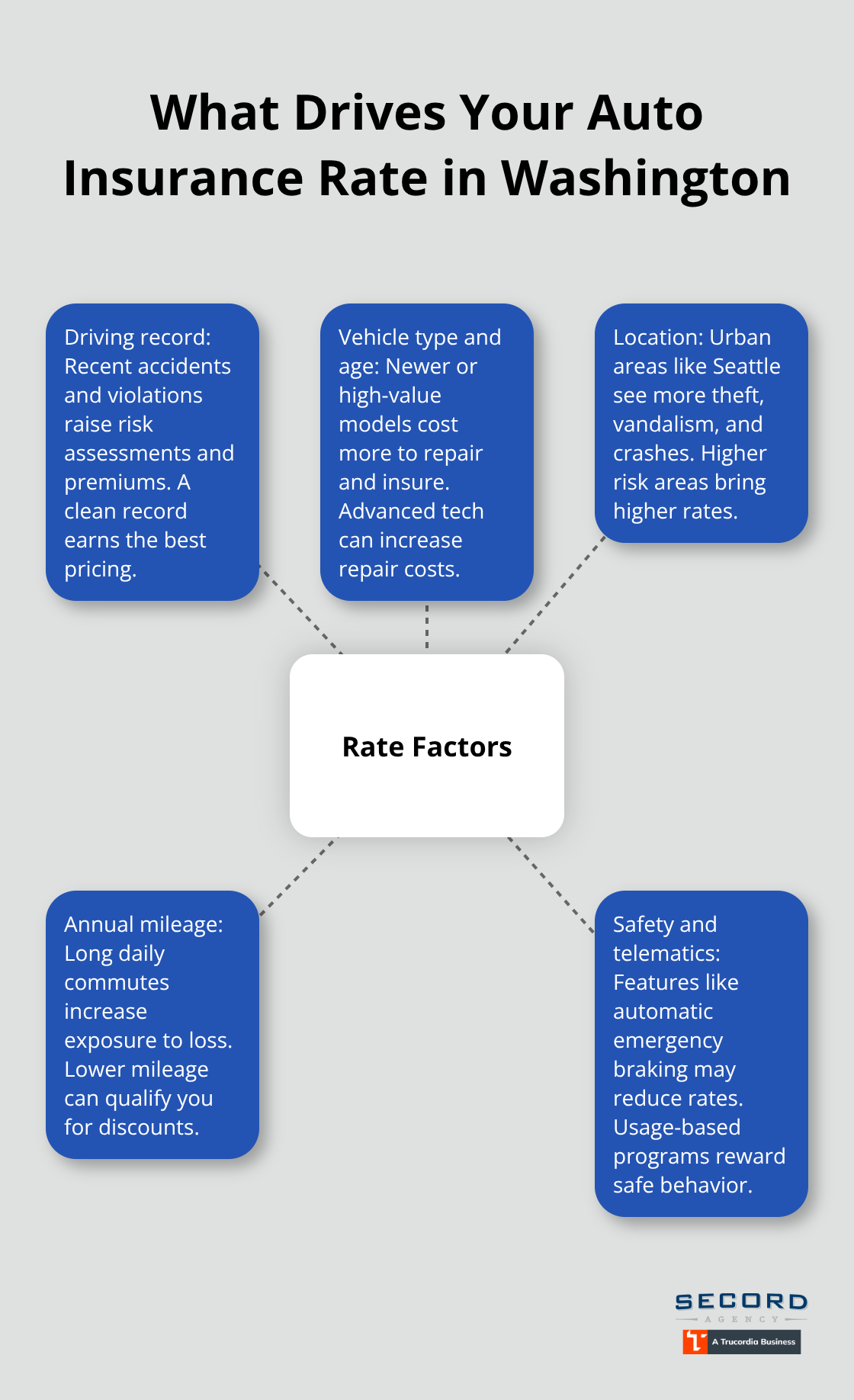
Auto insurance premiums in the Fort Totten area of Upper Northeast D.C. (Ward 5) are calculated based on driver history, vehicle characteristics, and localized zip code risk profiles. Bordered by neighborhoods such as Lamond-Riggs, Queens Chapel, Manor Park, and Brookland, Fort Totten presents a distinct urban transit profile that direct insurance underwriting models evaluate closely.
Upper Northeast D.C. Commuting & Parking Dynamics:
- Arterial Commuter Traffic
- Riggs Rd NE / South Dakota Ave
- North Capitol St / MD Line
- Inter-State Transit Volume
- Urban Parking Exposure
- Transit Hub (Red/Green Metro)
- On-Street Curbside Risks
- Catalytic Converter & Vandalism
High-Density Commuting Corridors
Fort Totten sits at a vital crossroad for regional commuters traveling between Prince George’s County, Maryland, and downtown Washington, D.C. Major arterial roadways—including Riggs Road NE, South Dakota Avenue NE, North Capitol Street NE, and Eastern Avenue NE—handle high daily traffic volumes. The frequent transition of vehicles across the Maryland–D.C. border increases localized accident frequency, which insurance actuaries reflect in regional base rates. Intersections along these primary routes often experience stop-and-go congestion during peak morning and evening rush hours, raising the probability of rear-end collisions and low-speed fender-benders.
Transit Hub Proximity and Street Parking Vulnerabilities
The Fort Totten Metro Station serves as a major intermodal transfer hub connecting the Red Line, Green Line, and multiple regional bus routes. The area features a mix of mid-rise multi-family housing complexes, newly developed transit-oriented apartments, and established single-family semi-detached rowhouses.
For residents who park on public curbs along residential streets rather than in private garages or designated off-street lots, insurance risk profiles increase. On-street parking in dense urban areas exposes vehicles to heightened risks, including:
- Sideswipe collisions from passing traffic or turning delivery vehicles.
- Bumper scuffs and structural impact during tight parallel parking maneuvers.
- Glass breakage, opportunistic theft of personal belongings, and catalytic converter theft.
- Vandalism or hit-and-run incidents where an at-fault driver cannot be identified.
Regional Weather and Environmental Hazards
Upper Northeast D.C. experiences seasonal weather events that generate comprehensive insurance claims. Heavy summer thunderstorms can bring localized flash flooding to low-lying road segments along Upper Northeast transit corridors, while winter weather introduces ice accumulation on hilly secondary streets. Fallen tree branches during high-wind storms—particularly in areas adjacent to Fort Totten Park and surrounding green spaces—frequently result in non-collision physical damage claims.
Essential Coverage Options Beyond D.C. Legal Minimums
Relying solely on Washington, D.C. mandatory minimum auto insurance leaves vehicle owners vulnerable to substantial out-of-pocket financial liability. A $10,000 property damage limit, for instance, is easily exceeded in a collision involving modern automobiles or District infrastructure. To ensure adequate financial protection, Fort Totten vehicle owners should consider structuring a comprehensive policy that incorporates broader liability thresholds and physical damage protections.
Comprehensive and Collision Coverages
- Collision Coverage: Pays to repair or replace your vehicle if it collides with another car, a tree, a guardrail, or experiences a rollover event, regardless of fault. This is essential for drivers navigating high-traffic corridors like Riggs Road NE.
- Comprehensive Coverage: Covers physical damage caused by events outside of direct traffic collisions. In Upper Northeast D.C., comprehensive protection safeguards against vehicle theft, vandalism, weather damage (hail, falling ice, or fallen tree limbs), fire, animal strikes, and windshield cracking.
If your vehicle is financed or leased through a commercial lender, the lienholder will typically mandate both comprehensive and collision coverages with maximum deductible limits (usually $500 or $1,000).
GAP Insurance and Loan Replacement
Because new automobiles depreciate rapidly, the market value of a vehicle may drop below the outstanding principal balance of an auto loan. If a vehicle is declared a total loss following a major collision on North Capitol Street or a severe theft incident, standard collision or comprehensive coverage only pays the vehicle's fair market value at the time of loss. Guaranteed Asset Protection (GAP) insurance pays the difference between the actual cash value payout and the remaining balance on your auto loan or lease, preventing out-of-pocket debt obligations.
Extended Liability Limits
Financial planners and insurance experts generally advise carrying liability limits well above the D.C. legal minimums. A recommended baseline structure for urban vehicle owners includes:
- Bodily Injury Liability: $100,000 per person / $300,000 per accident.
- Property Damage Liability: $50,000 to $100,000 per accident.
- Uninsured/Underinsured Motorist Coverage: Matched to your selected bodily injury liability limits ($100,000/$300,000).
Comparing Auto Insurance Tiers for Fort Totten Residents
Selecting the right balance between premium costs and financial protection requires evaluating coverage tiers against your vehicle's value, commuting habits, and parking environment.
| Coverage Type | D.C. Legal Minimum | Recommended Urban Protection Level | Primary Risk Mitigated |
|---|---|---|---|
| Bodily Injury Liability | $25,000 / $50,000 | $100,000 / $300,000 | Medical costs, lost wages, and legal defense from severe multi-vehicle collisions. |
| Property Damage Liability | $10,000 | $50,000 – $100,000 | Repair costs for high-value modern vehicles or public street infrastructure. |
| Uninsured Motorist BI | $25,000 / $50,000 | $100,000 / $300,000 | Collisions with hit-and-run drivers or uninsured motorists across MD/DC boundaries. |
| Uninsured Motorist PD | $5,000 ($200 deductible) | $25,000 – Actual Cash Value | Vehicle damage caused by an identified uninsured or hit-and-run motorist. |
| Comprehensive | Optional (Not mandated by law) | $500 Deductible | Curbside vandalism, catalytic converter theft, severe hail, and falling tree limbs. |
| Collision | Optional (Not mandated by law) | $500 – $1,000 Deductible | Direct traffic accident repairs, stationary object collisions, and pothole damage. |
| Personal Injury Protection | Optional (Must be offered) | $10,000 – $25,000 | Immediate medical cost and wage loss reimbursement regardless of fault status. |
Strategies to Lower Auto Insurance Premiums in Ward 5
While auto insurance rates in urban environments reflect higher baseline risks, drivers in Fort Totten can utilize several actionable strategies to lower overall premium expenses without compromising necessary coverage limits.
Leverage Public Transit and Low-Mileage Discounts
Fort Totten’s position as a Red Line and Green Line hub allows many residents to commute via public transit to downtown Washington, D.C., Maryland, or Virginia, rather than using a personal vehicle for daily work trips.
Insurance carriers offer reduced rates for vehicles classified for pleasure use rather than daily commuting. If your annual driving distance is below 7,500 miles, report your odometer reading to your insurer or participate in telematics programs that monitor driving frequency. Pay-per-mile or usage-based auto insurance programs calculate premiums primarily on actual miles driven, yielding substantial savings for transit-oriented residents.
Declare Off-Street Parking Arrangements
If your residence in Fort Totten includes access to a private driveway, single-car garage, or secure apartment parking garage, ensure your insurance company reflects this in your policy file. Off-street parking reduces the probability of curbside vandalism, side-mirror impact, and vehicle theft, which can translate into discounts on comprehensive coverage fees.
Policy Bundling and Multi-Policy Discounts
Combining your auto insurance policy with renters, condominium, or homeowners insurance through the same carrier can reduce overall premium costs by 10% to 25%. Insurance providers operating in the District frequently grant multi-policy discounts, which help offset higher base rates associated with urban zip codes.
Complete Approved Defensive Driving Courses
Taking an adult defensive driving course approved by the D.C. Department of Motor Vehicles or recognized nationwide by major carriers (such as courses administered by AARP or the National Safety Council) can qualify drivers for multi-year premium discounts. These courses reinforce safe driving strategies for high-density traffic zones, helping to lower accident rates among participating motorists.
D.C. DMV Compliance, Inspection, and Registration Guidelines
Maintaining valid auto insurance is directly linked to vehicle registration and licensing through the District of Columbia Department of Motor Vehicles (DC DMV). The D.C. DMV enforces continuous coverage laws electronically to prevent uninsured driving on public streets.
- Purchase D.C. Insurance (DISB-Approved Carrier)
- Complete D.C. Inspection (Half Street Inspection Station)
- Register Vehicle at D.C. DMV (Provide Proof & Title)
1. Insurance Verification Requirement
Before registering a vehicle in Washington, D.C., or transferring an out-of-state title to the District, you must obtain an insurance policy issued by a carrier authorized by DISB. The insurance card and electronic record must display:
- The exact legal name of the insured matching the D.C. driver's license.
- The specific Vehicle Identification Number (VIN).
- Active policy effective dates.
- D.C. specific minimum liability coverage levels.
2. Vehicle Safety and Emissions Inspection
All passenger cars registered in the District must undergo periodic safety and emissions inspections. Vehicles must be taken to the official D.C. DMV Vehicle Inspection Station located at 1001 Half Street SW, Washington, D.C. Passing inspection is mandatory before new tags can be issued or existing registrations renewed. Detailed procedures and current operational schedules can be reviewed directly via the D.C. DMV Driver and Vehicle Services Portal.
3. Avoiding Severe Uninsured Vehicle Fines
The D.C. DMV receives automated electronic notifications directly from insurance carriers whenever a policy is canceled, lapsed, or modified. If an insurance policy is terminated and replacement proof of D.C. coverage is not transmitted immediately, the D.C. DMV imposes administrative penalties:
- Initial Fine: $150 penalty for the first 1-to-30 days of lapse in mandatory insurance coverage.
- Ongoing Fine: $7 per day for each additional day the vehicle remains uninsured, up to statutory penalty caps.
- Registration Suspension: The vehicle's registration and license plates will be suspended, exposing the vehicle to impoundment and ticketing if parked on or driven along public streets in Fort Totten or elsewhere in the District.
If you sell your vehicle, move out of Washington, D.C., or store a vehicle without insurance, you must surrender your vehicle license plates to the D.C. DMV before canceling your auto insurance coverage.
Steps to Take Following a Car Accident in Upper Northeast D.C.
Experiencing a motor vehicle collision on busy thoroughfares like South Dakota Avenue NE or Riggs Road NE requires immediate, structured steps to protect your personal safety and safeguard your legal and financial claims.
Secure Safety & Call 911 (MPD Dispatch)
Document Scene (Photos, VIN, License Plates)
Exchange Details (Driver Info, Insurance Cards)
Request Police Report (MPD 4th District)
Notify Insurer & DISB Oversight (If Needed)
Ensure Safety and Call Emergency Services: Move vehicles out of live traffic lanes if possible and safe to do so. Call 911 to request emergency medical assistance and dispatch officers from the Metropolitan Police Department (MPD). The Fort Totten neighborhood is served primarily by the MPD Fourth District police station.
Document the Accident Scene Thoroughly: Capture high-resolution photographs of all damaged vehicles, license plate numbers, traffic signals, road conditions, and visible skid marks. Note the exact street name, nearest intersection, and relevant landmark signs.
Exchange Required Details: Exchange full contact information, driver's license numbers, vehicle registration details, and insurance carrier policy numbers with all drivers involved. Do not admit fault or discuss financial liability at the scene.
Obtain an Official MPD Police Report: Ensure the responding MPD officer files an official traffic accident report and request the police report card number. Insurance adjusters require an official police report when evaluating claims involving disputed fault, structural damage, or hit-and-run scenarios across state boundaries.
Notify Your Insurance Carrier Promptly: Report the accident to your insurance company as quickly as possible. Provide facts accurately and submit all scene documentation. If you encounter bad-faith claim denials or regulatory disputes with your insurer, you can file an administrative complaint with the D.C. Department of Insurance, Securities and Banking Regulatory Division.
Frequently Asked Questions
Is Washington, D.C. a strictly no-fault insurance jurisdiction?
No, Washington, D.C. operates under a hybrid no-fault framework. Insurers must offer Personal Injury Protection (PIP) to cover medical expenses and lost wages regardless of fault. However, drivers can choose to accept or reject PIP coverage. Accepting PIP limits your right to sue an at-fault driver unless your injuries meet severe statutory threshold criteria, whereas waiving PIP preserves standard fault-based tort rights.
How does living near the Maryland border impact insurance costs in Fort Totten?
Fort Totten's proximity to major commuter routes crossing into Prince George's County increases localized traffic volume and overall claim frequency. Underwriters factor regional traffic density, cross-border commuter collisions, and urban zip code data into baseline rates, making premiums in Upper Northeast D.C. higher than in outer suburban jurisdictions.
Can I maintain an auto insurance policy registered to a Maryland or Virginia address while residing in Fort Totten?
No. Operating a vehicle continuously garaged in Fort Totten while maintaining an out-of-state insurance policy or vehicle registration constitutes rate evasion and insurance fraud. In the event of a collision, the insurer can deny coverage, rescind the policy, and leave the driver personally responsible for all damages and legal penalties enforced by the D.C. DMV.
What should I do if my vehicle is hit while parked on the street in Fort Totten?
If your parked vehicle sustains damage, report the incident immediately to the Metropolitan Police Department to obtain a hit-and-run police report. Contact your insurance carrier to file a claim under your Uninsured Motorist Property Damage (UMPD) or Comprehensive/Collision coverage, depending on whether the hit-and-run driver can be identified.
Does taking the Metro from Fort Totten help lower auto insurance costs?
Yes. If using the Fort Totten Metro station reduces your annual driving distance below standard commuting thresholds, you can qualify for low-mileage discounts. Inform your insurance provider of your reduced annual mileage or enroll in a usage-based telematics program to secure lower rates.
Strategic Recommendations for Fort Totten Motorists
To ensure reliable legal compliance and financial protection while driving in Upper Northeast D.C., follow these steps:
- Select Coverage Beyond Mandatory Minimums: Do not rely solely on the legal minimum limits of $25,000/$50,000/$10,000. Increase bodily injury liability limits to at least $100,000/$300,000 and property damage limits to $50,000 or $100,000 to defend personal assets against high-cost claims.
- Add Comprehensive Physical Protection: Protect your vehicle against street-parking hazards, vandalism, severe storms, and theft in Ward 5 by maintaining comprehensive and collision coverage with manageable deductibles ($500 to $1,000).
- Confirm D.C. DMV Synchronization: Ensure your insurance carrier is licensed by DISB and submits electronic verification directly to the D.C. DMV. Surrender vehicle license plates prior to canceling any policy to prevent severe administrative fines.
- Re-Evaluate Mileage and Rate Discounts Annually: Review policy terms annually, submit updated annual mileage estimates reflecting public transit usage, and compare quotes across multiple DISB-licensed carriers to secure competitive pricing in 2026.
Image Gallery