What the Carson City Courts Actually Do: A Comprehensive Guide
Carson City courts manage the legal affairs of Nevada’s capital through a tiered system comprising the Municipal, Justice, and First Judicial District Courts. They adjudicate everything from minor traffic violations and small claims to...
Carson City courts manage the legal affairs of Nevada’s capital through a tiered system comprising the Municipal, Justice, and First Judicial District Courts. They adjudicate everything from minor traffic violations and small claims to high-stakes civil litigation, felony criminal trials, and complex family law matters within their specific jurisdictional boundaries.
Contents
As a consolidated municipality, Carson City functions as both a city and a county. This unique administrative structure influences how its judicial system is organized. Understanding what these courts actually do requires a look at the specific jurisdictions, the types of cases they handle, and how they interact with the broader Nevada state legal framework. As of 2026, these courts have streamlined many of their digital processes, yet their core mission remains the adjudication of justice based on the Nevada Revised Statutes (NRS).
The Tiered Structure of Carson City’s Judiciary
The judicial system in Carson City is not a single entity but a collection of specialized courts with distinct "subject matter jurisdiction." This means that the type of legal issue you have determines exactly which building you enter and which judge you see.
The Carson City Justice Court
The Justice Court is often the "people's court." It is a court of limited jurisdiction, meaning it can only hear cases that fall within specific categories defined by state law. In 2026, the Justice Court continues to be the primary point of contact for the majority of residents.
Criminal Jurisdiction: The Justice Court handles all misdemeanors committed within the township. This includes offenses like driving under the influence (DUI), petty larceny, and simple assault. Additionally, the Justice Court conducts "preliminary hearings" for felony and gross misdemeanor cases. While the Justice Court cannot sentence someone for a felony, it determines if there is enough evidence (probable cause) to "bind the case over" to the District Court for trial.
Civil Jurisdiction: The Justice Court manages civil disputes where the amount in controversy does not exceed $15,000. This is a critical threshold; if your claim is for $15,001, you must move to the District Court. Within this tier is the Small Claims Division, which handles cases up to $10,000. These proceedings are designed to be informal, often occurring without the presence of attorneys.
Evictions and Protection Orders: Landlord-tenant disputes, specifically summary eviction proceedings, are a high-volume area for the Justice Court. It also issues Temporary Protection Orders (TPOs) for domestic violence, stalking, or harassment.
The Carson City Municipal Court
The Municipal Court is frequently confused with the Justice Court because they often share the same judges and facilities in Carson City. However, its focus is narrower. It handles violations of Carson City’s local municipal codes and ordinances. This includes local traffic citations, animal control violations, and breaches of city-specific safety regulations.
The First Judicial District Court of Nevada
The First Judicial District Court is a court of general jurisdiction. It serves as the highest trial-level court in Carson City. Its authority is vast, covering all matters not specifically reserved for the lower courts.
Felony and Gross Misdemeanor Adjudication
Unlike the Justice Court, the District Court has the authority to conduct trials and hand down sentences for the most serious crimes. This includes homicides, sexual assault, white-collar crimes, and large-scale narcotics distribution. By 2026, the District Court has integrated advanced evidentiary technologies into the courtroom, but the fundamental right to a jury trial remains the cornerstone of its criminal proceedings.
High-Value Civil Litigation
When a lawsuit involves damages exceeding $15,000, it falls under the First Judicial District Court. These cases often involve complex business disputes, medical malpractice, personal injury, and real estate litigation. The court is responsible for managing the discovery process, ruling on pre-trial motions, and presiding over bench or jury trials.
Family Law and Domestic Relations
The District Court houses the Family Division. This is perhaps the most sensitive area of what the Carson City courts actually do. This division handles:
- Divorce and Annulment: Deciding the dissolution of marriage and the equitable distribution of community property.
- Child Custody and Support: Establishing parenting plans that prioritize the "best interests of the child" according to Nevada law.
- Adoptions and Guardianships: Legalizing the relationship between caregivers and minors or incapacitated adults.
- Termination of Parental Rights: Handling cases where the state or a parent seeks to legally sever a parental bond due to abandonment or abuse.
Probate and Estates
The District Court also oversees the probate process. When a resident of Carson City passes away, the court ensures that their will is valid, debts are paid, and assets are distributed to heirs. For estates without a will (intestate), the court follows strict Nevada succession laws.
Specialty Courts: A Rehabilitative Approach
In 2026, Carson City continues to emphasize "Specialty Courts" within the District and Justice levels. These programs recognize that traditional incarceration isn't always the most effective solution for crimes rooted in addiction or mental health issues.
- Drug Court: A rigorous, supervised program for non-violent offenders with substance abuse disorders. It requires frequent testing, mandatory counseling, and regular check-ins with a judge.
- Mental Health Court: Designed to divert individuals with diagnosed mental illnesses away from the jail system and into managed treatment programs.
- DUI Court: Specifically targets repeat offenders to reduce recidivism through intensive monitoring.
Administrative and Public Services
Beyond the bench and the black robes, the Carson City courts function as a massive administrative hub. The Clerk of the Court is the custodian of records.
- Public Records Access: The courts maintain a database of filings. Most civil and criminal records are public, allowing individuals to perform background checks or research property disputes.
- Jury Management: The court system coordinates the selection and summoning of Carson City residents for jury duty, a vital civic function.
- Marriage Licenses: While the Marriage Bureau is often associated with the Clerk’s office, the judges themselves frequently perform wedding ceremonies in the courthouse.
- Filing and Fees: The courts process filing fees, bail payments, and court-ordered restitution. In 2026, almost all of these functions are accessible via online portals to increase efficiency.
Comparing Jurisdictions in Carson City
The following table outlines the primary differences between the three main court tiers in Carson City to help clarify where specific legal matters are handled.
| Feature | Municipal Court | Justice Court | District Court |
|---|---|---|---|
| Case Type | City Ordinance Violations | Misdemeanors, Evictions | Felonies, Family Law |
| Civil Limit | N/A | Up to $15,000 | Over $15,000 |
| Small Claims | No | Yes (Up to $10,000) | No |
| Jury Trials | Rare/Limited | No (Bench trials only) | Yes |
| Appeals | To District Court | To District Court | To NV Supreme Court |
| Key Officers | City Attorney | District Attorney | District Attorney |
The Role of the Nevada Supreme Court in Carson City
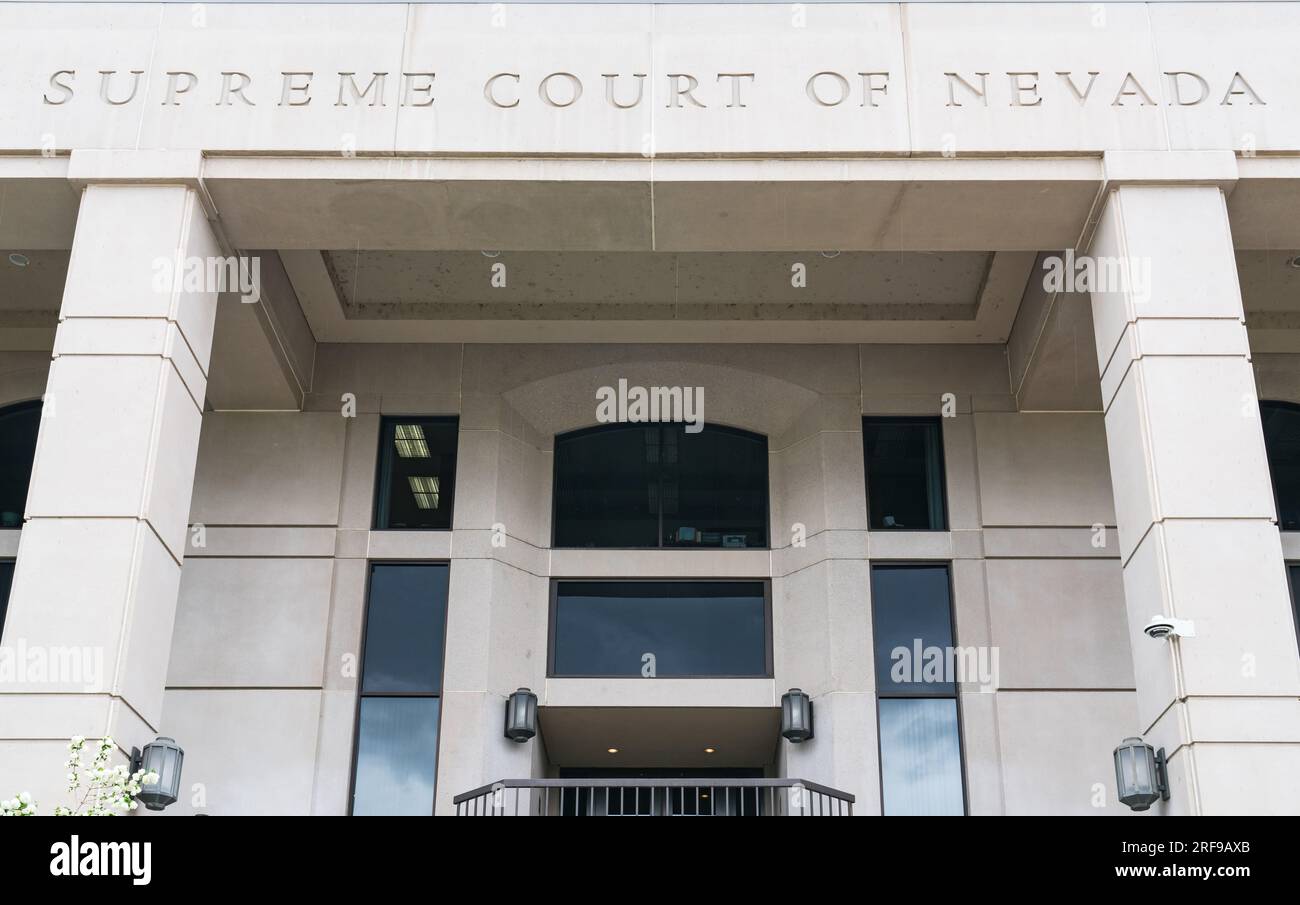
It is important to note that because Carson City is the state capital, it also hosts the Nevada Supreme Court and the Nevada Court of Appeals. While these are "Carson City courts" in a geographic sense, they do not handle local trials. Instead, they review decisions made by District Courts across the entire state. If a litigant is unhappy with a ruling from the First Judicial District Court in Carson City, their next step is an appeal to these high-level state courts.
Frequently Asked Questions
How do I find out if I have a case in Carson City?
You can search for active cases through the Carson City Justice and Municipal Court's online portal. You will typically need a case number or the full name of one of the parties involved. Criminal records and civil filings are updated regularly, though some sensitive family law or juvenile cases may be sealed from public view.
Can I represent myself in Carson City courts?
Yes, you have the right to represent yourself (known as "pro se" litigation). The Justice Court’s Small Claims division is specifically designed for this. However, for District Court matters involving felonies or complex civil litigation, the court strongly recommends hiring a licensed attorney due to the complexity of the Nevada Rules of Civil Procedure.
Where are the courts located?
The Justice and Municipal Courts are generally located in the Carson City Courthouse at 885 East Musser Street. The First Judicial District Court is also housed in this complex. It is centrally located near the state legislature and the Governor's mansion.
What should I wear to a Carson City court hearing?
The courts maintain a formal dress code. In 2026, even with the rise of virtual hearings, "business casual" is considered the minimum standard. Shorts, tank tops, and hats are generally prohibited in the courtroom. Dressing respectfully is often viewed by the court as a sign of taking the legal proceedings seriously.
How are judges selected in Carson City?
Judges in both the Justice Court and the District Court are elected by the citizens of Carson City in non-partisan elections. They serve six-year terms. If a vacancy occurs mid-term, the Governor may appoint a replacement, but that individual must eventually run for election to keep the seat.
Practical Recommendations for Navigating the System
If you find yourself needing to interact with the Carson City courts, start by identifying the nature of your problem. If it is a debt under $10,000, your path lies with the Small Claims division of the Justice Court. If you are dealing with a divorce or a major property dispute, you must prepare for the First Judicial District Court.
Always check the current Nevada Revised Statutes to understand the laws governing your specific situation. Before attending any hearing, visit the Clerk’s office or their official website to verify filing deadlines and required forms. Missing a procedural deadline can result in the dismissal of a case regardless of the merits of your argument.
Image Gallery