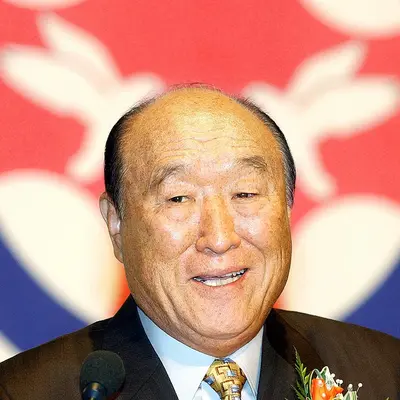
The Reverend Sun Myung Moon’s Net Worth Explained
Determining the net worth of the Reverend Sun Myung Moon—the founder of the Unification Church—is a complex task because his wealth was inextricably linked to a vast, transnational network of business entities, religious organizations,...
Determining the net worth of the Reverend Sun Myung Moon—the founder of the Unification Church—is a complex task because his wealth was inextricably linked to a vast, transnational network of business entities, religious organizations, and non-profit foundations rather than personal holdings. While estimates of the collective assets controlled by his movement often reached billions of dollars, these figures represent organizational holdings managed by the Unification Church and its affiliated entities rather than private wealth in the conventional sense.
Contents
The Nature of Organizational Wealth vs. Personal Net Worth
When discussing the financial status of religious leaders who build expansive institutional networks, it is critical to distinguish between personal net worth and the total valuation of a controlled enterprise. Reverend Sun Myung Moon founded the Unification Church in 1954 in South Korea. Over the following decades, the movement evolved into a global conglomerate encompassing media, education, manufacturing, agriculture, and real estate.
The distinction here is fundamental: personal net worth typically refers to an individual's assets—such as private bank accounts, equity in non-affiliated companies, and personal property—minus their liabilities. In contrast, the assets under the Unification Church umbrella are generally held by various trusts, foundations, and corporations. Reverend Moon acted as the spiritual and ideological leader of this infrastructure, but he did not personally own these companies in the way a sole proprietor owns a private business. Consequently, assigning a "net worth" to him personally is an analytical approximation that often conflates his influence over these entities with individual financial accumulation.
The Unification Church’s Business Empire
The economic engine behind the Unification Church—frequently referred to as the "Tongil Group"—is a significant conglomerate with diversified interests. To understand why observers often struggle to pinpoint Moon’s wealth, one must examine the scale of these operations, which served both as revenue generators for the church and as tools for its global expansion.
- Media Holdings: One of the most recognizable assets associated with the organization is The Washington Times, founded by Moon in 1982. This publication became a cornerstone of the movement's influence in the United States.
- Manufacturing and Heavy Industry: The Tongil Group in South Korea maintains interests in automotive parts, machinery, and defense-related manufacturing. These entities provide a stable industrial base.
- Real Estate and Hospitality: The movement has historically held substantial real estate assets globally, including hotels, resorts, and conference centers. These properties are often used for church functions while also operating as commercial businesses.
- Marine and Food Industries: The movement expanded into international commercial fishing, processed seafood distribution, and agricultural technologies, seeking to establish self-sustaining enterprises that aligned with the movement’s goal of global economic integration.
Challenges in Financial Estimation
Financial journalists and researchers have long faced significant hurdles when attempting to quantify the value of the assets associated with the Unification Church. Because these entities are often structured as private corporations or non-profit organizations, they are not subject to the same public disclosure requirements as publicly traded companies on the stock exchange.
- Consolidation of Assets: Many of the businesses operate under different legal jurisdictions, making it difficult for outsiders to perform a consolidated audit of the movement’s total value.
- Religious vs. Commercial Purpose: The line between religious activity and commercial enterprise is frequently blurred. Capital often flows between charitable foundations and for-profit businesses to support the movement’s growth, obscuring the "bottom line."
- Lack of Transparency: Private entities, particularly those managed by faith-based organizations, often shield their internal financial data to protect their strategic operations and internal governance from external scrutiny.
Comparison of Financial Structures
The following table illustrates why traditional metrics of wealth calculation do not apply directly to leaders of decentralized institutional networks like the Unification Church.
| Feature | Traditional Billionaire | Religious Organization Leader |
|---|---|---|
| Asset Ownership | Individual/Direct (Stocks, Cash) | Institutional (Trusts, Foundations) |
| Disclosure | SEC Filings/Public Records | Variable/Generally Private |
| Liquidity | Highly Liquid Assets | Illiquid (Real Estate, Factories) |
| Primary Goal | Profit Maximization | Mission and Institutional Scaling |
| Succession | Inheritance/Estate Law | Theological/Organizational Governance |
Legal and Regulatory Scrutiny
Throughout his life, the financial activities of the Unification Church and the Tongil Group invited scrutiny from government bodies, particularly in the United States and Japan. In 1982, Reverend Moon was convicted of federal tax fraud in the United States, specifically regarding the handling of funds in a personal bank account that prosecutors argued belonged to the church. This incident highlighted the perpetual tension between the organization’s massive financial holdings and the individual accountability of its leadership.
Such legal challenges underscore that even if the assets were legally organized under the movement’s name, regulators frequently looked for instances where personal use of those assets could be established. This creates a regulatory environment where the "net worth" of the founder is often debated in courtrooms, where the focus is on fiscal compliance rather than market valuation.
Impact on Global Influence
The wealth controlled by the Unification Church was never merely about accumulation; it was, by design, an instrument of influence. By investing in media outlets, international conferences, and global diplomatic initiatives, the organization sought to project a specific political and social ideology. Understanding this intent is essential for any analysis of the movement's finances. The "worth" of the movement, therefore, is better interpreted through its ability to fund global operations and sustain its institutional longevity rather than through a static dollar figure associated with its founder.
Frequently Asked Questions
1. Was Reverend Sun Myung Moon considered one of the richest people in the world? While the assets controlled by the movement he founded were often estimated in the billions, these were not personal holdings. Consequently, he did not appear on lists of the world’s wealthiest individuals, such as those published by Forbes, as those rankings measure personal, liquid net worth.
2. How did the Unification Church generate its funding? The church utilized a combination of member contributions (tithes), earnings from its various business subsidiaries under the Tongil Group, and international fundraising efforts. These funds were then reinvested into further business ventures and social/religious programming.
3. What happened to these assets after the Reverend passed away? Following the passing of Reverend Moon in 2012, control of the organizations and the broader network transitioned to his wife, Hak Ja Han, and their family members. The organizational structure remains largely intact, continuing to operate its various businesses and religious institutions under the direction of the church's leadership.
4. Why is it difficult to get an accurate figure for his net worth? The primary difficulty stems from the decentralized and private nature of the organizations involved. Because the businesses are not publicly traded and do not release consolidated financial statements, any attempt to quantify the "worth" of the movement is an estimation based on property holdings and industry estimates, not verified account balances.
Next Steps for Further Research
If you are interested in the fiscal impact of religious organizations, the best approach is to examine the annual reports of individual entities that are required to file public disclosures, such as specific non-profit foundations or media holdings that operate in transparent jurisdictions. Focusing on publicly available tax filings for the movement’s non-profit branches in the United States, which are available via the IRS Exempt Organizations Select Check tool, provides the most grounded insight into their operational scale.
Image Gallery