Best Life Insurance for Late 20s: A 2026 Comprehensive Guide
The best life insurance for individuals in their late 20s is typically a 20- or 30-year term life policy, which offers the highest coverage amount for the lowest monthly premium. At this age, you benefit from "locked-in" rates and high...
The best life insurance for individuals in their late 20s is typically a 20- or 30-year term life policy, which offers the highest coverage amount for the lowest monthly premium. At this age, you benefit from "locked-in" rates and high insurability, often qualifying for accelerated underwriting that bypasses traditional medical exams.
Contents
Securing life insurance between the ages of 25 and 29 is widely considered one of the smartest financial moves a young professional can make. In 2026, the landscape of life insurance has shifted toward digital-first platforms and data-driven underwriting, making it easier than ever to obtain a policy in minutes. However, the abundance of choices—from employer-sponsored plans to complex permanent policies—requires a nuanced understanding of your long-term financial trajectory. This guide explores the optimal strategies for choosing coverage that protects your future family, covers your debts, and preserves your insurability.
Why Your Late 20s is the "Golden Window" for Life Insurance
In your late 20s, you possess a unique financial asset: your youth. From an actuarial perspective, you are at the lowest risk of mortality, which translates directly into the lowest possible premiums. By 2026, insurance companies have refined their risk models to reward healthy young adults with rates that may not be available even five years later.
Locking in Lower Premiums
Life insurance premiums generally increase by 5% to 8% for every year you age. By purchasing a level-term policy now, you lock in a monthly rate that remains unchanged for the next two or three decades. A 28-year-old non-smoker in good health might pay significantly less for a $1 million policy than they would if they waited until age 35, even if their health remains perfect.
Protecting Your Insurability
"Insurability" refers to your ability to qualify for a policy based on your health. While you may be healthy now, the onset of chronic conditions like hypertension, high cholesterol, or type 2 diabetes in your 30s can result in "rated" policies with higher premiums or even a total denial of coverage. Securing a policy in your late 20s ensures you have protection regardless of future health developments.
Addressing Modern Debt Loads
The financial profile of a 2026 young adult often includes significant student loan debt, car notes, and perhaps a first mortgage. While federal student loans are often discharged upon death, private student loans and co-signed debts are not. Life insurance acts as a safety net, ensuring that your parents or partners are not burdened with your liabilities.
Term vs. Permanent Life Insurance: Which Fits Your Age?
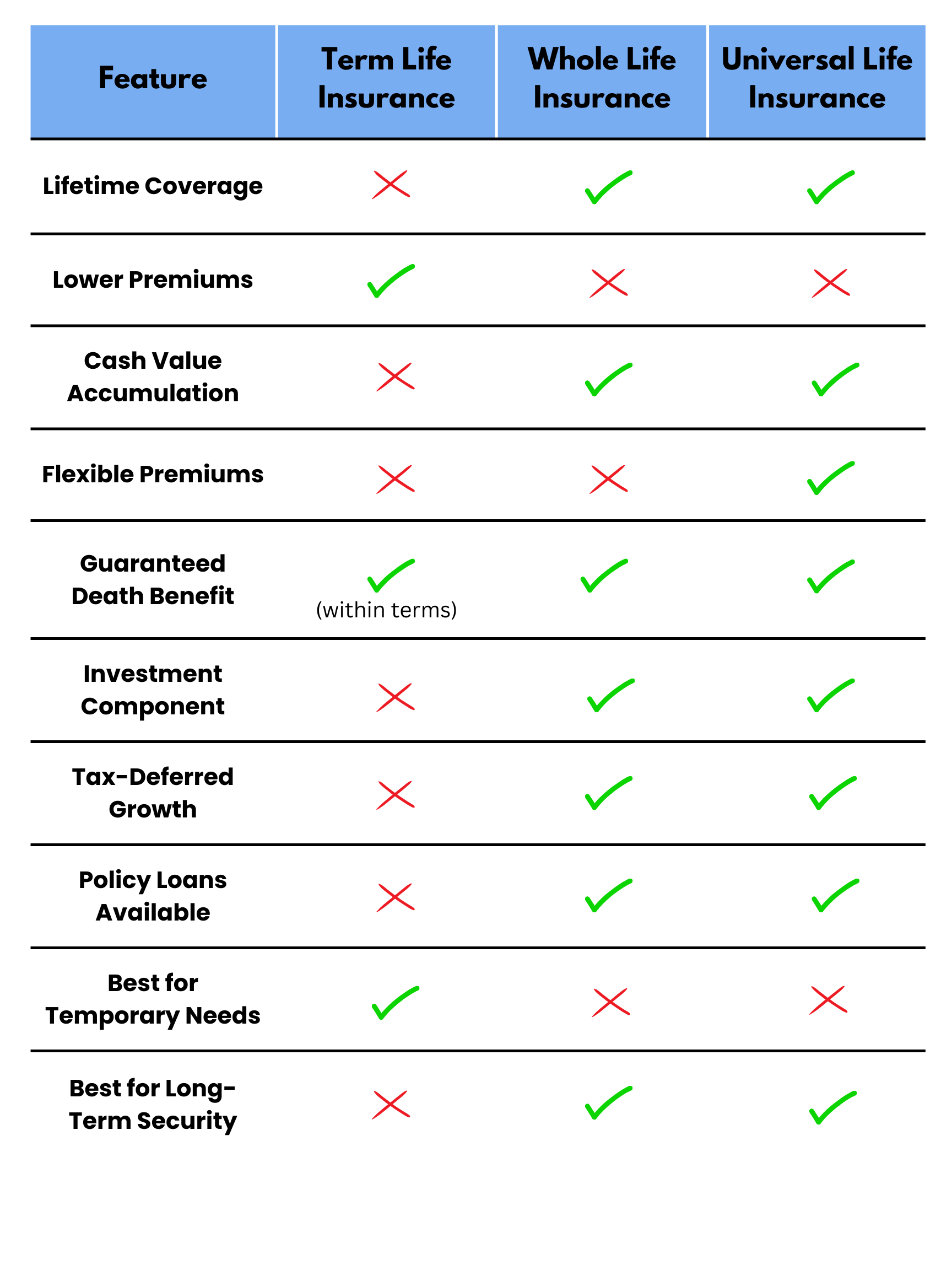
Choosing the right type of insurance is the most critical decision in this process. For the vast majority of people in their late 20s, the choice boils down to Term Life versus Whole or Universal Life.
Term Life Insurance: The Practical Choice
Term life insurance provides coverage for a specific period, such as 10, 20, or 30 years. It is "pure" insurance with no investment component, which is why it is so affordable.
- Pros: Extremely low cost; high coverage amounts; simple to understand.
- Cons: No value remains once the term expires; no cash value accumulation.
- Best For: Young families, those with mortgages, and professionals looking to protect their income during their peak earning years.
Permanent Life Insurance: The Wealth Strategy
Permanent life insurance, including Whole Life and Universal Life, covers you for your entire life and includes a cash value component that grows over time.
- Pros: Lifelong coverage; builds equity (cash value) that can be borrowed against; potential for dividends.
- Cons: Premiums are often 5 to 10 times higher than term life; complex fee structures.
- Best For: High-net-worth individuals, those with lifelong dependents (e.g., a child with special needs), or those looking for a specialized tax-advantaged investment vehicle.
The "Convertible Term" Compromise
Many 2026 term policies include a conversion rider. This allows you to convert your term policy into a permanent policy later in life without undergoing a new medical exam. This is an excellent feature for those in their late 20s who want cheap protection now but may want a permanent component once their income increases in their 40s.
Determining Your Coverage Needs: The DIME Formula
A common mistake for those in their late 20s is under-insuring. Relying on the "1x or 2x salary" benefit provided by an employer is rarely sufficient. Instead, financial experts recommend the DIME formula to calculate a precise need.
| Category | What to Include | Why It Matters |
|---|---|---|
| Debt | Private student loans, credit cards, car loans. | Prevents debt from falling on co-signers or your estate. |
| Income | Annual salary multiplied by years until retirement (or 10-15 years). | Replaces your economic value for your dependents. |
| Mortgage | The remaining balance on your home loan. | Ensures your partner or family can stay in their home. |
| Education | Future tuition costs for current or planned children. | Secures the educational future of your survivors. |
By 2026 standards, a typical young professional earning $75,000 with a mortgage and student debt often requires a policy between $750,000 and $1.5 million. While these numbers sound high, the monthly cost for a healthy 27-year-old is often less than a standard streaming service subscription.
Top Insurance Providers for Young Adults in 2026
The market for life insurance has bifurcated into traditional "legacy" carriers and "InsurTech" disruptors. Your choice depends on whether you value a digital-only experience or a relationship with a human agent.
- MassMutual: Frequently cited for its financial strength and dividend-paying whole life policies. They are a top choice if you are considering a permanent policy or a term policy with a strong conversion option.
- Ladder: A leader in the digital space. Ladder allows you to "ladder" your coverage up or down as your needs change without new paperwork, which is perfect for the fluctuating life stages of your 20s and 30s.
- State Farm: Consistently ranked high for customer satisfaction. They are an excellent option if you already have auto or renters insurance with them, as "bundling" can lead to significant discounts.
- Ethos: Uses predictive analytics to offer policies. Many applicants in their late 20s can get approved for significant coverage in minutes without a medical exam, using data from your medical history and prescription records.
- Northwestern Mutual: Best for those seeking comprehensive financial planning alongside life insurance. They utilize a network of advisors to tailor policies to your broader wealth management goals.
The Application Process: Navigating Accelerated Underwriting
In 2026, the days of waiting six weeks for a nurse to visit your home for a blood draw are largely over for young, healthy applicants. This modern process is known as accelerated underwriting.
How It Works
When you apply, the insurer uses your Social Security number to pull data from several sources:
- MIB (Medical Information Bureau): Records of previous insurance applications.
- Prescription Data: History of medications prescribed to you.
- Motor Vehicle Records (MVR): Your driving history, looking for DUIs or excessive speeding.
- FCRA Data: Public records and sometimes credit-based insurance scores.
If your data "clears" their algorithmic hurdles, you may receive an instant approval. If you have a pre-existing condition or a complex medical history, you may be moved to "traditional underwriting," which might require a medical exam or an Attending Physician Statement (APS).
Steps to Apply
- Get Quotes: Use online aggregators to compare term rates across multiple carriers.
- Select a Policy: Choose based on the carrier's financial rating (A.M. Best rating of A or higher is preferred).
- Complete the Digital Application: Be honest about your tobacco and marijuana use, as these are easily verified via lab tests if an exam is required.
- Review the Offer: Once approved, check that the "level premium" period matches your needs (e.g., 20 years).
- E-Sign and Pay: Your coverage typically begins the moment your first premium is processed.
Critical Riders to Consider in Your 20s
Riders are optional add-ons that customize your policy. While they increase the premium slightly, some are particularly valuable for young adults.
- Waiver of Premium: If you become totally disabled and cannot work, the insurance company pays your premiums for you. This prevents you from losing coverage when you are most vulnerable.
- Accelerated Death Benefit (Living Benefits): Allows you to access a portion of the death benefit if you are diagnosed with a terminal illness. This money can be used for medical treatments or end-of-life care.
- Child Term Rider: Provides a small amount of life insurance for any current or future children, covering funeral expenses in the event of a tragedy.
- Guaranteed Insurability Rider: Allows you to purchase additional coverage at specific intervals (e.g., marriage, birth of a child) without proving your health again.
Common Mistakes to Avoid
- Relying Only on Employer Coverage: Most group policies are not portable. If you leave your job, you lose your coverage. Furthermore, employer plans usually offer only $50,000 or 1x salary, which is insufficient for most needs.
- Waiting for "The Right Time": Many wait until they are married or have children. However, the cost of waiting often outweighs the savings of delaying the premium.
- Overlooking "Laddering": You don't need one giant policy. You can buy a 30-year term for your mortgage and a 10-year term for your student loans, allowing the more expensive coverage to drop off once the debt is paid.
- Inaccurate Health Disclosures: In the age of big data, insurers will find out about chronic conditions. Being "declined" for a policy due to dishonesty makes it much harder to get coverage elsewhere.
Frequently Asked Questions
Do I need life insurance if I am single and have no kids?
Yes, for three primary reasons: locking in the lowest possible rates for your future self, covering debts that might fall on your parents (like co-signed private student loans), and providing for final expenses. Many people in their late 20s buy insurance as a gift to their future families, ensuring they are protected before health issues arise.
Is term life better than whole life for a 27-year-old?
For most, yes. Term life is significantly cheaper, allowing you to invest the difference in a 401(k) or Roth IRA. Whole life is typically reserved for those who have already maximized their retirement accounts and are looking for a conservative, tax-advantaged place to store wealth.
Will my history of anxiety or depression affect my rates?
In 2026, most insurers are more sophisticated regarding mental health. If your condition is well-managed with medication and hasn't resulted in hospitalizations or inability to work, you can often still qualify for "Standard" or even "Preferred" rates.
Can I get life insurance if I use marijuana?
Many carriers now treat occasional marijuana use similarly to alcohol use rather than tobacco use. However, policies vary. Some will give you "non-smoker" rates, while others will categorize you as a smoker, which can triple your premium. It is essential to work with a broker who knows which carriers are "pot-friendly."
How long should the term be?
Most people in their late 20s should opt for a 20- or 30-year term. A 30-year term covers you until you are in your late 50s, by which time your mortgage is likely paid off, your children are grown, and your retirement savings are substantial enough to make life insurance unnecessary.
Final Recommendation
If you are in your late 20s, do not delay the application process. Start by calculating your "DIME" number and then apply for a 20- or 30-year term policy through a reputable digital carrier or a local agent. Even a modest $500,000 policy is a foundational pillar of a mature financial plan. By securing coverage now, you are not just buying a death benefit; you are buying the peace of mind that your financial legacy is secure before life becomes more expensive and your health becomes less predictable.
Image Gallery