Independent vs Captive Insurance Agent: Comprehensive 2026 Comparison
Choosing between an independent and a captive insurance agent depends on whether you prioritize a variety of market options or a single-brand relationship. Independent agents represent multiple carriers to offer diverse pricing and cov...
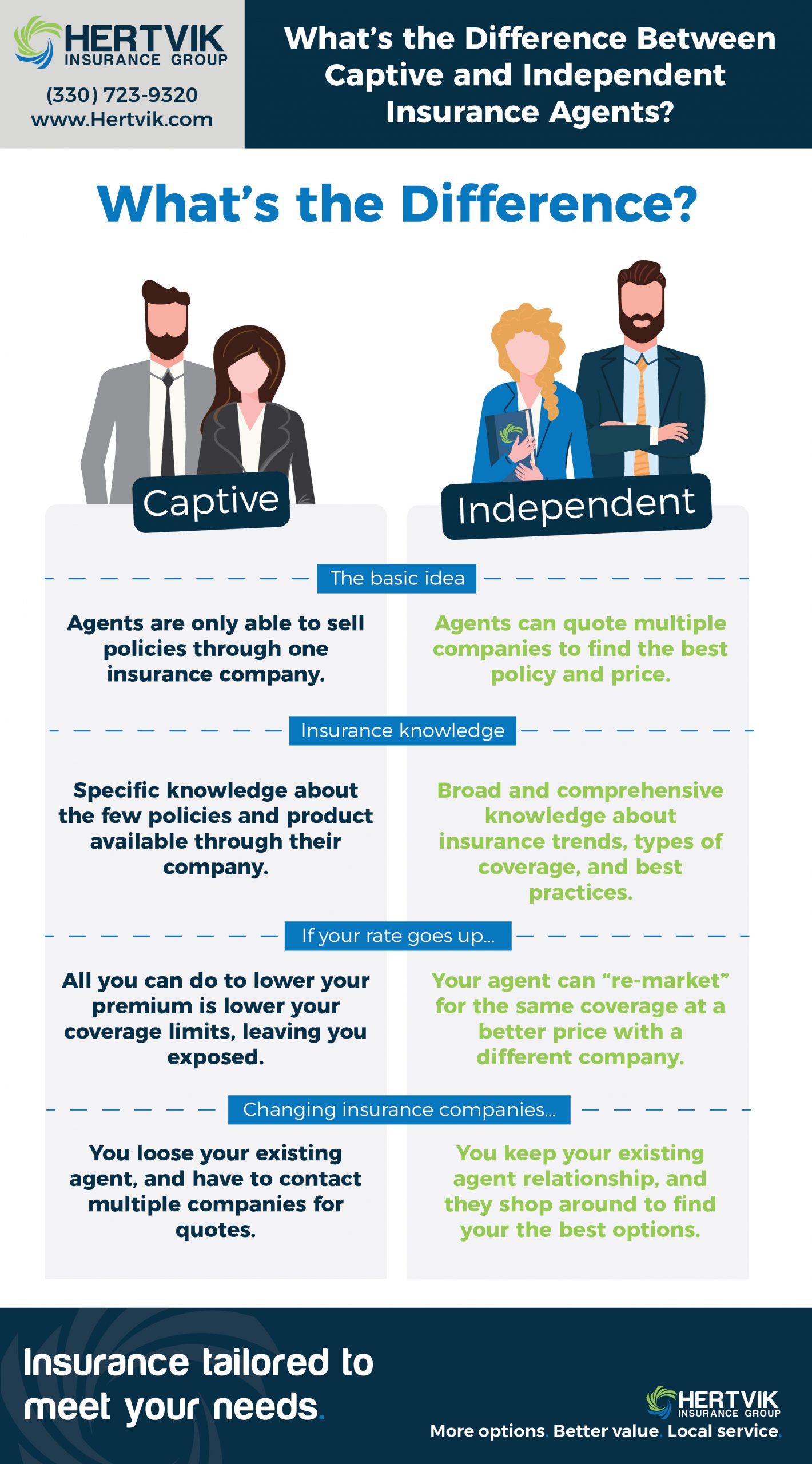
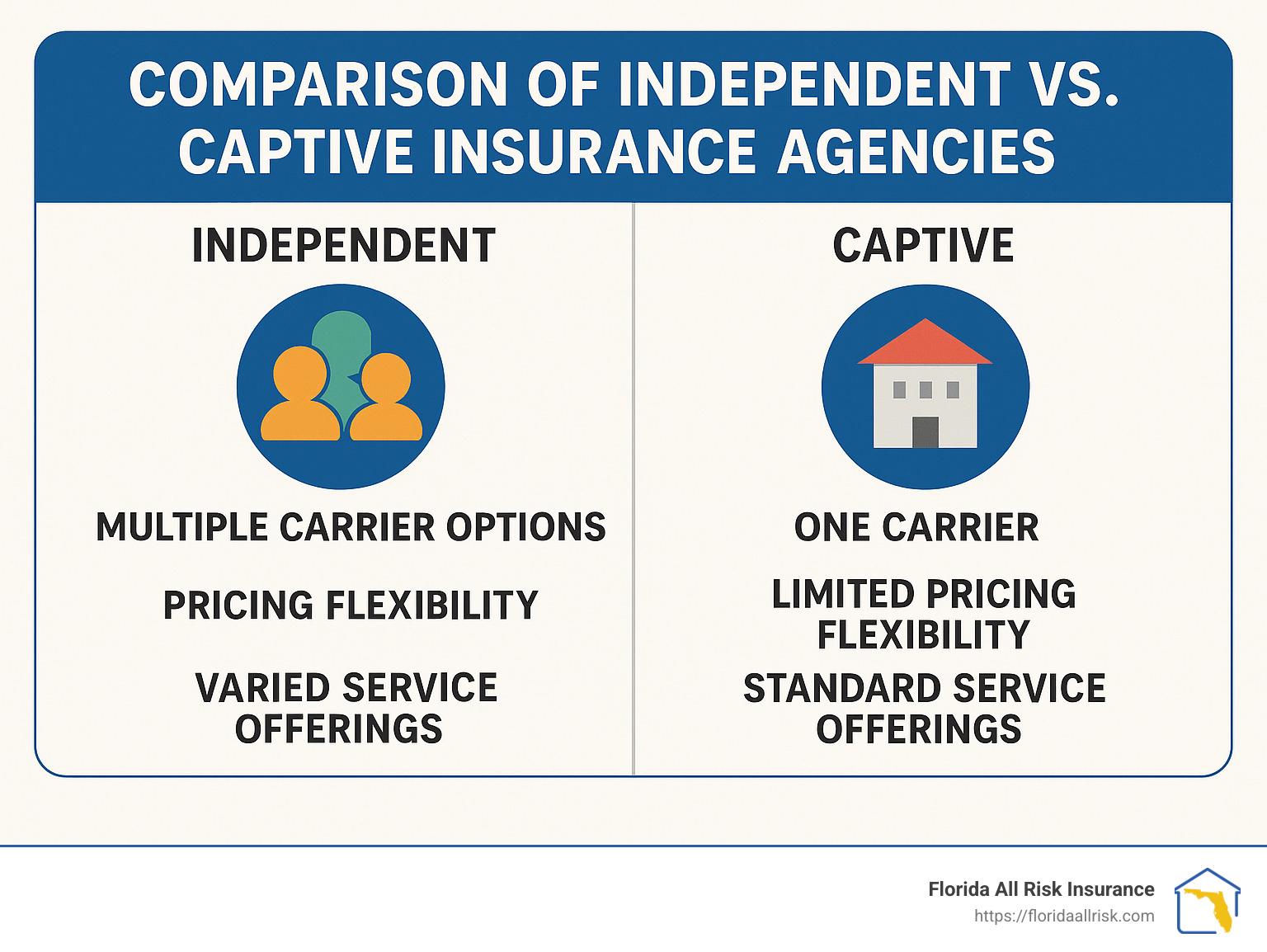
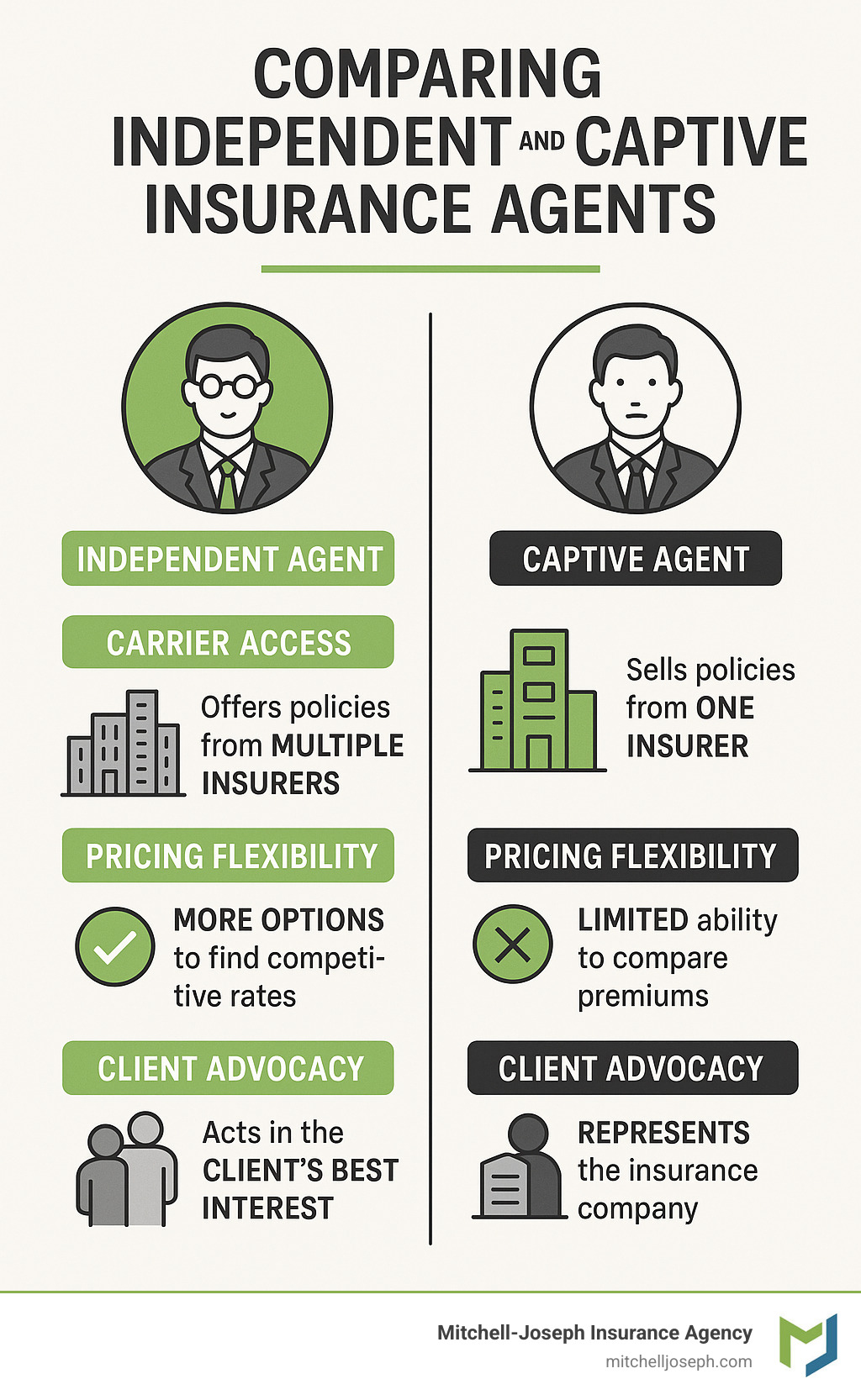
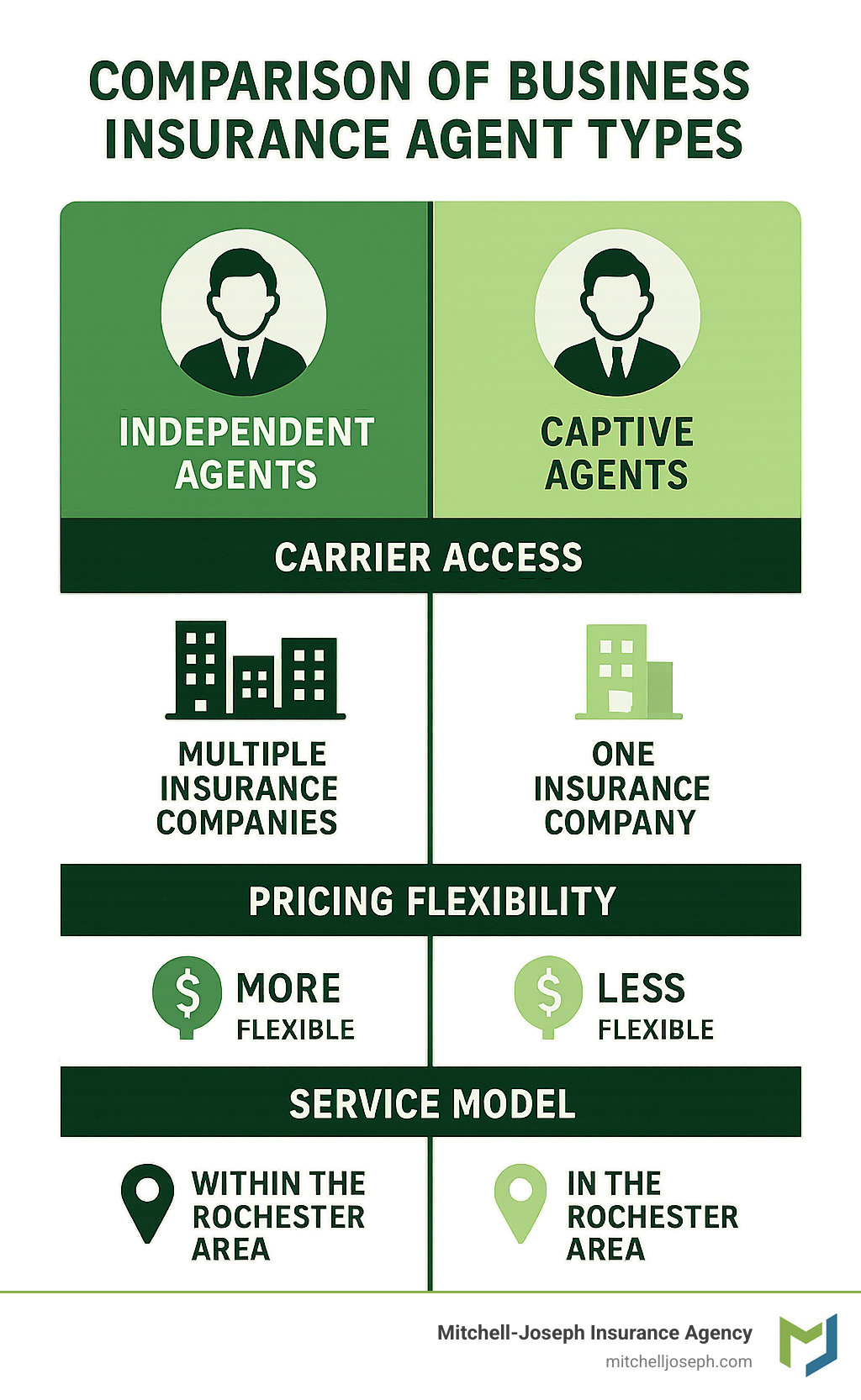
Choosing between an independent and a captive insurance agent depends on whether you prioritize a variety of market options or a single-brand relationship. Independent agents represent multiple carriers to offer diverse pricing and coverage choices, while captive agents represent one company, providing specialized knowledge of that brand’s proprietary products and streamlined claims processes.
Contents
The insurance landscape in 2026 is characterized by increased automation and a "hard market" where premiums have risen across the board. In this environment, understanding the structural differences between independent and captive agents is essential for both consumers seeking coverage and professionals entering the industry. Both models serve distinct functions within the risk management ecosystem, and the right choice depends on the complexity of the risk, the need for competitive bidding, and the desired level of brand-specific expertise.
Understanding the Captive Insurance Agent Model
A captive insurance agent is a professional who works exclusively for one insurance company. Common examples of companies that utilize the captive model include State Farm, Allstate, and Farmers Insurance. These agents are "captive" to the carrier, meaning they are contractually obligated to sell only that company’s products.
The Role of the Carrier
In the captive model, the parent insurance company provides the branding, the products, and often the leads. The carrier maintains significant control over how the agent operates, including the software they use, the marketing materials they distribute, and the underwriting guidelines they must follow. For the agent, this offers a sense of stability and a clear brand identity that is immediately recognizable to consumers.
Advantages for the Consumer
Consumers often choose captive agents because of brand loyalty and the "one-stop-shop" convenience for that specific carrier’s ecosystem. Because captive agents focus on a single set of products, they possess an exhaustive understanding of the policy language, internal discounts, and claims procedures of their parent company. If you have multiple policies (auto, home, life) with one carrier, a captive agent can often manage the "bundling" discounts more efficiently than an outside party could.
Limitations of the Captive Model
The primary drawback of the captive model is the lack of choice. If the carrier’s rates increase or their "appetite" for a certain type of risk changes (for example, if they stop insuring homes in high-risk wildfire zones), the captive agent has no alternative products to offer. In a hard market, this can lead to situations where the agent must tell a long-term client that they can no longer provide affordable coverage.
Understanding the Independent Insurance Agent Model
An independent insurance agent operates as a middleman between the consumer and several different insurance companies. These agents are not employees of any single carrier; instead, they hold "appointments" with multiple companies like Travelers, Progressive, Liberty Mutual, or Chubb.
The Power of Choice
The defining characteristic of the independent agent is the ability to "shop the market." When a client requests a quote, the independent agent enters the data into a comparative rater—a software tool that pulls pricing from all their appointed carriers. This allows the agent to present the client with a range of options, varying in price, coverage limits, and deductible structures.
Ownership of the "Book of Business"
One of the most significant technical differences in the independent model is the ownership of renewals (also known as the "expirations"). In most independent agency contracts, the agent owns the list of clients and the rights to their renewals. If the agent decides to move their agency to a different network or sell the business, they take their clients with them. This is fundamentally different from the captive model, where the parent carrier usually owns the client data.
Advantages for the Consumer
For consumers with unique or high-risk needs, independent agents are often the better choice. Because they have access to many carriers, including surplus lines for non-standard risks, they can find coverage for homes with older roofs, drivers with multiple accidents, or businesses in specialized niches. As market conditions fluctuate in 2026, the ability to pivot between carriers without changing agents provides a layer of protection against localized rate hikes.
Structural Differences: A Technical Breakdown
To further distinguish these two paths, we must look at the operational and financial structures that govern them. The following table highlights the core differences between the independent and captive models as they stand in 2026.
| Feature | Captive Agent | Independent Agent |
|---|---|---|
| Carrier Representation | Single carrier (exclusive) | Multiple carriers (non-exclusive) |
| Ownership of Renewals | The Carrier | The Agent/Agency |
| Product Variety | Limited to one brand’s portfolio | Broad (includes many brands/niches) |
| Support & Training | High; provided by parent carrier | Moderate; agent responsible for own training |
| Marketing Costs | Often subsidized by the carrier | Paid entirely by the agent |
| Commission Structure | Lower percentages; may include salary | Higher percentages; strictly commission/fees |
| Startup Costs | Lower (often includes office support) | Higher (requires technology and appointments) |
| Consumer Experience | Brand-consistent and specialized | Personalized and market-comparative |
Commission and Compensation Structures
The way agents are paid significantly influences their behavior and the advice they provide.
Captive Agent Compensation
Captive agents often receive a combination of a base salary (particularly in their first few years) and a lower commission rate on new business and renewals. Because the parent company spends millions on national advertising to drive leads to the agent, the agent’s commission per policy is generally lower than an independent agent’s. Some captive carriers also offer bonuses based on "profitability" or "retention" targets specific to the company's annual goals.
Independent Agent Compensation
Independent agents typically operate on a 100% commission basis. They earn a percentage of the premium for every policy they sell (new business) and every year the policy remains active (renewals). Because the independent agent is responsible for their own lead generation, office space, and staff, the commission percentages are higher—often ranging from 10% to 20% depending on the line of business. This model incentivizes the agent to provide excellent long-term service to ensure the client does not "broker of record" their policy to another agency.
The 2026 Insurance Market Context
As of 2026, the insurance industry is grappling with two major forces: climate-driven risk and artificial intelligence. These factors have influenced how both captive and independent agents operate.
Hard Market Dynamics
A "hard market" occurs when insurance companies tighten their underwriting standards and raise premiums to remain profitable after heavy losses. In 2026, many captive agents find themselves in a difficult position if their single carrier decides to pull out of a specific state or increase rates by 30%. Independent agents have fared better in this environment because they can move a client from "Carrier A" to "Carrier B" when rates become untenable, though even they are finding fewer carriers willing to take on new risks in certain jurisdictions.
The Role of Technology
Both models have integrated advanced AI for underwriting and claims. Captive agents use proprietary tools that are deeply integrated with their company's internal data, allowing for rapid policy issuance. Independent agents utilize sophisticated "comparative raters" that can scan 20+ carriers in seconds. However, the rise of "direct-to-consumer" (DTC) models where customers buy online without any agent at all has forced both types of agents to emphasize their role as risk advisors rather than just order-takers.
How to Choose the Right Agent for Your Needs
The decision to work with a captive or independent agent should be based on your specific risk profile and how much time you want to spend managing your insurance.
When to Choose a Captive Agent
- Simplicity: If you have a standard risk profile (e.g., a clean driving record and a standard suburban home) and want the backing of a massive, household-name brand.
- Bundling: If you want all your policies under one roof with a single login and a single point of contact who knows that carrier's rules inside and out.
- Claims Focus: If you believe a specific carrier has superior claims handling and you want an agent who has a direct line to that company’s adjusters.
When to Choose an Independent Agent
- Complexity: If you own a business, have multiple rental properties, or own high-value assets that require specialized coverage.
- Price Sensitivity: If you want to ensure you are getting the most competitive rate across the entire market, not just from one company.
- Market Volatility: If you live in an area where insurance companies are frequently changing their rates or leaving the market, an independent agent can provide more long-term stability by switching carriers on your behalf.
Professional Considerations: Starting a Career in Insurance
For those looking to become insurance agents in 2026, the choice of model is a business decision.
Becoming a Captive Agent is often seen as the "safer" entry point. The parent company provides the roadmap, the training, and the brand recognition. It is an excellent path for individuals who are strong at sales and relationship management but do not necessarily want to build the back-end infrastructure of a business from scratch.
Becoming an Independent Agent is an entrepreneurial endeavor. It requires securing "appointments" from carriers, which can be difficult for new agents without a proven track record. However, the long-term financial rewards are often higher because the agent owns the equity in their book of business. In 2026, many new independent agents join "aggregators" or "clusters"—groups that provide them with carrier access in exchange for a split of the commission.
Verification and Regulation
Regardless of the model, all insurance agents must be licensed by the state in which they operate. The National Association of Insurance Commissioners (NAIC) provides resources for consumers to verify an agent’s license and check for any disciplinary actions.
In 2026, state insurance departments have increased oversight regarding "transparency in compensation," particularly for independent agents who may charge "broker fees" in addition to earning commissions. Consumers should always ask for a clear breakdown of how an agent is compensated and whether they have a fiduciary duty or a "suitability" standard when recommending products.
FAQs
Can an independent agent sell policies from a captive company?
No. Captive companies like State Farm or Geico generally do not offer "appointments" to independent agents. Their products can only be sold by their own captive agents or through their direct-to-consumer websites.
Does it cost more to use an independent agent?
Generally, no. The insurance company pays the agent a commission out of the premium you are already paying. While some independent agents may charge a one-time "broker fee" for complex commercial policies, for standard auto and home insurance, the price you pay through an agent is typically the same as (or lower than) what you would find on your own.
Which agent type is better for small business insurance?
Independent agents are usually preferred for small businesses. Business needs vary wildly between a coffee shop, a construction firm, and a tech startup. An independent agent can access specialized commercial carriers that a captive agent’s single company might not support.
What happens to my policy if my agent leaves the business?
If you have a captive agent, your policy stays with the carrier and is usually assigned to a new captive agent in your area. If you have an independent agent, the agency usually owns the renewal rights, so another agent within that same agency will take over your account.
Are captive agents employees of the insurance company?
Not always. While some are direct employees, many captive agents are independent contractors who own their own small businesses but are contractually tied to only sell for that one carrier. They are responsible for their own staff and office expenses, though they receive significant support from the parent company.
Can an agent be "hybrid"?
In some rare cases, a captive carrier may allow their agents to write business through other companies if the parent carrier rejects the risk (known as "excess and surplus" lines). However, the agent remains primarily captive.
Final Recommendation
For most consumers in 2026, the best approach is to start with an independent agent to get a baseline of what the broad market offers. Once you have a market-wide quote, compare it against a quote from a captive agent representing a major carrier known for its financial strength. This "best of both worlds" strategy ensures that you are not sacrificing coverage for price, nor are you overpaying for a brand name when a lesser-known but equally stable carrier might offer a better deal. If you have a complex set of assets or live in a high-risk area, the advocacy and market-access of an independent agent are almost always worth the investment.
Image Gallery