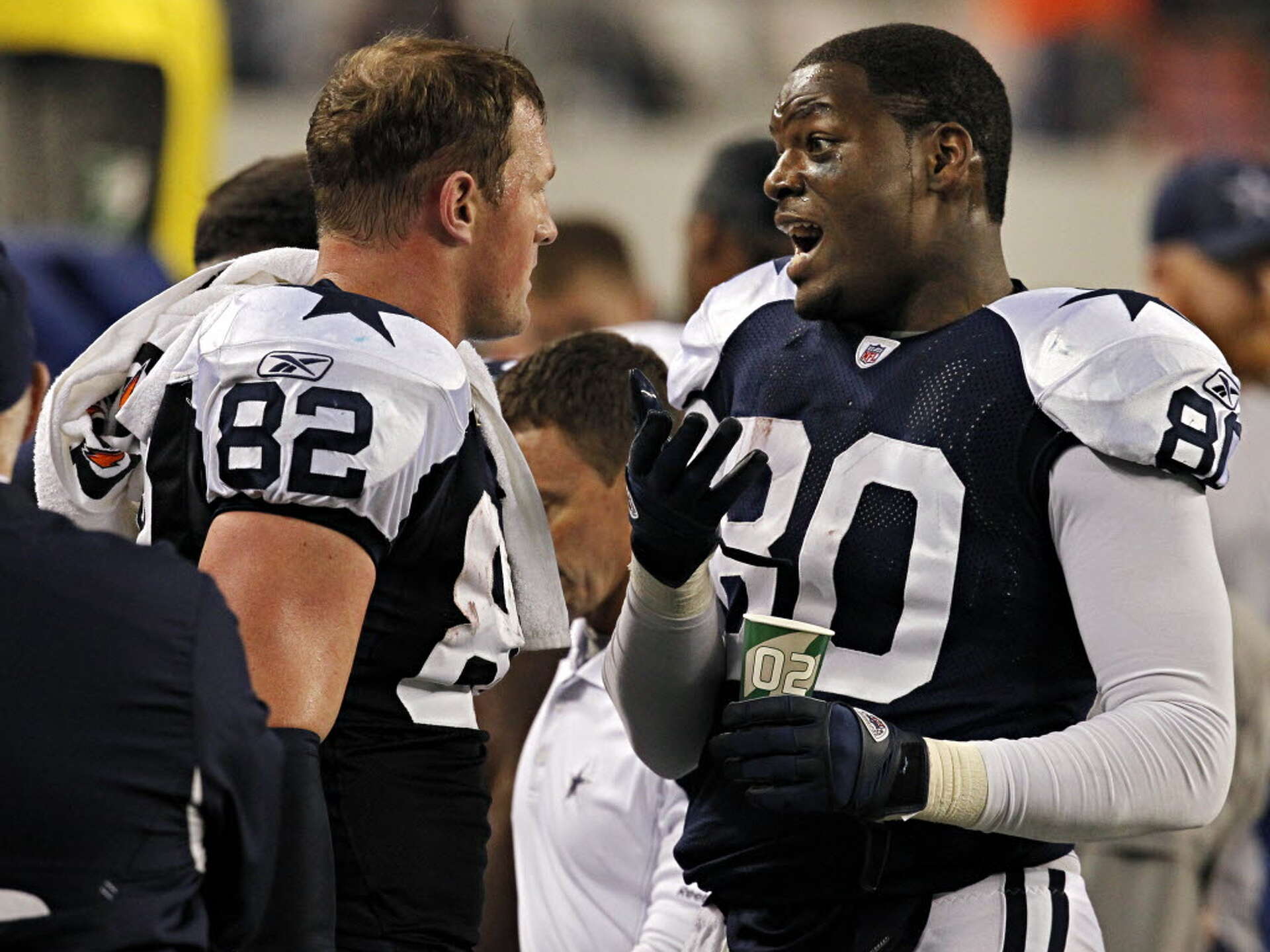
Martellus Bennett and the Dallas Cowboys: A Retrospective Analysis
Martellus Bennett’s tenure with the Dallas Cowboys, spanning from his selection in the 2008 NFL Draft through the conclusion of the 2011 season, represents a formative period defined by high physical expectations and a secondary role b...
Martellus Bennett’s tenure with the Dallas Cowboys, spanning from his selection in the 2008 NFL Draft through the conclusion of the 2011 season, represents a formative period defined by high physical expectations and a secondary role behind future Hall of Famer Jason Witten. Serving as a dual-threat tight end, Bennett provided the Cowboys with significant blocking utility and red-zone presence, though his statistical output remained tethered to the team's reliance on a singular tight end offensive structure.
Contents
The 2008 NFL Draft and Early Expectations
The Dallas Cowboys selected Martellus Bennett in the second round of the 2008 NFL Draft with the 61st overall pick. Entering the league out of Texas A&M, Bennett was heralded for his immense physical gifts—standing 6’6” and weighing approximately 270 pounds—which made him a mismatch for smaller defensive backs and linebackers. The Cowboys, then under the leadership of head coach Wade Phillips and offensive coordinator Jason Garrett, sought to utilize Bennett as a "Y" tight end who could complement the veteran presence of Jason Witten.
The primary strategic goal was the implementation of a two-tight-end set, a formation the coaching staff believed would provide quarterback Tony Romo with versatility. In theory, Bennett was tasked with handling the more taxing inline blocking assignments, allowing the team to maintain a balanced attack while keeping the defense guessing regarding whether the play would be a run or a pass. However, as the 2008 season progressed, it became evident that Bennett’s transition to the professional level would be one of assimilation rather than immediate statistical dominance.
Statistical Profile and Role Limitations
During his four seasons in Dallas (2008–2011), Bennett’s production was intrinsically linked to the team’s heavy reliance on Jason Witten. In the NFL, the role of a secondary tight end often necessitates a sacrifice of target volume for the benefit of team-wide offensive efficiency.
Career Statistics Summary (2008–2011)
| Season | Games Played | Receptions | Yards | Touchdowns |
|---|---|---|---|---|
| 2008 | 16 | 20 | 283 | 4 |
| 2009 | 16 | 15 | 159 | 0 |
| 2010 | 16 | 33 | 260 | 0 |
| 2011 | 16 | 17 | 144 | 0 |
These statistics reveal a plateau in usage. While Bennett played in every game during his four-year tenure—showcasing durability—his reception numbers peaked in 2010. By 2011, Bennett’s role had largely solidified into that of a specialized blocker. Critics often pointed to these figures as evidence that the former Aggie was being underutilized, while the coaching staff maintained that his blocking contributions were essential to the success of the Cowboys’ running game, which featured Marion Barber and later Felix Jones and DeMarco Murray.
Coaching Transitions and Team Dynamics
The organizational stability of the Dallas Cowboys underwent significant shifts during Bennett’s tenure. The transition from Wade Phillips to Jason Garrett as head coach mid-way through the 2010 season brought a shift in offensive philosophy. Garrett, who had long served as the offensive coordinator, emphasized disciplined route running and specific alignment requirements that sometimes conflicted with the more improvisational style Bennett preferred.
Throughout this era, the culture in the Dallas locker room was heavily influenced by the presence of high-profile veterans. Bennett often provided a colorful personality in the media, frequently offering candid quotes that contrasted with the more conservative tone typically associated with the Cowboys’ organization. This divergence in style—combined with the clear hierarchy at the tight end position—led to growing speculation about his future outside of Dallas once his rookie contract neared its end.
The Departure and Post-Cowboys Trajectory
Following the 2011 season, Bennett became an unrestricted free agent. The Cowboys, prioritizing the continuation of Jason Witten’s tenure, did not make a significant effort to re-sign the tight end. Bennett signed with the New York Giants in 2012, marking the beginning of a journeyman phase that would see him eventually bloom into a Pro Bowl-caliber player with the Chicago Bears and a Super Bowl champion with the New England Patriots.
His exit from Dallas highlighted a common NFL developmental trend: talented players sometimes require a change of scenery and a larger share of targets to unlock their potential. The "Cowboys experiment" provided Bennett with foundational NFL experience, specifically in elite-level blocking and professional game-planning, which he utilized to expand his game in subsequent years.
Comparative Performance and Tactical Impact
Understanding Bennett’s time in Dallas requires comparing his performance against the expectations of a second-round draft choice.
Key Factors in Bennett’s Development
- Positional Competition: Being drafted behind one of the most productive tight ends in NFL history (Witten) effectively capped Bennett's target ceiling.
- Blocking Requirements: The Cowboys' offense relied on the tight end to seal the edge, a role Bennett performed effectively, often at the expense of receiving opportunities.
- Offensive Philosophy: The transition to Jason Garrett’s more rigid passing schemes prioritized precise execution over the physical mismatch potential Bennett offered in the red zone.
- Physical Maintenance: Bennett maintained high availability, participating in all 64 possible games during his four-year tenure, proving his reliability as an active roster member.
Frequently Asked Questions
Did Martellus Bennett start over Jason Witten in Dallas? No. Martellus Bennett served as the backup to Jason Witten throughout his four-year tenure with the Cowboys. Witten remained the primary receiving target for Tony Romo at the tight end position during that time.
Why did the Cowboys move on from Martellus Bennett in 2012? Bennett’s rookie contract expired, and the Cowboys prioritized their existing offensive structure. Given his desire for a larger role and the team’s commitment to Witten, a parting of ways was the most logical outcome for both parties.
What was Bennett’s primary strength during his Cowboys tenure? While he possessed soft hands and significant verticality, his primary value to the Cowboys was his size and physicality as a run blocker. He was frequently deployed to help stabilize the offensive line during rushing plays.
Did Martellus Bennett win a championship with the Dallas Cowboys? No. Bennett did not win a Super Bowl with the Dallas Cowboys. He eventually won a Super Bowl ring with the New England Patriots in the 2016 season, four years after departing Dallas.
How is Bennett's tenure in Dallas viewed in retrospect? It is viewed as a period of restricted development. While he did not reach his statistical peak in Dallas, the experience provided him with the professional training that allowed him to excel in subsequent years with other franchises.
Next Steps for Fans and Researchers
For those interested in the statistical history of the Cowboys' tight end room, reviewing the play-by-play logs from the 2008–2011 seasons reveals how often Bennett was utilized in 12-personnel (one running back, two tight ends) formations. These archives provide a clearer picture of his blocking efficiency compared to modern tight end standards, which emphasize hybrid roles. Readers interested in deeper research should consult the official NFL historical data archives for snap-count distributions during those specific seasons.
Image Gallery