The Impact of Life Insurance in an Irrevocable Trust
Placing life insurance within an irrevocable trust (ILIT) primarily excludes the death benefit from the insured’s gross estate, significantly reducing potential federal and state estate tax liabilities. This legal structure provides im...
Placing life insurance within an irrevocable trust (ILIT) primarily excludes the death benefit from the insured’s gross estate, significantly reducing potential federal and state estate tax liabilities. This legal structure provides immediate liquidity to heirs, ensures robust asset protection against creditors, and allows the grantor to maintain controlled, long-term distribution of proceeds.
Contents
Understanding the Mechanics of an Irrevocable Life Insurance Trust (ILIT)
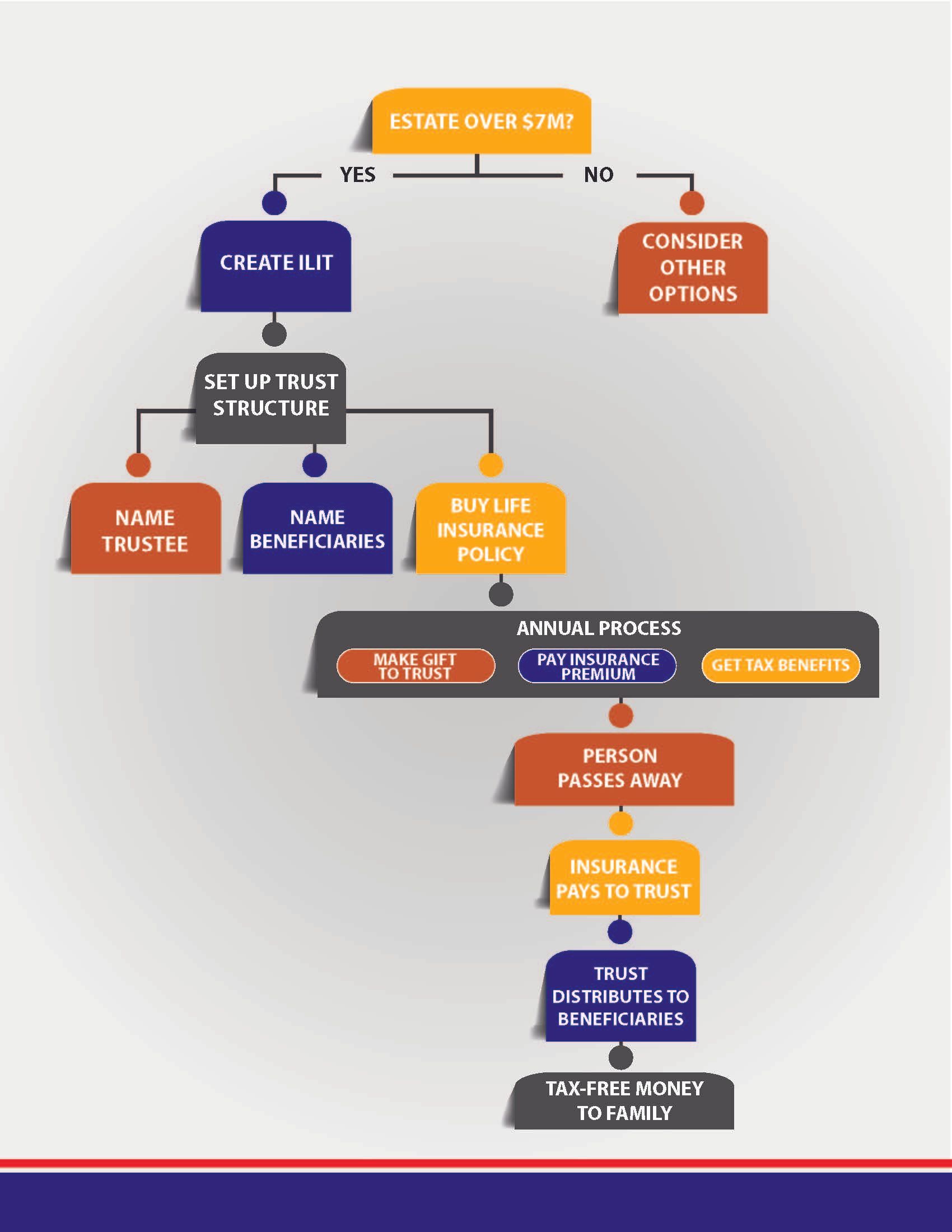
An Irrevocable Life Insurance Trust, or ILIT, is a sophisticated estate planning vehicle designed specifically to own and manage life insurance policies. In the current 2026 financial landscape, the "irrevocable" nature of this trust is its most defining characteristic. Once the grantor executes the trust agreement and transfers a policy into it—or the trust purchases a new policy—the grantor relinquishes all "incidents of ownership."
In legal terms, incidents of ownership include the power to change beneficiaries, the right to borrow against the policy’s cash value, the ability to surrender or cancel the policy, and the right to assign the policy to another party. By ceding these rights to an independent trustee, the grantor effectively removes the policy from their personal balance sheet. This separation is the foundation of the tax and legal benefits that follow.
The trust is its own legal entity with its own Taxpayer Identification Number (TIN). The trustee is responsible for paying premiums, managing the policy’s performance, and eventually distributing the death benefit to the named beneficiaries. Because the grantor no longer "owns" the policy, the proceeds bypass the probate process entirely, allowing for a faster and more private transfer of wealth.
Estate Tax Mitigation in the 2026 Tax Environment
The most significant impact of placing life insurance in an irrevocable trust is the mitigation of estate taxes. As of 2026, the estate tax landscape has shifted significantly following the sunset of the temporary high exemptions established by the Tax Cuts and Jobs Act (TCJA) of 2017. With the federal exemption now hovering at approximately $7 million (adjusted for inflation) per individual, a much larger segment of the population faces potential estate tax exposure than in years past.
Without an ILIT, the full death benefit of a life insurance policy is included in the decedent's gross estate under Internal Revenue Code (IRC) Section 2042. For a high-net-worth individual with a $5 million or $10 million life insurance policy, this could easily push the total estate value over the federal threshold, resulting in a tax rate as high as 40%.
By utilizing an ILIT, the death benefit is not counted as part of the estate. This effectively makes the insurance proceeds "tax-free" not only in terms of income tax (which is standard for life insurance) but also in terms of estate tax. For families with illiquid assets, such as family businesses or real estate holdings, this tax savings is often the difference between preserving the family legacy and being forced to sell assets to satisfy the IRS.
Solving the Liquidity Crisis: "Land-Rich, Cash-Poor"
A common challenge for successful estates is the lack of immediate liquidity. When a patriarch or matriarch passes away, estate taxes, funeral costs, and legal fees are typically due within nine months. If the majority of the estate's value is tied up in commercial real estate, private equity, or agricultural land, the executors may find themselves in a "fire sale" scenario.
The impact of life insurance held in an ILIT is that it provides a "bucket of cash" exactly when the estate needs it most. Because the funds are inside a trust, they are not frozen by the probate court. The trustee can be authorized—though not legally required—to:
- Purchase assets from the estate: The trust uses insurance proceeds to buy illiquid assets at fair market value, providing the estate with the cash needed to pay taxes.
- Loan money to the estate: The trust can provide a low-interest loan to the estate to cover temporary obligations.
This mechanism ensures that the estate’s core assets remain intact for the beneficiaries while the government is paid on time and in full.
Asset Protection and Creditor Shielding
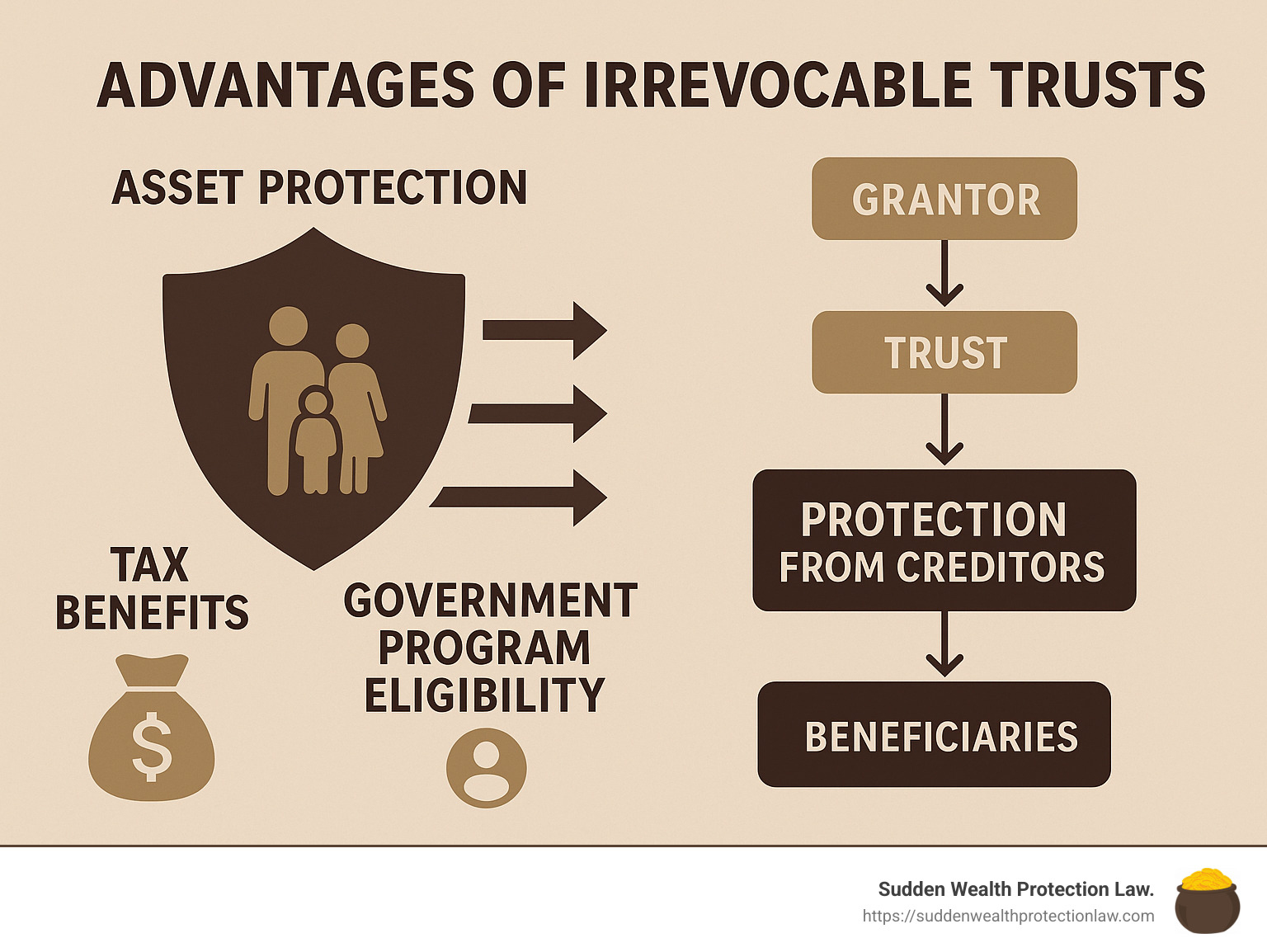
Beyond tax benefits, an ILIT serves as a formidable shield against creditors. Because the trust owns the policy, the cash value and the eventual death benefit are generally protected from the grantor's personal creditors. If the grantor faces a lawsuit or bankruptcy, the assets held within the irrevocable trust are typically out of reach, provided the transfer was not a "fraudulent conveyance."
The protection extends to the beneficiaries as well. Many ILITs include a spendthrift clause, which prevents a beneficiary from pledging their future interest in the trust to a creditor. This is particularly impactful for beneficiaries who may be in high-risk professions (such as surgeons or developers) or those who struggle with financial management. Instead of receiving a massive lump sum that could be seized by a creditor or lost in a divorce settlement, the beneficiary receives distributions at the discretion of the trustee, protected by the trust's legal walls.
Navigating the Three-Year Rule and Crummey Powers
The benefits of an ILIT come with strict compliance requirements. Two of the most critical impacts involve the timing of the policy transfer and the method of funding premium payments.
The Three-Year Lookback Rule (IRC Section 2035)
If an individual transfers an existing life insurance policy into an irrevocable trust and dies within three years of that transfer, the IRS ignores the trust and pulls the death benefit back into the grantor’s taxable estate. To avoid this impact, it is often preferable for the trustee of the ILIT to apply for and purchase a new policy directly. If the trust is the original owner and applicant, the three-year rule does not apply.
Crummey Powers and Annual Gift Tax Exclusions
Since the trust has no income, the grantor must provide the funds to pay the insurance premiums. These transfers are considered "gifts." However, to qualify for the annual gift tax exclusion ($18,000 per recipient in 2024, likely adjusted to approximately $19,000-$20,000 by 2026), the gift must be a "present interest."
To satisfy this, the trust includes Crummey powers, named after the landmark court case Crummey v. Commissioner. This gives beneficiaries a limited window (usually 30 days) to withdraw the gifted funds. The trustee must issue "Crummey notices" to the beneficiaries every time a gift is made. If the beneficiaries decline to withdraw the money, the funds stay in the trust, and the trustee uses them to pay the premium. Failure to strictly follow this administrative ritual can result in the loss of the gift tax exclusion, potentially chipping away at the grantor's lifetime exemption.
Comparison: Personal Ownership vs. ILIT Ownership
| Feature | Personal Ownership | Irrevocable Trust (ILIT) |
|---|---|---|
| Estate Tax Inclusion | Yes (Full death benefit) | No (Excluded from estate) |
| Probate Requirement | Often required | Bypasses probate entirely |
| Creditor Protection | Limited (Varies by state) | High (Federal/State trust laws) |
| Control Over Proceeds | Determined by beneficiary form | Dictated by detailed trust language |
| Ability to Change Policy | Full control at any time | No control (Held by Trustee) |
| Administrative Cost | Minimal (Premium only) | Moderate (Legal fees, tax filings) |
| Liquidity Access | Immediate to beneficiary | Controlled by Trustee |
Potential Drawbacks: The Cost of Irrevocability
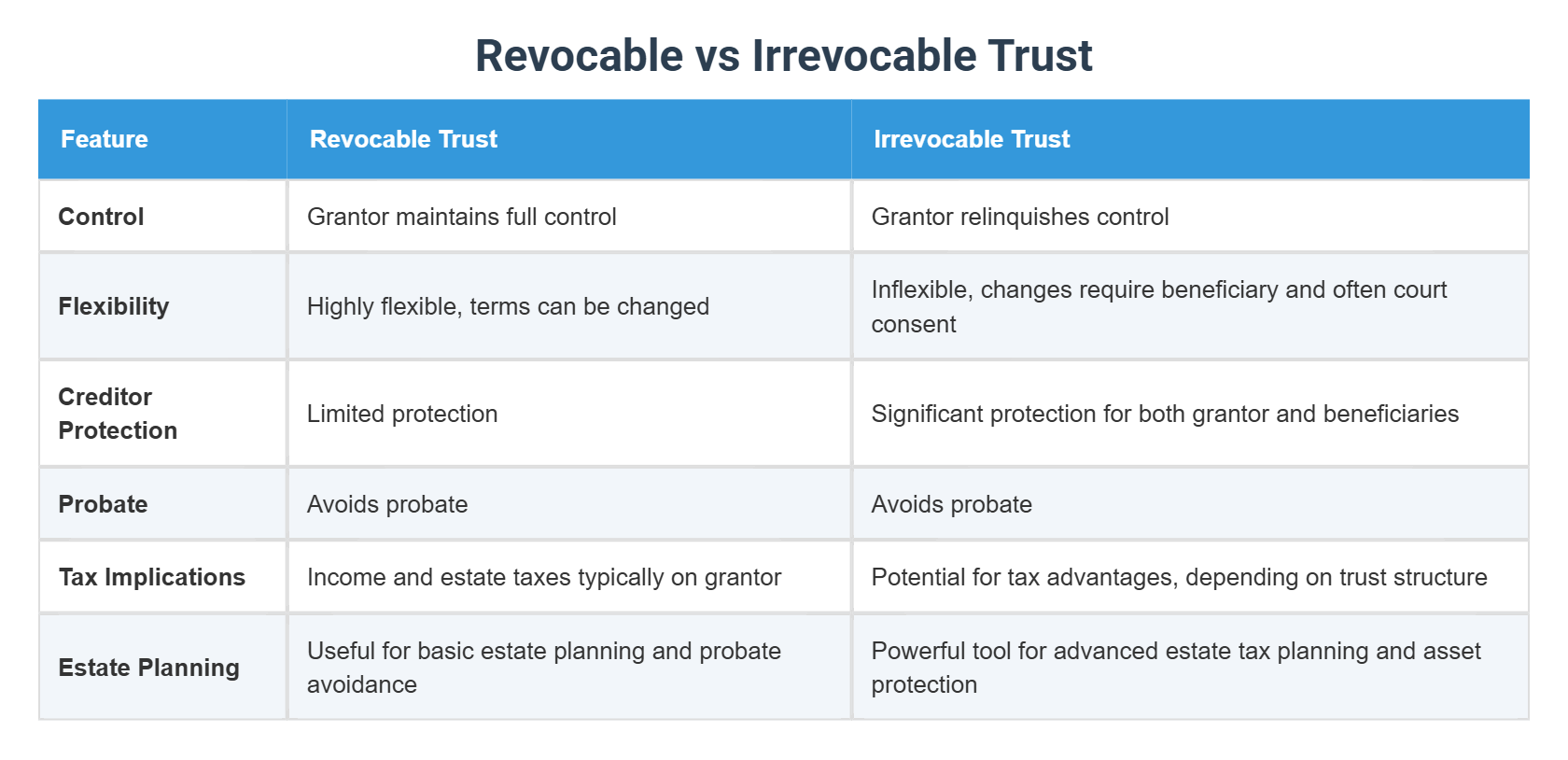
While the impacts of an ILIT are largely positive for estate preservation, the "irrevocable" nature brings specific challenges. Once the trust is established, the grantor cannot simply change their mind. If family dynamics shift—such as a divorce or a falling out with a child—the grantor cannot unilaterally remove a beneficiary from the trust.
Furthermore, the grantor loses access to the policy’s cash value. If the grantor needs to borrow money for a personal emergency, they cannot tap into the life insurance policy held by the ILIT. The trust is a "one-way street" for assets. Additionally, there are ongoing administrative costs, including the potential need for annual tax returns (Form 1041) if the trust generates its own income, and the fees for a professional trustee if a family member is not chosen for the role.
Frequently Asked Questions
Can I be the trustee of my own Irrevocable Life Insurance Trust?
While legally possible in some narrow jurisdictions, it is highly discouraged. If the grantor acts as the trustee, the IRS may argue that they have retained "incidents of ownership" over the policy. This could result in the death benefit being included in the grantor's taxable estate, defeating the primary purpose of the ILIT. It is standard practice to appoint a spouse, an adult child, a trusted friend, or a professional corporate trustee.
What happens if I can no longer afford the premiums?
If the grantor stops gifting money to the trust for premium payments, the policy may lapse unless the trust has other assets or the policy has enough cash value to sustain itself. Some trustees may choose to sell the policy (a life settlement) to a third party to recoup some value for the beneficiaries, or they may take a loan against the cash value to keep the death benefit in force at a lower level.
Can I use an existing life insurance policy to fund an ILIT?
Yes, you can transfer an existing policy into an ILIT. However, you must be aware of the three-year lookback rule mentioned earlier. Additionally, if the policy has a large cash value, the transfer itself may be considered a taxable gift. It is essential to get a formal valuation of the policy from the insurance carrier before proceeding with a transfer.
Is an ILIT necessary if my estate is below the federal tax limit?
Even if your estate is below the federal limit, an ILIT can be beneficial for state-level estate taxes, which often have much lower thresholds (sometimes as low as $1 million or $2 million). Furthermore, the asset protection and controlled distribution features are valuable regardless of tax liability. If you have concerns about a beneficiary's ability to manage money or potential future creditors, an ILIT remains a powerful tool.
Final Recommendation
For individuals whose total assets—including life insurance death benefits—exceed the 2026 federal or state estate tax exemptions, an Irrevocable Life Insurance Trust is an essential component of a robust estate plan. The immediate impact is a substantial reduction in tax exposure and the creation of a liquid fund to protect family assets.
However, because of the complexity of Crummey notices, IRC Section 2042 compliance, and the permanence of the trust, you should not attempt to "DIY" an ILIT. Engage a qualified estate planning attorney to draft the trust document and coordinate with your financial advisor to ensure the policy is structured correctly within the trust's framework. Taking these steps today ensures that your life insurance serves its intended purpose: providing for your loved ones rather than the IRS.
Image Gallery