How to Cook Bacon on Parchment Paper: The Ultimate Oven-Baking Guide
Cooking bacon on parchment paper in the oven ensures evenly crisp strips, prevents sticking, and makes cleanup effortless. Lining a rimmed baking sheet with parchment paper allows bacon to render smoothly in its own fat at 400°F (204°C...
Cooking bacon on parchment paper in the oven ensures evenly crisp strips, prevents sticking, and makes cleanup effortless. Lining a rimmed baking sheet with parchment paper allows bacon to render smoothly in its own fat at 400°F (204°C) for 15 to 20 minutes without curling, smoking excessively, or leaving burnt grease baked onto your cookware.
Contents
The Culinary Science of Baking Bacon on Parchment Paper
Oven-baking bacon has quickly displaced stovetop frying in both commercial kitchens and home routines. When you cook bacon in a skillet, localized heat points cause raw pork strips to curl, buckle, and cook unevenly. Fat renders rapidly in some spots while remaining unrendered and chewy in others, resulting in a mix of burnt edges and undercooked fat.
Using parchment paper inside a baking sheet solves these structural cooking challenges through consistent thermal distribution and surface management.
Heat Transfer Mechanism: Oven Air & Sheet Pan
- Radiant Heat
- Bacon Strip: Renders fat flat
- Parchment: Non-stick thermal barrier
- Metal Sheet: Absorbs & spreads pan heat
Thermal Distribution and Non-Stick Properties
Parchment paper is treated with a thin coating of food-grade silicone. This silicone layer creates a hydrophobic and lipophobic surface, meaning neither water nor grease can penetrate or stick to it. When bacon strips rest on parchment paper:
- Direct Metal Isolation: The paper creates a slight thermal barrier between the conductive metal pan and the delicate bacon slices. This prevents the underside of the meat from searing or burning before the fat has time to render fully.
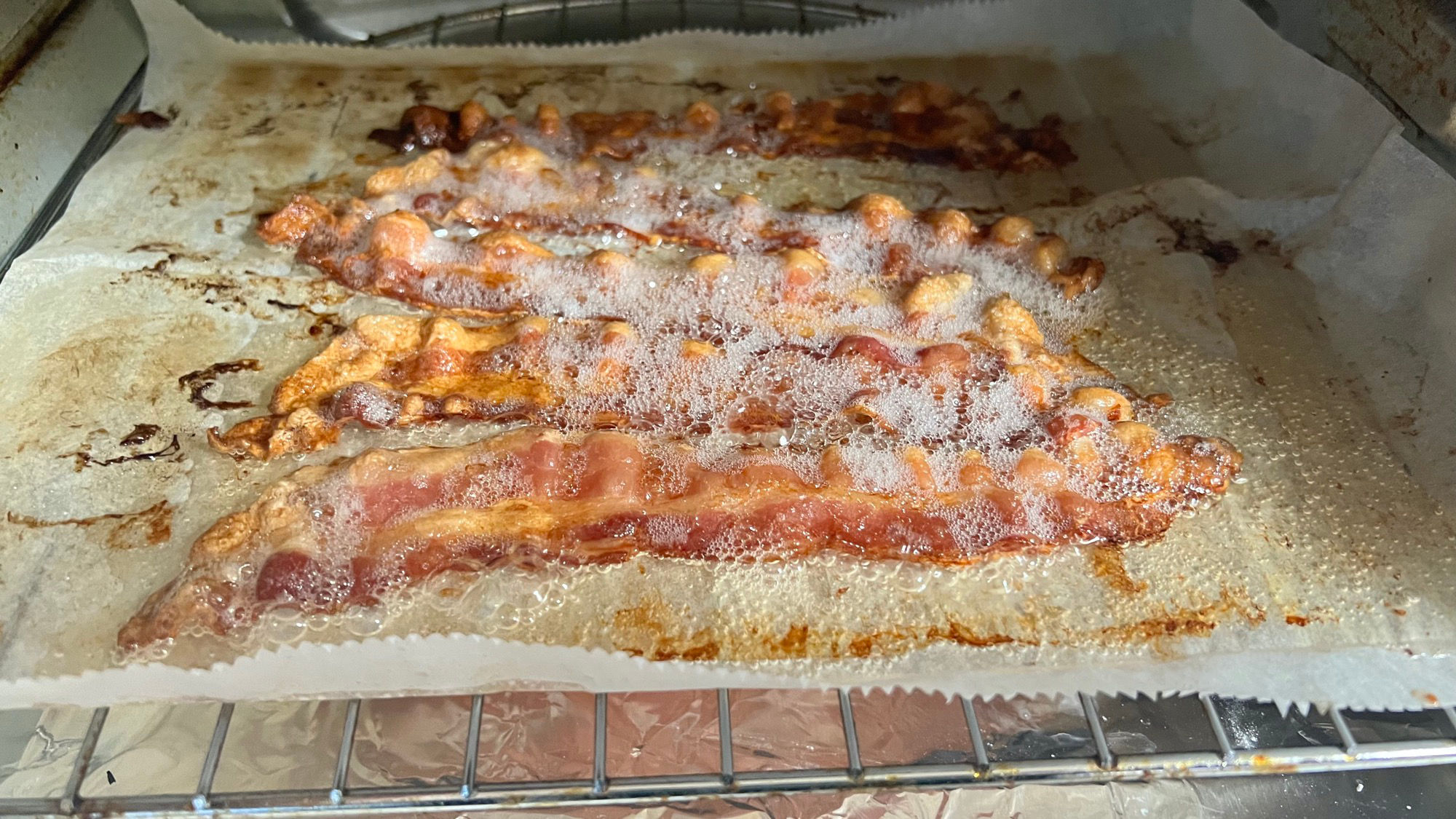
- Flat Rendering: As the bacon heats up, rendered fat liquifies and pools slightly around each strip. Because the parchment surface remains flat and non-stick, the strips stay flat rather than curling up away from the heat source.
- Controlled Browning: The fat bathes the strip evenly, facilitating the Maillard reaction—the chemical reaction between amino acids and reducing sugars that gives browned food its desirable flavor and deep golden color.
Smoke Reduction and Pan Preservation
Bacon grease typically reaches its smoke point between 375°F and 400°F (190°C–204°C). When fat drips directly onto raw aluminum or stainless steel baking sheets, intense pan contact can scorch localized pools of grease, releasing harsh smoke into your kitchen.
Parchment paper buffers this contact area. It catches micro-particles of protein that fall off the meat, preventing them from sticking to the pan metal and charring. Furthermore, parchment paper acts as a protective shield for your sheet pans, preventing acidic, salty bacon drippings from pitting, discoloring, or permanently seasoning light-colored bakeware.
Equipment Selection and Temperature Safety Limits
To achieve optimal results when cooking bacon on parchment paper, choosing the correct kitchen tools and understanding temperature constraints is critical for safety and performance.
Essential Equipment Checklist
- Heavy-Duty Rimmed Baking Sheet: Always use a baking pan with a raised edge of at least 1/2 inch to 1 inch (often called a half-sheet pan). Never use flat cookie sheets, as liquefied bacon fat will spill over the edges, creating a dangerous oven fire risk.
- Food-Grade Silicone-Coated Parchment Paper: Select pre-cut parchment sheets or roll paper rated for high heat. Pre-cut sheets (12x16 inches for standard half-sheet pans) lie flat naturally without curling up at the corners.
- Tongs or Silicone Spatula: Stainless steel tongs allow easy handling of hot bacon strips without tearing the parchment paper beneath.
- Paper Towel-Lined Plate: Essential for draining residual surface fat immediately after removing bacon from the oven.
Understanding Parchment Paper Heat Thresholds
Parchment paper is safe for oven baking, but it has defined operational limits:
- Silicone-Coated vs. Quilon Paper: Silicone-coated parchment paper is the gold standard for high-heat roasting. Quilon-coated paper uses a chrome complex treatment that is less expensive but degrades rapidly above 400°F (204°C), losing its non-stick quality and turning brown quickly.
- Maximum Temperature Rating: Most quality parchment papers are safe up to 425°F to 450°F (218°C to 232°C). Exceeding these temperatures will cause the edges of the paper to become brittle, char, and break down.
- The Broiler Warning: Never use parchment paper under a direct broiler element or in direct contact with open flames. Direct infrared heat from a broiler can heat the paper well beyond 500°F (260°C) within seconds, causing it to ignite.
Step-by-Step Guide: Cooking Bacon on Parchment Paper
Follow these steps to ensure perfectly crisp, flat bacon with minimal cleanup.
Step-by-Step Oven Process:
- Line Rimmed Pan with Parchment
- Arrange Bacon Slices (No Overlap)
- Bake at 400°F (15–20 minutes)
- Rest on Paper Towels & Save Grease
Step 1: Prepare the Pan
Tear or select a sheet of parchment paper that matches the dimensions of your rimmed baking sheet. Ensure the paper covers the flat bottom and extends slightly up the inside edges, but do not allow the paper to overhang the outer rim of the pan. Overhanging edges can touch the interior walls or heating elements of the oven, presenting a charring hazard.
Step 2: Lay Out the Bacon
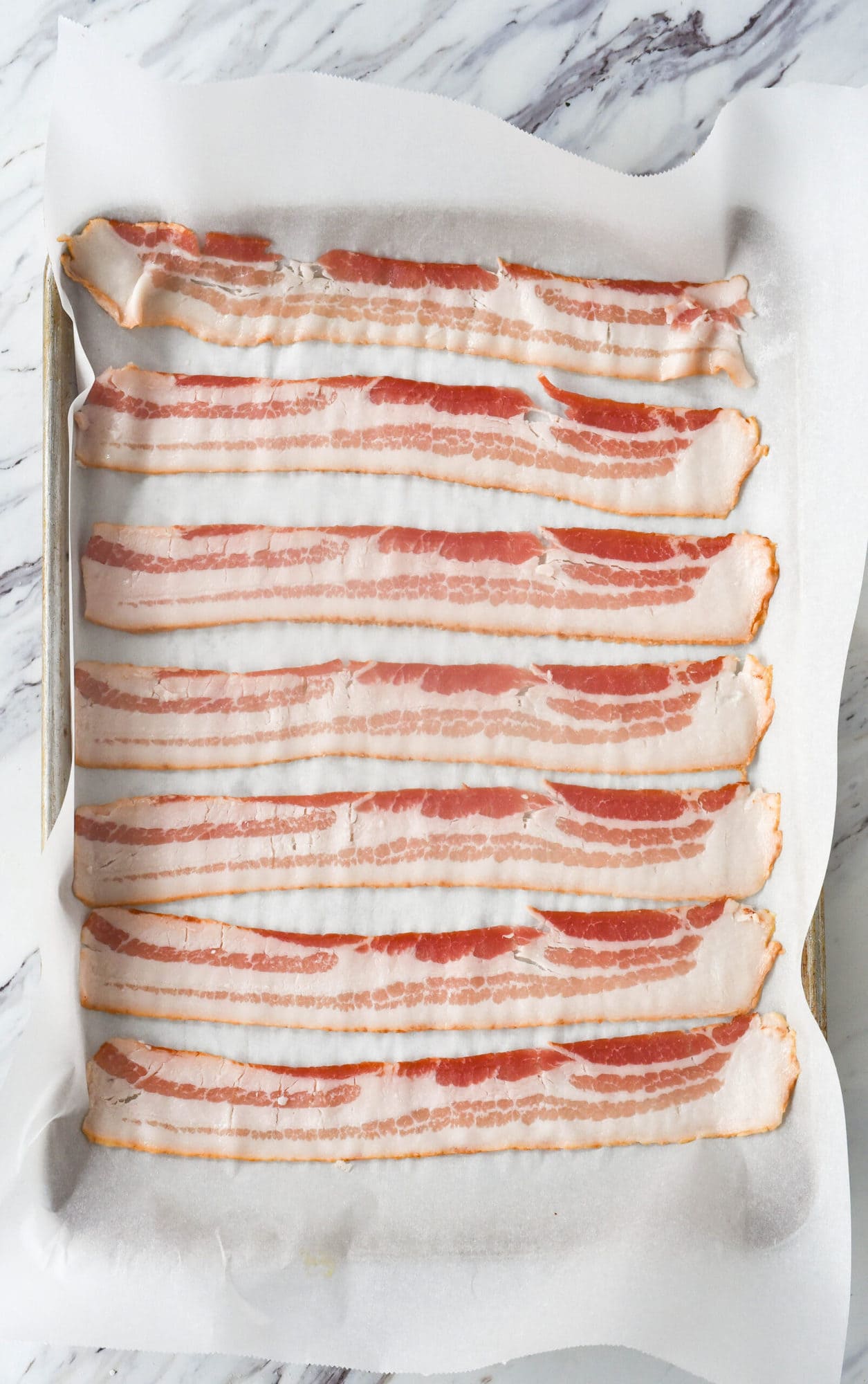
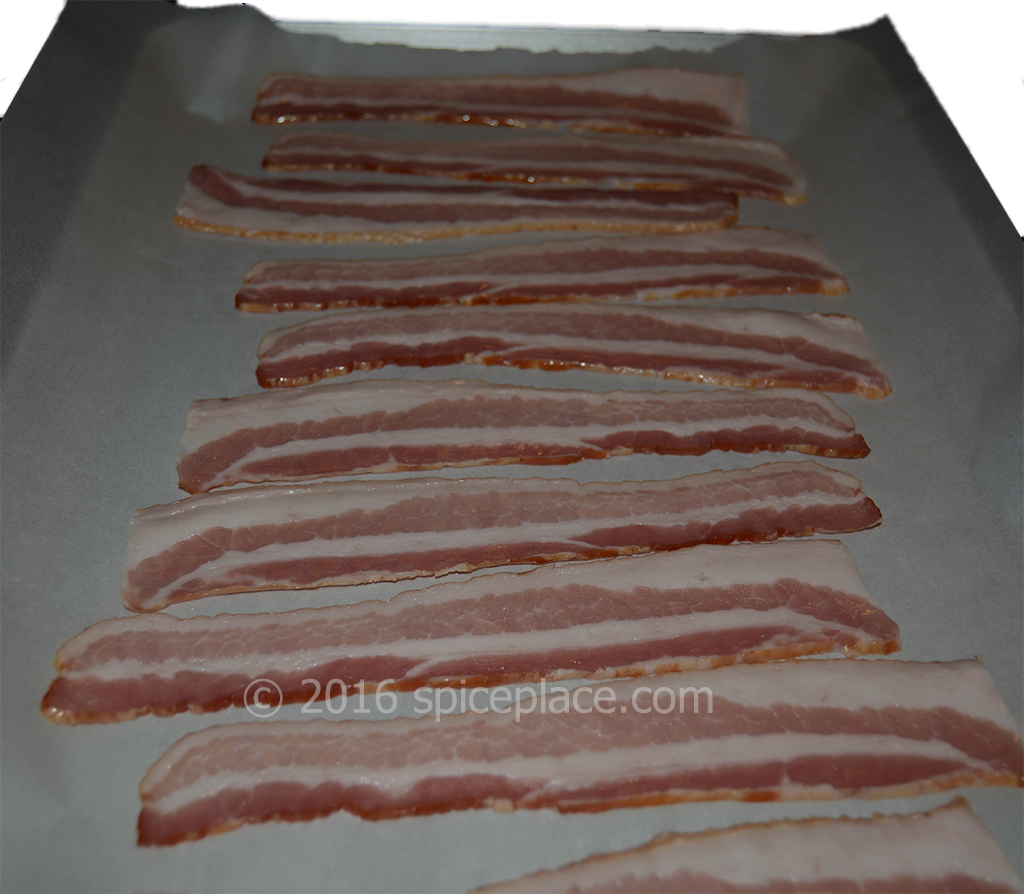
Place the bacon slices side by side on the parchment-lined sheet pan.
- Lay them flat without stretching the strips.
- It is acceptable for the edges of the raw bacon to touch slightly, as the bacon will shrink as it cooks.
- Do not overlap the slices. Overlapping prevents heat from reaching the covered sections, resulting in soft, rubbery patches.
Step 3: Select Oven Temperature and Bake
Preheat your oven to 400°F (204°C) for standard crispness. Alternatively, if you prefer a cold-oven start method, place the pan in a cold oven and set the temperature to 400°F; this allows the fat to render even slower as the oven warms up.
- Standard Slice Bacon (Thin to Medium): Bake at 400°F for 14 to 17 minutes.
- Thick-Cut Bacon: Bake at 400°F for 18 to 22 minutes.
- Extra-Crispy Preference: Extend baking time by 2 to 3 minutes, keeping a close eye on the pan during the final stages to prevent scorching.
Note for Convection Ovens: If using a convection (fan-assisted) setting, lower the temperature to 375°F (190°C) and check for doneness 3 to 4 minutes earlier than standard times, as forced air accelerates fat rendering and browning.
Step 4: Drain and Rest
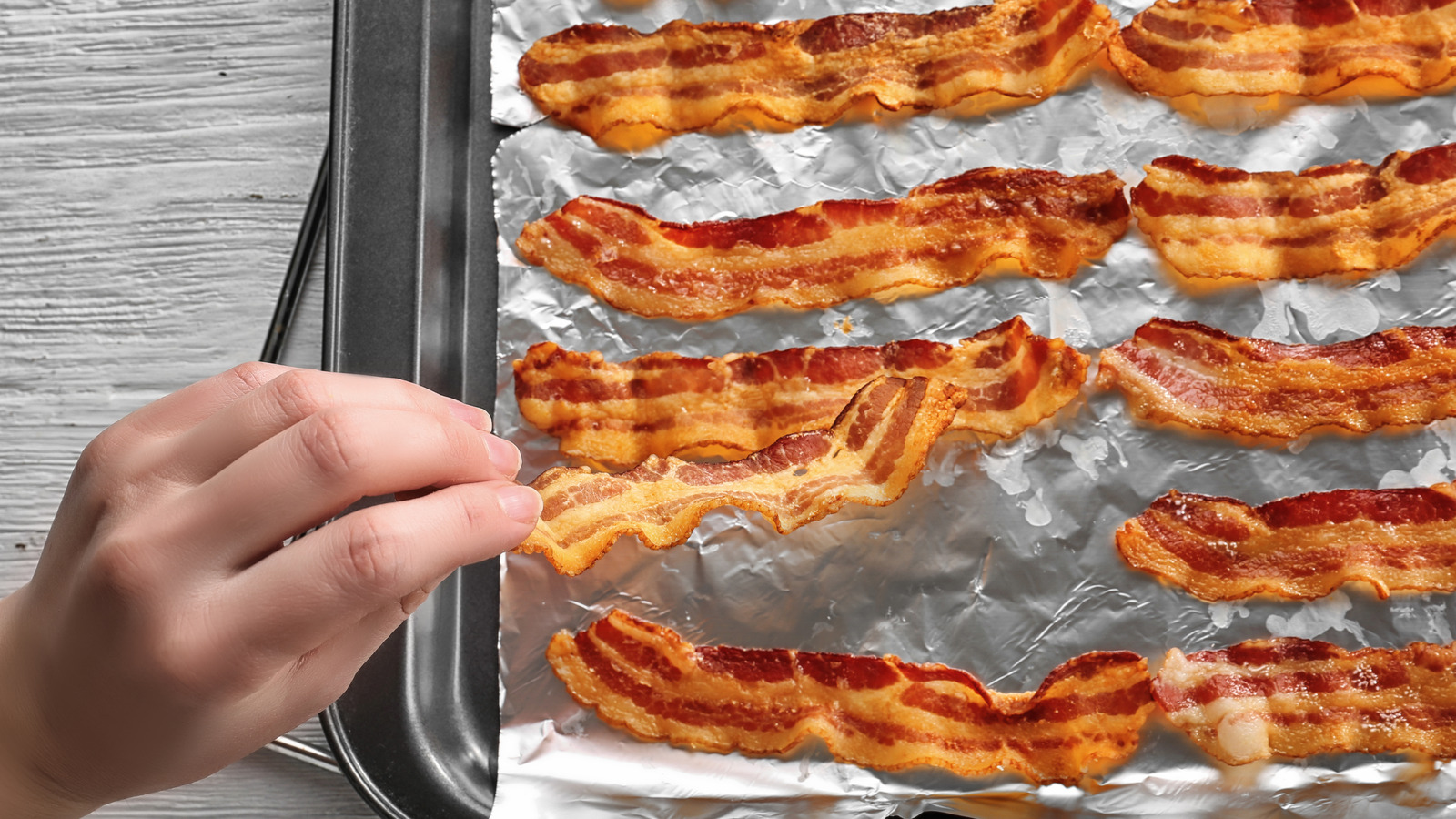
Remove the sheet pan from the oven using dry oven mitts. Use tongs to immediately transfer the hot bacon strips from the grease pool onto a paper towel-lined plate or platter. Allowing bacon to cool inside the hot liquid fat on the pan will cause it to reabsorb grease and lose its crisp texture. Let the bacon rest for 2 to 3 minutes; it will continue to crisp up as it cools.
Method Comparison: Parchment Paper vs. Other Bacon Cooking Techniques
Choosing how to cook bacon depends on your goals for cleanup speed, texture, smoke management, and fat collection. Below is a comparative overview of popular preparation methods.
| Feature / Metric | Parchment Paper on Sheet Pan | Aluminum Foil on Sheet Pan | Wire Rack on Baking Sheet | Traditional Skillet (Stovetop) |
|---|---|---|---|---|
| Cleanup Effort | Extremely Low (Toss paper, wipe pan) | Low to Medium (Foil can tear, leaking grease) | High (Scrubbing burnt fat off rack wire grid) | High (Stovetop splatter and pan washing) |
| Bacon Flatness | Excellent (Renders flat in light fat pool) | Moderate to Good (Slight sticking can cause curling) | Excellent (Slices stay flat off the metal) | Poor (Strips curl and twist during frying) |
| Crispiness Uniformity | High (Convection & fat-bath combination) | High (Similar to parchment) | Very High (Dry-heat crisping, non-chewy) | Variable (Burnt ends, soft middle sections) |
| Grease Harvesting | Very Easy (Paper acts as a flexible funnel) | Moderate (Foil can tear while pouring) | Difficult (Grease bakes onto wire grid) | Easy (Pour directly from pan spout) |
| Smoke Generation | Minimal (Parchment prevents scorch) | Low to Moderate | Moderate (Fat drops directly onto bare hot pan bottom) | High (Grease splatters on high burner heat) |
| Max Safe Temp | 425°F – 450°F (218°C – 232°C) | 500°F+ (260°C+) | 500°F+ (260°C+) | Direct Flame / Burner Heat |
Safely Collecting and Storing Rendered Bacon Fat
One major advantage of using parchment paper is how simple it makes salvaging clean, usable bacon grease (tallow/drippings) for future cooking. Rendered bacon fat adds deep flavor to roasted vegetables, fried eggs, pan-seared meats, and cornbread.
Parchment Fat Funnel Method:
- Let pan cool slightly (2-3 mins)
- Lift parchment paper by opposite corners
- Channel grease through paper fold
- Filter through mesh into glass jar
Pouring Technique Using Parchment Paper
- Allow the baking sheet and grease to cool for 3 to 5 minutes after removing the bacon. The fat should remain warm and liquid, but not dangerously hot.
- Grasp two opposing corners of the parchment paper.
- Carefully lift the paper slightly off the baking sheet, letting the liquid fat pool toward the center crease of the paper.
- Form a natural funnel spout with the parchment paper edge and channel the clear liquid fat directly into a clean, heat-safe glass jar or container.
- If desired, pour the grease through a fine-mesh strainer or cheesecloth placed over the jar opening to catch any dark crisp bits (fond), ensuring a pure, white finished fat once solid.
Storage and Shelf-Life Standards
- Refrigeration: Stored in an airtight glass jar in the refrigerator, strained bacon fat remains safe and fresh for up to 6 months.
- Freezing: Rendered bacon fat can be frozen in small silicone ice cube trays and stored in freezer bags for up to 12 months.
- Disposal: Never pour liquid bacon fat down your sink drain. If you do not intend to save the grease, allow the liquid fat to cool and solidify directly on the parchment paper on the pan. Once solidified, simply roll up the parchment paper containing the hardened fat and discard it in the trash.
Common Mistakes and Troubleshooting
Even with a straightforward method, minor errors in technique can impact your results. Here is how to fix common baking issues:
1. The Bacon is Soft or Rubbery Instead of Crispy
- Cause: Overcrowding the pan or taking the bacon out too early.
- Solution: Give each strip breathing room. If strips are tightly packed or overlapping, moisture released from the meat creates steam rather than letting the fat render. Ensure your oven is fully preheated to 400°F before placing the sheet inside.
2. The Parchment Paper Turned Dark Brown and Brittle
- Cause: The oven temperature exceeded the parchment paper’s safety threshold, or an active broiler element was used.
- Solution: Verify your oven temperature calibration with an independent oven thermometer. Keep temperatures at or below 400°F to 425°F. Ensure your parchment paper is rated for high-heat baking and do not turn on the broiler.
3. The Oven Started Smoking
- Cause: High heat scorched stray bacon splatters on the exposed inner walls of your oven, or you used an unrimmed cookie sheet that spilled fat onto the oven floor.
- Solution: Always use a baking pan with a minimum 1/2-inch rim. If your oven cooks hot, reduce the setting to 375°F. Clean baked-on residue from your oven floor before starting a new batch.
4. Strip Slices Cooked Unevenly (Crispy Ends, Raw Middle)
- Cause: Uneven oven airflow or structural hot spots.
- Solution: Rotate your sheet pan 180 degrees halfway through the total baking time (around the 8 to 10-minute mark) to ensure even thermal exposure across all strips.
Frequently Asked Questions
Can you put parchment paper in a 400 degree oven for bacon?
Yes. Quality silicone-coated parchment paper is specifically engineered to handle temperatures up to 425°F–450°F (218°C–232°C). At 400°F, parchment paper remains structurally stable, non-stick, and completely safe for cooking bacon.
Is parchment paper better than aluminum foil for baking bacon?
Parchment paper provides a superior non-stick surface compared to standard aluminum foil. Bacon strips can occasionally stick to foil, causing them to tear when flipped or removed. Parchment paper also buffers heat transfer slightly better than foil, reducing pan scorching and ensuring smooth, even browning.
Should you flip bacon halfway through baking on parchment paper?
Flipping is not strictly necessary when cooking bacon on parchment paper. Because heat radiates off the metal pan beneath the paper while hot rendered fat bathes the strip from above, both sides cook evenly. However, flipping strips once at the 10-minute mark can yield an extra-uniform texture if your oven has strong hot spots.
Can parchment paper catch fire inside a hot oven?
Parchment paper will not ignite under normal baking conditions up to its manufacturer temperature limit (usually 425°F–450°F). However, parchment paper can catch fire if it comes into direct contact with an open gas flame or a heating element, or if exposed to the intense direct radiant heat of an active broiler.
Can you reuse parchment paper for a second batch of bacon?
It is not recommended to reuse parchment paper for sequential batches of bacon. During the first batch, the paper absorbs microscopic amounts of moisture and heat, rendering the silicone layer less effective. Reusing grease-soaked paper for a second round increases the risk of smoke, charring, and tear hazards.
Practical Recommendation
For the cleanest execution and consistent results, cook standard-cut bacon at 400°F (204°C) for 15 minutes on a sheet of pre-cut, silicone-coated parchment paper lining a heavy rimmed half-sheet pan.
Transfer the crisp bacon immediately to paper towels to drain, let the pan cool for 3 minutes, and pour the rendered fat through a strainer into a glass jar for future culinary use. Discard the parchment paper once cool for a zero-scrub pan cleanup.
Image Gallery