What Is an API Gateway? Architecture, Core Functions, and Implementation
An API gateway is a management component that serves as a single entry point for internal and external client requests directed toward a backend application or microservices network. It acts as a reverse proxy, receiving application pr...
An API gateway is a management component that serves as a single entry point for internal and external client requests directed toward a backend application or microservices network. It acts as a reverse proxy, receiving application programming interface (API) calls, evaluating routing rules, enforcing security policies, and delivering responses back to the client.
Contents
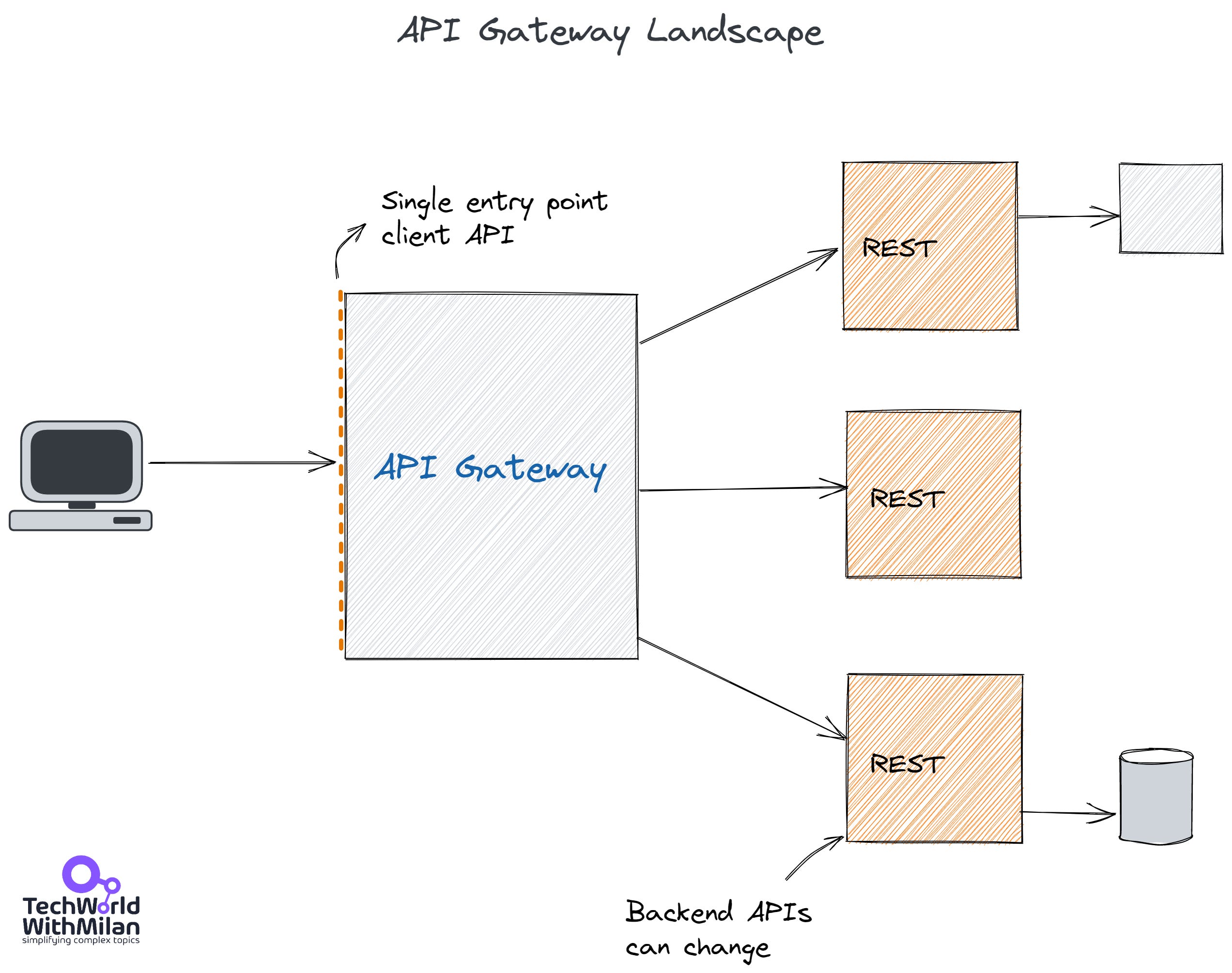
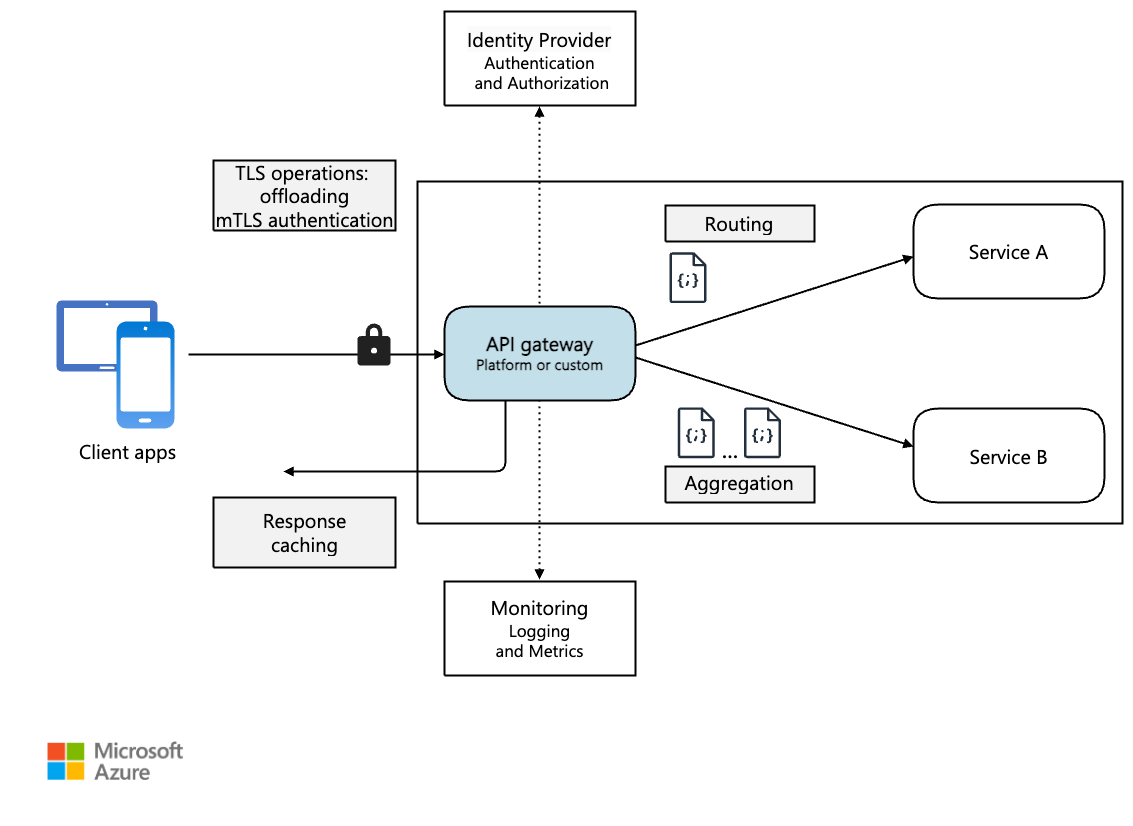
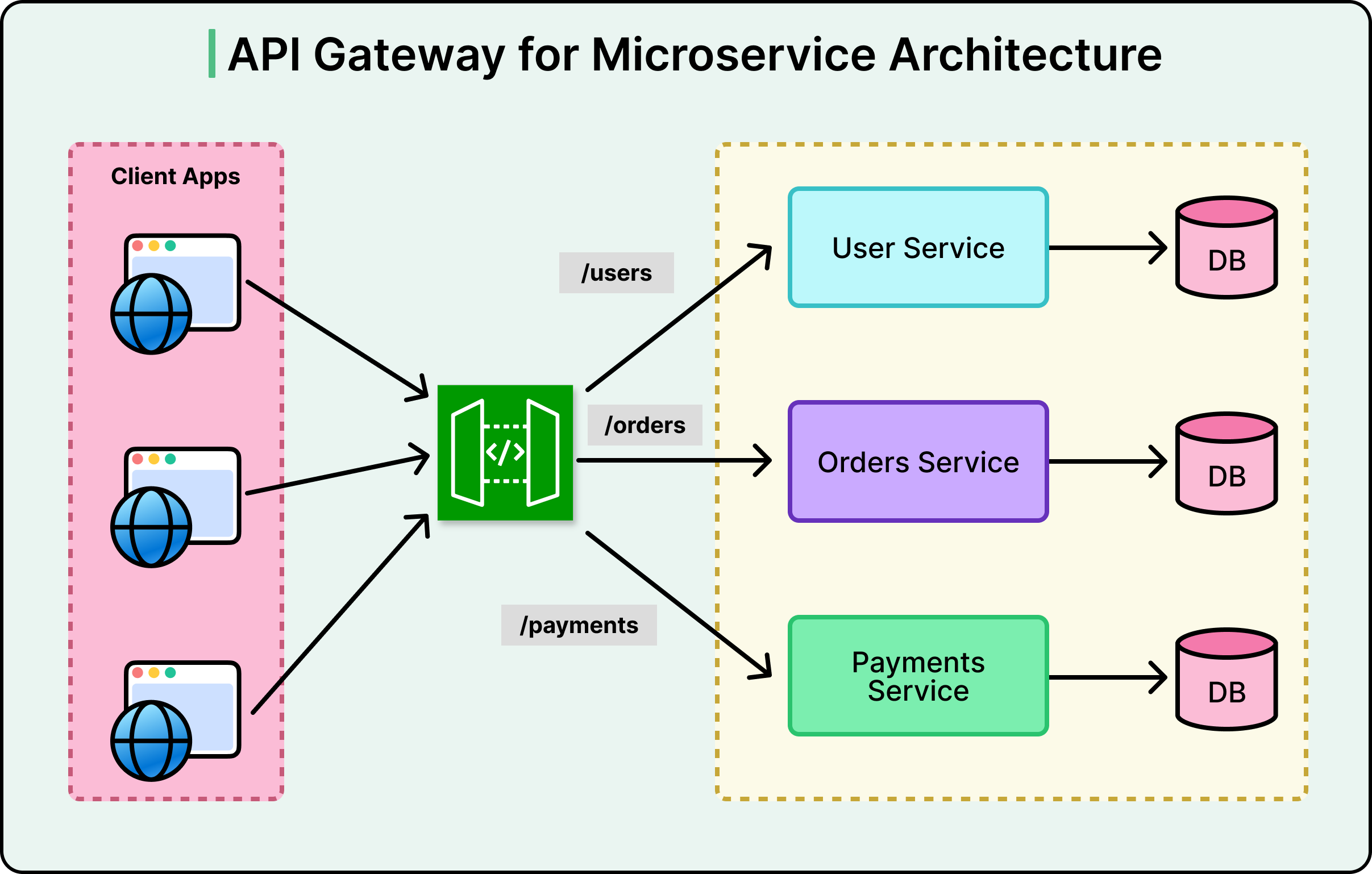
By decoupling the client layer from individual backend services, an API gateway simplifies client implementation while centralizing cross-cutting operational requirements. Rather than forcing a web browser, mobile application, or third-party client to establish separate connections to dozens of independent microservices, the client executes requests against the API gateway. The gateway then validates credentials, redirects or transforms the payload, routes the request to the appropriate internal destination, aggregates response data, and returns the result.
- Clients:
- Mobile / Web Client Apps (connecting via HTTP)
- Third-Party APIs
- API Gateway:
- Security
- Routing
- Rate Limiting
- Observability
- Backend Services:
- User Service (connected via gRPC)
- Order Service (connected via REST)
- Payment Service (connected via AMQP)
As enterprise applications transition away from monolithic architectures toward distributed, microservices-based, and serverless environments, managing network endpoints at scale becomes a central architectural challenge. The API gateway serves as the primary governance mechanism for this network layer.
How an API Gateway Works in Modern Software Architecture
To understand the operational function of an API gateway, it is helpful to examine how software systems evolve from monolithic structures to distributed microservice architectures.
From Monoliths to Distributed Microservices
In a monolithic application, all business logic, database abstractions, and user-interface handling reside within a single code base running on a shared runtime execution environment. Routing is managed internally via language-level function calls or in-process routing engines. Clients connect to a unified endpoint (such as api.example.com), which handles authentication, processes business logic, and reads from a single database.
- Monolithic Architecture:
- Client connects to Monolithic Application (Auth + Logic + DB Access)
- Microservices Architecture (Without Gateway):
- Client connects to User Service
- Client connects to Order Service
- Client connects to Payment Service
- Client connects to Inventory Service
When an application is decomposed into microservices, business domains are isolated into independently deployable services. Without an API gateway, client applications must interact directly with every microservice endpoint:
- Client Complexity: A single screen in a mobile application might require data from the User Service, Order Service, Inventory Service, and Recommendation Service. The client must make four separate HTTP requests over public networks, manage four distinct network sessions, and manually aggregate the payload.
- Security Exposure: Every microservice must be exposed directly to the internet, increasing the system's attack surface. Each team must individually implement transport layer security (TLS), token verification, firewall rules, and distributed denial-of-service (DDoS) mitigation.
- Tight Coupling: If a backend microservice is split, renamed, or refactored, client applications break unless updated synchronously. This impedes independent service deployment schedules.
- Protocol Incompatibility: Internal microservices frequently communicate using high-performance, lightweight binary protocols like gRPC or asynchronous messaging systems like Apache Kafka or RabbitMQ. Modern web browsers, however, natively support HTTP/1.1 or HTTP/2 JSON APIs, creating a protocol mismatch.
An API gateway eliminates these vulnerabilities by interposing a facade pattern between clients and backend microservices.
The Request-Response Lifecycle Through a Gateway
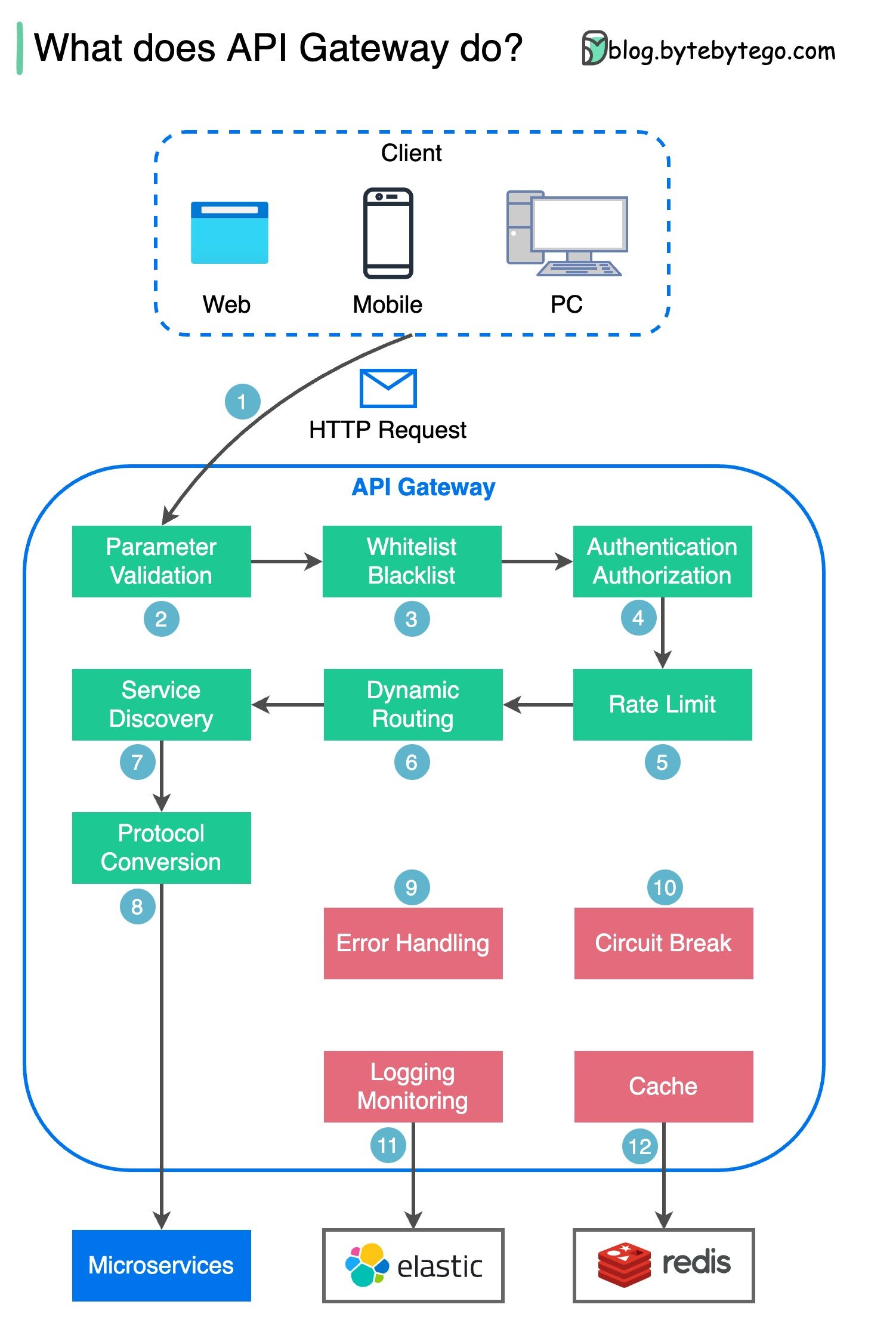
When a client issues a request to an application managed by an API gateway, the processing cycle follows a deterministic sequence:
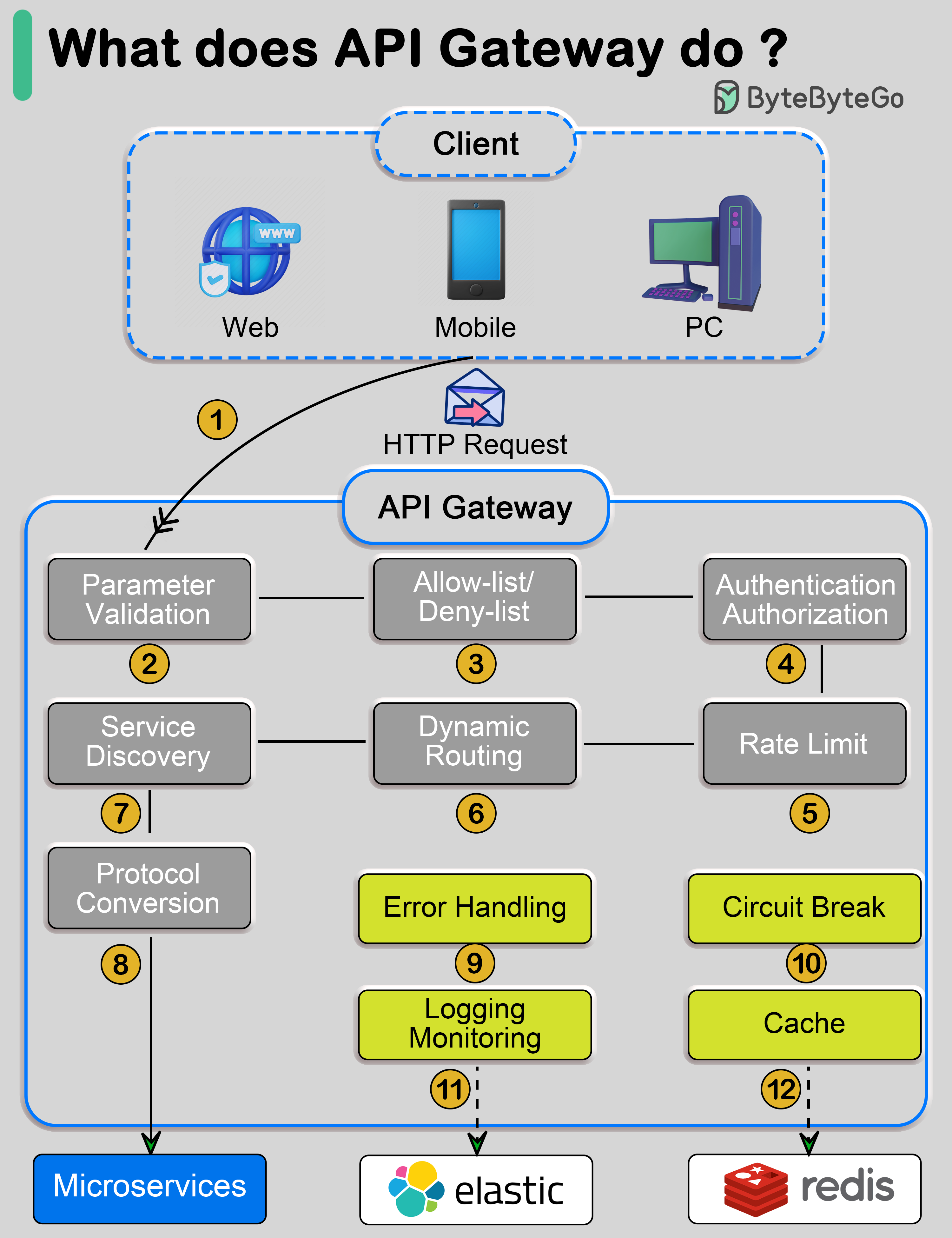
- Connection Termination: The gateway terminates the incoming client connection, handling TLS decryption and HTTP/2 or HTTP/3 multiplexing.
- Request Inspection & Sanitization: The gateway parses the incoming request path, headers, HTTP verb, query parameters, and payload to detect malformed data, SQL injection attempts, or unauthorized access vectors.
- Authentication & Authorization: The gateway verifies client identity credentials—such as validating a JSON Web Token (JWT), inspecting an API key against an in-memory cache, or verifying an OAuth 2.0 access token via an identity provider standard like IETF OAuth 2.0 (RFC 6749).
- Traffic & Policy Control: The gateway evaluates rate limits, concurrency rules, and quota allocation to ensure the requesting IP address or client account has not exceeded authorized usage thresholds.
- Request Transformation: The gateway modifies the request as necessary. This may involve injecting downstream headers (such as
X-User-IDor trace context headers), reformatting JSON payloads, or translating protocols (e.g., converting HTTP/REST to gRPC). - Routing & Load Balancing: The gateway selects the target backend service instance based on configured path routing rules (e.g.,
/v1/orders/*maps to the Order Microservice cluster) and balances the load across healthy upstream nodes. - Execution & Response Aggregation: The gateway forwards the request to the upstream service. If configured for request aggregation, it may simultaneously issue sub-requests to multiple services, merge their payloads into a single response, and compress the output.
- Telemetry Generation: The gateway records access logs, updates metrics (latency, HTTP status counts), and emits distributed tracing spans to monitoring platforms before returning the final response to the client.
Core Capabilities of an API Gateway
Modern enterprise API gateways provide functionality across security, network orchestration, traffic governance, and observability.
- API Gateway Core Features:
- Security & Auth: JWT / OAuth2, Mutual TLS (mTLS), IP Filtering
- Traffic Control: Rate Limiting, Load Balancing, Circuit Breaker
- Transformations: REST to gRPC, Header Injection, Payload Aggregation
- Observability & Monitoring: OpenTelemetry Logs, Prometheus Metrics, Distributed Tracing
1. Security, Authentication, and Authorization
Centralizing security enforcement at the gateway level prevents insecure or unauthenticated requests from reaching the internal network perimeter.
- Token Validation: The gateway offloads JWT validation from backend microservices. It cryptographically verifies the token's signature using public keys retrieved from an identity provider's JSON Web Key Set (JWKS) endpoint, checking expiration times (
exp) and audience claims (aud). - Mutual TLS (mTLS): For high-security environments, gateways enforce bidirectional certificate authentication, validating client-side certificates before establishing a connection.
- Web Application Firewall (WAF) Integration: Gateways block common application-layer attack vectors, including cross-site scripting (XSS), SQL injection, and path traversal, before requests traverse internal subnets.
2. Request Routing and Traffic Governance
API gateways control how application traffic flows to downstream infrastructure.
- Path-Based and Header-Based Routing: Gateways direct requests based on URL paths (
/api/v2/payments), HTTP headers (Host: mobile.example.com), query parameters, or HTTP verbs (GETvs.POST). - Canary Deployments and Blue/Green Routing: Development teams can execute deployment strategies by directing a controlled percentage of traffic (e.g., 5%) to a new software release while sending 95% to stable infrastructure.
- Circuit Breaking and Fallbacks: If a backend service experiences elevated error rates or latencies, the gateway can temporarily stop forwarding traffic to that service ("opening" the circuit breaker) and instantly return a graceful degraded response or fallback cache payload.
3. Rate Limiting, Throttling, and Quota Management
To preserve system stability and protect against denial-of-service conditions or resource exhaustion, API gateways enforce strict rate management policies.
- Rate Limiting Algorithms: Gateways employ token bucket, leaky bucket, or sliding window algorithms to constrain request frequency. For example, an API tier might limit clients to 100 requests per minute.
- Tiered Quota Allocation: Enterprise APIs use gateways to enforce business logic based on subscription tiers (e.g., Free tier: 1,000 calls/day; Enterprise tier: 1,000,000 calls/day).
- Backpressure Mitigation: When backend systems become saturated, the gateway returns standard
429 Too Many Requestsstatus codes immediately, shielding downstream databases and application servers from processing spikes.
4. Protocol Translation and Request Transformation
Heterogeneous systems rely on diverse networking protocols, serialization formats, and API designs.
- Protocol Translation: Gateways act as adapters between client-facing protocols (HTTP/1.1, HTTP/2, WebSockets) and internal enterprise protocols (gRPC, Apache Thrift, AMQP, MQTT).
- Payload Modification: The gateway can rewrite paths, inject authorization claims into request headers, or convert data formats (such as transforming legacy XML payloads from backend SOAP services into clean JSON structures for modern frontend clients).
- Data Masking and Filtering: To satisfy data privacy mandates such as GDPR or HIPAA, gateways redact or filter sensitive fields (like credit card details or personally identifiable information) before returning responses to external clients.
5. Observability and Telemetry
Because all external traffic passes through the API gateway, it serves as a central point for telemetry collection.
- Access Logging: Generates audit trails of every incoming request, including remote IP addresses, HTTP status codes, request durations, and user identities.
- Distributed Tracing: Implements tracing standards by injecting propagation headers (such as standard
traceparentheaders defined by the W3C Distributed Tracing specification) into incoming requests. This enables observability platforms to trace a single transaction as it traverses multiple internal services. - Real-time Metrics: Exports operational metrics—such as request volume per second (RPS), error rates (4xx/5xx responses), and latency percentiles (p50, p95, p99)—directly to systems like Prometheus.
API Gateway vs. Related Infrastructure Components
Because software architecture incorporates multiple networking components, the roles of API gateways, load balancers, reverse proxies, and service meshes frequently overlap. The table below details their fundamental differences.
| Architectural Dimension | API Gateway | Load Balancer | Reverse Proxy | Service Mesh |
|---|---|---|---|---|
| Primary Architectural Layer | Layer 7 (Application) | Layer 4 (Transport) / Layer 7 | Layer 7 (Application) | Layer 7 (Data Plane Sidecar) |
| Primary Orientation | North-South (Client to Server) | North-South (Client to Server) | North-South (Client to Server) | East-West (Service to Service) |
| Core Intent | API governance, auth, routing, and API lifecycle management | Distributing traffic across identical backend nodes | Hiding server details, basic proxying, static caching | Intra-service communication, mTLS, micro-segmentation |
| Business Logic Awareness | High (Processes JWTs, APIs, quotas, payloads) | Low (Focuses on IP, TCP/UDP ports, round-robin) | Low to Medium (Headers, basic paths, URL rewrites) | Low (Translucent service discovery & network telemetry) |
| Deployment Location | Edge of public network or enterprise ingress point | Network boundary / Infrastructure ingress | Web server boundary / Front of app servers | Distributed sidecar containers alongside services |
Disambiguating Key Infrastructure Concepts
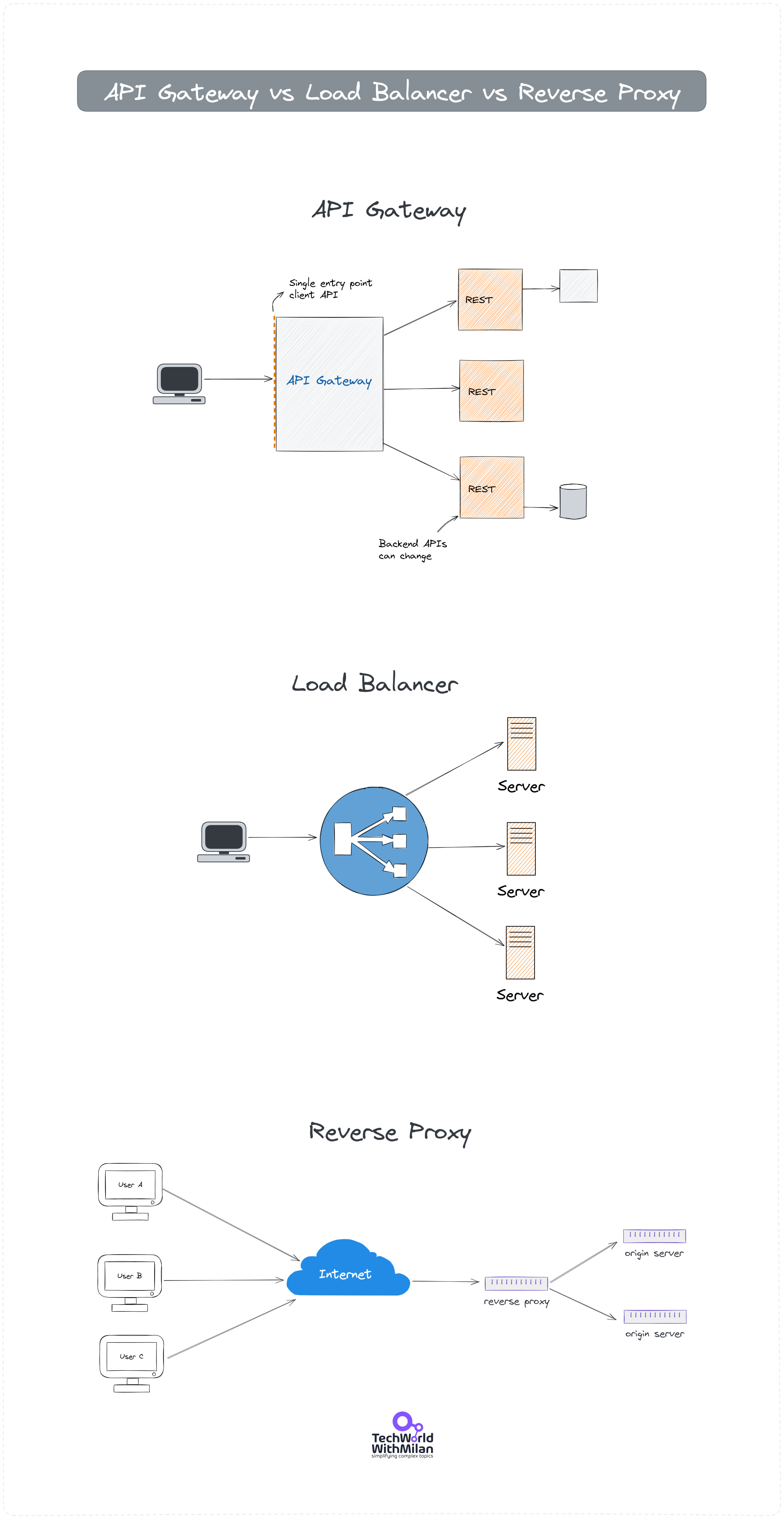
- API Gateway vs. Load Balancer: A standard Layer 4 load balancer (such as an AWS NLB) routes raw TCP/UDP packets across server pools without parsing HTTP paths or inspecting authorization headers. An API gateway operates at Layer 7, executing complex, content-aware routing and authentication logic before forwarding the request.
- API Gateway vs. Reverse Proxy: A reverse proxy (such as standard NGINX or HAProxy) forwards requests from a client to backend servers. An API gateway is an advanced reverse proxy augmented with API-centric management capabilities: developer portals, rate limiting by API client ID, token introspection, and multi-service payload aggregation.
- API Gateway vs. Service Mesh: An API gateway manages North-South traffic (requests entering the network boundary from external clients). A service mesh (such as Istio or Linkerd) manages East-West traffic (secure, observable network communications between internal microservices inside the infrastructure perimeter).
Architectural Patterns and Deployment Models
Organizations choose different API gateway topologies based on performance needs, operational expertise, and system architecture.
- Backend-For-Frontend (BFF) Pattern Architecture:
- Mobile Client connects to Mobile API Gateway (Optimized JSON)
- Web Frontend connects to Web API Gateway (Rich Data Sets)
- Both gateways connect to the Microservices Internal Subnet
1. Edge API Gateway Pattern
The standard deployment model features a centralized gateway cluster deployed at the perimeter (edge) of the corporate network or Virtual Private Cloud (VPC). All public internet traffic passes through this edge cluster before reaching internal networks.
- Advantages: Centralized governance, single security policy enforcement point, simplified domain management.
- Disadvantages: Risk of creating a organizational bottleneck where dedicated API teams must approve all routing configuration updates.
2. Backend-for-Frontend (BFF) Pattern
Instead of deploying a single monolithic API gateway for all consumers, the BFF pattern deploys dedicated, lightweight gateways tailored to specific client interfaces. For example, a company might run a Mobile API Gateway, a Web API Gateway, and a Partner API Gateway.
- Mobile BFF: Aggregates multi-service calls into highly compressed JSON payloads optimized for high-latency mobile networks.
- Web BFF: Delivers expanded response objects tailored to desktop displays operating over high-bandwidth connections.
- Third-Party Partner BFF: Implements strict developer authentication, developer portal rate limits, and custom billing telemetry.
3. Kubernetes Ingress Controllers as API Gateways
In containerized environments running on Kubernetes, modern API gateways often act directly as Ingress Controllers or implementations of the Kubernetes Gateway API standard. They read native Kubernetes custom resource definitions (CRDs) to automatically map external public endpoints to internal Kubernetes Service abstractions.
Implementation Trade-Offs and Operational Challenges
While API gateways resolve major challenges in distributed systems, they also introduce architectural trade-offs that engineering teams must manage.
1. Latency Overhead
Adding a proxy layer to every network call introduces processing latency. Parsing JSON payloads, cryptographically validating JWT signatures, running rate-limiting algorithms against distributed caches (like Redis), and establishing new downstream TCP connections add milliseconds to the request lifecycle. High-throughput architectures require gateways written in low-overhead languages (such as C++, Rust, or Go) coupled with efficient caching strategies.
2. Single Point of Failure (SPOF)
If an edge API gateway cluster experiences an outage, all downstream application access halts—even if the underlying microservices remain fully operational. Mitigating this requires:
- Deploying API gateway instances across multiple availability zones.
- Utilizing global traffic routing (such as Anycast DNS or Cloudflare/AWS Route 53) to shift traffic away from failing regions automatically.
- Maintaining infrastructure-as-code (IaC) deployment pipelines to instantly recover gateway configurations.
3. Policy Bloat and Configuration Complexity
Over time, API gateways risk becoming dump sites for custom business logic. When developers write specialized transformations, custom authentication scripts, and application-level routing inside the gateway configuration, the gateway itself becomes a complex, difficult-to-test monolithic component. Best practices dictate keeping the API gateway focused exclusively on infrastructure-level cross-cutting concerns, keeping core business logic inside downstream microservices.
Evaluating Standard API Gateway Platforms
Organizing an enterprise API strategy involves choosing between managed cloud services, open-source gateways, and enterprise API platforms.
API Gateway Landscape:
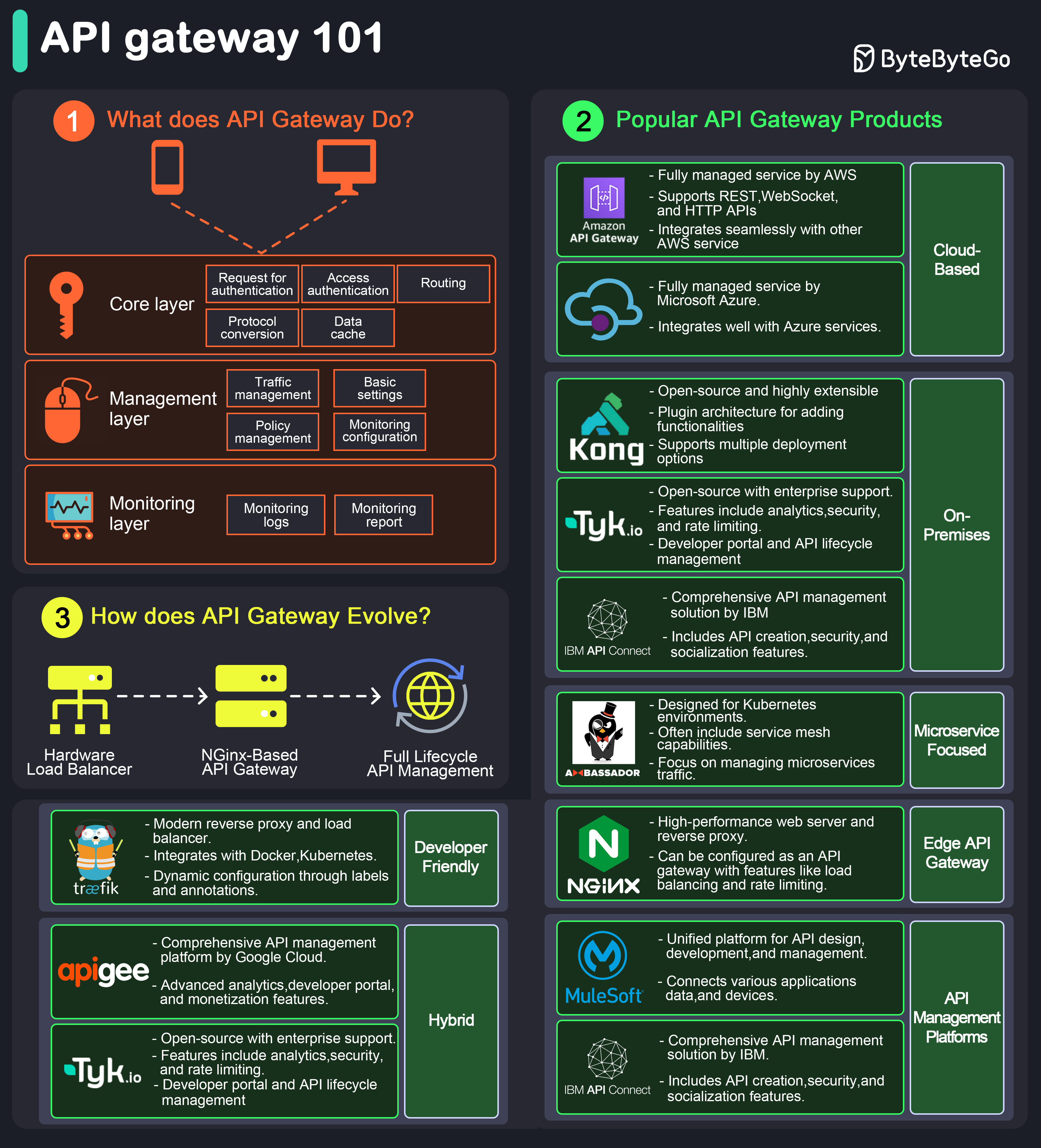
- Cloud-Managed Services: AWS API Gateway, Azure API Management, Google Cloud Apigee
- Self-Hosted / Open-Source: Kong API Gateway, Envoy Proxy, Traefik Proxy
AWS API Gateway / Azure API Management / Google Cloud Apigee: Fully managed cloud-native gateway services designed to scale automatically with cloud infrastructure. They integrate directly with cloud identity systems (e.g., AWS Cognito, Entra ID) and serverless execution environments (e.g., AWS Lambda).
Kong API Gateway: An open-source, lightweight gateway built on top of NGINX and OpenResty, designed for high performance and extensibility via Lua, Go, or Python plugins. It operates seamlessly across multi-cloud and on-premises environments.
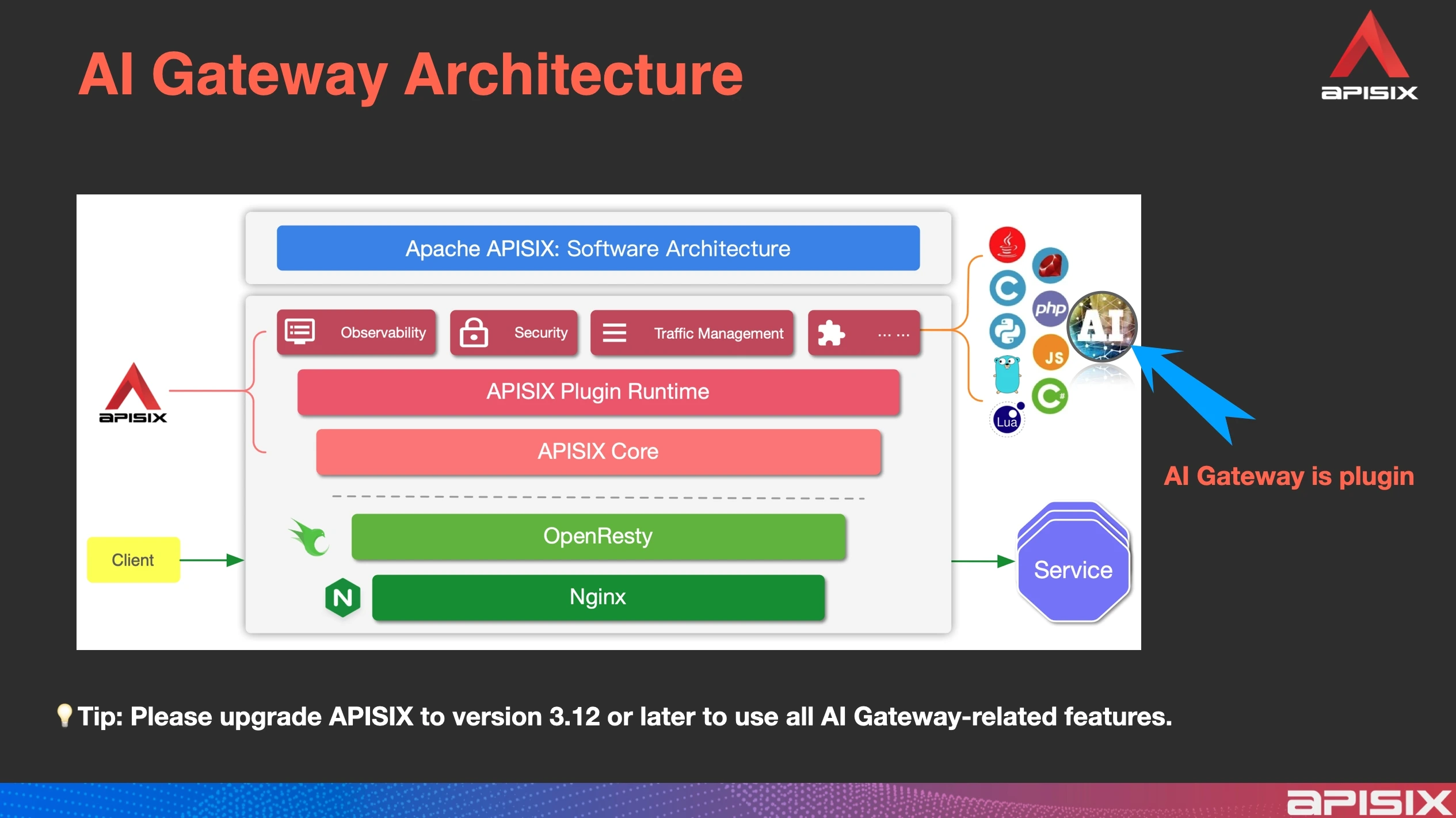
Envoy Proxy: An open-source edge and service proxy hosted by the Cloud Native Computing Foundation (CNCF). Envoy is frequently deployed as the underlying engine for modern API gateways and service meshes due to its low memory footprint and high throughput capabilities.
Traefik: A cloud-native edge router built in Go that automatically discovers service configurations natively from Docker, Kubernetes, and cloud provider APIs.
Frequently Asked Questions
Can an application function without an API gateway?
Yes. Simple applications or monolithic architectures do not require an API gateway. Small microservice deployments can also expose services directly via basic load balancers or HTTP web servers. However, as microservice counts and external client integration requirements grow, managing cross-cutting concerns like authentication, rate limiting, and routing without a gateway becomes difficult to sustain securely.
What is the performance impact of an API gateway?
A properly configured API gateway adds negligible latency—typically between 1 and 5 milliseconds—to incoming requests. Highly optimized open-source proxies (such as Envoy or Kong) process tens of thousands of requests per second per node. Latency issues generally stem from custom policy scripts, synchronous blocking operations, or remote cache lookups rather than the gateway's core routing engine.
Does an API gateway handle database transactions?
No. An API gateway operates strictly at the networking and application protocol layers (HTTP, gRPC, WebSockets). It does not maintain database connections, manage ACID transactions, or execute database queries. All persistence logic remains isolated inside backend application microservices.
How does an API gateway validate a JSON Web Token (JWT)?
When a client sends a request containing a Bearer JWT in the Authorization header, the gateway decodes the token header and payload. It verifies the cryptographic signature using the identity provider's public key (retrieved via a JWKS endpoint) and checks the token's standard claims (such as exp for expiration and nbf for active window). If the token is valid, the gateway strips or forwards the token to internal services; if invalid, it immediately responds with a 401 Unauthorized HTTP status code.
What is the difference between an Ingress Controller and an API Gateway in Kubernetes?
A basic Kubernetes Ingress Controller manages external access to services within a cluster using standard HTTP/HTTPS path routing rules. An API Gateway offers a broader set of features, including advanced client authentication, rate limiting, payload transformations, API monetization tools, and developer portals. Modern Kubernetes environments often use specialized API gateways (or implementations of the Kubernetes Gateway API) to serve as both an Ingress Controller and an advanced API Gateway.
Implementation Next Steps
When evaluating or implementing an API gateway within your organization's technical stack:
- Audit Your Current Network Traffic: Identify all public-facing endpoints and categorize the cross-cutting security, rate limiting, and observability requirements across your teams.
- Select an Architectural Strategy: Determine whether a centralized Edge Gateway, a Kubernetes-native Gateway, or a decentralized Backend-For-Frontend (BFF) topology aligns best with your deployment models and team structure.
- Decouple Business Logic: Ensure that the gateway handles strictly infrastructure-level concerns (authentication, TLS termination, rate control) and avoid embedding domain-specific business logic within proxy configurations.
- Establish Observability Baselines: Configure standardized logging, tracing propagation standards, and metrics monitoring at the gateway layer before migrating production traffic.
Image Gallery