How Boating USA Insurance Works: A Comprehensive Guide for Owners
Boating insurance in the USA functions as a specialized risk-management tool designed to protect vessel owners against financial loss from physical damage, theft, and liability claims. Unlike standard homeowner policies, marine insuran...
Boating insurance in the USA functions as a specialized risk-management tool designed to protect vessel owners against financial loss from physical damage, theft, and liability claims. Unlike standard homeowner policies, marine insurance addresses the unique hazards of navigation, such as salvage operations, fuel spills, and environmental cleanup, ensuring coverage remains active both on the water and while the vessel is in storage.
Contents
Understanding the Marine Insurance Framework
Marine insurance is distinct from other forms of property insurance because it is specifically tailored to the environmental and operational realities of maritime travel. In the United States, boat insurance is not federally mandated; however, most marinas require proof of liability insurance before granting a slip rental, and many lenders require comprehensive coverage as a condition of a marine mortgage.
The policy structure generally focuses on two pillars: the boat itself (hull) and the risks associated with its operation (liability). Because watercraft are mobile assets that traverse various jurisdictions, policies are written to account for navigational limits, which define the geographical boundaries where your coverage remains valid.
Core Components of a Boating Policy
To understand how your policy functions, you must differentiate between the various coverage types included in a standard agreement. Most insurers offer "Agreed Value" or "Actual Cash Value" policies, which significantly impact how a claim is settled.
- Hull Insurance: This covers the physical vessel, including the hull, motor, mast, and permanently attached equipment. If the boat is damaged in a collision or destroyed by a covered peril like fire or lightning, this section provides the funds for repair or replacement.
- Liability Coverage: This is the most critical component for most owners. It covers legal fees, medical bills, and property damage if you are found at fault in an accident involving another boat, a dock, or a person.
- Medical Payments: This covers the costs of injuries sustained by you or your passengers, regardless of who is at fault. It is particularly useful for covering immediate medical expenses after an onboard accident.
- Uninsured Boater Coverage: Given that many states do not require boat insurance, the risk of encountering an uninsured operator is high. This provision protects you if you are struck by someone who lacks the funds or the policy to cover your damages.
Determining the Basis of Settlement: Agreed Value vs. Actual Cash Value
The most common point of confusion for boat owners is the method of valuation. These two methods dictate how much you will be paid in the event of a total loss.
| Feature | Agreed Value | Actual Cash Value (ACV) |
|---|---|---|
| Definition | Value established at policy inception | Market value at time of loss |
| Depreciation | No depreciation applied | Depreciation is deducted |
| Total Loss Payout | Guaranteed payout amount | Depreciated market value |
| Premium Cost | Typically higher | Typically lower |
Choosing an "Agreed Value" policy is generally recommended for newer or high-value vessels, as it eliminates the uncertainty of market fluctuations. Conversely, "Actual Cash Value" may be sufficient for older boats where the cost of a premium hike outweighs the benefit of a guaranteed payout.
Factors Influencing Insurance Premiums
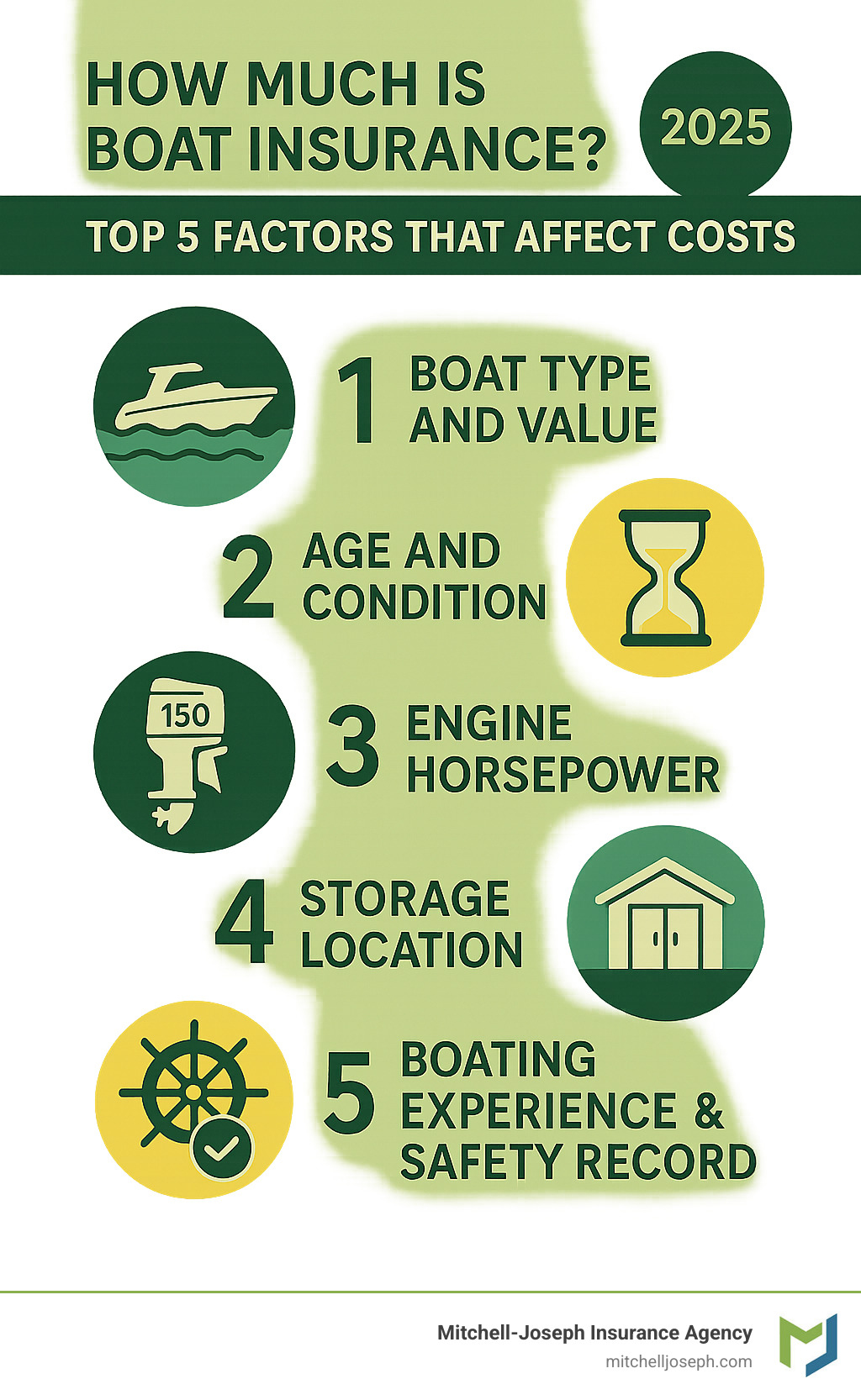
Insurance underwriters assess risk using a specific set of variables. Understanding these factors allows owners to take proactive steps to reduce their annual premiums.
1. Vessel Type and Power The speed and size of the boat are primary drivers of cost. High-performance speedboats or vessels with twin engines inherently carry more risk than a small sailboat or a pontoon boat. The likelihood of high-speed collision and the complexity of repair for sophisticated engines increase the premium.
2. Navigational Territory Where you operate your vessel matters. Operating in coastal waters prone to hurricanes involves different risk profiles than operating on inland lakes. Insurers will explicitly state your "navigational limits." Straying outside these bounds often renders your coverage void in the event of a claim.
3. Safety Features and Training Installing fire suppression systems, GPS tracking, and automatic bilge pumps can often qualify you for discounts. Furthermore, completion of a boating safety course recognized by the United States Coast Guard (USCG) often results in a premium reduction, as it signals a lower risk profile to the underwriter.
4. Storage and Lay-Up Periods If you live in a region with distinct boating seasons, you may opt for a "lay-up" period. This means agreeing not to use the boat during winter months, effectively shifting it from active coverage to storage coverage. This significantly lowers the premium while keeping the boat protected against fire, theft, or vandalism while on the hard.
Common Exclusions and Operational Limitations
Not every incident is covered by a standard marine policy. Understanding these exclusions is vital for maintaining compliance:
- Wear and Tear: Marine insurance is not a maintenance plan. Damage resulting from gradual deterioration, blistering, or lack of routine maintenance (such as engine neglect) is typically excluded.
- Racing: Standard policies often exclude coverage if the vessel is used in organized racing events. You would typically need a specific rider or an entirely different policy to cover competitive marine activities.
- Illegal Activity: Operating a vessel under the influence or in violation of federal maritime laws will result in the immediate denial of any claim and potential cancellation of the policy.
- Negligence: If damage is caused by gross negligence—such as failing to secure the vessel during a known, forecasted severe storm—the insurer may refuse to pay for damages.
The Claims Process: A Step-by-Step Approach
If you experience a loss, the efficacy of your insurance depends on your adherence to the claims procedure.
- Safety First: Immediately ensure the safety of all passengers. If the vessel is taking on water, prioritize distress calls and emergency evacuation.
- Mitigation of Further Damage: You have a legal obligation to prevent further loss. If a hose has burst, shut off the seacock. If the boat is sinking, make reasonable attempts to haul it or stabilize it, provided it is safe to do so.
- Documentation: Take extensive photographs of the damage, the location of the vessel, and any property involved in the accident. Obtain contact information from witnesses and, if local law enforcement or the Coast Guard was involved, request a copy of the incident report.
- Reporting: Notify your insurer as soon as possible. Most carriers have 24/7 claims lines. Do not authorize permanent repairs until an insurance adjuster has inspected the vessel or you have received explicit written authorization from your carrier.
- Assessment: The adjuster will evaluate the repair estimates against the policy terms. If the repair cost exceeds a certain percentage of the boat's value, the insurer may declare a constructive total loss.
Frequently Asked Questions
Is my boat covered by my homeowners insurance? Generally, no. Homeowners insurance provides very limited coverage for small watercraft (such as canoes or small sailboats with low horsepower). It does not provide the liability or salvage coverage necessary for larger powerboats or yachts.
What is a "salvage" charge, and why does my policy include it? If your boat sinks or runs aground, the cost to retrieve it can be astronomical. Salvage coverage pays for professional recovery services to prevent environmental damage and clear navigational hazards. Without this, you could be personally liable for tens of thousands of dollars in recovery fees.
Does my insurance cover me if I let a friend borrow my boat? Most policies provide coverage for "permissive users," meaning someone you have explicitly allowed to operate your vessel. However, check your "operator clause." If you have a named-operator policy, your friend may not be covered, which would leave you personally liable for any damages they cause.
What happens if I sell my boat mid-year? You should contact your insurance provider immediately to cancel the policy as of the date of sale. You may be entitled to a prorated refund of the unused premium. Do not simply transfer the policy to the new owner, as they need to establish their own insurable interest.
Next Actions for Boat Owners
To ensure your vessel is properly protected, start by reviewing your current declarations page. Confirm that your "Agreed Value" reflects the current 2026 market value of your boat, as values have fluctuated significantly in recent years. If you have added aftermarket electronics, engines, or custom rigging, ensure these are listed as "scheduled property" to guarantee they are fully covered. If you operate your vessel in coastal areas, specifically confirm that "named storm" coverage is included in your policy, as some standard plans exclude this without an additional rider.
Image Gallery