Acoustic Research AR-4x Guide: Technical Specs, Restoration, and Performance
The Acoustic Research AR-4x is a historic two-way bookshelf loudspeaker introduced in 1965 that helped define high-fidelity home audio. Renowned for its acoustic suspension design, smooth midrange, and warm bass response, the AR-4x rem...
The Acoustic Research AR-4x is a historic two-way bookshelf loudspeaker introduced in 1965 that helped define high-fidelity home audio. Renowned for its acoustic suspension design, smooth midrange, and warm bass response, the AR-4x remains one of the most popular vintage speakers for audiophiles and DIY restorers today.
Contents
Historical Context and Design Philosophy
During the mid-1960s, Acoustic Research (AR), founded by Edgar Villchur and Henry Kloss, dominated the American high-fidelity speaker market. Before Villchur invented the acoustic suspension enclosure in the 1950s, producing deep bass required massive cabinet enclosures or porting methods that often introduced low-frequency distortion.
The acoustic suspension principle revolutionized speaker manufacturing by sealing the cabinet completely airtight. Instead of relying on a stiff mechanical suspension (the woofer's spider and surround) to restore the cone to its baseline position, the sealed enclosure uses the compressed air trapped inside the cabinet as a linear spring force. This design permitted compact "bookshelf" dimensions while achieving exceptionally clean, low-distortion bass extension previously impossible in small boxes.
Introduced in 1965 as an upgrade to the original AR-4, the AR-4x became an immediate commercial success. Sold through the early 1970s, it offered working-class music lovers true high-fidelity sound at an accessible price point (roughly $57 to $63 per speaker at release). Today, the AR-4x is celebrated as an exemplar of the "East Coast Sound"—a voicing style characterized by an accurate, non-fatiguing midrange, linear bass, and a smooth, gentle high-frequency roll-off, contrasting sharply with the brighter, punchier "West Coast Sound" popularized by JBL and Cerwin-Vega.
Technical Specifications and Architecture
Understanding the physical build and internal components of the AR-4x is essential for both prospective buyers and collectors undertaking restoration.
AR-4x Cabinet Cross-Section
- 2.5" Cone Tweeter
- Wide Dispersion / Sealed Back Frame
- 8" Woofer
- Treated Cloth Surround / Long-Throw Voice Coil
- Airtight Enclosure Filled with Fiberglass Stuffing
- Crossover: 6 µF Capacitor + Wirewound Potentiometer
Driver Topology
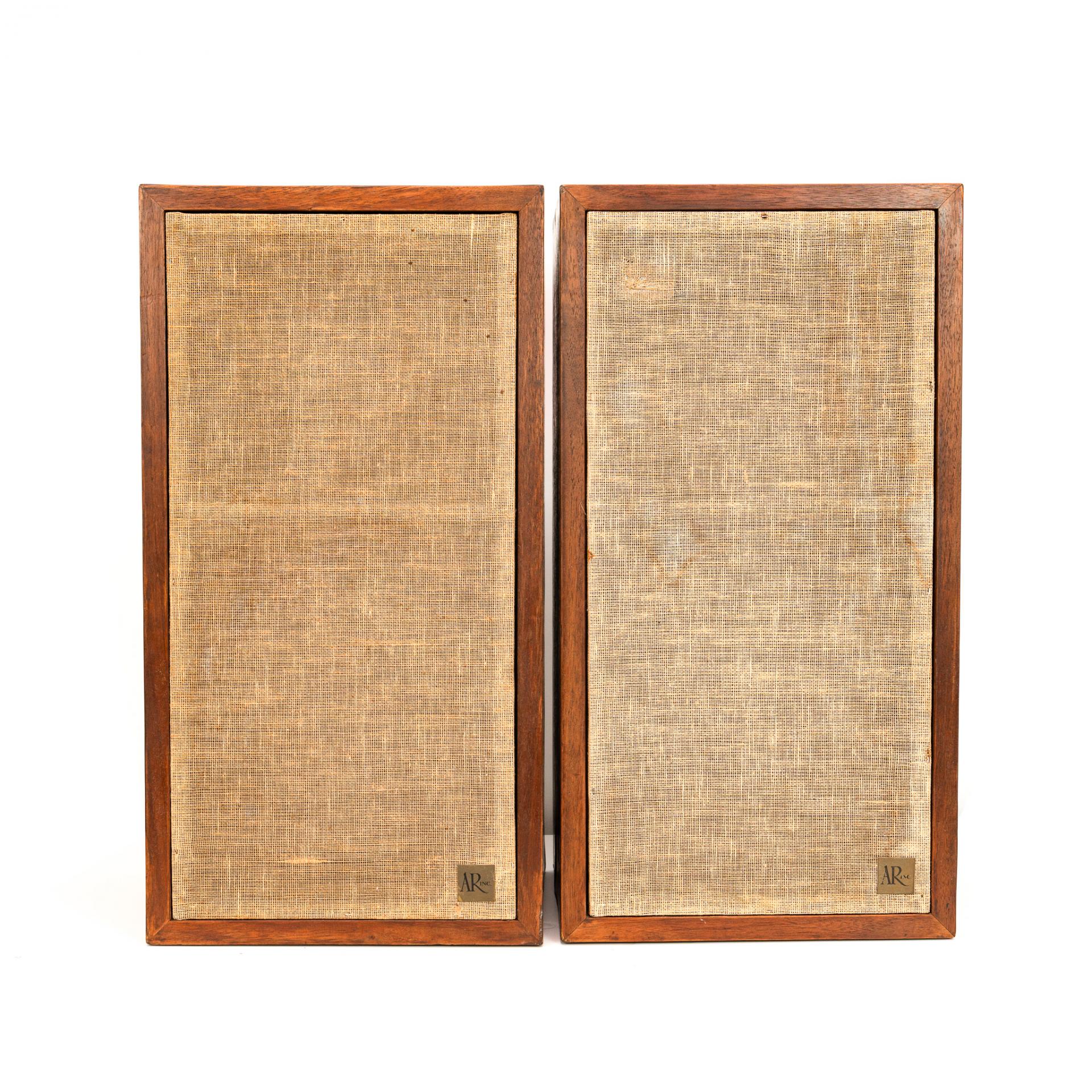
The AR-4x utilizes a two-driver setup housed within an oiled walnut or vinyl-clad cabinet:
- 8-Inch Low-Frequency Driver (Woofer): The woofer features a heavy magnet structure, a long-throw voice coil, and a treated pleated-cloth surround. Unlike later speakers from the late 1970s and 1980s that utilized polyurethane foam surrounds that degrade over time, the AR-4x's cloth surround does not rot, though its original chemical sealant often hardens or becomes porous over decades.
- 2.5-Inch High-Frequency Driver (Tweeter): Replacing the 3.5-inch driver found in the original AR-4, the AR-4x introduced a improved 2.5-inch cone tweeter featuring a wider dispersion pattern and lower crossover capabilities. This driver delivers exceptional vocal naturalness without harshness.
Crossover Network and Control
The crossover in the AR-4x is minimalist by design. It crosses over at approximately 1,200 Hz, which allows the 2.5-inch tweeter to handle a substantial portion of the upper midrange spectrum. The circuit contains:
- A single 6 µF (microfarad) non-polarized industrial capacitor (often manufactured by Callins or Sprague) to filter low frequencies out of the tweeter.
- An inductor (choke coil) mounted to the inner cabinet board to roll off high frequencies from the woofer.
- A variable 15-ohm wirewound potentiometer (rheostat) mounted on the back panel, allowing listeners to adjust the tweeter output to match room acoustics or personal preference.
| Specification | Details / Measurements |
|---|---|
| System Type | 2-way acoustic suspension (sealed enclosure) |
| Frequency Response | 45 Hz – 15,000 Hz (±3 dB) |
| Low-Frequency Driver | 8-inch acoustic suspension woofer with cloth surround |
| High-Frequency Driver | 2.5-inch wide-dispersion cone tweeter |
| Crossover Frequency | 1,200 Hz |
| Nominal Impedance | 8 Ohms (Minimum ~6 Ohms) |
| Recommended Amplifier Power | 15 to 60 Watts RMS per channel |
| Cabinet Dimensions | 19" H × 10" W × 9" D (48.2 cm × 25.4 cm × 22.8 cm) |
| Weight | Approximately 18.5 lbs (8.4 kg) per enclosure |
| Enclosure Materials | 3/4-inch particle board with oiled walnut veneer or birch |
Evaluating Sound Quality and Modern Amplifier Pairing
The sonic character of the AR-4x is distinctly musical, natural, and warm. Its greatest strength lies in vocal and acoustic instrument reproduction.
Midrange and High-Frequency Performance
Because the woofer transitions to the tweeter at 1,200 Hz, the upper midrange has an open, seamless quality. Acoustic guitars, cellos, pianos, and male and female vocals sound realistic and textured. The 2.5-inch cone tweeter avoids the sibilance and metallic ringing that can plague early dome or metal tweeters. However, listeners accustomed to modern ultra-bright ribbon tweeters may find the extreme top end (above 12 kHz) somewhat muted or rolled off.
Bass Response
Despite its compact size, the sealed cabinet design provides deep, linear bass down to roughly 45 Hz. The bass response is tight and controlled rather than booming or muddy. Unlike bass-reflex (ported) enclosures, which exhibit a steep 24 dB per octave roll-off below their tuning frequency, the AR-4x's acoustic suspension enclosure rolls off at a gentle 12 dB per octave, allowing for surprising low-frequency extension in smaller to medium-sized rooms.
Amplifier Matching Recommendations
While rated at an 8-ohm nominal impedance, the AR-4x is relatively low in sensitivity (roughly 85 dB @ 1W/1m). Acoustic suspension systems require real power to move the air trapped inside the cabinet.
- Vintage Tube Amplifiers: Pairing the AR-4x with a 20-to-35-watt vintage tube receiver (such as a Dynaco ST-70 or Fisher 400) creates a lush, highly musical presentation ideal for jazz, classical, and vocal recordings.
- Vintage Solid-State Receivers: Classic 1970s receivers from Marantz, Pioneer, Sansui, or Sherwood delivering 30 to 60 watts per channel provide excellent grip on the woofer while maintaining warm tonal characteristics.
- Modern Amplifiers: A clean, modern Class-D or Class-AB integrated amplifier providing 40 to 80 watts handles the AR-4x easily. Ensure the amplifier is comfortable driving 6-to-8-ohm loads.
Restoration Guide: Restoring an AR-4x to Original Specs
Because AR-4x speakers are now decades old, un-restored pairs rarely perform to their original factory standards. Component degradation typically manifests as silent tweeters, scratchy level controls, or weak bass output caused by air leaks.
Step 1: Diagnosing and Servicing the Potentiometers
The most common point of failure in the AR-4x is the rear potentiometer used for tweeter control. The original Astatine/CTS open-frame potentiometers corrode over time due to oxidation (green copper oxide accumulation), resulting in complete loss of high frequencies or erratic output when turning the knob.
- Back Panel Potentiometer
- Option A: Clean corrosion with DeoxIT D5 / Wire Brush
- Option B: Bypass circuit (Connect wire straight to tweeter +)
- Option C: Replace with modern 8-ohm / 15-ohm L-Pad
Cleaning the Original Potentiometer
- Remove the woofer screws and carefully lift the woofer out to access the interior cabinet.
- Remove the internal fiberglass insulation (wear safety gloves and a mask).
- Desolder the connections from the potentiometer, noting the wire locations.
- Carefully pry open the metal retaining tabs on the potentiometer casing.
- Scrub the wirewound element and wiper contact clean using a small wire brush, fine brass wool, and an electrical contact cleaner such as DeoxIT D5.
- Coat the metal contacts with dielectric grease to prevent future oxidation, reassemble the housing, and solder the wiring back into place.
Installing an L-Pad Replacement
If the original wirewound pot is corroded beyond repair, replace it with a modern 15-ohm wirewound potentiometer or an 8-ohm L-pad with a 25-ohm parallel resistor added to match the original circuit impedance.
Step 2: Recapping the Crossover Circuit
The original 6 µF industrial capacitors installed in the 1960s (typically black Callins capacitors with PVC end caps or wax-filled blocks) suffer from high equivalent series resistance (ESR) and value drift.
- Replace the old capacitor with a high-quality 6.0 µF metalized polypropylene film capacitor (brands like Dayton Audio, Solen, or Jantzen are standard choices).
- Solder the new film capacitor directly into the tweeter line. Because film capacitors are non-polarized, orientation does not matter.
- Replacing this capacitor restores treble clarity, dynamics, and protects the tweeter from low-frequency energy.
Step 3: Resealing the Woofer Cloth Surround
The AR-4x woofer uses a cloth surround that original factory technicians treated with a pliable chemical sealant. Over decades, this compound dries out, rendering the cloth porous and destroying the airtight seal required for proper acoustic suspension operation.
Caution: Never use rubber cement, silicone, PVA wood glue, or polyurethane foam sealants on an AR-4x cloth surround. These compounds harden, alter the cone's mass, stiffness, and resonant frequency, and permanently ruin the driver's suspension geometry.
Correct Resealing Procedure
- Obtain an acoustic-suspension butyl sealant specifically formulated for vintage cloth surrounds (commonly sold by vintage audio restoration specialists).
- Clean dust and loose debris from the cloth surround with a soft brush.
- Apply a thin, light coat of the liquid butyl sealant onto the pleated cloth surround using a small paintbrush.
- Allow the sealant to cure for 24 hours. Test the airtight seal by gently pushing the woofer cone inward with even finger pressure; when released, the cone should return to its resting position slowly (over 1 to 2 seconds) rather than snapping back instantly. If it snaps back instantly, air is escaping through cabinet joints, dust caps, or driver gaskets.
AR-4x Comparison Matrix
When evaluating vintage bookshelf speakers, comparing the AR-4x against its siblings and competitors helps put its performance into perspective.
| Speaker Model | Production Era | Topology | Drivers | Sound Signature | Notable Restoration Needs |
|---|---|---|---|---|---|
| Acoustic Research AR-4x | 1965–1973 | 2-Way Sealed | 8" Woofer, 2.5" Cone Tweeter | Balanced midrange, warm bass, smooth top end | Potentiometer corrosion, surround resealing, recap |
| Acoustic Research AR-4 | 1964–1965 | 2-Way Sealed | 8" Woofer, 3.5" Cone Tweeter | Darker high end, higher crossover (2 kHz) | Potentiometer cleaning, capacitor replacement |
| Acoustic Research AR-2ax | 1964–1976 | 3-Way Sealed | 10" Woofer, 3.5" Mid, 0.75" Dome Tweeter | Deeper bass extension, wider soundstage | Dual potentiometers, foam or cloth surround resealing |
| Dynaco A-25 | 1969–1977 | 2-Way Aperiodic | 10" Woofer, 1" SEAS Dome Tweeter | Punchy mid-bass, fast transient response | Generally durable; minimal recap needed |
| Advent Loudspeaker ("Large Advent") | 1969–1977 | 2-Way Sealed | 10" Woofer, 2" Fried Egg Tweeter | Extended bass, detailed highs, higher output | Foam surround replacement (foam rots) |
Market Value and Buying Considerations
In the current vintage audio market, the AR-4x remains an affordable entry point into true vintage hi-fi sound. Prices vary depending on cabinet condition, driver integrity, and whether the crossovers have been restored.
| Unrestored / Rough Cabinet | Restored / Excellent Veneer | Collector Grade / Matching Pair |
|---|---|---|
| $100 - $180 | $250 - $400 | $450 - $650+ |
Checklist for Buyers
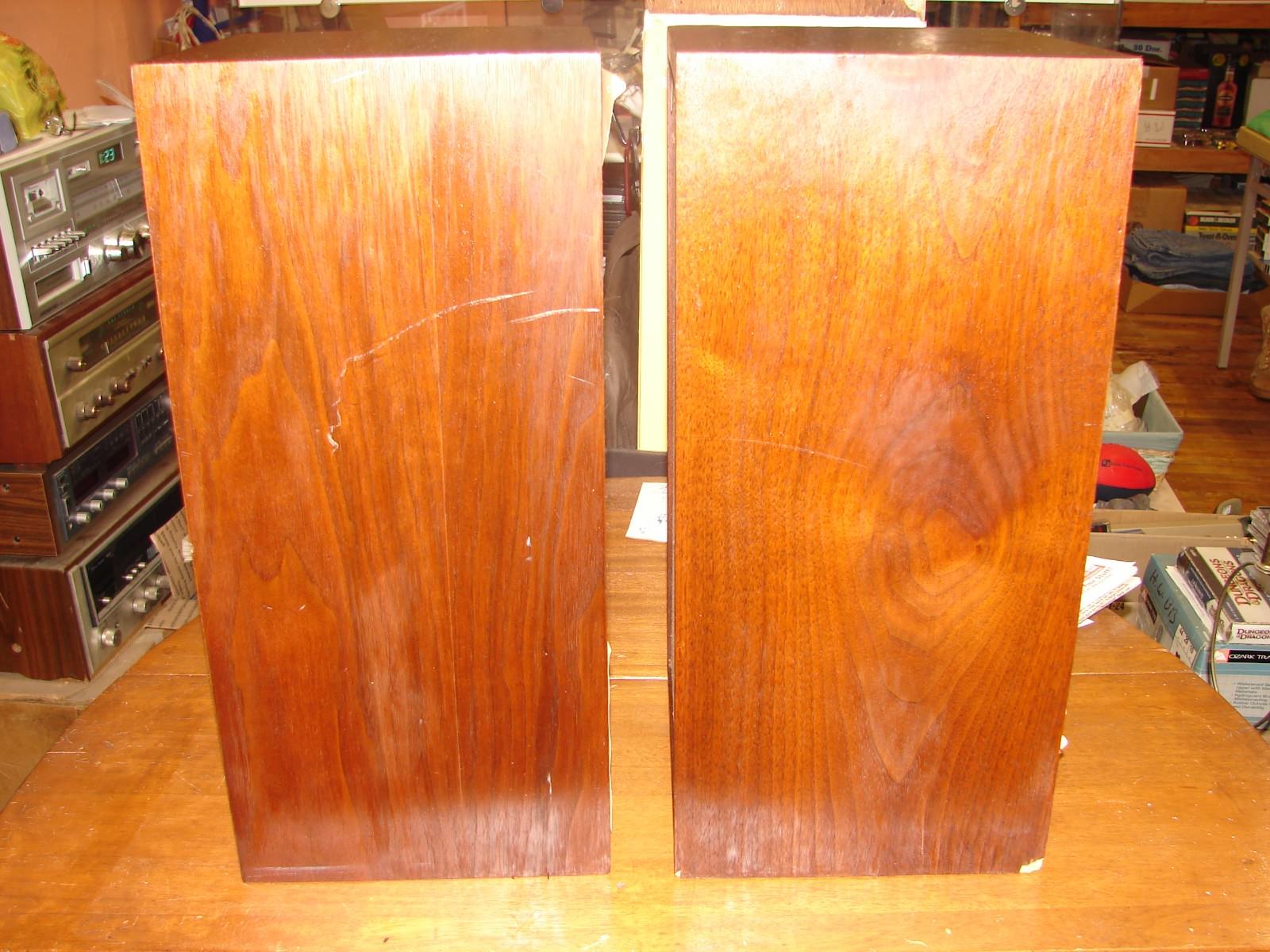
- Check Cabinet Finish: AR-4x cabinets were produced in real oiled walnut, finished pine, and vinyl woodgrain. Real walnut veneers can be sanded gently and re-oiled with Watco Danish Oil or Howard Restor-A-Finish to remove light scratches and water rings.
- Inspect the Tweeters: Verify that both tweeters output sound. If a tweeter is silent, do not assume it is blown; 90% of the time, the issue is simply a corroded potentiometer or dried-out capacitor.
- Verify Original Drivers: Ensure the 8-inch woofer has its original cloth surround and intact dust cap. Replacement with generic modern woofers destroys the acoustic suspension tuning and compromises sound quality.
- Confirm Serial Numbers: AR-4x speakers were sold individually or in factory-matched pairs. Look for consecutive serial numbers on the paper labels on the rear panel.
Frequently Asked Questions
Can I run the AR-4x without repairing the rear potentiometers?
If the potentiometer is corroded, the tweeter will sound intermittent or be cut off completely. While operating the speaker in this state will not harm the woofer, you will miss all high-frequency information. If you do not want to clean or replace the potentiometer, you can temporary bypass it by soldering the crossover output directly to the tweeter lead, setting it to maximum output.
What is the difference between the AR-4, AR-4x, and AR-4xa?
The original AR-4 (1964) used a 3.5-inch tweeter crossed over at 2,000 Hz. The AR-4x (1965) introduced a smaller 2.5-inch tweeter with improved dispersion and lowered the crossover frequency to 1,200 Hz for better midrange continuity. The later AR-4xa (1973) updated the tweeter design again and modified the front baffle arrangement before the series was discontinued.
Do AR-4x woofers require re-foaming?
No. The original AR-4x woofer features a treated cloth surround rather than a polyurethane foam surround. Cloth surrounds do not rot or disintegrate like foam. They only require periodic re-sealing with an airtight butyl sealant to maintain proper enclosure compression.
How much power do I need to drive the AR-4x safely?
An amplifier rated between 30 and 60 watts per channel into 8 ohms provides optimal power for the AR-4x in standard residential listening spaces. While low-power tube amps (15–20 watts) will work well at moderate volume levels, driving the speaker with an underpowered amplifier pushed into clipping can damage the 2.5-inch tweeter.
Next Actions for Owners and Restorers
If you own or have recently acquired a pair of Acoustic Research AR-4x speakers:
- Perform an Audition and Leak Test: Test both drivers at low volume. Lightly press the woofer cone to evaluate enclosure airtightness.
- Order Restoration Parts: Purchase two 6.0 µF metalized polypropylene capacitors and a bottle of specialized cloth-surround sealant.
- Service the Electricals: Remove the woofers, clean or bypass the potentiometers, replace the stock capacitors, and ensure internal wiring connections are secure.
- Reseal Cabinet Joints and Surrounds: Apply sealant to the cloth woofer surrounds and verify that driver mounting gaskets create an airtight seal against the front baffle.
- Pair and Enjoy: Connect your restored AR-4x speakers to a high-quality amplifier, elevate them on 12-to-18-inch speaker stands away from corners, and enjoy classical, jazz, and vocal recordings as they were intended to be heard.
Image Gallery