Understanding the Risks and Safety Protocols for Hunters Struck by Lightning in Colorado
In Colorado, hunters face a significant risk of lightning strikes due to the state's high-altitude terrain and unpredictable mountain weather patterns. Each year, Colorado ranks among the top states in the U.S. for lightning-related fa...
In Colorado, hunters face a significant risk of lightning strikes due to the state's high-altitude terrain and unpredictable mountain weather patterns. Each year, Colorado ranks among the top states in the U.S. for lightning-related fatalities and injuries, with a high concentration of incidents occurring during the late summer and autumn hunting seasons. Because hunters often operate in remote, exposed areas far from substantial shelter, understanding the physics of lightning, localized weather patterns, and immediate response protocols is essential for survival in the backcountry.
Contents
The Geographic and Meteorological Risks of Colorado Hunting
Colorado’s unique topography is a primary driver for its high frequency of lightning. The state’s average elevation is the highest in the contiguous United States, which places hunters in closer proximity to the base of developing storm clouds. As of 2026, meteorological data continues to highlight the "North American Monsoon" as a critical danger period. This seasonal shift typically begins in July and extends through September, overlapping significantly with archery and early rifle seasons.
During these months, moisture-laden air from the Gulf of California and the Gulf of Mexico is pushed upward by the steep terrain of the Rocky Mountains. This process, known as orographic lifting, causes rapid cooling and condensation, leading to the sudden formation of "pop-up" thunderstorms. For a hunter tracking elk in the San Juan Mountains or the Sawatch Range, a clear blue sky can transform into a life-threatening electrical storm in less than 30 minutes.
The danger is not limited to the peak of the storm. Lightning can strike up to 10 miles away from the area where it is raining. This phenomenon, often called a "bolt from the blue," is particularly dangerous for hunters who may believe they are safe because the storm appears distant or the sun is still shining overhead.
Historical Context: Hunters Struck by Lightning in Colorado
History provides several sobering examples of why Colorado is considered a "lightning alley." Over the past decades, dozens of incidents have been recorded involving hunters and outdoor enthusiasts. One of the most notable historical incidents occurred in the San Luis Valley, where a group of hunters was struck while seeking shelter under a lone tree—a common but fatal mistake.
In more recent years, including data up to 2026, the National Weather Service (NWS) and Colorado Parks and Wildlife (CPW) have tracked a trend: most hunting-related strikes occur between 1:00 PM and 4:00 PM. This timeframe corresponds with the heating of the mountain slopes, which triggers convective activity. Statistical analysis shows that victims are often men between the ages of 20 and 50 who are engaged in high-altitude activities. The isolation of Colorado’s wilderness means that even a non-fatal strike can become a fatality due to the delay in emergency medical response and the onset of hypothermia or secondary trauma.
The Mechanics of a Lightning Strike: How Hunters are Hit
Understanding how lightning interacts with the human body and the environment can help hunters make better decisions when a storm approaches. There are five primary ways a hunter can be struck:
- Direct Strike: The most lethal, though less common than other types. The lightning hits the person directly, often because they are the highest point in an open area.
- Side Flash: This occurs when lightning strikes a taller object (like a tree) and a portion of the current jumps to a nearby person. This is why standing near a tree for "shelter" is extremely dangerous.
- Ground Current: This is the most common cause of lightning injuries and deaths. When lightning hits an object or the ground, the energy spreads out along the surface. If a hunter is standing with their feet apart, the current can travel up one leg and down the other, passing through vital organs.
- Conduction: Lightning can travel long distances through metal wires, fences, or even graphite/carbon fiber equipment. Hunters carrying rifles or using metal-framed backpacks are at increased risk if they do not manage their gear properly during a storm.
- Streamers: As a downward leader approaches the ground, "streamers" of positive charge rise from ground objects. A person can be caught in one of these upward-reaching electrical paths even if the main bolt hits elsewhere.
Survival Protocols: What to Do When a Storm Hits
The primary rule for lightning safety in the Colorado backcountry is: When thunder roars, go indoors. However, for hunters miles from a trailhead, "indoors" is not an option. In the absence of a substantial building or a hard-topped metal vehicle, hunters must employ secondary survival tactics.
Immediate Terrain Management
If you are above the timberline (the elevation where trees stop growing), you must descend immediately. High-altitude ridges and peaks are the most dangerous locations. Seek a lower elevation in a valley or a depression, but avoid areas prone to flash flooding, as heavy rain often accompanies lightning.
The "Lightning Crouch"
If you are caught in the open and feel your hair stand on end or hear a "buzzing" sound from nearby rocks or equipment, a strike is imminent. You should:
- Squat down on the balls of your feet.
- Keep your feet as close together as possible to minimize "step voltage."
- Tuck your head and cover your ears.
- Do not lie flat on the ground, as this increases your surface area and exposure to ground currents.
Gear Management
There is a common myth that metal objects "attract" lightning. While metal does not attract lightning, it is an excellent conductor. If you are in a high-risk situation, place your rifle, metal-framed pack, and any electronic devices (like GPS units) 100 feet away from your crouching position. This prevents the gear from acting as a conduit for a strike or side flash.
Emergency Response and First Aid for Lightning Victims
If a member of a hunting party is struck, immediate action is required. Contrary to popular belief, lightning victims do not carry an electrical charge and are safe to touch immediately.
Cardiac and Respiratory Arrest
The most common cause of death from lightning is cardiac arrest. The electrical shock "short-circuits" the heart’s natural rhythm. If the victim is not breathing or has no pulse, begin CPR immediately. In many cases, the heart may restart on its own, but the respiratory system remains paralyzed longer. Continuous rescue breathing is vital.
Identifying Secondary Injuries
Lightning can cause a variety of internal and external injuries that may not be immediately apparent:
- Keraunoparalysis: A temporary paralysis of the limbs common after a strike. It usually resolves within hours but can make evacuation difficult.
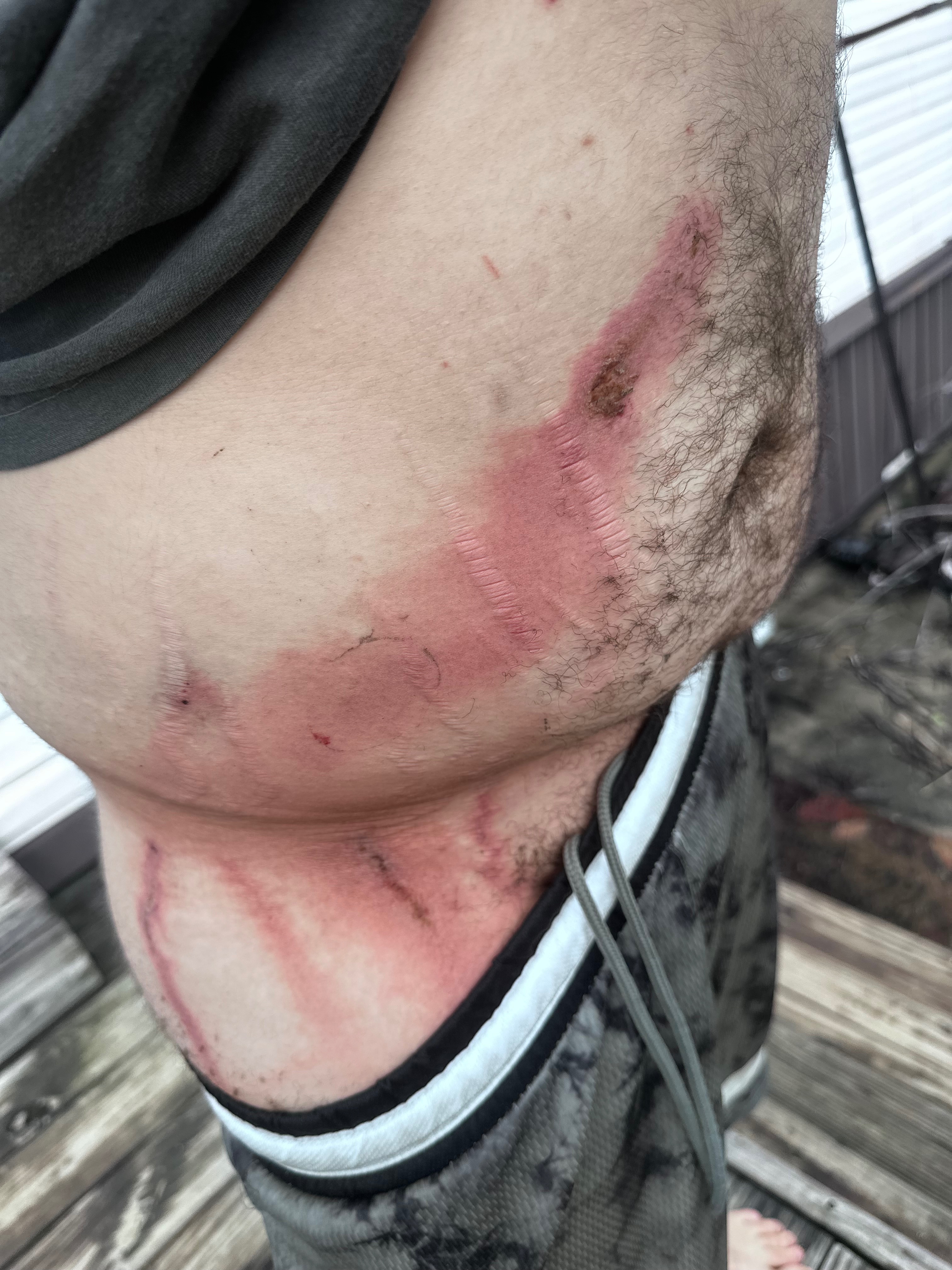
- Lichtenberg Figures: Ferning or "feathering" patterns on the skin caused by the rupture of capillaries. These are diagnostic of a lightning strike.
- Blast Trauma: The rapid expansion of air around a lightning bolt creates a shockwave that can cause ruptured eardrums, internal organ damage, and concussions.
- Burns: Often found where metal (like jewelry or zippers) was in contact with the skin.
| Strike Type | Primary Danger | Prevention Strategy |
|---|---|---|
| Direct Strike | Maximum electrical load; immediate cardiac arrest. | Avoid high peaks and ridges; descend below timberline. |
| Side Flash | Current jumping from trees or structures. | Stay at least 15-20 feet away from tall, isolated objects. |
| Ground Current | Electricity flowing through the earth's surface. | Keep feet together; avoid lying flat on the ground. |
| Conduction | Current traveling through equipment or fences. | Drop rifles and metal frames; avoid wire boundary fences. |
| Streamer | Developing electrical paths before the main bolt. | If hair stands on end, immediately assume the crouch. |
Backcountry Safety Equipment for 2026
By 2026, technology has provided hunters with better tools for lightning awareness. Satellite-linked devices (such as Garmin InReach or Zoleo) now provide near real-time weather alerts even in areas without cellular service. Modern hunters should utilize these devices to monitor "convective outlooks" and lightning strike density maps.
Additionally, lightning detectors—handheld devices that sense electromagnetic pulses (EMP) from lightning—have become more accurate. These devices can detect strikes up to 40 miles away and provide an estimated "time to arrival." While these tools are useful, they should never replace visual observation of the sky and common sense.
Legal and Administrative Considerations in Colorado
For those organizing guided hunts or operating outfitting businesses in Colorado, lightning safety is a matter of liability. Colorado law and the Department of Regulatory Agencies (DORA) require outfitters to exercise a reasonable standard of care. This includes monitoring weather conditions and having an evacuation plan. In the event of a strike, failure to provide adequate safety briefings or ignoring clear weather warnings can result in legal action and the revocation of outfitter licenses.
Furthermore, hunters should be aware that Colorado Parks and Wildlife (CPW) does not offer refunds for licenses due to inclement weather or "acts of God" such as lightning. However, hunters are encouraged to report significant weather events or lightning-caused forest fires to the nearest ranger station or dispatch center.
Frequently Asked Questions
Can I hide in my tent during a lightning storm?
No. A tent provides zero protection from lightning. In fact, the metal or carbon fiber poles can act as conductors. If a storm hits while you are in camp, your best option is to move to a thick stand of small trees (avoiding tall, isolated ones) or a deep valley. If you have a vehicle nearby, a hard-topped metal car is the safest place to be.
Is it safe to use a cell phone or GPS during a storm?
Using a handheld device does not increase your chances of being struck. However, if the device is plugged into a charger or connected to a large external antenna, it could conduct current. The primary risk of using a phone during a storm is distraction; you should be focused on finding safety rather than looking at a screen.
How long should I wait after the last thunderclap before moving?
The standard safety recommendation is to wait 30 minutes after the last sound of thunder before resuming activity or leaving your sheltered area. Lightning can strike from the "back side" of a storm even after the rain has stopped.
Do rubber boots provide protection from a strike?
No. The voltage in a lightning bolt (often exceeding 100 million volts) is far too high to be insulated by a few millimeters of rubber in a hunting boot. While rubber is an insulator for low-voltage household electricity, it is irrelevant against the power of a lightning strike.
What is the safest type of forest to hide in?
The safest area is a "uniform" forest—a large stand of trees that are roughly the same height. Avoid the edges of the forest, lone trees, or trees that are significantly taller than their neighbors. The goal is to be among many "targets" of equal height so that the probability of you or your immediate vicinity being the primary strike point is reduced.
Practical Recommendation for Colorado Hunters
Before heading into the Colorado backcountry, every hunter should check the NWS "Hazardous Weather Outlook" specifically for the zone they intend to hunt. Plan your day so that you are off the high ridges and peaks by noon. If you are hunting in a group, maintain a distance of at least 20 feet between individuals during a storm; if one person is struck, the others will be far enough away to avoid the side flash and can provide immediate first aid.
Image Gallery