Mark Zuckerberg’s Net Worth Loss: Analyzing the Historic Volatility of Meta’s Founder
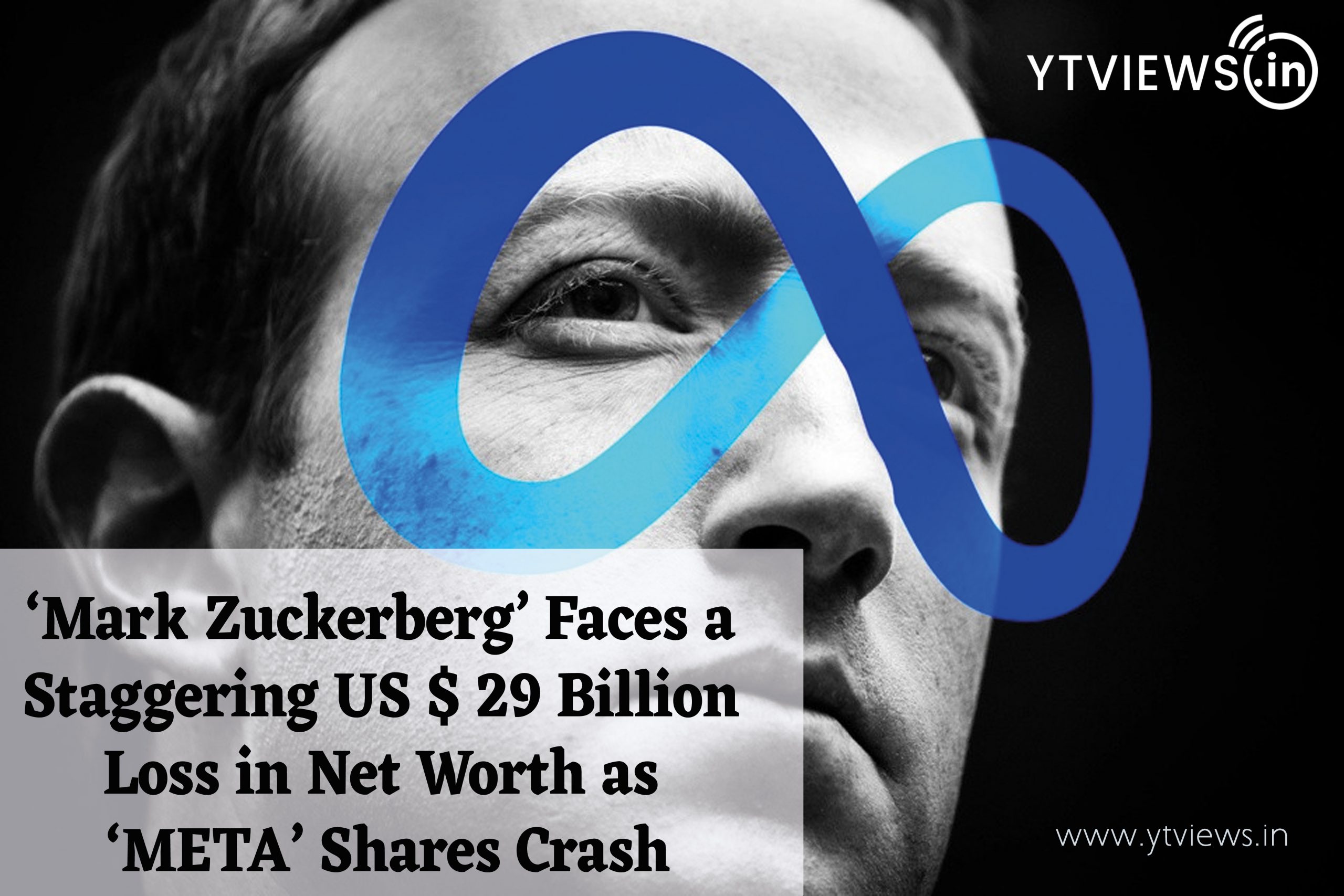
Mark Zuckerberg experienced a historic net worth loss between late 2021 and 2022, seeing his personal wealth plummet by over $100 billion. This decline was primarily driven by Meta’s aggressive pivot toward the metaverse, significant a...
Mark Zuckerberg experienced a historic net worth loss between late 2021 and 2022, seeing his personal wealth plummet by over $100 billion. This decline was primarily driven by Meta’s aggressive pivot toward the metaverse, significant advertising revenue hits from Apple’s privacy changes, and fierce competition from TikTok. Although his wealth has since surged to new highs in 2026, the period of loss remains a landmark case study in equity concentration.
Contents
The Anatomy of a $100 Billion Wealth Erosion
To understand Mark Zuckerberg’s net worth loss, one must first understand the structure of his wealth. Unlike traditional investors with diversified portfolios, the vast majority of Zuckerberg’s net worth is tied directly to his holdings in Meta Platforms, Inc. (formerly Facebook). In late 2021, Zuckerberg’s wealth peaked at approximately $142 billion. However, by November 2022, that figure had cratered to roughly $35 billion.
This $100 billion-plus disappearance of "paper wealth" was not the result of poor personal spending but rather a massive market re-evaluation of Meta’s core business model. For the first time in the company’s history, investors began to doubt the long-term viability of the social media giant, leading to a precipitous drop in share price.
The Concentrated Risk of Founder-Led Firms
Zuckerberg’s financial trajectory highlights the inherent risks of founder-led technology companies. Because he maintains a significant percentage of Meta’s Class B shares—which grant him majority voting power—his personal fortune is a direct reflection of the market’s confidence in his specific vision. When the market soured on the "Metaverse" rebrand in 2022, the lack of diversification meant there was no floor to catch his falling net worth.
Primary Drivers Behind the Historic Decline
Several distinct factors converged to create a "perfect storm" that eroded Zuckerberg’s wealth. Each of these factors impacted Meta’s bottom line, which in turn triggered the sell-off of the stock that constitutes the bulk of his assets.
1. The Reality Labs Capital Burn
The most significant internal factor was the massive capital expenditure allocated to Reality Labs, Meta’s division dedicated to augmented reality (AR) and virtual reality (VR). Zuckerberg’s commitment to building the metaverse resulted in annual losses exceeding $10 billion for the division.
Investors grew wary of the "burn rate," as the timeframe for a return on this investment appeared to be a decade or more away. In a high-interest-rate environment, the market shifted its preference from long-term speculative growth to immediate profitability, punishing Zuckerberg’s net worth for his refusal to scale back metaverse spending initially.
2. Apple’s App Tracking Transparency (ATT)
Externally, Meta faced a structural threat from Apple. The introduction of App Tracking Transparency (ATT) in iOS 14.5 allowed users to opt out of tracking across apps. Since Meta’s advertising engine relied heavily on this data to target ads and measure conversions, the change was devastating. Meta estimated that ATT would cost the company $10 billion in revenue in 2022 alone. This loss of signal directly reduced the ROI for advertisers, leading to lower ad prices and a subsequent drop in Meta’s valuation.
3. The Rise of TikTok and Engagement Shifts
During the period of Zuckerberg’s steepest wealth loss, Meta’s flagship platforms (Facebook and Instagram) faced an existential threat from TikTok. The shift toward short-form video content required Meta to pivot aggressively toward Reels. However, Reels initially monetized at a lower rate than the traditional Feed or Stories, creating a revenue gap during the transition. The market perceived this as a loss of dominance, further devaluing Zuckerberg’s holdings.
Comparing Historical Lows to the 2026 Financial Landscape
As of 2026, the narrative surrounding Zuckerberg’s net worth has shifted from "loss" to "resurgence." However, the lessons from the 2022 trough remain relevant for understanding how billionaire wealth is calculated and sustained.
| Metric | 2021 Peak | 2022 Trough | 2026 Current (Est.) |
|---|---|---|---|
| Net Worth | ~$142 Billion | ~$35 Billion | ~$210 Billion |
| Meta Stock Price | ~$380 | ~$90 | ~$550+ |
| Primary Driver | Post-Pandemic Boom | Metaverse Pivot/ATT | AI Integration/Efficiency |
| Public Sentiment | Optimistic | Highly Skeptical | Dominant/Resilient |
This table illustrates that while the "loss" was staggering, it was ultimately an unrealized loss. By holding his shares through the volatility, Zuckerberg was able to capture the subsequent upside when Meta’s "Year of Efficiency" and AI integration bore fruit in 2024 and 2025.
The Mechanics of Unrealized Losses for Tech Founders
When headlines report that a billionaire has "lost" billions of dollars, it rarely means they have less cash in their bank account. For Mark Zuckerberg, these are unrealized losses.
- Stock Volatility: Because Zuckerberg owns roughly 13% of Meta, every $1 move in the stock price shifts his net worth by hundreds of millions of dollars.
- Liquidity Constraints: High-net-worth individuals cannot simply sell all their shares at once without crashing the stock price and triggering SEC investigations. Therefore, their wealth is "trapped" in the equity of their company.
- Tax Implications: These losses often provide tax advantages. If Zuckerberg sells a small portion of shares during a downturn, he can realize a capital loss to offset other gains, though his primary strategy remains long-term holding.
In 2022, the "loss" was a reflection of the market’s fear. In 2026, his wealth reflects the market's enthusiasm for Meta’s role in the AI infrastructure of the internet.
Strategic Pivot: How the Wealth Was Recovered
Zuckerberg’s path to recovering his net worth involved a radical shift in corporate strategy that began in early 2023. This "Year of Efficiency" involved several key moves that restored investor confidence:
- Massive Layoffs: Meta reduced its workforce by over 20,000 employees, significantly improving operating margins.
- AI Overhaul: Meta shifted its primary narrative from the "Metaverse" to Artificial Intelligence. By developing Llama (their open-source large language model), Meta positioned itself as a leader in the AI race, causing the stock to trade at a premium again.
- Capital Return Programs: For the first time, Meta initiated a dividend and increased share buybacks. These moves signaled to Wall Street that Zuckerberg was finally prioritizing shareholder value over speculative R&D.
By the start of 2026, these efforts had not only erased the $100 billion loss but had propelled Zuckerberg into the top tier of the world's wealthiest individuals, often trading places with other tech moguls for the top spots on the Bloomberg Billionaires Index.
Frequently Asked Questions
Did Mark Zuckerberg actually lose $100 billion in cash?
No. The loss was almost entirely in the form of unrealized equity value. Since his wealth is tied to Meta stock, the "loss" represented the decrease in the market value of his shares. He did not lose $100 billion from a bank account; rather, his net worth—as calculated by the market—dropped.
How much of Meta does Mark Zuckerberg currently own?
As of 2026, Mark Zuckerberg continues to own approximately 13% of Meta Platforms, Inc. However, he maintains control over the company through dual-class stock, holding the majority of Class B shares which carry ten votes per share. This structure ensures that despite fluctuations in his net worth, his leadership remains secure.
What was the lowest point for Zuckerberg's net worth?
The lowest point in recent history occurred in late 2022, specifically around October and November, when Meta stock dipped below $90 per share. At that time, his net worth was estimated to be between $33 billion and $36 billion, a massive drop from the $142 billion high a year prior.
How did AI help Zuckerberg recover his lost net worth?
The recovery was driven by Meta’s successful integration of AI into its ad-ranking systems and the release of the Llama LLM series. By using AI to improve ad targeting (overcoming the obstacles created by Apple’s privacy changes) and enhancing user engagement via the "Discovery Engine," Meta's profitability soared, leading to a record-breaking stock price in 2025 and 2026.
Is the Metaverse still causing a loss for Meta?
Yes, the Reality Labs division continues to operate at a significant loss in 2026. However, the market is now more tolerant of these losses because Meta’s core advertising business is generating record profits, and the company’s AI initiatives have provided a more immediate growth narrative that offsets the Metaverse skepticism.
Practical Considerations for Investors
The saga of Mark Zuckerberg’s net worth loss provides a vital lesson in asset concentration. For the average investor, holding 90% of one’s net worth in a single stock is considered extremely high-risk. While this concentration allowed Zuckerberg to become one of the wealthiest people in history, it also exposed him to a $100 billion swing in less than twelve months.
If you are tracking billionaire wealth or investing in tech, focus on the price-to-earnings (P/E) ratio and the capital expenditure (CapEx) trends of founder-led companies. Zuckerberg’s recovery suggests that while visionary founders may cause short-term volatility through aggressive spending, their ability to pivot the entire organization—as Meta did toward AI—can lead to rapid wealth restoration.
For those monitoring real-time changes, official SEC Form 4 filings provide the most accurate data on Zuckerberg’s share sales and current holdings.
Image Gallery