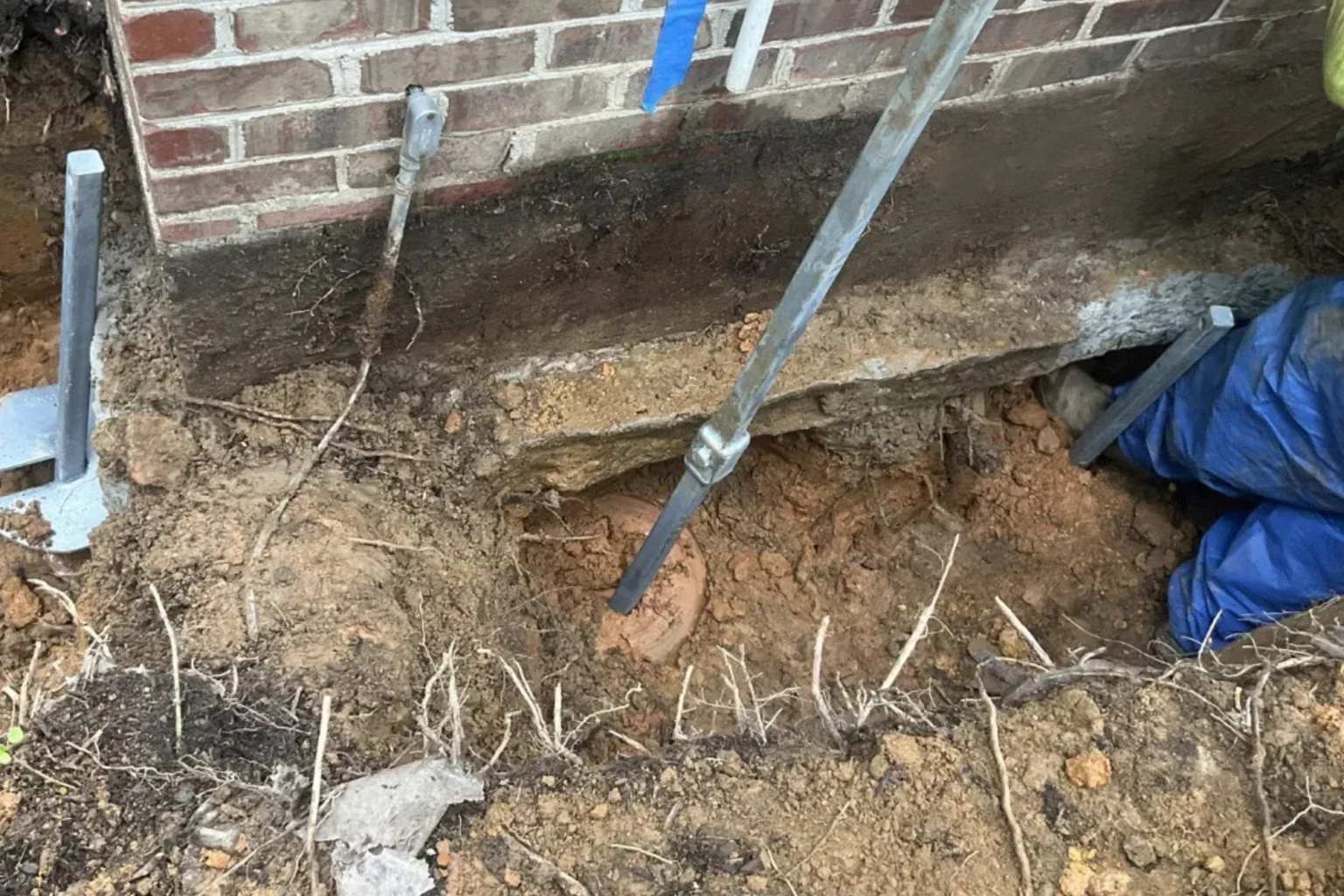
Why Foundation Repair in Middleburg, VA Matters: Protecting Your Historic or Modern Investment
Foundation repair in Middleburg, VA, is critical because the region’s expansive clay soils and seasonal moisture fluctuations frequently cause structural shifting. Addressing these issues promptly prevents escalating repair costs, pres...
Foundation repair in Middleburg, VA, is critical because the region’s expansive clay soils and seasonal moisture fluctuations frequently cause structural shifting. Addressing these issues promptly prevents escalating repair costs, preserves high property values in Loudoun County’s premium real estate market, and ensures the long-term safety of Middleburg's unique historic and equestrian estates.
Contents
The rolling hills and picturesque landscapes of Middleburg, Virginia, offer a prestigious backdrop for some of the most significant real estate in the United States. However, the same geology that makes the Piedmont region beautiful also presents significant challenges for residential and commercial foundations. As we move through 2026, homeowners are increasingly finding that deferred maintenance on structural elements leads to exponential increases in repair costs and significant hurdles during property transfers. Whether you own a historic stone manor near Washington Street or a contemporary estate on the outskirts of town, understanding the mechanics of foundation health is essential for asset protection.
The Unique Geological Challenges of Middleburg
Middleburg is situated within the Piedmont physiographic province, characterized by a complex mix of metamorphic and igneous rock overlain by thick layers of residual soil. The primary culprit in local foundation failure is the prevalence of expansive clay. These soils are highly reactive to moisture; they swell significantly when wet and shrink during the dry summer months.
In 2026, climate patterns in Northern Virginia have shown more frequent cycles of intense precipitation followed by prolonged dry spells. This "shrink-swell" cycle creates a phenomenon known as differential settlement. When the soil beneath one part of a home dries out faster than another, the foundation loses its uniform support. This uneven movement puts immense stress on concrete, brick, and stone, leading to cracks that compromise the entire building envelope.
Furthermore, many Middleburg properties are built on slopes. Over time, the soil on these inclines can undergo "creep," a slow downward movement that exerts lateral pressure against foundation walls. This is particularly dangerous for basement-level structures, as it can lead to bowing walls and eventual catastrophic failure if the hydrostatic pressure is not properly managed.
Preserving Property Value in a Premium Market
Middleburg remains one of the wealthiest enclaves in Loudoun County. In this market, buyers are exceptionally discerning. A home inspection report highlighting foundation issues can be a "deal-killer" or lead to aggressive price renegotiations.
Data from recent 2026 real estate transactions suggests that homes with documented foundation issues often sit on the market 40% longer than those with clean structural bills of health. Conversely, a foundation that has been professionally stabilized with transferable warranties adds a layer of "structural equity" to the property.
By addressing foundation concerns early, homeowners avoid the "compounding interest" of structural damage. A small crack today might cost $2,000 to inject and monitor; left unaddressed for three years, it could evolve into a $50,000 piering project that involves lifting the entire perimeter of the home. In a town where historic preservation is a point of pride, maintaining the structural integrity of the original masonry is not just about safety—it is about honoring the architectural heritage of Virginia's horse country.
Recognizing the Signs of Foundation Distress
Detecting foundation issues early requires a keen eye for subtle changes in the home’s interior and exterior. Because Middleburg contains a mix of 18th-century fieldstone foundations and 21st-century poured concrete, the signs of distress can vary.
Interior Indicators
- Sticking Doors and Windows: When a foundation shifts, door and window frames go out of square. If you find that a door suddenly refuses to latch or a window requires significant force to open, the house is likely "racking" due to settlement.
- Drywall Cracks: Look for diagonal cracks originating from the corners of door and window frames. While some settling is normal in new builds, large or recurring cracks indicate active movement.
- Uneven Floors: In older Middleburg farmhouses, sloping floors are often dismissed as "character." However, a significant pitch often indicates that the main support piers or the perimeter foundation has sunk.
Exterior Indicators
- Stair-Step Cracking: This is a classic sign of settlement in brick or block walls. The crack follows the mortar joints in a zig-zag pattern.
- Separation Around Frieze Boards: If you notice gaps appearing where the wall meets the roofline (the soffit or frieze board), the wall may be rotating outward.
- Chimney Separation: Because chimneys are heavy and often built on a separate footing, they are frequently the first part of a Middleburg home to show signs of tilting away from the main structure.
Technical Solutions for Foundation Restoration
Modern engineering provides several high-tech solutions to stabilize foundations in the 2026 market. The choice of method depends heavily on the specific soil conditions and the weight of the structure.
| Repair Method | Best Used For | Primary Benefit |
|---|---|---|
| Helical Piers | Light-to-medium residential structures; porches | Can be installed with minimal vibration; ideal for sensitive historic sites. |
| Steel Push Piers | Heavy masonry homes; deep settlement issues | Uses the weight of the house to drive piers deep into load-bearing strata or bedrock. |
| Slab Jacking / Poly-Leveling | Sunken concrete porches, walkways, or interior slabs | Rapidly levels concrete by injecting high-density expansive foam. |
| Carbon Fiber Straps | Bowing basement walls | Low-profile reinforcement that prevents further wall movement without taking up floor space. |
| Wall Anchors | Severely bowed or leaning foundation walls | Uses an external "deadman" anchor to pull walls back toward their original position. |
The Role of Waterproofing
In Middleburg’s humid climate, foundation repair and waterproofing go hand-in-hand. High water tables in low-lying areas of Loudoun County can lead to efflorescence (white, powdery salt deposits) on basement walls. This is a sign of hydrostatic pressure. Installing interior drain tiles or exterior French drains is often a prerequisite to structural stabilization, as it removes the water that causes the soil to swell and exert pressure in the first place.
The Risks of DIY and "Quick Fixes"
In an era where many homeowners look to online tutorials for home maintenance, foundation repair remains a strictly professional domain. The structural loads of a Middleburg estate are immense. Attempting to "patch" a foundation crack with topical sealant without addressing the underlying soil movement is akin to painting over a rust spot on a structural beam; it masks the symptom while the disease continues to spread.
Professional contractors in 2026 utilize laser levels and soil borings to determine exactly why a house is moving. In Middleburg, where many homes are governed by local historic district guidelines, unpermitted or substandard repairs can lead to legal complications and the loss of historic tax credits. Working with a firm that understands Loudoun County's building codes ensures that all work is performed to modern safety standards.
Environmental Impacts on Local Structures
Environmental factors in the Piedmont region extend beyond just soil. The high concentration of mature trees in Middleburg can also impact foundations. During periods of drought, large oak or maple trees can transpire hundreds of gallons of water daily, pulling moisture from the soil directly beneath the foundation. This causes localized shrinkage and can lead to the "dropping" of one corner of the house.
Furthermore, the freeze-thaw cycles typical of Northern Virginia winters can exacerbate existing cracks. Water enters a small fissure, freezes, expands, and widens the gap. This process, repeated over several decades, can turn a hairline fracture into a major structural breach.
Frequently Asked Questions
Is foundation repair covered by standard homeowners insurance in Middleburg?
Generally, no. Most standard homeowners insurance policies in Virginia exclude "earth movement," which includes settlement, shrinking, and swelling of the soil. However, if the foundation damage is a direct result of a covered peril, such as a sudden pipe burst or a major flood event, there may be grounds for a claim. It is essential to review your specific policy with a local agent familiar with Loudoun County conditions.
How long does a typical foundation repair take to complete?
Most residential foundation stabilization projects in Middleburg take between three to seven days. More complex projects involving historic masonry restoration or extensive basement waterproofing can take two weeks or longer. Modern piering systems are designed for relatively quick installation with minimal disruption to the surrounding landscape, which is particularly important for well-manicured equestrian properties.
Will foundation repair damage my landscaping?
While some disruption is inevitable, specialized equipment used in 2026 allows for much narrower excavation than in previous decades. Helical piers, for example, can be installed with small, tracked machinery that minimizes soil compaction and turf damage. A professional contractor will typically discuss a landscape mitigation plan before work begins.
Do I need a permit for foundation repair in Loudoun County?
Yes. Most structural repairs, including the installation of piers, wall anchors, or major drainage systems, require a building permit from Loudoun County. This ensures that the repair plan has been reviewed by an engineer and that the final work is inspected for safety. Failing to secure a permit can cause significant issues when trying to sell the home later.
Can I live in my home during the repair process?
In the vast majority of cases, yes. Foundation repair is typically performed from the exterior of the home. Even if interior work is required (such as installing carbon fiber straps or interior drains), it is usually localized to the basement or crawlspace. Your daily routine should not be significantly impacted, though there will be some noise during the pier-driving process.
Strategic Recommendations for Homeowners
If you suspect your Middleburg property is experiencing foundation movement, the following steps are recommended:
- Professional Assessment: Hire a structural engineer who does not work for a repair company to provide an unbiased assessment. This is a critical first step to distinguish between cosmetic settling and structural failure.
- Moisture Management: Ensure your gutters are clean and downspouts discharge at least 10 feet away from the foundation. Middleburg's clay soils must be kept at a relatively consistent moisture level.
- Monitor Cracks: Use a crack monitor gauge (available at most hardware stores) to track if a crack is actively growing or if it has stabilized.
- Check Local Ordinances: If your home is in the Middleburg Historic District, consult with the Town of Middleburg regarding any exterior alterations to ensure compliance with preservation standards.
By treating the foundation as the most vital system of the home, Middleburg residents can ensure their properties remain safe, stable, and valuable for the next century.
Image Gallery