Why the Sapphire Priority Pass Lounges Will Lose Their Edge
Chase Sapphire Lounges by The Club initially redefined premium airport hospitality by offering superior food, craft cocktails, and high-end wellness amenities through the Priority Pass network. However, surging cardholder volumes, rest...
Chase Sapphire Lounges by The Club initially redefined premium airport hospitality by offering superior food, craft cocktails, and high-end wellness amenities through the Priority Pass network. However, surging cardholder volumes, restrictive non-Sapphire access caps, aggressive network expansion by American Express and Capital One, and escalating annual fees threaten to dilute their competitive advantage.
Contents
The Rise of Chase Sapphire Lounge by The Club
When JPMorgan Chase partnered with Airport Dimensions to launch the Chase Sapphire Lounge by The Club network, it fundamentally altered the standard for Priority Pass facilities in North America. Historically, Priority Pass lounges in major United States hubs suffered from a reputation of deferred maintenance, crowded seating, and uninspired cold-buffet catering.
Chase took a completely different approach. By integrating local culinary partnerships, bespoke cocktail menus, barista-staffed coffee stations, private rest pods, and even spa treatments, the Sapphire Lounges directly challenged the gold standard set by American Express Centurion Lounges. Furthermore, Chase embedded these lounges inside the Priority Pass ecosystem, allowing a broad base of cardholders to enter while offering unlimited visits to Chase Sapphire Reserve cardholders.
This model earned immediate acclaim, setting high benchmarks in hubs such as Boston Logan (BOS), Hong Kong (HKG), New York LaGuardia (LGA), and New York John F. Kennedy (JFK). Yet the very factors that made these lounges an overnight sensation are establishing the structural pressures that will cause them to lose their edge over the long term.
1. The Paradox of Priority Pass Integration and Access Friction
The most distinct structural vulnerability of the Sapphire Lounge network stems from its coexistence inside Priority Pass. Unlike American Express Centurion Lounges—which restrict access exclusively to Platinum, Centurion, and select business cardholders—or Capital One Lounges, which prioritize Venture X members, Chase attempted a hybrid access structure:
- Chase Sapphire Reserve cardholders: Unlimited complimentary access for the primary cardholder and up to two guests.
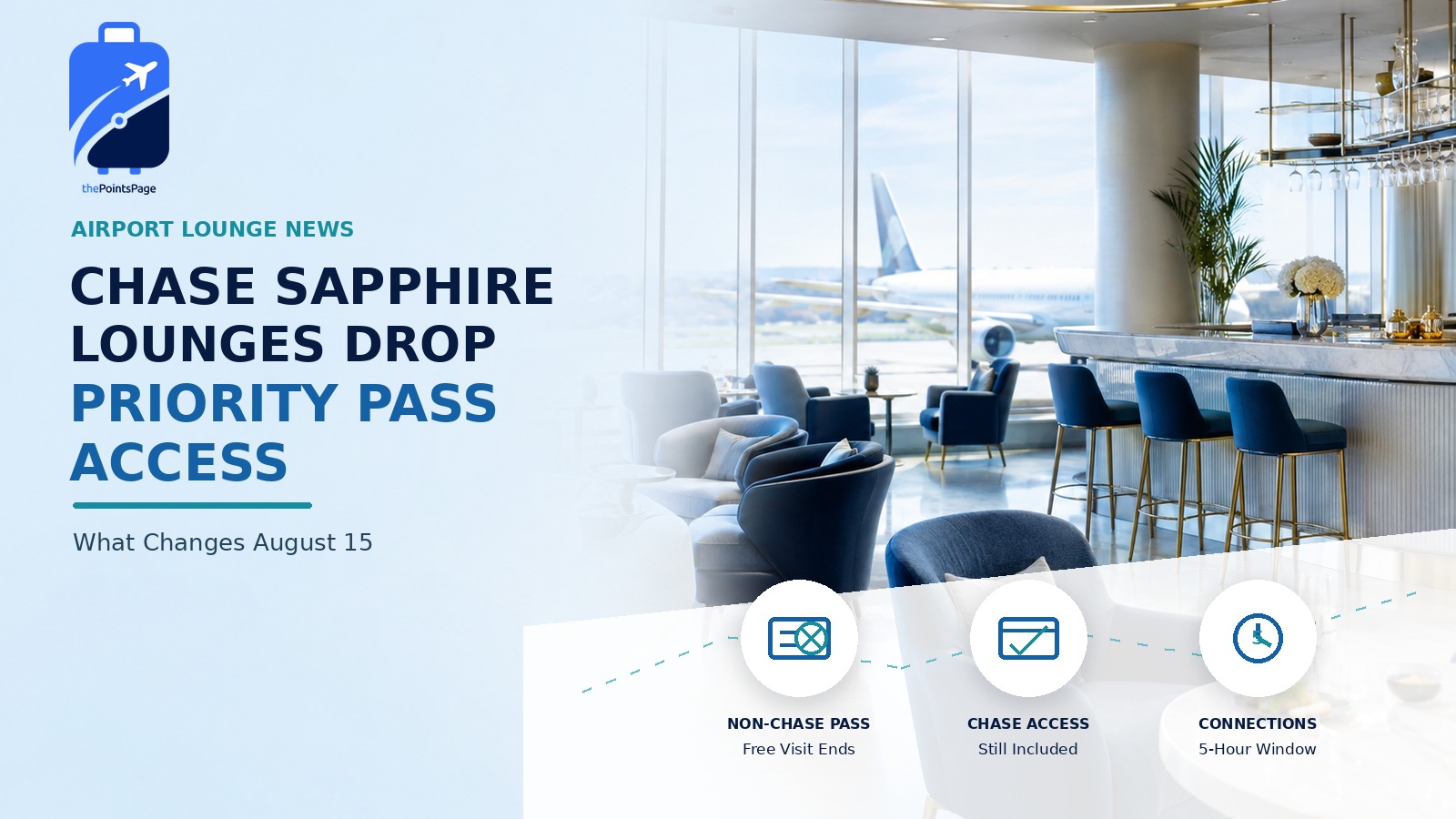
- General Priority Pass members (from non-Chase cards): Exactly one complimentary calendar-year visit to any domestic Sapphire Lounge, with subsequent visits billed at an entry fee (typically $75).
- The Club network integration: Operational handling by Airport Dimensions, which must balance general network commitments with Chase's brand promises.
This hybrid model creates severe operational strain. While the one-visit restriction on general Priority Pass members was intended to curb overcrowding, the aggregate volume of Priority Pass cards issued across the banking industry—including premium cards from Capital One, Citi, and various corporate accounts—remains massive.
Even a single annual visit granted to millions of travelers creates massive spikes during peak holiday and business travel windows. Sapphire Reserve cardholders, who pay an annual fee of $550 to carry the card, increasingly encounter the same physical waitlists and QR-code virtual queues that have plagued the broader Priority Pass network for years. When a cardholder paying a luxury-tier fee is forced to wait 45 minutes outside a lounge alongside occasional visitors, the perceived exclusivity and utility of the benefit quickly evaporates.
2. Capacity Constraints and the Rapid Saturation of Prime Hubs
Airport real estate is finite, heavily regulated, and exceptionally difficult to acquire. While Chase secured desirable footprints in several high-traffic terminals, many of its locations are fundamentally constrained in physical square footage relative to the volume of eligible fliers passing through those terminals.
Lounges thrive on high turnover and ample spatial separation. However, modern travel habits have shifted. Cardholders arrive at airports earlier to maximize premium amenities, work remotely for extended periods before boarding, and frequently travel with authorized users or companions.
- High Cardholder Growth + Finite Square Footage
- Virtual Queues
- Diminished Per-Guest Service
- Wear and Tear on Premium Amenities
As lounge capacity reaches maximum fire-code limits during morning and evening banks, operators must throttle entry. Waitlists erode one of the most critical value propositions of airport lounges: predictable efficiency. If a business traveler with a 60-minute connection cannot immediately enter the lounge to take a call or grab a meal, the lounge provides zero functional utility, regardless of how impressive the interior finishes are.
3. Asymmetric Footprint Competition from Capital One and American Express
A lounge network’s value is directly tied to its geographical reach and operational ubiquity. A traveler cannot benefit from an exceptional lounge in Boston if their primary domestic routes transit through Dallas, Denver, or Atlanta.
In the battle for airport lounge supremacy, Chase faces two formidable competitors with fundamentally distinct growth strategies:
The American Express Centurion Dominance
American Express holds a multi-decade head start. The Centurion Lounge footprint covers more than 40 locations worldwide, with deep penetration in major domestic transit centers, including Charlotte, Dallas/Fort Worth, Denver, Houston, Las Vegas, Miami, Phoenix, San Francisco, and Seattle. Amex responded to its own overcrowding challenges by removing complimentary guest privileges for basic Platinum cardholders unless they meet a steep annual spending threshold. While controversial, this rule significantly stabilized physical occupancy levels, preserving access for the core cardholder.
The Capital One Acceleration
Capital One has executed a precise, targeted rollout of proprietary lounges and landing concepts in hubs like Dallas/Fort Worth (DFW), Washington Dulles (IAD), and Denver (DEN). Capital One’s spaces emphasize grab-and-go artisan food, craft draft beverages, and soundproof work booths tailored to contemporary travelers. Furthermore, Capital One limits broad third-party access, ensuring that Venture X cardholders retain primary priority.
By contrast, Chase’s proprietary lounge network remains limited to a small handful of domestic hubs. Cardholders flying through major secondary and tertiary airports are still left relying on third-party Priority Pass contract lounges, which remain vastly inferior in amenities, maintenance, and food quality.
4. Operational Degradation and High-Touch Service Costs
Sapphire Lounges established their initial reputation on high-touch hospitality. Features such as à la carte dining ordered via table QR codes, craft cocktail bars, local bakery tie-ins, and dedicated shower suites require significant labor allocations and continuous operational expenditures.
Maintaining this level of luxury inside high-volume airport terminals is notoriously difficult. As foot traffic scales, several operational bottlenecks inevitably emerge:
- Menu Simplification: Preparing made-to-order, restaurant-quality dishes becomes unsustainable during periods of peak occupancy, often forcing kitchens to transition toward standardized buffet warming trays.
- Labor Turnover and Service Friction: High airport security clearance requirements complicate staffing. Shortages lead to slow bussing of tables, delays in specialty beverage preparation, and reduced availability of private wellness spaces.
- Physical Wear and Tear: Premium upholstery, bespoke lighting fixtures, and high-end restroom amenities degrade rapidly under the transit of thousands of passengers per week carrying heavy rolling luggage.
When the tangible amenities regress toward the mean of standard domestic airline clubs, the "edge" that Chase marketed to justify its premium credit card ecosystem begins to narrow.
Premium Airport Lounge Network Comparison
To understand how the market is shifting, the following table evaluates the key structural differences between the three major proprietary credit card lounge ecosystems operating in 2026.
| Feature / Metric | Chase Sapphire Lounge by The Club | American Express Centurion Lounge | Capital One Lounge |
|---|---|---|---|
| Primary Card Access | Chase Sapphire Reserve, J.P. Morgan Reserve | The Platinum Card®, The Business Platinum Card® | Capital One Venture X, Venture X Business |
| Primary Network Host | Priority Pass / Airport Dimensions | Proprietary Amex Network | Proprietary Capital One Network |
| Third-Party Card Access | Priority Pass members receive 1 visit/year | None (Exclusively Amex) | Non-members can pay full day-rate access |
| Complimentary Guests | 2 guests included per Sapphire Reserve cardholder | $50/guest (unless $75k annual spend met) | 2 guests included per Venture X cardholder |
| Network Size (Proprietary) | Selective (under 10 major US locations) | Extensive (40+ global locations) | Targeted (under 10 major hubs, expanding) |
| Food & Beverage Model | À la carte digital ordering + upscale buffet | Chef-partnered buffet + craft bar | Grab-and-go stations + plated small bites |
| Primary Risk Factor | Third-party Priority Pass congestion & waitlists | Guest fees alienate family travelers | Smaller physical lounge network footprint |
5. Airline Loyalty Counter-Offensives
The major legacy carriers—Delta Air Lines, United Airlines, and American Airlines—have recognized the threat posed by bank-owned lounges and have executed aggressive countermeasures to protect their market share.
Historically, airline clubs were utilitarian rooms providing basic seating, basic snacks, and Wi-Fi. In recent years, legacy carriers have invested billions in next-generation facilities:
- Delta One Lounges: Ultra-premium lounges restricted exclusively to long-haul and transcontinental premium-cabin passengers, completely bypassing standard Sky Club credit-card volume.
- United Polaris Lounges: Dedicated exclusively to international business-class travelers, offering full sit-down à la carte dining without entry available through any credit card fee.
- American Airlines Flagship Lounges: Premium dining, expansive showers, and curated amenities reserved for long-haul business and first-class fliers and top-tier elite members.
These carrier initiatives systematically remove the highest-spending frequent fliers from the credit card lounge pool entirely. If an executive or premium traveler already receives guaranteed, uncrowded access to an airline-operated business-class lounge, the presence of a Chase Sapphire Lounge in the terminal provides negligible incremental value.
6. The Shifting Economics of the $550+ Annual Fee Card
The justification for holding a credit card with an annual fee of $550 or higher rests on the net value delivered by its primary benefits. For years, premium travel cards maintained market share by stacking high-value lounge perks against annual travel credits.
However, consumers face a shifting economic reality:
- Fee Creep: Issuers must continually raise annual fees or reduce ancillary credits to cover rising interchange costs and lounge operational expenses.
- Authorized User Costs: Adding authorized users to cards like the Sapphire Reserve requires an additional annual fee per cardholder, making family coverage an expensive proposition.
- The Utility Gap: If cardholders routinely encounter 30- to 60-minute waitlists at the lounge entrance, the functional valuation of the lounge access benefit drops toward zero.
When cardholders assess their retention offers or renewal notices, a benefit that looks exceptional on marketing materials but proves difficult to access in practice becomes an active driver of portfolio cancellations or product downgrades.
Practical Guidance for Travelers Navigating Crowded Lounges
If your travel strategy relies heavily on the Chase Sapphire Reserve and its associated Priority Pass network, use these actionable steps to preserve your transit efficiency:
- Monitor Virtual Queues in Advance: Check the Priority Pass or Chase mobile application as soon as you clear airport security. Sapphire Lounges frequently utilize a digital QR-code waitlist system during peak banks; registering before you walk to the concourse can save 20 to 30 minutes of standing at the threshold.
- Leverage Grab-and-Go Options: When concourses are congested and seating is unavailable, utilize the grab-and-go food and beverage stations located at select Sapphire facilities to bypass the dining waitlist entirely.
- Maintain Diversified Network Redundancy: Do not rely on a single card network for lounge access. Pairing a card carrying Priority Pass with an airline co-branded card (such as a United Club or Delta SkyMiles Reserve card) ensures you have a backup lounge option if a bank-branded facility reaches capacity.
- Audit Your Renewal Value Annually: Track the number of times you successfully enter a proprietary lounge each year without friction. If you use the facility fewer than three to four times annually due to routing or crowding, calculate whether downgrading to a lower-annual-fee card (such as the Chase Sapphire Preferred) and purchasing day passes or terminal meals out-of-pocket delivers superior net economics.
Frequently Asked Questions
Can anyone with a Priority Pass enter a Chase Sapphire Lounge?
Yes, but with strict limitations. Priority Pass members who receive their membership through other credit card issuers or direct subscription are entitled to one complimentary visit per calendar year across the entire domestic Chase Sapphire Lounge network. Any subsequent visits by non-Chase Priority Pass holders require a per-entry fee (typically $75), subject to capacity constraints. Chase Sapphire Reserve cardholders receive unlimited complimentary access.
Why do Chase Sapphire Lounges have waitlists if access is restricted?
Waitlists occur because peak flight departure windows push passenger volumes past the lounge’s legal fire-code capacity. Even with restrictions on outside Priority Pass cardholders, the high number of primary Chase Sapphire Reserve cardholders, authorized users, and their permitted guests (two per member) can rapidly overwhelm the available physical seating during morning and early evening banks.
How does the guest policy of the Sapphire Lounge compare to Amex Centurion?
Chase Sapphire Reserve cardholders can bring up to two guests free of charge per visit. In contrast, American Express Centurion Lounges charge standard Platinum cardholders $50 per adult guest unless the cardholder spends at least $75,000 on eligible purchases on the card in a calendar year. This makes the Sapphire Lounge significantly more attractive for families, but also exacerbates internal crowding.
Will Chase remove Sapphire Lounges from the Priority Pass network entirely?
While Chase has not officially announced plans to eliminate general Priority Pass access, ongoing overcrowding pressures may force the bank to evaluate exclusivity. If capacity constraints continue to degrade the experience for primary Chase Sapphire Reserve cardholders, further tightening guest allowances or eliminating the single annual visit for general Priority Pass members represents the most logical operational adjustment.
Does the one complimentary visit for general Priority Pass members apply to each lounge or the whole network?
The single complimentary visit applies across the entire domestic Chase Sapphire Lounge network, not per individual airport location. Once a non-Chase Priority Pass member uses their single free entry at one location (such as Boston Logan), any subsequent visit to that lounge or any other domestic Sapphire Lounge within the same calendar year will trigger an entry charge.
Final Recommendation
The Chase Sapphire Lounge by The Club network remains an exceptional product in concept, but its reliance on the high-volume Priority Pass architecture makes long-term degradation nearly inevitable. To maximize your value, treat Sapphire Lounges as an opportunistic bonus rather than a guaranteed travel hub. Verify terminal maps, join digital waitlists immediately upon arrival, and evaluate whether your card's annual fee remains justified if lounge wait times continue to rise.
Image Gallery