Enterprise Loan Overview: Structures, Systems, and Lifecycle Management
An enterprise loan is a large-scale financing facility provided to corporations and large institutions to fund capital expenditures, debt refinancing, working capital, or strategic acquisitions. Managed through sophisticated corporate...
An enterprise loan is a large-scale financing facility provided to corporations and large institutions to fund capital expenditures, debt refinancing, working capital, or strategic acquisitions. Managed through sophisticated corporate banking infrastructures, enterprise loans encompass bilateral facilities, syndicated loans, and revolving credit structures designed to support complex financial requirements, manage balance sheet liquidity, and maintain regulatory compliance.
Contents
Understanding Enterprise Loans and Corporate Debt Financing
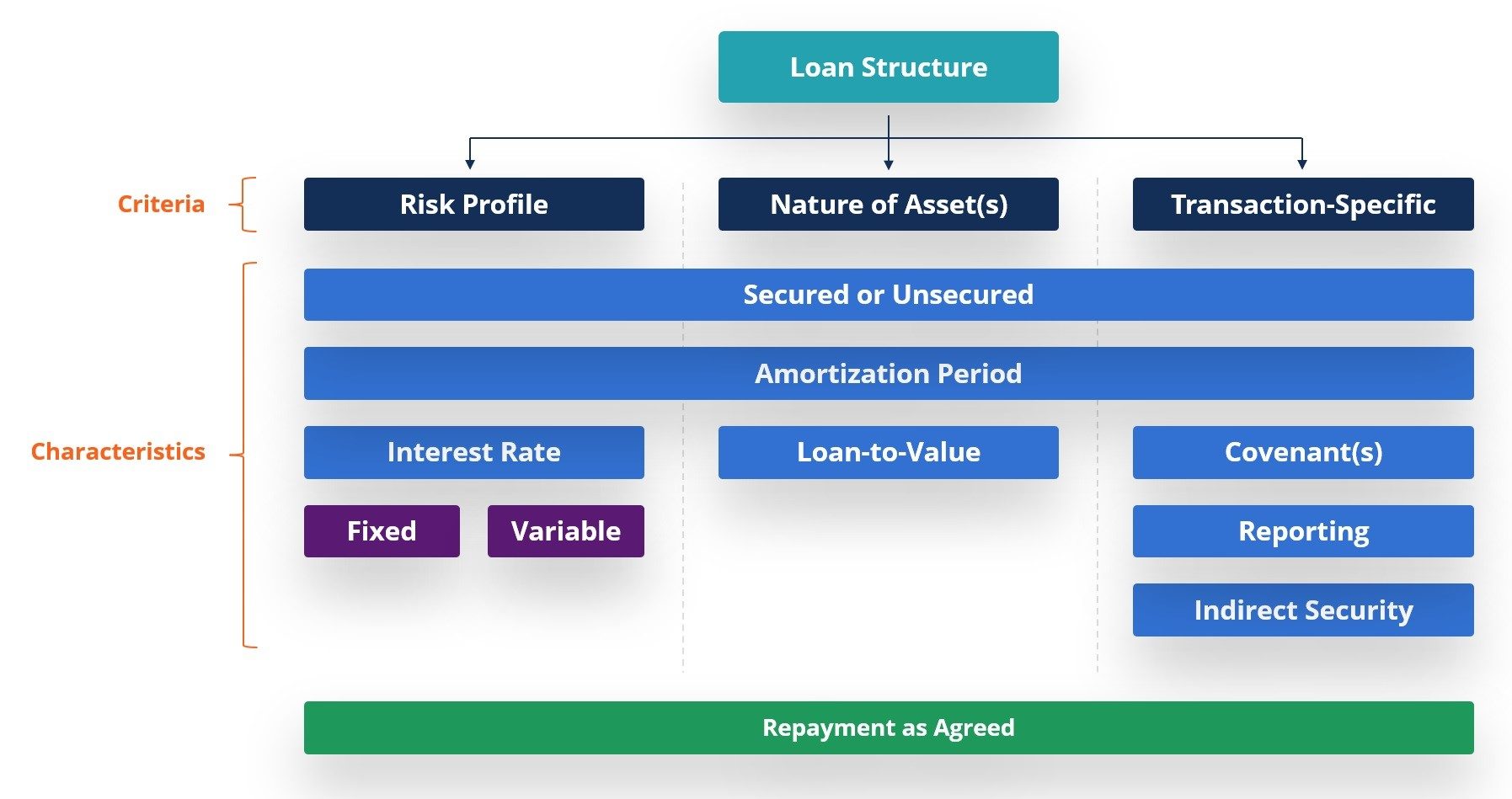
Enterprise loans represent the financial bedrock for mid-sized corporations, large multinational enterprises, and institutional entities requiring substantial debt capital. Unlike standard small business administration (SBA) loans or retail commercial mortgages, enterprise loans involve custom structuring, rigorous credit risk modeling, multi-layered covenant agreements, and often multiple lending institutions.
Corporations utilize enterprise loans to achieve distinct strategic objectives:
- Capital Expenditure (CapEx): Financing major infrastructure, facility expansions, technology transformations, or industrial fleet upgrades over extended horizons.
- Mergers and Acquisitions (M&A): Securing immediate liquidity to fund strategic corporate acquisitions, leverage buyouts, or asset purchases.
- Working Capital Optimization: Maintaining operational liquidity to buffer seasonal cash flow fluctuations, inventory build-ups, or supply chain obligations.
- Debt Restructuring: Consolidating higher-cost short-term obligations into structured long-term credit facilities to lower the weighted average cost of capital (WACC).
Enterprise financing mechanisms range from single-lender arrangements to complex capital market instruments. Institutional borrowers choose specific debt structures depending on balance sheet leverage, credit ratings, required borrowing capacity, and risk tolerance for interest rate adjustments.
Key Enterprise Loan Structures
Corporate borrowers access debt capital through several primary credit structures. Understanding these distinctions allows finance teams and corporate treasurers to align debt obligations with operational cash flow profiles.
1. Bilateral vs. Syndicated Facilities
A bilateral loan involves a direct contractual agreement between a single enterprise borrower and a single commercial bank. Bilateral loans are typically faster to execute, carry lower administrative overhead, and offer greater privacy. However, a single financial institution’s credit limits may cap the total available capital.
When enterprise capital needs exceed a single bank’s underwriting capacity, lenders establish a syndicated loan. In a syndicated facility, an arranger bank (lead arranger) structures, prices, and syndicates the loan across a syndicate of participating banks and institutional investors. The borrower maintains a single credit agreement, while the agent bank handles administration, payment distribution, and collateral monitoring.
2. Revolving Credit Facilities (RCF)
A revolving credit facility provides flexible drawdowns and repayments up to an agreed credit limit throughout the facility's tenure. Enterprises pay commitment fees on undrawn balances and interest exclusively on drawn amounts. RCFs act as liquidity backstops for working capital management and treasury operations.
3. Term Loans (Term Loan A and Term Loan B)
Term loans supply a lump-sum disbursement at closing, repaid according to a fixed or amortizing schedule over a set duration:
- Term Loan A (TLA): Typically syndicated to commercial banks, carrying shorter maturities (3 to 5 years), higher annual amortization requirements, and lower interest margins.
- Term Loan B (TLB): Syndicated to institutional investors (such as collateralized loan obligations, hedge funds, and insurance companies), featuring longer maturities (6 to 7 years), minimal nominal annual amortization, and a bullet repayment at maturity.
4. Bridge Loans and Mezzanine Financing
Bridge loans provide short-term, high-cost interim financing to cover funding gaps prior to long-term equity or bond issuances. Mezzanine financing occupies a hybrid layer between senior debt and equity, offering flexible repayment structures subordinated to senior debt, often bundled with equity warrants to offset higher yields.
Comparative Overview of Enterprise Loan Structures
The following table summarizes core characteristics, risk profiles, and operational applications across primary enterprise loan formats:
| Facility Type | Typical Tenure | Amortization Profile | Primary Target Lenders | Key Structural Considerations |
|---|---|---|---|---|
| Bilateral Term Loan | 1 – 5 Years | Fully or Partially Amortizing | Commercial Banks | Direct negotiation, customized covenants, limited funding capacity. |
| Syndicated Term Loan A | 3 – 5 Years | Structured Amortization | Commercial & Investment Banks | Stricter financial covenants, shared lender risk, competitive pricing. |
| Syndicated Term Loan B | 6 – 7 Years | Minimal (1% p.a. bullet) | Institutional Investors, CLOs | Flexible covenant terms (covenant-lite), higher floating spreads. |
| Revolving Credit Facility | 3 – 5 Years | Flexible Draw/Repay | Commercial Banks | Undrawn commitment fees, mandatory maintenance covenants. |
| Mezzanine Debt | 5 – 8 Years | Deferred / Bullet | Private Equity, Credit Funds | Subordinated status, conversion warrants, higher cost of capital. |
Core Architecture of Enterprise Loan Management Systems
Managing multi-million dollar corporate credit facilities requires dedicated technology infrastructure. Financial institutions use Enterprise Loan Management Systems (ELMS) to automate underwriting, portfolio servicing, covenant tracking, and regulatory accounting. Modern enterprise lending systems bridge front-office sales, middle-office risk analysis, and back-office treasury accounting.
- Enterprise Loan System
- Origination Engine
- Credit Scoring
- Document Parsing
- KYC/AML Verification
- Servicing Engine
- Principal/Interest
- Multi-Currency Ledger
- Collateral Tracking
- Risk & Reporting
- Covenant Checks
- IFRS 9 / CECL
- Basel IV Metrics
- Origination Engine
1. Loan Origination and Automated Credit Scoring
Enterprise origination platforms ingest unstructured financial statements, tax filings, and legal records. Machine learning algorithms parse balance sheets to compute leverage ratios, debt service coverage ratios (DSCR), and fixed charge coverage ratios (FCCR). Integration with corporate registry databases automates Know Your Customer (KYC), Anti-Money Laundering (AML), and Ultimate Beneficial Owner (UBO) compliance checks.
2. Multi-Currency Servicing Engine and Accounting Ledger
Large corporate facilities frequently operate across international borders, requiring multi-currency capabilities and flexible interest rate calculations. Servicing engines calculate compound interest based on benchmark rates such as the Secured Overnight Financing Rate (SOFR) or the Euro Short-Term Rate (€STR), along with adjusted credit spread adjustments (CSA).
3. Automated Covenant Monitoring and Risk Alerts
Financial covenants force corporate borrowers to maintain specific financial metrics (such as maximum Total Debt/EBITDA ratios). Enterprise management systems continuously ingest real-time enterprise resource planning (ERP) data from borrowers, triggering automated compliance alerts whenever metrics approach critical covenant thresholds.
4. Impairment Modeling and Capital Adequacy
Under global accounting standards like IFRS 9 and CECL (Current Expected Credit Losses), financial institutions must estimate expected credit losses over the loan life. Enterprise lending software connects directly to enterprise risk engines to dynamically adjust loan-loss provisions based on macroeconomic indicators and borrower rating migration.
The Enterprise Loan Lifecycle
The execution and ongoing management of an enterprise loan follows a strict multi-stage lifecycle, spanning initial credit evaluation through final settlement or workout.
- Assessment
- Structuring
- Closing
- Servicing
- Maturity
Stage 1: Credit Assessment and Due Diligence
Lenders initiate comprehensive financial, operational, and legal due diligence. Underwriters evaluate historic EBITDA performance, enterprise valuation, supply chain vulnerabilities, tax compliance, and environmental, social, and governance (ESG) risk parameters. Credit committees assign an internal credit rating that determines baseline capital pricing.
Stage 2: Structuring, Term Sheet Negotiation, and Syndication
The lender and borrower draft a non-binding term sheet outlining key terms: total credit capacity, interest margin over reference rates, maturity schedules, security packages (collateral guarantees), and financial covenants. In syndicated deals, the lead arranger launches market syndication to allocate loan tranches among institutional participants.
Stage 3: Legal Documentation and Closing
Legal counsel prepares formal loan agreements based on industry frameworks, such as standard agreements from the Loan Market Association (LMA) or the Loan Syndications and Trading Association (LSTA). Once precedent conditions—such as legal opinions, insurance verification, and perfected security interests—are satisfied, funds are disbursed.
Stage 4: Ongoing Servicing, Reporting, and Monitoring
During the active loan term, the agent bank collects periodic principal and interest payments, monitors compliance certificates, and distributes funds to syndicate participants. Borrowers submit audited quarterly and annual financial statements to verify financial stability.
Stage 5: Maturity, Refinancing, or Workout
At maturity, the borrower settles remaining balances, negotiates a facility extension, or executes a refinancing transaction. If a enterprise encounters financial distress, the loan transfers to a specialized workouts team to execute debt restructuring, covenant waivers, or asset recovery proceedings.
Regulatory Compliance and Risk Management
Enterprise lending operates under strict regulatory oversight designed to prevent systemic financial instability. Financial institutions and institutional borrowers must comply with established legal and accounting standards.
Basel III and Basel IV Capital Frameworks
The Basel Committee on Banking Supervision mandates that commercial banks hold sufficient regulatory capital against credit risk exposures. Under Basel IV framework implementations, banks use standardized or internal ratings-based (IRB) approaches to calculate risk-weighted assets (RWA). Higher-risk enterprise loans carry increased capital charges, directly influencing interest margins and facility fees.
Expected Credit Loss Accounting (IFRS 9 / CECL)
Under IFRS 9 and Financial Accounting Standards Board (FASB) CECL guidelines, banks must recognize credit impairment dynamically rather than waiting for an actual default event. Facilities migrate across three risk stages:
- Stage 1: Performing loans requiring 12-month expected credit loss allowances.
- Stage 2: Loans exhibiting a Significant Increase in Credit Risk (SICR), requiring lifetime expected credit loss provisioning.
- Stage 3: Credit-impaired assets requiring explicit individual write-downs.
Legal Jurisdictions and Governance Limitations
Disclaimer: Enterprise debt structuring involves significant legal and regulatory considerations. Enterprise borrowers and financial institutions should consult qualified corporate attorneys and accredited financial advisors before executing binding debt agreements.
Enterprise debt contracts must account for jurisdictional variances in cross-border collateral enforcement, withholding taxes, insolvency priority, and currency controls. Cross-border syndicated facilities usually select established legal frameworks, such as English law or New York law, to ensure predictable enforcement outcomes.
Frequently Asked Questions
What distinguishes an enterprise loan from a standard commercial business loan?
Enterprise loans involve higher capital volumes (often tens or hundreds of millions of dollars), customized facility structures (syndications, revolving facilities, subordinated debt), complex multi-jurisdictional legal documentation, and tailored covenant packages, whereas standard commercial business loans use standardized terms and lower loan caps.
How do floating interest rates work in enterprise financing?
Most enterprise loans utilize floating interest rates tied to benchmark risk-free rates, such as the Secured Overnight Financing Rate (SOFR) or the Euro Short-Term Rate (€STR). The total interest rate equals the underlying benchmark rate plus a fixed credit margin determined by the borrower's credit rating and leverage profile.
What are financial covenants in an enterprise credit agreement?
Financial covenants are legally binding operational and financial benchmarks specified in the credit agreement. Common maintenance covenants mandate that borrowers maintain a minimum Debt Service Coverage Ratio (DSCR) or stay below a specified Total Debt-to-EBITDA ceiling. Uncured covenant breaches constitute an event of default.
What role does an agent bank play in a syndicated enterprise loan?
The agent bank acts as the administrative liaison between the borrower and all syndicate members. The agent manages payment collections, disburses interest and principal to participant lenders, tracks covenant compliance certificates, and coordinates formal communications or vote solicitations regarding legal amendments.
How do modern enterprise loan management systems support compliance?
Enterprise loan software automates real-time calculation of risk-weighted assets, tracks covenant performance via automated data pipelines, triggers early warning signals for potential defaults, and automatically calculates expected credit losses (ECL) under IFRS 9 and CECL frameworks.
Strategic Recommendations for Borrowers and Lenders
To optimize capital management and mitigate credit exposure, financial institutions and enterprise treasurers should follow structured best practices:
- Conduct Dynamic Stress Testing: Corporate treasury departments must model financial covenant performance against downside revenue scenarios, unexpected rate hikes, and supply chain disruptions before finalizing debt packages.
- Standardize System Integrations: Financial institutions should connect loan origination and servicing software directly to corporate ERP systems to automate covenant tracking, lower administrative overhead, and avoid compliance delays.
- Optimize Capital Structures: Borrowers should balance short-term revolving facilities with long-term term debt (such as Term Loan B facilities) to smooth out debt maturity walls and optimize the overall weighted average cost of capital.
- Maintain Ongoing Compliance Verification: Establish robust internal audit workflows to ensure periodic compliance certificates, audited balance sheets, and collateral valuations are submitted well ahead of contract deadlines.
Image Gallery