Financial Help and Low-Cost Auto Insurance for Seniors in 2026
While there is no federal "grant" specifically designed to pay for car insurance, seniors can access significant financial help through state-sponsored low-cost insurance programs, mandatory "mature driver" discounts, and specialized g...
While there is no federal "grant" specifically designed to pay for car insurance, seniors can access significant financial help through state-sponsored low-cost insurance programs, mandatory "mature driver" discounts, and specialized group policies. In 2026, programs like California’s CLCA and various state-mandated defensive driving discounts remain the most effective ways for older adults on fixed incomes to reduce their premiums.
Contents
For many seniors, the rising cost of living in 2026 has made maintaining a vehicle a financial challenge. However, because seniors often have decades of driving experience and lower annual mileage, they qualify for specific financial relief mechanisms that younger drivers do not. Accessing this help requires understanding the distinction between government-subsidized "low-cost" policies and private-sector discounts tailored to the retired population.
State-Sponsored Low-Cost Automobile Insurance Programs
The most direct form of financial assistance for auto insurance comes from state-level programs designed for low-to-moderate-income residents. These programs are not "free," but they provide a legal way to drive with premiums that are often 50% to 70% lower than standard private market rates.
The California Low Cost Automobile Insurance Program (CLCA)
As of 2026, California remains the leader in providing a state-backed insurance safety net. The CLCA is designed specifically for people who meet income eligibility requirements and drive vehicles valued under a certain threshold (currently $25,000). For a senior on Social Security, this program is often the only way to remain legally insured without sacrificing basic necessities.
To qualify for CLCA, a senior must:
- Be at least 16 years old (seniors obviously qualify).
- Have a valid driver’s license.
- Meet annual income limits (e.g., approximately $33,975 for a single person or $46,075 for a household of two, though these figures adjust periodically).
- Own a vehicle with a replacement value of $25,000 or less.
- Have a "good" driving record with minimal points.
New Jersey’s Special Automobile Insurance Policy (SAIP)
In New Jersey, the SAIP (often called the "Dollar-a-Day" policy) provides a unique form of help for seniors who are enrolled in Federal Medicaid with hospitalization. This policy is extremely limited—it covers emergency treatment and a $10,000 death benefit but does not provide liability coverage for damage to others' property. It is a "last resort" financial help option for the most economically vulnerable seniors.
Mandatory Mature Driver Discounts
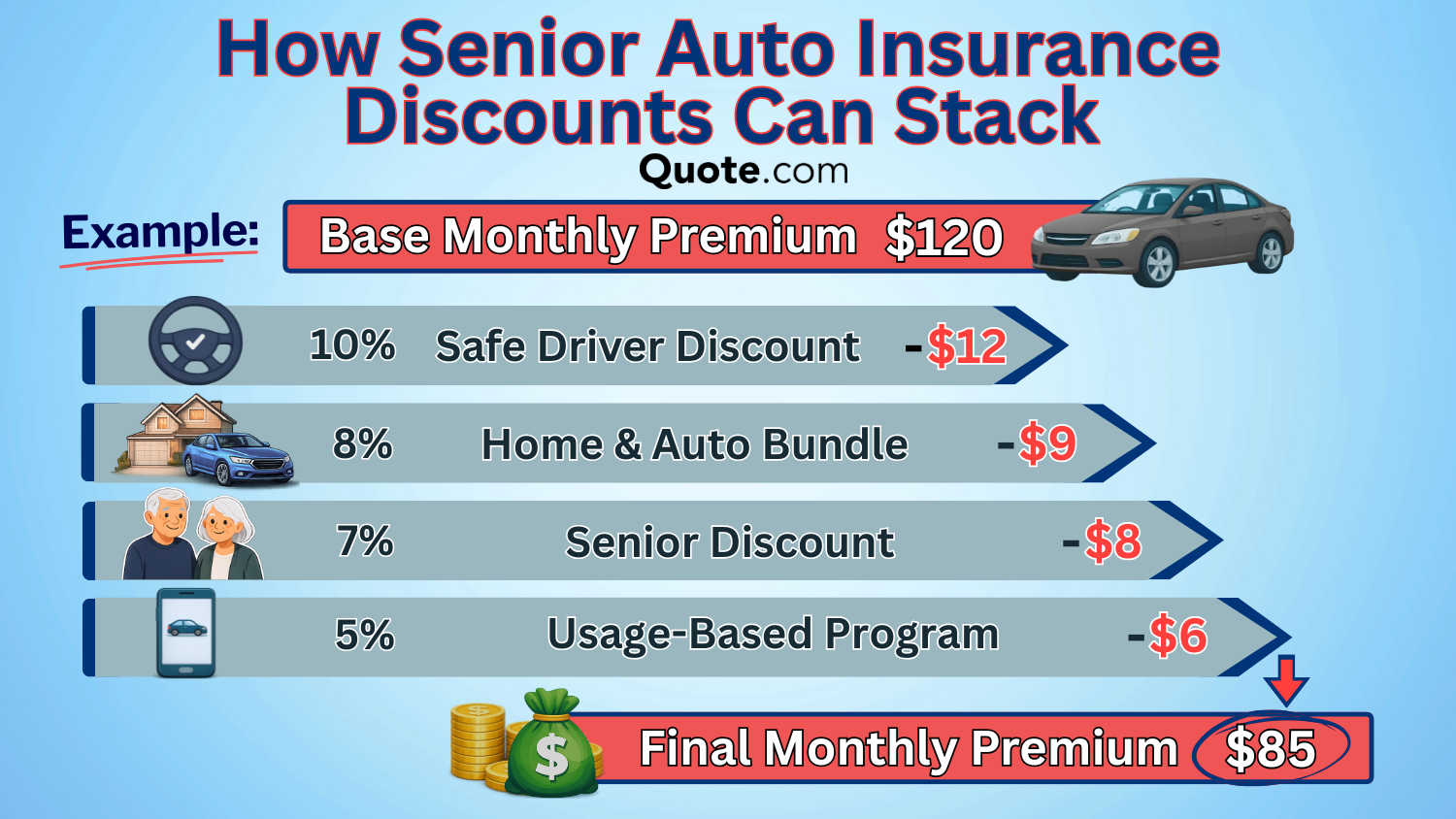
In the United States, more than 30 states have laws requiring insurance companies to provide a discount to seniors who complete an approved "Mature Driver" or "Defensive Driving" course. This is perhaps the most reliable form of "financial help" because it is a legal right in many jurisdictions rather than a voluntary offer by a corporation.
How the Discount Works
Seniors (usually defined as age 55 or older, though some states start at 50) attend a classroom or online safety course. These courses focus on physiological changes associated with aging, such as slower reaction times and vision changes, and provide strategies to compensate for them.
Upon completion, the driver receives a certificate. By law in participating states, the insurance provider must apply a discount to the liability and collision portions of the premium. In 2026, these discounts typically range from 5% to 15% and are usually valid for three years, after which a refresher course must be taken to maintain the financial benefit.
Approved Course Providers
- AARP Smart Driver: The most recognized program nationally.
- AAA Roadwise Driver: Tailored specifically for seniors to address modern vehicle technology.
- National Safety Council (NSC): Offers state-specific online modules.
Usage-Based Insurance (UBI): Help for Low-Mileage Retirees
One of the most significant shifts in the 2026 insurance market is the maturity of "Pay-per-mile" and telematics-based insurance. For seniors who no longer commute to work, standard insurance policies often charge for a level of risk they simply do not represent.
The Math of Pay-Per-Mile
Traditional policies assume a certain average mileage (often 10,000 to 12,000 miles per year). A retired senior may only drive 3,000 miles per year to run local errands or visit family. Companies like Metromile, Allstate (Milewise), and Nationwide (SmartMiles) offer a base rate plus a few cents per mile.
For many seniors, switching to a usage-based model provides more financial relief than any government program. If a standard policy costs $1,200 annually, a low-mileage senior on a pay-per-mile plan might see that cost drop to $600 or $700, effectively "saving" $50 per month.
Telematics and Safety Bonuses
Beyond just mileage, telematics programs (using a smartphone app or a plug-in device) track braking, acceleration, and time of day. Since seniors generally avoid late-night driving and high-speed maneuvers, they often score in the highest "safety tier," leading to additional premium reductions of up to 30% at the time of renewal.
Organizational and Group Assistance
Seniors have access to group buying power that can significantly lower costs. This isn't "charity," but it is a form of financial assistance derived from membership in specific communities.
AARP and The Hartford
The partnership between AARP and The Hartford is the most prominent example of senior-specific financial help. This program offers "Lifetime Renewability," which prevents the insurance company from dropping a senior driver simply because of their age—a major financial protection against being forced into the high-risk, high-cost "residual" insurance market.
Retired Military and Government Personnel
Seniors who are veterans or retired government employees have access to organizations like USAA or GEICO’s federal employee discounts. These organizations often provide the lowest rates in the industry, including specific "storage" discounts for seniors who may spend part of the year traveling without their primary vehicle.
Comparison of Financial Help Options for Seniors (2026)
| Type of Help | Eligibility | Estimated Savings | Key Benefit |
|---|---|---|---|
| State Low-Cost Programs | Low income + low vehicle value | 50% - 70% | Legal coverage for those who can't afford private rates. |
| Defensive Driving Discount | Age 55+ (State dependent) | 5% - 15% | Legally mandated in most states; improves safety. |
| Usage-Based (Telematics) | Low-mileage drivers | 20% - 40% | Pays only for the miles actually driven. |
| AARP / Group Discounts | Membership in organization | 10% - 25% | Protection against age-related cancellations. |
| Multi-Policy Bundling | Own home/renters insurance | 15% - 20% | Simplifies finances and reduces total overhead. |
Reducing Costs Through Coverage Adjustments
Financial help also comes from "self-help" by auditing the policy for unnecessary costs. Many seniors continue to pay for coverage levels they no longer need, which acts as a "tax" on their fixed income.
Dropping Collision and Comprehensive
If a senior is driving an older vehicle (over 10–12 years old) with a low market value, the cost of collision and comprehensive coverage may exceed the potential payout in the event of an accident. Financial experts often suggest that if the annual cost of these coverages exceeds 10% of the car's total value, it may be more financially sound to drop them and rely solely on liability coverage.
Increasing Deductibles
For seniors with a modest "emergency fund" or savings, increasing a deductible from $250 to $1,000 can reduce the monthly premium by 15% to 30%. This is a strategic move for those who are confident in their driving and want to minimize their fixed monthly expenses.
Common Mistakes to Avoid
When seeking financial help with auto insurance, seniors should be wary of several common pitfalls that can lead to higher costs or legal trouble.
- Lapsing Coverage: Never cancel a policy before a new one is in place. Even a three-day "lapse" in coverage can cause a senior to be labeled "high risk," which can double their premiums for several years.
- Omitting Discounts: Many companies do not automatically apply the "retired" status discount. Seniors should explicitly notify their agent when they stop commuting to work.
- Ignoring the "Shop Around" Rule: In 2026, insurance companies use complex algorithms (price optimization) that sometimes penalize long-term loyal customers. Shopping for a new quote every two years is the most effective way to ensure you are receiving the best "financial help" the market offers.
Frequently Asked Questions
Does Social Security provide money for car insurance?
No, the Social Security Administration does not provide a specific stipend for auto insurance. However, the income a senior receives from Social Security is often the primary metric used to determine eligibility for state-sponsored low-cost insurance programs like California's CLCA.
Is there a federal program for low-income senior car insurance?
There is no federal program. Auto insurance is regulated at the state level. Any financial assistance must come from state programs, non-profit organizations, or private insurance discounts mandated by state law.
Can I get a discount if I only drive to the grocery store and doctor?
Yes. This is known as "pleasure use" or "low-mileage" rating. Ensure your insurance agent knows your annual mileage is low (typically under 5,000 miles). You should also consider pay-per-mile insurance, which is specifically designed for this type of usage pattern.
Do I have to retake my driving test to get a senior discount?
Usually, no. To get the "Mature Driver" discount, you only need to take a safety course, which is often done online. This is not the same as the DMV re-testing your driving skills; it is an educational seminar that results in a certificate for your insurance company.
Are there charities that help seniors pay for car insurance?
Direct charitable payment for car insurance is rare. However, organizations like St. Vincent de Paul or local Community Action Agencies may occasionally offer one-time emergency financial assistance to help a senior keep their vehicle legal if it is essential for medical appointments or basic survival.
Practical Recommendations
To secure the most financial help for auto insurance in 2026, seniors should follow these steps:
- Contact the State Department of Insurance: Ask if your state has a "Low Cost Automobile Insurance Program." If you live in California or New Jersey, these programs are active and accepting applications.
- Enroll in a Defensive Driving Course: Use the AARP or AAA websites to find a "Mature Driver" course. The small fee for the course is usually recouped in the first few months of insurance savings.
- Audit Your Mileage: Check your odometer. If you drive less than 7,500 miles a year, call your agent to ensure you aren't being charged for a "commuter" profile.
- Request a "Market Review": Contact an independent insurance agent who can compare rates across multiple companies. Tell them specifically that you are looking for "senior-specific" or "retired" discounts.
By combining state-mandated discounts with usage-based technology, most seniors can find significant financial relief, ensuring that their mobility—and their independence—remains affordable throughout their retirement years.
Image Gallery