Top Military Colleges in the US: A Comprehensive Guide for 2026
The top military colleges in the US include five federal service academies—such as West Point and the Naval Academy—and seven Senior Military Colleges (SMCs) like VMI and The Citadel. These institutions provide world-class education an...
The top military colleges in the US include five federal service academies—such as West Point and the Naval Academy—and seven Senior Military Colleges (SMCs) like VMI and The Citadel. These institutions provide world-class education and leadership training, leading to guaranteed officer commissions in the U.S. Armed Forces or specialized civilian careers.
Contents
Understanding the Landscape of US Military Education
Choosing the right military college in 2026 requires an understanding of the two primary institutional paths available to prospective students: Federal Service Academies and Senior Military Colleges (SMCs). While both emphasize academic excellence, physical fitness, and character development, they differ significantly in terms of cost, service commitment, and the daily "cadet" experience.
Federal Service Academies are fully funded by the government. In exchange for free tuition, room, and board, students (midshipmen or cadets) commit to serving as commissioned officers for at least five years after graduation. These are highly competitive institutions with acceptance rates often dipping below 10%.
Senior Military Colleges, on the other hand, are distinct because they offer a military environment within a larger university setting or as a standalone private military college. Students at SMCs have the option to pursue a commission through the Reserve Officers' Training Corps (ROTC), but it is not always mandatory for graduation unless the student is on a specific military scholarship. This flexibility makes SMCs an attractive option for those who want a military-style education but wish to keep their post-graduation career options open.
The Five Federal Service Academies
The federal service academies are the most prestigious military institutions in the world. As of 2026, they continue to produce the bulk of the nation’s high-ranking military leadership.
United States Military Academy (West Point)
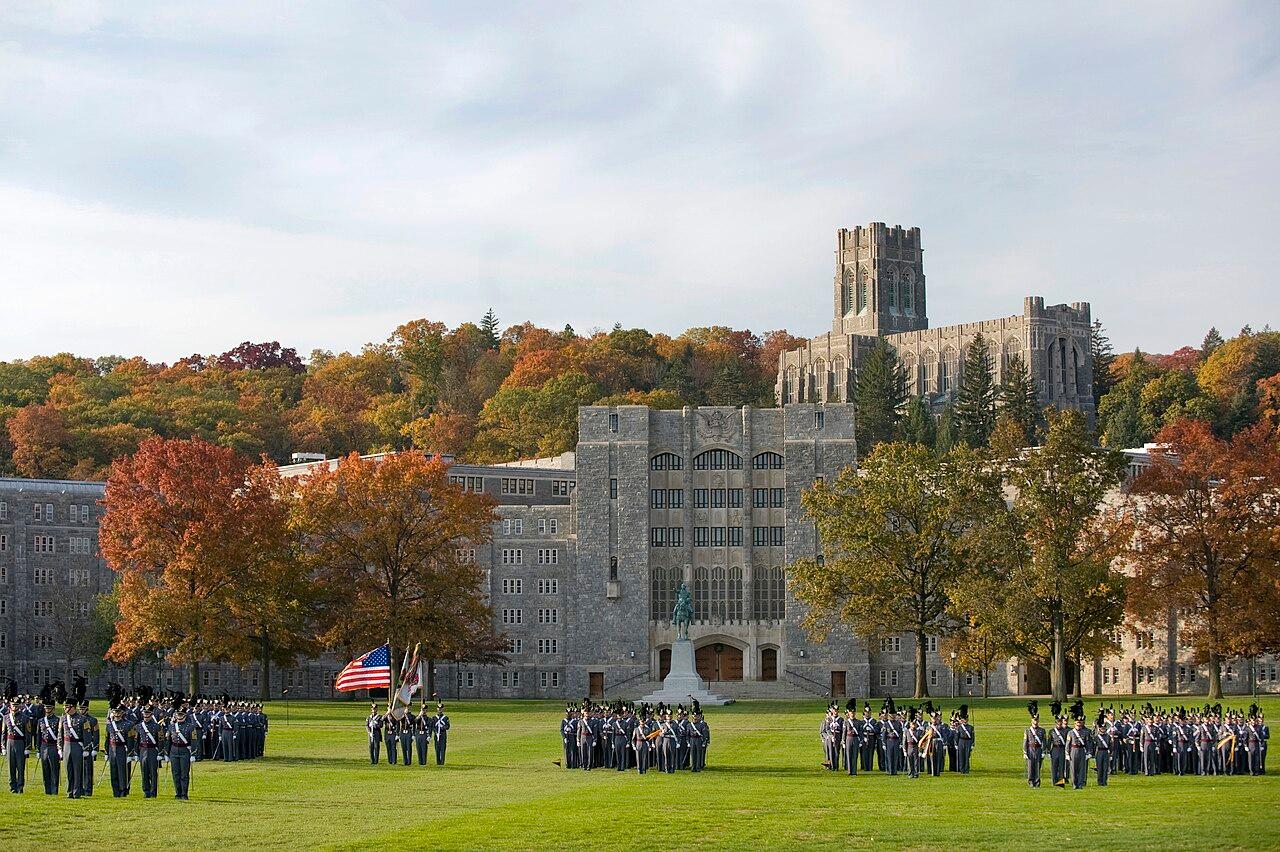
Located in West Point, New York, "The Academy" is the oldest of the five service academies. It focuses exclusively on preparing officers for the U.S. Army. The curriculum is heavily engineering-focused but has expanded significantly into cyber security and international relations to meet the demands of modern warfare. West Point cadets are known for their rigorous "Thayer Method" of instruction, which requires students to prepare lessons in advance and demonstrate mastery in every class session.
United States Naval Academy (Annapolis)
Based in Annapolis, Maryland, the Naval Academy trains future officers for both the U.S. Navy and the U.S. Marine Corps. Midshipmen choose their service assignment during their senior (Firstie) year. Annapolis is world-renowned for its STEM programs and its proximity to Washington, D.C., providing students with unique internships and policy exposure. The campus, known as "The Yard," emphasizes maritime tradition and leadership at sea.
United States Air Force Academy (USAFA)
Located in Colorado Springs, Colorado, USAFA is the premier training ground for the U.S. Air Force and the U.S. Space Force. Given the high altitude and cutting-edge facilities, it is a hub for aeronautical engineering and space operations research. In 2026, USAFA has further integrated Space Force-specific tracks into its curriculum, reflecting the increasing importance of orbital mechanics and satellite defense in national security.
United States Coast Guard Academy (USCGA)
The USCGA, situated in New London, Connecticut, is the only service academy that does not require a Congressional nomination for admission. It is also the smallest of the academies. It focuses on the U.S. Coast Guard’s missions of maritime safety, security, and stewardship. Because of its size, the USCGA offers a more intimate academic environment while maintaining the same level of discipline and physical demand as its larger counterparts.
United States Merchant Marine Academy (USMMA)
Located at Kings Point, New York, the USMMA is unique because its graduates can choose to serve as commissioned officers in any branch of the U.S. Armed Forces or work in the maritime industry as licensed merchant mariners. A hallmark of the USMMA is the "Sea Year," where midshipmen spend months aboard commercial vessels, gaining real-world experience in global logistics and navigation.
The Senior Military Colleges (SMCs)
SMCs are recognized under federal law and maintain a corps of cadets under a military discipline system. They offer a unique "hybrid" experience.
Virginia Military Institute (VMI)
VMI, located in Lexington, Virginia, is often called the "West Point of the South." It is the oldest public senior military college in the US and maintains a strictly military environment for all students. Every student is a cadet, and everyone must participate in ROTC for four years, though they are not required to accept a commission unless they are on scholarship. VMI is famous for its "Rat Line," a rigorous six-month induction period designed to build equality and resilience among new students.
The Citadel
The Citadel, in Charleston, South Carolina, is another prestigious public military college. It offers a wide range of academic programs and is highly regarded for its business and engineering schools. The Citadel’s "Corps of Cadets" is central to campus life, but the college also serves a large population of evening and graduate students who are not in the military system, providing a robust financial and academic foundation.
Norwich University
As the birthplace of the ROTC, Norwich University in Vermont is the oldest private military college in the country. It offers students the choice between the Corps of Cadets and a traditional civilian student experience. This allows for a diverse campus culture where military-focused students interact daily with civilian peers, simulating the civil-military relations they will encounter in their professional careers.
Texas A&M and Virginia Tech (Corps of Cadets)
While Texas A&M and Virginia Tech are large public research universities, they both host elite Corps of Cadets programs. These programs function as "colleges within the university." Cadets live in dedicated barracks and follow military protocols, but they attend classes with the general student population. These institutions are ideal for students who want a massive "Big Ten" style campus experience combined with the discipline of a military academy.
Key Comparison of Top Military Colleges (2026 Data)
| Institution | Type | Primary Branch | Nomination Required? | Tuition Cost (Approx.) |
|---|---|---|---|---|
| West Point | Federal | Army | Yes | $0 (Full Scholarship) |
| Naval Academy | Federal | Navy/Marines | Yes | $0 (Full Scholarship) |
| Air Force Academy | Federal | Air Force/Space Force | Yes | $0 (Full Scholarship) |
| Coast Guard Academy | Federal | Coast Guard | No | $0 (Full Scholarship) |
| Merchant Marine Academy | Federal | All Branches/Maritime | Yes | $0 (Full Scholarship) |
| VMI | SMC | All Branches | No | ~$32k (In-state) |
| The Citadel | SMC | All Branches | No | ~$30k (In-state) |
| Norwich University | SMC | All Branches | No | ~$48k (Private) |
| Texas A&M (Corps) | SMC | All Branches | No | ~$13k (In-state) |
The Admission and Nomination Process
Gaining admission to a federal service academy is a multi-step process that usually begins in the junior year of high school. In 2026, the criteria remain exceptionally high, focusing on three main pillars:
- Academic Excellence: Applicants must have high GPAs and competitive SAT or ACT scores. While the academies look at the whole person, technical proficiency in math and science is non-negotiable for many engineering-heavy majors.
- Physical Fitness: All applicants must pass the Candidate Fitness Assessment (CFA), which measures strength, agility, and endurance through events like pull-ups, a shuttle run, and a mile run.
- The Nomination: For all academies except the Coast Guard, applicants must receive a nomination. This usually comes from a U.S. Senator, a Member of the House of Representatives, or the Vice President. The nomination process is a separate application involving interviews and essays, and it is often as competitive as the academy application itself.
For Senior Military Colleges, the process is more traditional. Students apply directly to the university. However, those seeking ROTC scholarships to cover the costs of these schools must undergo a rigorous national-level competition that includes fitness tests and interviews with military officers.
Financial Considerations and Service Obligations
The "cost" of a military education is often measured in time rather than dollars. At a Federal Service Academy, the government pays for 100% of the tuition, books, and medical care. Cadets and midshipmen even receive a monthly stipend (approx. $1,200 in 2026) to cover uniforms and personal expenses. The "repayment" is a mandatory five-year active duty service obligation upon graduation.
Senior Military Colleges are different. If a student attends an SMC without an ROTC scholarship, they pay standard tuition and have no service obligation. However, most students at these schools aim for an ROTC scholarship. These scholarships can cover two, three, or four years of tuition. Upon graduation, these scholarship recipients typically owe four years of active duty service or eight years in the Reserve/National Guard.
Career Outcomes: Beyond the Commission
While the primary goal of these colleges is to produce military officers, the long-term career outcomes are diverse. Graduates of military colleges are highly sought after by Fortune 500 companies because of their proven leadership, technical skills, and ability to work under pressure.
By 2026, the curriculum at these schools has pivoted heavily toward cyber defense, artificial intelligence, and logistics. A graduate from the Air Force Academy with a degree in Operations Research, for example, is equally prepared to lead a squadron of drones or manage a global supply chain for a private aerospace firm. The "alumni networks" of schools like West Point and VMI are exceptionally tight-knit, often providing graduates with lifelong career support in both the public and private sectors.
Frequently Asked Questions
Do I have to join the military if I go to a military college?
If you attend a Federal Service Academy, yes, you are contractually obligated to serve. If you attend a Senior Military College, you only have to serve if you accept an ROTC scholarship or choose to commission upon graduation. Many students attend SMCs for the discipline and leadership training but enter the civilian workforce immediately after graduating.
Which military academy is the hardest to get into?
Statistically, the U.S. Naval Academy and West Point usually have the lowest acceptance rates, often ranging between 8% and 10%. However, "difficulty" is subjective; the Air Force Academy has very high average SAT scores, while the Coast Guard Academy’s lack of a nomination requirement means they receive a high volume of very qualified applicants.
What is the difference between ROTC and a Service Academy?
A Service Academy is a 24/7 military environment where your entire college experience is governed by military law and tradition. ROTC is a program taken alongside traditional college courses at civilian universities or SMCs. ROTC students have more "civilian" time, though they still participate in drills, physical training, and military science classes. Both paths lead to the same result: a commission as a Second Lieutenant or Ensign.
Can I fly planes if I graduate from West Point?
Yes, but it is less common than at the Air Force or Naval Academies. Each year, a portion of West Point graduates are branched into Army Aviation to fly helicopters (like the AH-64 Apache) or fixed-wing aircraft. If your primary goal is to fly fighter jets, the Air Force Academy or the Naval Academy (for Navy/Marine aviation) are the more direct paths.
Is there an age limit for applying to military colleges?
For federal academies, you must be at least 17 but not yet 23 years of age on July 1 of the year you enter. For SMCs and ROTC programs, the age limits are generally more flexible but usually require you to be able to commission by age 30 or 31, with some waivers available for prior-service veterans.
Recommendation for Prospective Students
If your goal is a career in military leadership and you have a stellar academic and athletic record, the Federal Service Academies are the gold standard. They offer a debt-free education and an immediate, high-responsibility job.
However, if you want a more traditional college social life, or if you aren't 100% certain you want to make the military a career, a Senior Military College like Virginia Tech or The Citadel is the better choice. These schools allow you to test your mettle in a military environment while providing a safety net of civilian flexibility. For the 2026-2027 application cycle, students should begin reaching out to their Congressional offices for nominations no later than the spring of their junior year.
Image Gallery