Why Custom Tailored Suits in San Francisco Feel Worth the Wait
Investing in a custom tailored suit in San Francisco is a commitment to precision, local artistry, and long-term value that transcends off-the-rack convenience. In 2026, the "wait" represents a meticulous multi-stage construction proce...
Investing in a custom tailored suit in San Francisco is a commitment to precision, local artistry, and long-term value that transcends off-the-rack convenience. In 2026, the "wait" represents a meticulous multi-stage construction process—incorporating hand-canvassing and personalized architecture—ensuring a garment that performs across the city’s unique micro-climates while offering a fit unattainable through mass production.
Contents
San Francisco’s sartorial landscape has undergone a significant transformation. As we move through 2026, the pendulum has swung away from the ultra-casual "tech-bro" aesthetic toward a more intentional, polished look. However, this isn't the rigid corporate uniform of the past. It is a sophisticated blend of heritage craftsmanship and modern functionality. When you commission a suit from a premier San Francisco tailor, you aren't just buying clothing; you are entering a months-long collaborative journey. While the 8-to-12-week lead time can feel daunting in an era of instant gratification, the final result serves as a testament to why the slow-fashion movement continues to thrive in the Bay Area.
The San Francisco Sartorial Landscape in 2026
The city's relationship with tailoring is deeply rooted in its history, from the luxury hubs of Union Square to the hidden ateliers in Jackson Square and the Financial District. In 2026, the demand for bespoke and made-to-measure garments is driven by a desire for sustainability and "quiet luxury." Professionals in law, venture capital, and the revitalized AI sector are seeking garments that signal competence without shouting.
San Francisco presents a unique challenge for tailors: the micro-climate. A suit must be breathable enough for a sunny afternoon in Mission Bay but substantial enough to ward off the chill of the evening fog rolling into Pacific Heights. This requirement for versatility is one of the primary reasons why local custom tailoring is superior. A local tailor understands that a heavy, stiff British tweed might be too much for a walk down Market Street, while a paper-thin Italian silk might not hold up against the damp bay air. Instead, they guide clients toward high-twist wools and open-weave fabrics that offer temperature regulation and wrinkle resistance.
The Anatomy of the Wait: Why It Takes Time
Understanding why a custom suit takes several months requires a look into the technical stages of production. Unlike "made-to-order" services that simply modify an existing pattern, true custom tailoring in San Francisco involves creating a unique paper pattern based on dozens of individual measurements.
1. Fabric Sourcing and Logistics
The process begins with the selection of cloth. In 2026, San Francisco’s top tailors maintain direct relationships with prestigious mills such as Loro Piana, Holland & Sherry, and Vitale Barberis Canonico. If a specific "super 150s" wool or a rare cashmere-silk blend is requested, the fabric must be shipped from Europe, cleared through customs, and inspected for flaws. This initial phase can take one to two weeks alone.
2. The Internal Architecture (Full Canvassing)
The "feel" of a high-end suit comes from what is inside. Cheap suits use fused (glued) interlinings that bubble over time. A San Francisco custom suit utilizes a floating horsehair canvas. This canvas is hand-stitched to the fabric, allowing the jacket to drape naturally and mold to the wearer’s body over time. Hand-sewing this internal structure is a labor-intensive task that requires hours of focused craftsmanship.
3. The Basted Fitting
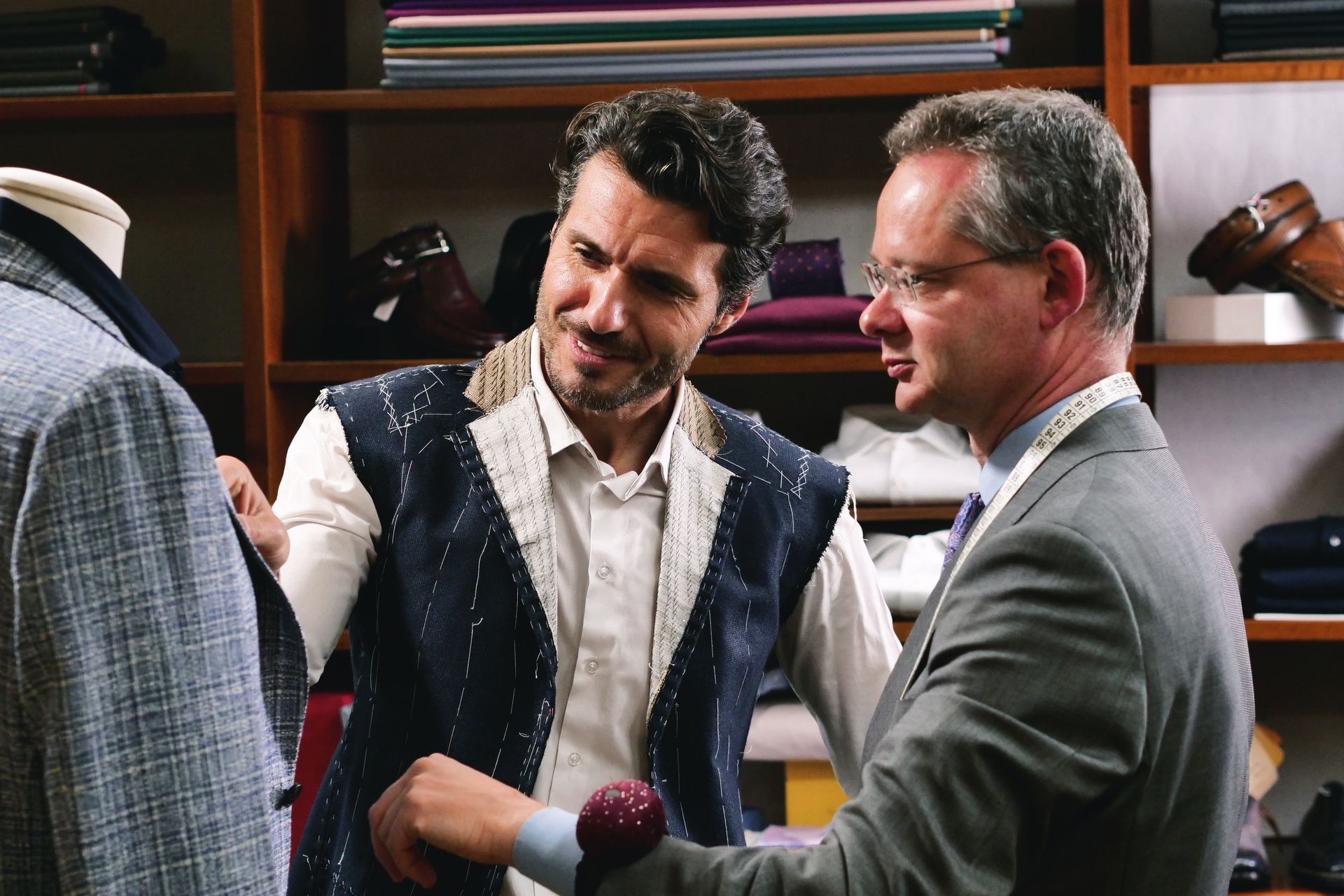
Perhaps the most critical reason for the wait is the basted fitting. After the initial measurements, the tailor creates a "draft" of the suit held together by white basting thread. The client returns to the shop to try on this skeleton of a suit. At this stage, the tailor isn't just looking at length; they are observing how the fabric interacts with the client’s posture, shoulder slope, and movement. Adjustments are made directly on the garment, which is then taken apart and re-cut.
Engineering the Perfect Fit for the Bay Area Professional
A custom suit is a piece of engineered apparel. In a city where people walk hills and commute via various modes of transit, the "fit" must be dynamic.
- Armhole Height: Higher armholes allow for a greater range of motion without the entire jacket lifting when you reach for a grab bar on the Muni or a steering wheel.
- Trouser Rise: Custom tailoring allows for a rise that accommodates the wearer’s actual waistline, preventing the "bunching" often seen in low-rise, off-the-rack trousers.
- Shoulder Expression: San Francisco tailors often specialize in a "soft shoulder" (spalla camicia), which provides a more natural, less aggressive silhouette suitable for the city's sophisticated yet approachable business culture.
Comparing Tailoring Tiers: Bespoke vs. Made-to-Measure
When navigating the world of custom clothing in San Francisco, it is essential to distinguish between the various levels of service available. The "wait" varies significantly between these tiers.
| Feature | Off-the-Rack (OTR) | Made-to-Measure (MTM) | Full Bespoke |
|---|---|---|---|
| Pattern | Standardized Sizing | Modified Base Pattern | Created from Scratch |
| Fittings | None (Post-purchase only) | 1–2 Fittings | 3–5 Fittings |
| Construction | Usually Fused | Half or Full Canvas | Full Hand-Stitched Canvas |
| Lead Time | Immediate | 4–6 Weeks | 10–16 Weeks |
| Price Point | $500 – $1,200 | $1,500 – $3,500 | $4,500+ |
| Longevity | 2–4 Years | 5–10 Years | 15+ Years (with care) |
The Financial Argument for the Long Game
While the upfront cost of a custom suit in San Francisco can be significant—often starting at $2,500 and climbing well past $6,000 for bespoke options—the "cost per wear" is frequently lower than cheaper alternatives.
In 2026, the fashion industry has faced increased scrutiny regarding waste. A custom suit is designed with generous "inlays"—extra fabric inside the seams. This allows the garment to be let out or taken in as the wearer’s body changes over a decade or more. Furthermore, because the suit is built with high-quality natural fibers and a floating canvas, it breathes better and resists the "shine" that develops on synthetic-blend suits after dry cleaning.
Investing in a custom suit is also a time-saver in the long run. Once a San Francisco tailor has your "final" pattern on file, ordering subsequent suits becomes a matter of selecting fabric and lining. The initial wait for the first garment pays dividends for years to come in the form of effortless ordering and a guaranteed perfect fit.
How to Prepare for Your First San Francisco Tailoring Appointment
To ensure the wait is productive, clients should approach their first consultation with a clear set of goals.
- Identify the Primary Use: Is this for a wedding at the Legion of Honor, daily wear in the Financial District, or high-stakes board meetings?
- Research Fabric Weights: For San Francisco, a "four-season" wool (approx. 280-300 grams) is generally the most versatile choice.
- Wear Your Preferred Shoes: The break of the trouser depends entirely on the height and style of the shoes you plan to wear most often.
- Be Honest About Your Routine: If you tend to carry two phones and a thick wallet, tell your tailor. They can reinforce pockets and adjust the drape to hide the bulk.
FAQs
How many fittings are required for a custom suit in San Francisco?
Typically, you should expect at least three fittings for your first suit. The first is the measurement and fabric selection, the second is the basted fitting (the "draft" suit), and the third is the forward fitting where the suit is nearly finished but still requires minor adjustments to the hem and sleeves.
Why is San Francisco more expensive for tailoring than other cities?
The cost reflects the high overhead of maintaining a physical atelier in San Francisco and the necessity of paying living wages to highly skilled local artisans. Additionally, the city’s tailors often source from the top 1% of global fabric mills, which adds to the material costs.
Can a custom suit be rushed if I have an event?
Some shops offer a "rush" service for an additional fee, potentially shortening the 8-week window to 4 weeks. However, this often bypasses the basted fitting stage, which can compromise the final fit. For the best results, it is always recommended to start the process at least three months before your deadline.
What is the difference between "bespoke" and "custom" in 2026?
In contemporary terms, "custom" is often used as a broad label. "Bespoke" specifically refers to a garment where a unique paper pattern is cut for the individual and involves significant hand-sewing. "Made-to-Measure" is a form of custom clothing where a pre-existing pattern is adjusted to your measurements. Both are "custom," but bespoke offers the highest level of personalization.
How should I maintain my custom suit to make it last?
Never dry clean your suit more than once or twice a year, as the chemicals degrade natural fibers. Instead, use a horsehair brush to remove surface dust after each wear and use a high-quality steam iron or professional pressing service to refresh the shape. Always hang the suit on a wide, contoured cedar hanger to preserve the shoulder structure.
Final Recommendation
For those seeking a garment that reflects the unique character and demanding environment of San Francisco, the wait for a custom tailored suit is not merely a delay—it is a requirement for excellence. By choosing a local tailor, you are securing a wardrobe staple that offers unmatched comfort, durability, and a silhouette that is uniquely yours. To begin, schedule a consultation with an established atelier in Union Square or the Financial District at least three months prior to when you need the garment. This lead time ensures that every stitch is placed with intention, resulting in a suit that feels less like a purchase and more like an investment in your personal brand.
Image Gallery