Understanding the RMD Net Worth Profile: Managing Retirement Distributions and Wealth Preservation
An RMD net worth profile is a strategic assessment of how Required Minimum Distributions from tax-deferred retirement accounts impact your total assets. It analyzes the balance between taxable, tax-deferred, and tax-free holdings to mi...
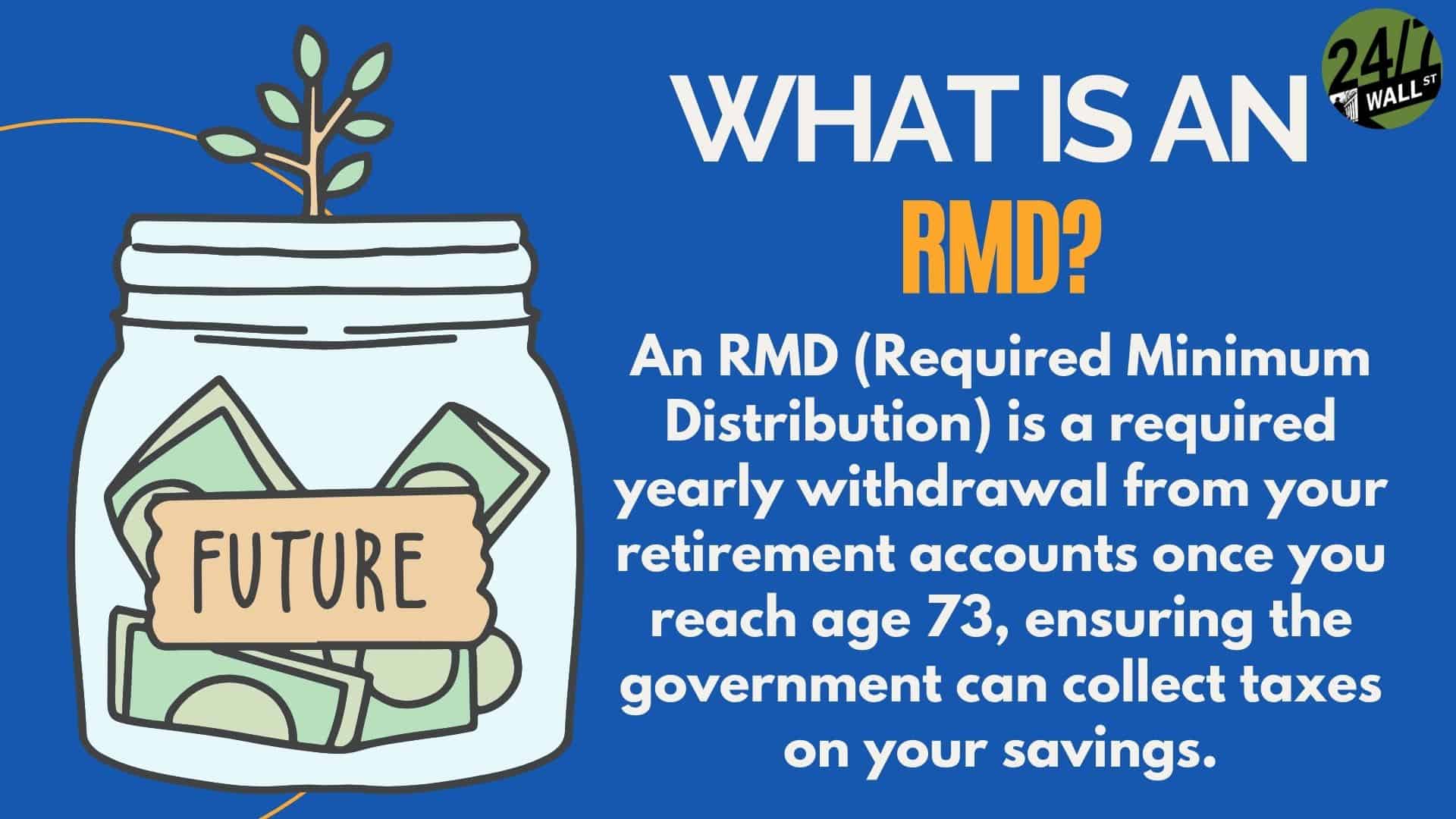
An RMD net worth profile is a strategic assessment of how Required Minimum Distributions from tax-deferred retirement accounts impact your total assets. It analyzes the balance between taxable, tax-deferred, and tax-free holdings to minimize tax liability, avoid IRS penalties, and optimize long-term wealth preservation for retirees and heirs.
Contents
Understanding your RMD (Required Minimum Distribution) net worth profile is a critical component of modern financial planning. As we navigate 2026, the regulatory landscape shaped by the SECURE Act 2.0 has matured, creating both opportunities and complexities for those entering or currently in retirement. A "net worth profile" in this context is not just a snapshot of what you own; it is a forward-looking map of how the Internal Revenue Service (IRS) will mandate the liquidation of your retirement savings and how those forced withdrawals will echo through your broader financial life.
For high-net-worth individuals and diligent savers alike, the RMD net worth profile serves as a diagnostic tool. It identifies the "tax bomb" hidden within traditional IRAs and 401(k)s and allows for the implementation of mitigation strategies before mandatory distributions begin. Failure to understand this profile can result in unintended tax bracket creep, increased Medicare premiums, and a significant erosion of the legacy intended for beneficiaries.
The Core Components of an RMD Net Worth Profile
To build an accurate RMD net worth profile, one must categorize assets based on their tax treatment and distribution requirements. In 2026, the distinction between "tax-deferred," "tax-free," and "taxable" assets is more pronounced than ever.
Tax-Deferred Assets (The RMD Engine)
These are the primary drivers of your RMD profile. They include Traditional IRAs, SEP IRAs, SIMPLE IRAs, and employer-sponsored plans like 401(k) and 403(b) accounts. Because these contributions were made with pre-tax dollars, the federal government requires you to begin withdrawing a portion of these funds once you reach the statutory age. In 2026, the applicable starting age for RMDs is 73 for those born between 1951 and 1959. These distributions are treated as ordinary income, which can significantly alter your tax profile.
Tax-Free Assets
Roth IRAs and Roth 401(k)s occupy a unique space. Under the current 2026 guidelines, Roth IRAs do not require RMDs during the original owner's lifetime. Furthermore, thanks to provisions in the SECURE Act 2.0, RMD requirements for designated Roth accounts in employer-sponsored plans (like Roth 401(k)s) have been eliminated. These assets are vital for "balancing" your profile, as they provide liquidity that does not increase your taxable income.
Taxable Brokerage and Cash Assets
While these do not have RMD requirements, they are integral to the profile. They provide the "tax-efficient" capital used to pay the taxes generated by RMDs from your deferred accounts. A healthy RMD net worth profile maintains enough liquidity in taxable accounts to cover these liabilities without forcing the liquidation of depreciated assets during market downturns.
The 2026 Regulatory Landscape and RMD Mechanics
As of 2026, the mechanics of calculating RMDs are governed by the IRS Uniform Lifetime Table. This table provides a "distribution period" or divisor based on your age. To find your RMD, you divide the fair market value of your tax-deferred accounts as of December 31 of the previous year by the divisor corresponding to your age in the current year.
The policy shift toward pushing the RMD start age later—reaching 73 currently—has a dual effect. While it allows for more tax-deferred growth, it also results in a shorter window for distribution, which can lead to larger mandatory withdrawals later in life. This is particularly relevant for those with substantial balances, as the IRS mandates that the entire balance must eventually be distributed (and taxed).
| Account Type | RMD Required (2026) | Primary Tax Treatment |
|---|---|---|
| Traditional IRA | Yes (Age 73) | Ordinary Income |
| Roth IRA | No (Lifetime) | Tax-Free |
| 401(k) / 403(b) | Yes (Age 73) | Ordinary Income |
| Roth 401(k) | No | Tax-Free |
| SEP / SIMPLE IRA | Yes (Age 73) | Ordinary Income |
| Inherited IRA | Yes (Variable) | Ordinary Income |
For detailed tables and specific life expectancy factors, the IRS Publication 590-B remains the definitive source for current-year calculations and specific exceptions.
Strategic Implications: The "Tax Bomb" and IRMAA
One of the most critical reasons to understand your RMD net worth profile is to avoid the "tax bomb." This occurs when RMDs are so large that they push the taxpayer into a significantly higher marginal tax bracket. In 2026, with the potential expiration or adjustment of previous tax cuts, managing your bracket is paramount.
Large RMDs also trigger secondary costs, most notably the Income-Related Monthly Adjustment Amount (IRMAA). IRMAA is a surcharge added to Medicare Part B and Part D premiums for high-income retirees. Because RMDs increase your Adjusted Gross Income (AGI), a poorly managed RMD profile can lead to thousands of dollars in additional healthcare costs annually.
Furthermore, the "widow’s penalty" or "surviving spouse trap" is a common risk in RMD profiling. When one spouse passes away, the survivor often inherits the deceased's retirement accounts. This can lead to the survivor receiving nearly the same amount of RMD income but filing as a "Single" taxpayer instead of "Married Filing Jointly," resulting in much higher tax rates on the same dollar amount of distributions.
Advanced Strategies for Profile Optimization
Once you have identified the risks within your RMD net worth profile, several strategies can be employed to optimize your financial standing. These strategies focus on reducing the total balance of tax-deferred accounts before RMDs begin or directing the distributions in a tax-efficient manner.
Roth Conversions
A Roth conversion involves moving funds from a Traditional IRA to a Roth IRA. You must pay ordinary income tax on the amount converted, but the funds then grow tax-free and are not subject to RMDs. In the years leading up to age 73—often called the "gap years"—retirees may find themselves in a lower tax bracket. Executing partial Roth conversions during these years can effectively "level out" the tax burden and reduce future mandatory distributions.
Qualified Charitable Distributions (QCDs)
For those who are charitably inclined, the QCD is one of the most powerful tools in the RMD arsenal. As of 2026, individuals aged 70½ or older can transfer up to $100,000 (indexed for inflation) directly from an IRA to a qualified 501(c)(3) organization. The beauty of the QCD is that it counts toward your RMD for the year but is excluded from your taxable income. This prevents the distribution from inflating your AGI and triggering IRMAA surcharges or other tax phase-outs.
Qualified Longevity Annuity Contracts (QLACs)
A QLAC allows you to move a portion of your IRA into a deferred annuity that does not start payments—and thus does not require RMDs—until as late as age 85. Under the SECURE Act 2.0, you can invest up to $200,000 (subject to inflation adjustments) into a QLAC. This effectively removes that capital from your RMD calculations for a decade or more, providing a hedge against longevity while lowering current tax liabilities.
Common Mistakes in RMD Management
Despite the availability of clear guidelines, many taxpayers make errors that result in heavy penalties. In 2026, the penalty for failing to take a full RMD is 25% of the amount not distributed. While this is a reduction from the previous 50% penalty, it remains one of the most punitive assessments in the tax code.
One frequent mistake is miscalculating the RMD across multiple accounts. While you can aggregate RMDs for multiple IRAs and take the total from just one, you cannot do the same for 401(k) accounts. Each employer-sponsored plan generally requires its own specific distribution. Mixing these rules can lead to an under-distribution in one account and a penalty, even if the total amount withdrawn across all accounts was sufficient.
Another error is ignoring the "First Year" rule. Your first RMD is due by April 1 of the year after you turn 73. However, if you wait until April 1, you must also take your second RMD by December 31 of that same year. This "double distribution" can skyrocket your taxable income for that calendar year, potentially pushing you into the highest possible tax bracket and triggering maximum IRMAA surcharges.
Frequently Asked Questions
What happens if I am still working at age 73?
If you are still employed and do not own more than 5% of the company, you may be able to delay RMDs from your current employer’s 401(k) or 403(b) until you retire. This is known as the "still-working exception." However, this does not apply to Traditional IRAs or retirement plans from previous employers. You must still take distributions from those accounts.
Can I reinvest my RMD back into a retirement account?
No. Once a distribution is categorized as an RMD, it cannot be rolled over into another tax-deferred account or a Roth IRA. However, you can (and often should) reinvest the remaining funds—after taxes—into a taxable brokerage account to continue asset growth.
How do inherited IRAs affect my RMD net worth profile?
Inherited IRAs have their own set of complex rules, largely dictated by the "10-Year Rule" established by the SECURE Act. Most non-spouse beneficiaries must empty the account within ten years of the original owner's death. This requires careful planning to ensure the distributions are spread out over those ten years to minimize the annual tax impact.
Is the RMD based on the account value at the time of withdrawal?
No. The RMD is calculated using the account’s fair market value as of December 31 of the previous year. If the market drops significantly in the current year, your RMD remains the same, meaning you may be forced to withdraw a larger percentage of your remaining balance than originally anticipated.
Do I have to take RMDs if my account balance is small?
Yes. The IRS does not provide a "de minimis" exception for small account balances. Even if the RMD is only a few dollars, the requirement must be met to avoid the 25% excise tax.
Practical Next Actions
To effectively manage your RMD net worth profile in 2026, start by aggregating all your tax-deferred account statements. Calculate your projected RMDs for the next five to ten years using current IRS life expectancy tables. If the projected distributions threaten to push you into a higher tax bracket or trigger IRMAA, consult with a financial advisor about implementing a multi-year Roth conversion strategy or utilizing QCDs.
Regularly reviewing your beneficiary designations is also vital. The tax efficiency of your RMD profile extends beyond your lifetime; ensuring your heirs are positioned to receive assets in the most tax-advantaged way is the final step in comprehensive wealth preservation.
Image Gallery