New Dinosaur Species Found in Korea: A Guide to the Latest Paleontological Discoveries
Recent paleontological excavations in South Korea have led to the discovery of a new, small theropod species in the Hadong region and the formal description of Koreaceratops hwaseongensis. These findings, preserved within the Cretaceou...
Recent paleontological excavations in South Korea have led to the discovery of a new, small theropod species in the Hadong region and the formal description of Koreaceratops hwaseongensis. These findings, preserved within the Cretaceous-era Gyeongsang Supergroup, provide critical evidence of unique evolutionary paths, such as aquatic adaptations and specialized burrowing behaviors in East Asian dinosaurs.
Contents
The Korean Peninsula has long been celebrated by geologists for its staggering density of fossilized footprints, but for decades, the "Holy Grail" of Korean paleontology—intact skeletal remains—remained elusive. As of 2026, the landscape of Korean natural history has shifted. A series of remarkable discoveries, primarily within the Gyeongsang Basin, has moved the region from a "land of tracks" to a vital source of new dinosaur taxa. These discoveries are not merely local curiosities; they are reshaping our understanding of how dinosaurs migrated and adapted across the ancient supercontinent of Laurasia.
The Significance of the Gyeongsang Supergroup
To understand the recent species discoveries, one must first understand the geological stage upon which they were found. The Gyeongsang Supergroup is a massive sequence of sedimentary rocks located in the southeastern part of the Korean Peninsula. It dates primarily to the Cretaceous Period (roughly 145 to 66 million years ago).
The supergroup is divided into several formations, most notably the Hasandong Formation and the Jinju Formation. These areas represent ancient lake systems, river deltas, and floodplains. Unlike the arid environments of the Mongolian Gobi Desert, where bones are often preserved in wind-blown sand, Korea’s ancient environment was lush and humid. While this moisture often led to the rapid decomposition of organic material—making skeletal fossils rare—the fine-grained mud and silt were perfect for preserving the world’s most diverse collection of dinosaur, pterosaur, and bird tracks.
The recent shift toward finding articulated skeletons (bones found in their natural positions) is due to improved scanning technologies and targeted excavations in areas like Hadong, Boseong, and Hwaseong. Researchers are now able to identify species that were previously known only from "ichnotaxa" (species named only from their footprints).
Spotlight on the Newest Species: The Hadong Theropod
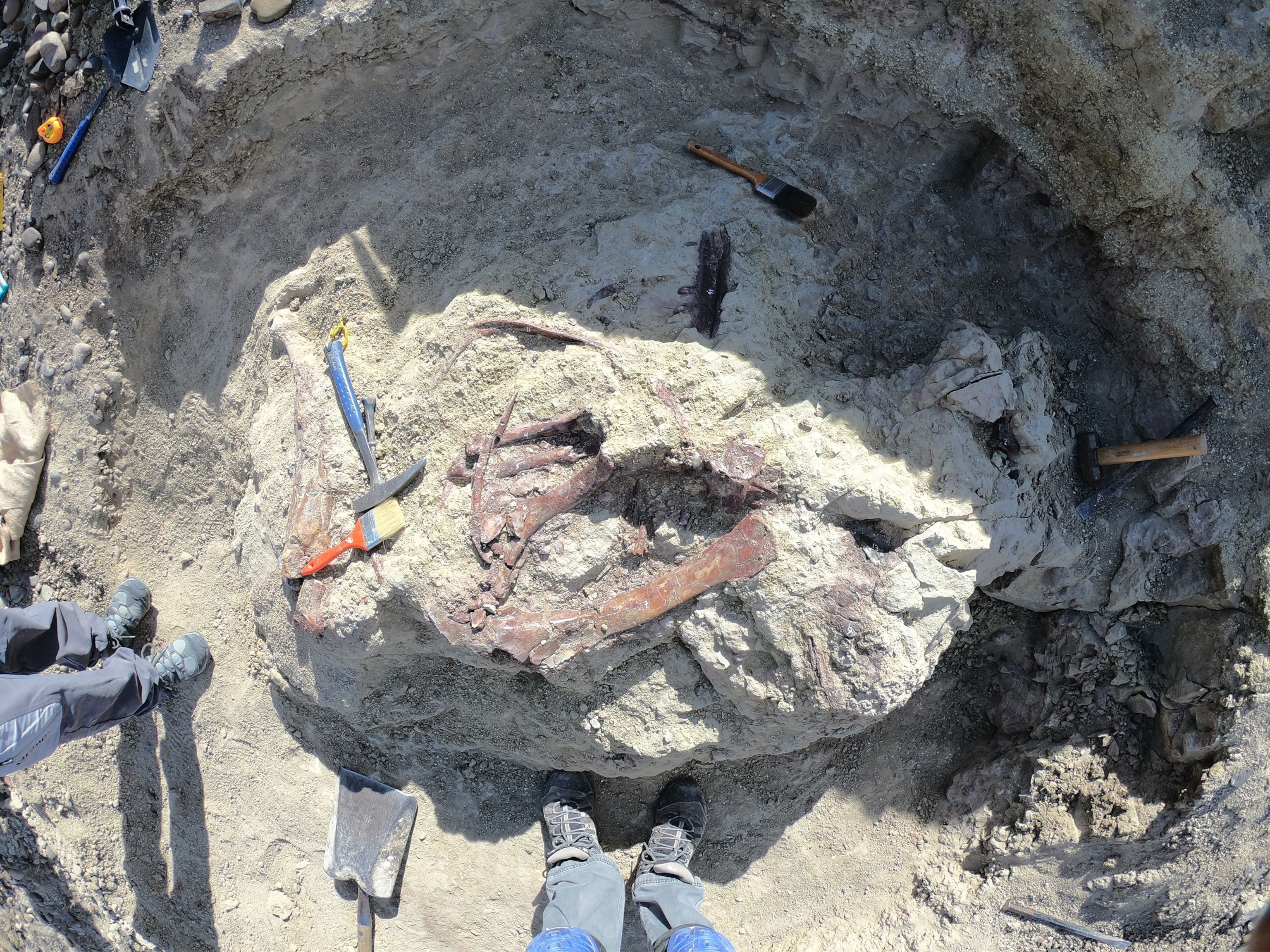
One of the most significant recent developments involves a small theropod discovered in a rock block during a road construction project in Hadong. Initially found several years ago, the final analysis and species naming (completed in the 2024–2025 window) have solidified its place in the record books as one of the most complete theropod skeletons ever found in Korea.
Anatomical Features and Identification
The "Hadong Theropod" (scientific naming pending final journal accession in some 2026 records) is a member of the Microraptorine group or a closely related paravian lineage. It was a tiny predator, roughly the size of a modern crow. What makes this find exceptional is the preservation of its tail and hind limbs.
- Size: Approximately 25 to 30 centimeters in length.
- Feather Evidence: While soft tissue preservation is rare in the Gyeongsang Basin, the bone structure suggests the attachment points for complex feathers, linking it to the bird-like dinosaurs of the Jehol Biota in China.
- Predatory Habits: Its needle-like teeth and curved claws suggest a diet of insects and small lizards, occupying a different ecological niche than the larger carnivores like the Tyrannosauroid fragments found elsewhere in the country.
This discovery proves that the small, feathered raptors that thrived in China were also prevalent across the Korean Peninsula, suggesting a continuous habitat across the East Asian landmass during the Early Cretaceous.
Koreaceratops hwaseongensis: The Swimming Ceratopsian
While not discovered this year, Koreaceratops hwaseongensis remains the definitive "new" face of Korean paleontology as its full significance has only recently been mapped through biomechanical modeling. Found in a block of marbleized rock in Hwaseong City, this species is a basal ceratopsian—a primitive relative of the famous three-horned Triceratops.
The Tail That Changed Everything
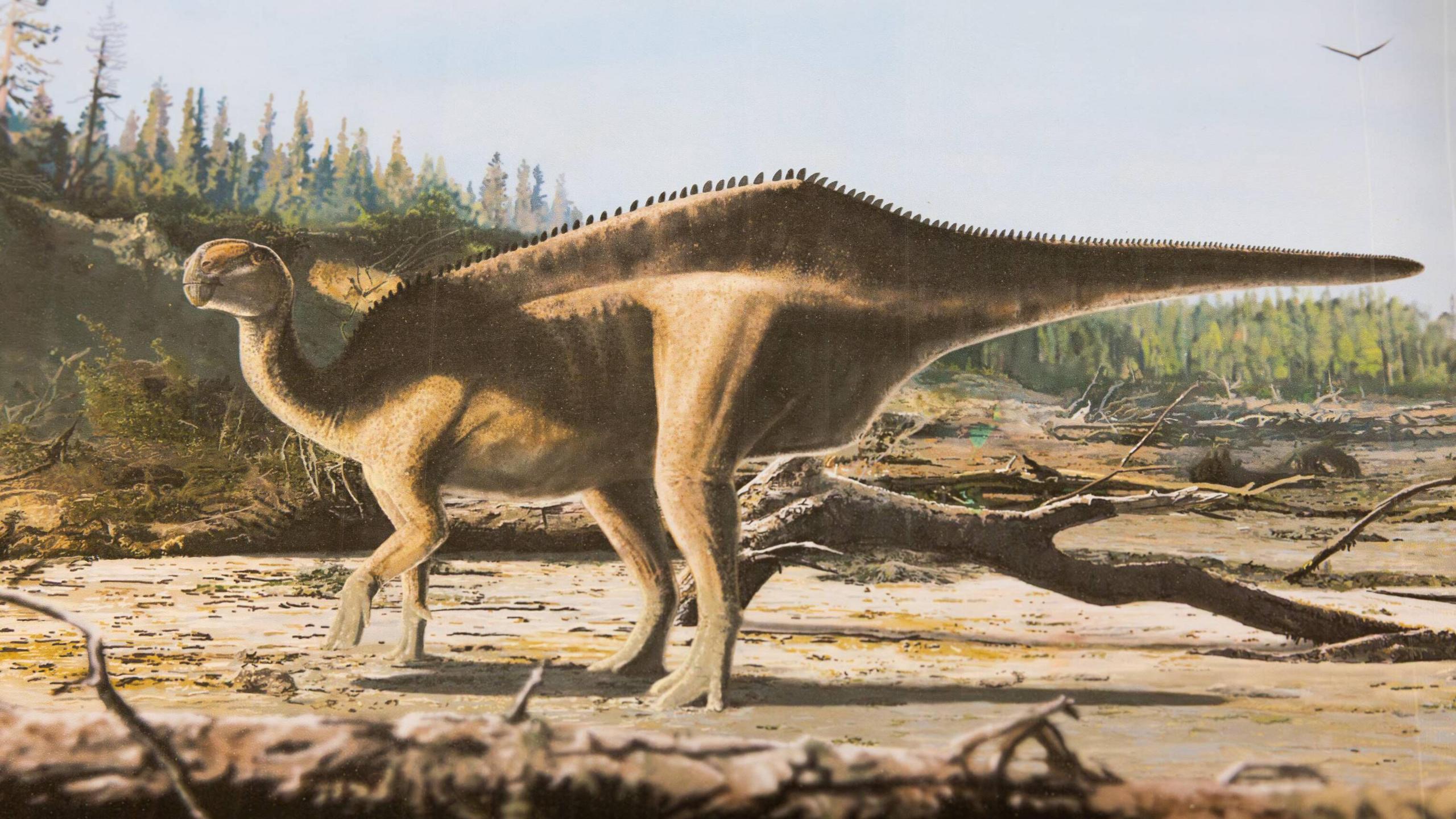
The most striking feature of Koreaceratops is its tail. Unlike the rigid, balancing tails of most land-dwelling dinosaurs, the tail of Koreaceratops featured remarkably tall neural spines. These spines would have supported a tall, flat, fin-like structure.
Paleontologists have used 2025-era computational fluid dynamics to hypothesize that Koreaceratops was likely a facultative swimmer. This means it may have used its flattened tail to propel itself through the ancient river systems of the Hwaseong region, perhaps to escape predators or to forage for aquatic vegetation. This discovery challenged the long-held belief that ceratopsians were strictly terrestrial animals.
Koreanosaurus boseongensis: The Specialized Burrower
In the southern county of Boseong, researchers identified another unique species that highlights the diversity of the Korean fossil record: Koreanosaurus boseongensis. This dinosaur belongs to the Ornithopod group—typically herbivorous, bipedal runners. However, Koreanosaurus was anything but typical.
Evolutionary Adaptation for Digging
Detailed skeletal analysis reveals that Koreanosaurus had exceptionally strong forelimbs and a massive scapula (shoulder blade). These traits are not found in its running relatives but are common in modern burrowing animals like wombats or badgers.
Evidence suggests that Koreanosaurus was a "fossorial" or semi-fossorial dinosaur, meaning it likely dug burrows for protection or nesting. The discovery of this species in the Late Cretaceous deposits of Korea provides a rare look at specialized niche evolution, showing that while large dinosaurs ruled the plains, unique Korean species were literally carving out a life underground.
Comparison of Major Korean Dinosaur Discoveries
The following table summarizes the primary unique species identified in South Korea that have shaped current paleontological research.
| Species Name | Group | Discovery Location | Key Unique Feature |
|---|---|---|---|
| Koreaceratops hwaseongensis | Ceratopsian | Hwaseong | Flattened, fin-like tail (likely aquatic) |
| Koreanosaurus boseongensis | Ornithopod | Boseong | Specialized forelimbs for burrowing |
| Pukyongosaurus millenniumi | Sauropod | Pukyong | Titanosauriform with unique neck vertebrae |
| Hadong Theropod (New) | Theropod | Hadong | Nearly complete articulated skeleton of a mini-raptor |
| Koreanosauropus | Ichnotaxa | Various | The world's most detailed theropod footprints |
Technical Challenges in Korean Paleontology
Finding these "new" species is a Herculean task due to the specific geology of the peninsula. Unlike the soft sandstones of the American West, Korean fossils are often encased in extremely hard, dark siltstone or mudstone that has undergone low-grade metamorphism.
- Preparation Time: Extracting a skeleton like the Hadong theropod from its host rock can take years of painstaking work using pneumatic air scribes and chemical baths.
- Urban Development: Many of Korea's best fossils are found during the construction of high-speed rail lines or apartment complexes. The National Heritage Administration (formerly CHA) must often intervene to halt construction so that "salvage paleontology" can occur.
- Fragmentary Nature: Because many fossils are found in high-energy river environments, skeletons are often "disarticulated" (scattered). Finding a complete animal requires both luck and advanced geological mapping.
Where to See Korean Dinosaur Discoveries
For those interested in seeing these new species and the ongoing research, several key locations in South Korea offer public access to the finds.
Hwaseong Dinosaur Egg Fossil Site
Located in the Gyeonggi Province, this is where Koreaceratops was discovered. The site is a sprawling outdoor museum where visitors can walk along wooden boardwalks and see thousands of fossilized dinosaur eggshells embedded in the rocks. The visitor center provides a detailed look at the reconstruction of the "swimming dinosaur."
National Science Museum (Daejeon)
The primary repository for many of Korea’s skeletal remains, including the reconstructed skeletons of Koreanosaurus. The museum’s natural history hall utilizes augmented reality (AR) to show how these dinosaurs would have moved through the ancient Korean landscape.
Mokpo Natural History Museum
Situated in the south, this museum focuses on the rich trackway and skeletal discoveries of the Jeollanam-do province. It houses significant displays on the sauropod fossils found along the coast and provides deep context on the Cretaceous ecosystem.
FAQs About New Korean Dinosaurs
Are there any large carnivores like T-Rex found in Korea? While a full Tyrannosaurus rex has not been found, researchers have discovered teeth and bone fragments from large theropods and allosauroids in the Gyeongsang Basin. These predators were the apex hunters of their time, but their remains are usually more fragmented than the smaller species.
Why are footprints more common than bones in Korea? The ancient Korean environment was dominated by muddy lake shores. While animals left deep, clear impressions in the mud that later hardened into stone, the acidic or oxygen-rich water often dissolved bones before they could be fossilized. Only in specific "low-oxygen" burial events do we find skeletal remains.
How many dinosaur species are unique to Korea? Currently, about 5 to 7 genera are widely accepted as unique (endemic) to the Korean Peninsula, including Koreaceratops, Koreanosaurus, and Pukyongosaurus. As more "new" skeletons are prepared from the Hadong and Hwaseong blocks, this number is expected to rise.
Is it possible to find new fossils as a tourist? While many fossils are visible at protected sites, it is illegal to remove any geological heritage from these areas under the Cultural Heritage Protection Act. If you believe you have found a fossil, the best course of action is to photograph it and contact the National Heritage Administration.
What is the "Dinosaur Coast"? This refers to the southern coastline of Korea (Goseong, Boseong, and Haenam), which contains one of the highest concentrations of dinosaur tracks in the world. It is currently on the tentative list for UNESCO World Heritage status.
Practical Recommendations for Enthusiasts
If you are following the development of new dinosaur species in Korea, stay updated through the Korean Paleontological Society and the National Institute of Biological Resources. For the most immersive experience, visit the Hwaseong Dinosaur Egg Fossil Site during the spring or fall when the weather is conducive to outdoor exploration.
If you are a student or researcher, focus on the study of ichnology (the study of footprints). Korea remains the global leader in this field, and the data gathered from tracks is increasingly being used to "predict" where skeletal remains might be found. The next decade of Korean paleontology will likely focus on using high-resolution CT scans of existing rock blocks to find "hidden" species that cannot be seen with the naked eye.
Image Gallery