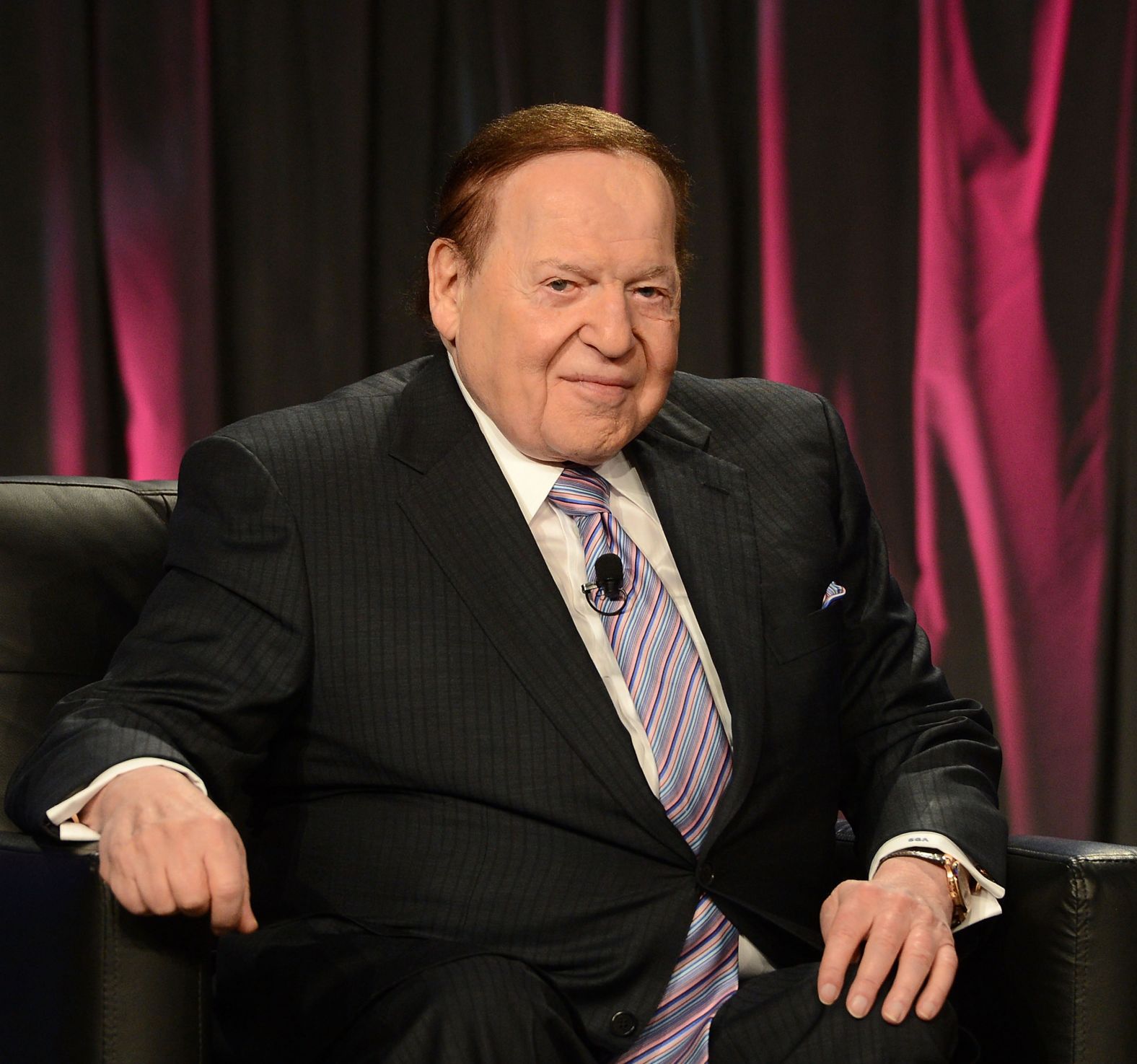
Sheldon Adelson: Biography, Business Empire, and Lasting Legacy
Sheldon Adelson (1933–2021) was an American billionaire businessman, political mega-donor, and founder of Las Vegas Sands Corp. Renowned for revolutionizing the gaming and hospitality industries, Adelson pioneered the convention-driven...
Sheldon Adelson (1933–2021) was an American billionaire businessman, political mega-donor, and founder of Las Vegas Sands Corp. Renowned for revolutionizing the gaming and hospitality industries, Adelson pioneered the convention-driven "integrated resort" model, built massive casino empires in Macau and Singapore, and exerted profound influence over conservative politics in the United States and Israel.
Contents
Early Life and the Origins of an Entrepreneur
Sheldon Gary Adelson was born on August 4, 1933, in the Dorchester neighborhood of Boston, Massachusetts, into a working-class Jewish immigrant family. His father worked as a taxi driver, while his mother ran a small knitting shop. Adelson exhibited strong business instincts at an early age, borrowing $200 from his uncle at age 12 to purchase a license to sell newspapers on street corners. By age 16, he had started a candy-vending machine business.
Adelson attended the City College of New York but dropped out before graduating to pursue business opportunities full-time. Over the next two decades, he launched more than 50 different entrepreneurial ventures, ranging from selling de-icer chemicals and toiletries to working as a mortgage broker and financial consultant.
[Timeline of Early Career]
- 1945: Starts first newspaper vending venture in Boston
- 1960s: Operates real estate and financial advisory services
- 1979: Co-founds COMDEX trade show in Las Vegas
- 1988: Purchases the historic Sands Hotel and Casino
- 1995: Sells COMDEX to SoftBank for $860 million
His major financial breakthrough occurred in 1979 when he co-founded COMDEX (Computer Dealers' Exhibition). Spotting the early surge in personal computing, Adelson created what quickly grew into the computer industry's premier global trade show. By the early 1990s, COMDEX hosted hundreds of thousands of attendees annually in Las Vegas. In 1995, Adelson and his partners sold the Interface Group—which produced COMDEX—to Japan's SoftBank Corporation for approximately $860 million, yielding Adelson a personal payout exceeding $500 million.
The Integrated Resort Model: Redefining Las Vegas
With the capital realized from COMDEX, Adelson turned his attention entirely to the resort and gaming sector. In 1988, he had acquired the historic Sands Hotel and Casino on the Las Vegas Strip for $128 million. Adelson recognized that Las Vegas relied heavily on weekend gamblers, leaving hotel rooms empty during mid-week periods.
To solve this vacancy problem, Adelson introduced the Integrated Resort (IR) model. The core strategy was to build expansive convention centers attached to luxury hotels, filling rooms from Monday through Thursday with business travelers attending corporate trade shows, and filling them with leisure gamblers on weekends.
In 1996, despite skepticism from veteran gaming executives, Adelson imploded the legendary Sands Hotel to build The Venetian Las Vegas, an opulent $1.5 billion complex featuring:
- Sands Expo & Convention Center: A massive private convention facility integrated directly into the property.
- All-Suite Accommodations: Hotel rooms designed with separate living and sleeping areas to cater to business executives.
- Retail and Dining Infrastructure: The Grand Canal Shoppes, which integrated retail channels and high-end dining into the resort layout.
Opening in May 1999, The Venetian established a new standard for Las Vegas hospitality. Adelson later expanded the complex by opening The Palazzo in 2007, creating one of the world's largest contiguous resort and convention properties under single management.
Asian Expansion: The Macau and Singapore Megaprojects
While Adelson transformed Las Vegas, his boldest financial decisions involved expanding into Asian markets. Recognizing the immense untapped demand for gaming and travel among Asia's growing middle class, Adelson positioned Las Vegas Sands as an early foreign entrant into Macau after the Chinese territory ended Stanley Ho's 40-year gaming monopoly in 2002.
Macau and the Cotai Strip
In May 2004, Las Vegas Sands opened the Sands Macao, a $240 million property located near the Macau ferry terminal. The casino recouped its total initial investment capital in under one year.
Adelson then undertook a far more ambitious project: converting reclaimed marshland between the islands of Coloane and Taipa into the Cotai Strip. Adelson envisioned transforming Macau from a day-trip gambling hub into a multi-day international leisure destination. In 2007, he opened The Venetian Macao, a $2.4 billion resort featuring a 15,000-seat arena, extensive retail space, and one of the world's largest casino floors. Sands China Ltd. (a subsidiary of Las Vegas Sands) went on to develop properties including The Plaza Macao, The Londoner Macao, and The Parisian Macao.
Marina Bay Sands (Singapore)
In 2006, the Singaporean government awarded Las Vegas Sands one of two licenses to build an integrated resort. Adelson committed over $5.5 billion to develop Marina Bay Sands, designed by architect Moshe Safdie. Featuring three 55-story hotel towers connected by a 340-meter-long SkyPark and a cantilevered infinity pool, Marina Bay Sands opened in 2010 and quickly became one of the world's most profitable single resort properties.
Major Business Milestones and Asset Overview
The strategic moves executed under Adelson's leadership established Las Vegas Sands as the world's highest-valued gaming enterprise by market capitalization during his lifetime.
| Asset / Venture | Year Established / Acquired | Key Strategic Value | Historical Significance |
|---|---|---|---|
| COMDEX | 1979 | Premier IT Trade Show | Sold to SoftBank in 1995 for $860 million; generated foundational wealth. |
| Sands Hotel & Casino | 1988 | Las Vegas Strip Real Estate | Purchased for $128M; demolished in 1996 to make way for convention-focused resorts. |
| The Venetian Las Vegas | 1999 | Flagship US Integrated Resort | Validated the business convention/leisure hybrid revenue model. |
| Sands Macao | 2004 | First Foreign Casino in Macau | Recouped capital in under 12 months; unlocked mainland Chinese consumer base. |
| The Venetian Macao | 2007 | Anchor Property of Cotai Strip | Catalyzed the transformation of Macau into the world's largest gambling market. |
| Marina Bay Sands | 2010 | Singapore Monopolistic Duopoly | Set global profit margin benchmarks for high-end luxury integrated resorts. |
Political Donorship and Media Influence
Beyond corporate real estate and gaming, Sheldon Adelson was one of the most impactful donors in modern American political history. Alongside his wife, Dr. Miriam Adelson, he contributed hundreds of millions of dollars to political campaigns, Political Action Committees (Super PACs), and conservative causes.
U.S. Politics
Adelson emerged as a dominant financial donor within the Republican Party (GOP) following the 2010 Supreme Court Citizens United ruling. His political contributions focused on fiscal conservatism, strong defense policies, and unwavering support for Israel. Key political engagements included:
- 2012 Presidential Election: Donating tens of millions of dollars to support Newt Gingrich's primary bid before directing massive capital to nominee Mitt Romney.
- 2016 and 2020 Campaigns: Directing over $200 million across the two election cycles to political committees supporting Donald Trump and Republican congressional candidates.
- Policy Influence: Advocating for key foreign policy shifts, including the relocation of the U.S. Embassy in Israel from Tel Aviv to Jerusalem, which occurred in 2018.
Media Ownership and Philanthropy
Adelson sought to influence public discourse through targeted media investments:
- Israel Hayom: In 2007, Adelson launched Israel Hayom, a free daily newspaper in Israel that rapidly grew to become the country's most widely circulated print publication.
- Las Vegas Review-Journal: In 2015, the Adelson family anonymously purchased Nevada's largest daily newspaper for $140 million, an acquisition that was later disclosed following investigative reporting by the paper's own journalists.
His philanthropic initiatives were largely directed through the Adelson Family Foundation. Major beneficiaries included Birthright Israel, which received over $400 million from the family to fund free educational trips to Israel for young Jewish adults, along with substantial contributions to medical research, addiction treatment clinics, and Holocaust memorial organizations such as Yad Vashem.
Corporate Succession and Post-Adelson Strategy
Sheldon Adelson died on January 11, 2021, at the age of 87, due to complications from non-Hodgkin's lymphoma. Following his death, Las Vegas Sands executed a major strategic pivot under new leadership, guided by Chief Executive Officer Robert Goldstein and President/COO Patrick Dumont (Adelson's stepson-in-law).
- Sheldon Adelson Era (1988-2021)
- Building Las Vegas Assets
- Global Expansion to Macau/SG
- Post-Adelson Strategy (2021-Present)
- Sale of LV Strip Real Estate
- Capital Reinvestment in Asia
- Digital & Regional US Bids
In March 2021, Las Vegas Sands announced the sale of its real estate assets in Las Vegas—including The Venetian, The Palazzo, and the Sands Expo Center—for $6.25 billion to VICI Properties and Apollo Global Management. The sale closed in early 2022, officially completing the company's departure from operating physical properties on the Las Vegas Strip.
The strategic rationale behind this divestment included:
- Focus on High-Margin Asian Operations: Directing executive capital and balance-sheet liquidity toward expanding properties in Macau and executing major investment commitments at Marina Bay Sands in Singapore.
- Targeting New Jurisdictions: Allocating growth capital to seek new commercial integrated resort licenses in domestic and international markets, such as New York and Texas.
- Digital Gaming Ventures: Exploring strategic investments in digital gaming infrastructure and business-to-business sports betting technology.
Key Business Takeaways for Corporate Leaders
Adelson’s career offers several strategic lessons for corporate leaders, real estate developers, and investors:
- Pivoting Revenue Models: Adelson's decision to shift casino resort economics away from pure gambling toward corporate conventions established a predictable mid-week cash flow model that stabilized room pricing and occupancy rates.
- First-Mover High-Risk Bets: Expanding into Macau before infrastructure was built required significant regulatory and financial risk, but it yielded returns that eclipsed original domestic market operations.
- Controlling Real Estate Footprints: Owning adjacent land parcels allowed Las Vegas Sands to build high-density mega-resorts (such as the Cotai Strip assembly) that competitors could not easily replicate.
Frequently Asked Questions
How did Sheldon Adelson make his original wealth?
Adelson made his initial fortune by co-founding COMDEX, a massive computer industry trade show established in 1979. He sold his stakes in the operating company behind COMDEX to SoftBank in 1995 for over $500 million, using that capital to build The Venetian in Las Vegas.
What was Sheldon Adelson's primary contribution to the casino industry?
Adelson pioneered the integrated resort (IR) model. Rather than relying solely on weekend gaming traffic, he integrated massive convention centers, corporate meeting spaces, high-end retail malls, and fine dining into luxury hotels, ensuring high midweek occupancy from corporate travelers.
Did Las Vegas Sands keep its Las Vegas casinos after Adelson's death?
No. In 2021, Las Vegas Sands agreed to sell its Las Vegas real estate and operations—including The Venetian, The Palazzo, and the Sands Expo Center—for approximately $6.25 billion. The transactions closed in early 2022, leaving the company focused primarily on its Asian properties in Macau and Singapore.
What media outlets did Sheldon Adelson own?
Adelson established the free daily newspaper Israel Hayom in Israel in 2007. In late 2015, his family acquired the Las Vegas Review-Journal, Nevada's largest daily newspaper.
What was Adelson's political legacy?
Adelson was one of the largest financial donors to the U.S. Republican Party and conservative candidates in Israel. His political advocacy focused heavily on fiscal conservatism, national defense, and strengthening U.S.–Israel relations, including playing a pivotal role in the decision to move the U.S. Embassy in Israel to Jerusalem.
Strategic Summary
Understanding Sheldon Adelson's impact requires examining how commercial real estate development, corporate convention economics, and political advocacy intersect. Executives evaluating market expansion or venue development can draw direct insights from his integrated resort model, which diversified revenue away from volatile single-stream operations into scalable corporate hospitality ecosystems.
Image Gallery