Bookkeeping Entries Explained: Understanding the Foundation of Financial Accuracy
Bookkeeping entries are the formal records of an entity’s financial transactions, documenting every exchange of value using the double-entry accounting system. By recording debits and credits for every operation, these entries ensure t...
Bookkeeping entries are the formal records of an entity’s financial transactions, documenting every exchange of value using the double-entry accounting system. By recording debits and credits for every operation, these entries ensure that the fundamental accounting equation—Assets = Liabilities + Equity—remains balanced, providing a transparent and verifiable trail of a business's economic health.
Contents
The Core Principles of Double-Entry Bookkeeping
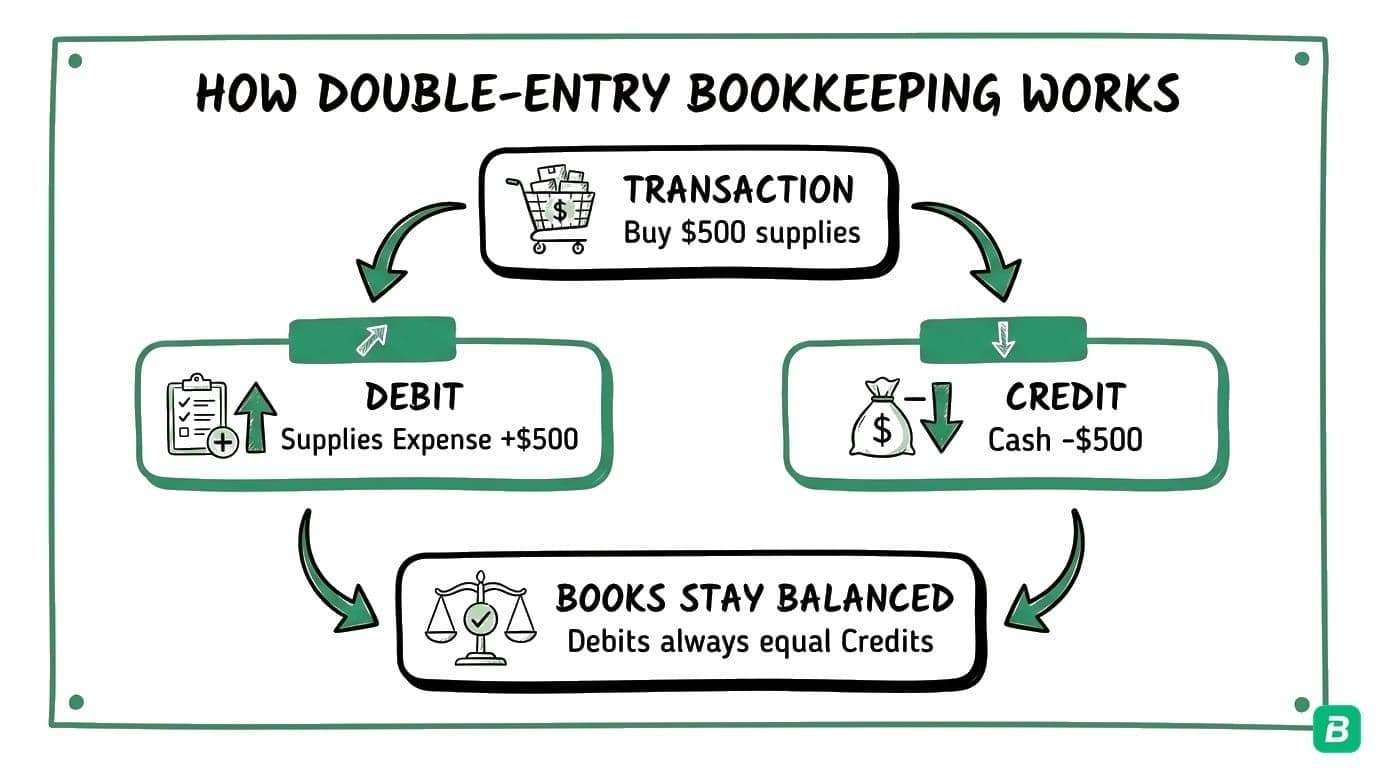
At the heart of every bookkeeping entry lies the principle of duality. In modern accounting, no financial event occurs in isolation; every transaction affects at least two accounts. This system, which has been the standard for centuries, requires that for every debit entry made to an account, a corresponding credit entry must be made to another account.
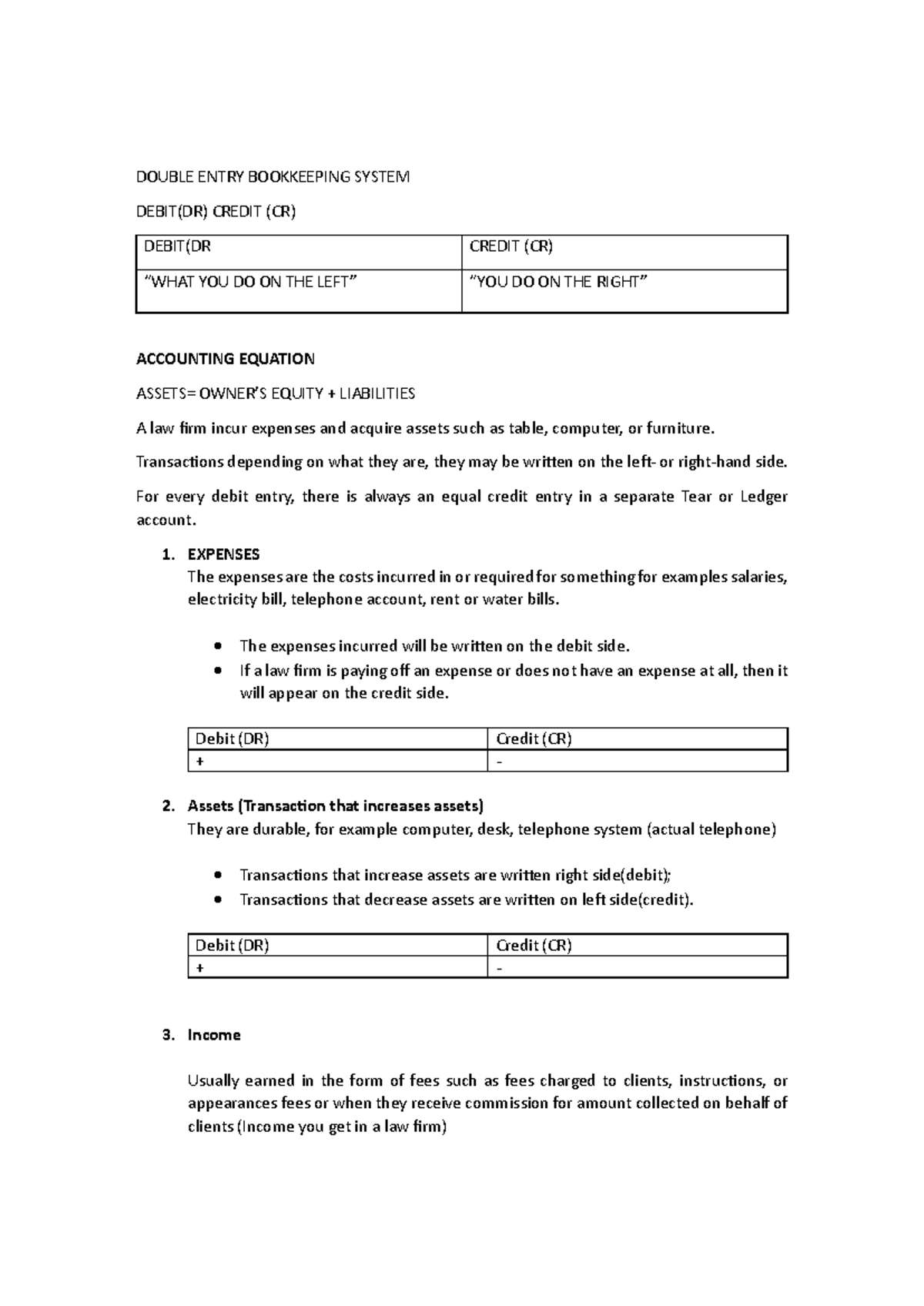
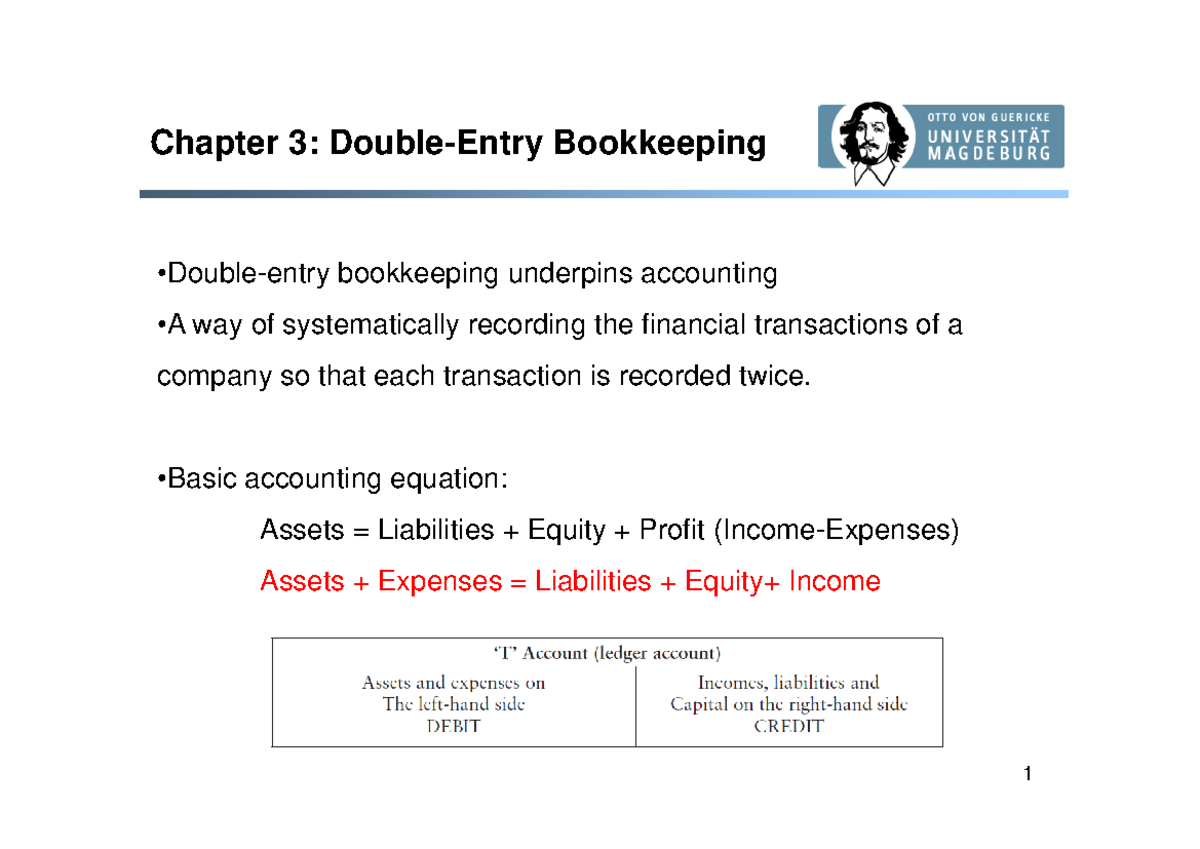
The mechanics of this system rely on the Accounting Equation. Assets (what the business owns) must always equal Liabilities (what the business owes) plus Owner’s Equity (the net value of the business). When a transaction occurs—such as purchasing raw materials or paying a utility bill—it shifts the values within these categories. Bookkeeping entries are the mechanism used to capture these shifts with surgical precision, ensuring that the ledger never falls out of balance.
Understanding Debits and Credits
The terms "debit" and "credit" are often misunderstood as "increase" and "decrease." In accounting, they are simply directional indicators used to track changes in accounts. Whether a debit increases or decreases an account balance depends entirely on the nature of that account:
- Assets and Expenses: These accounts increase with a debit and decrease with a credit.
- Liabilities, Equity, and Revenue: These accounts increase with a credit and decrease with a debit.
This framework is governed by the "Normal Balance" rule. For example, because cash is an asset, a debit entry increases your cash balance, while a credit entry reduces it. Conversely, because accounts payable is a liability, a credit entry increases the amount you owe, while a debit entry reduces it when you make a payment.
The Anatomy of a Journal Entry
A standard bookkeeping entry is recorded in a journal before being posted to the General Ledger. Every formal entry must contain specific components to be considered compliant with Generally Accepted Accounting Principles (GAAP) or International Financial Reporting Standards (IFRS):
- Date: The exact date the transaction occurred.
- Account Titles: The names of the accounts being affected.
- Debit Amounts: Entered in the left column.
- Credit Amounts: Entered in the right column.
- Reference/Description: A brief memo explaining the purpose of the transaction (e.g., "Payment of office rent for June 2026").
By maintaining this structure, bookkeepers ensure that any auditor or financial officer can trace a balance back to its origin.
Comparison of Financial Transaction Types
The following table outlines how standard business operations influence the accounting equation through specific entries.
| Transaction Type | Account Debited | Account Credited | Impact on Equation |
|---|---|---|---|
| Cash Sale | Cash | Revenue | Increases Assets & Equity |
| Purchase on Credit | Expense/Asset | Accounts Payable | Increases Assets/Exp & Liabilities |
| Paying off Loan | Notes Payable | Cash | Decreases Liabilities & Assets |
| Owner Investment | Cash | Owner's Capital | Increases Assets & Equity |
| Purchasing Supplies | Supplies | Cash | No net change (Asset swap) |
Prerequisites for Accurate Bookkeeping
Before attempting to record entries, an organization must establish a robust Chart of Accounts (COA). The COA is a categorized index of every account the business uses to track finances. It is typically organized into five primary sections: Assets, Liabilities, Equity, Revenue, and Expenses.
Without a well-defined COA, bookkeeping entries become inconsistent, leading to errors in financial reporting. Furthermore, in 2026, many businesses utilize automated accounting software. While software handles the math, the user must still possess the fundamental knowledge to verify that the entries generated by the system are being categorized correctly. If you input a transaction into the wrong account category, the balance sheet will reflect a distorted reality, potentially leading to incorrect tax filings or poor business decisions.
Common Mistakes and Troubleshooting
Even experienced bookkeepers encounter discrepancies. The most common error is a "transposition error," where two digits are swapped (e.g., recording 58 instead of 85). This creates an out-of-balance condition that is divisible by nine, which is a classic tell-tale sign for auditors.
If your Trial Balance—the report that lists all debit and credit balances—does not equal zero, follow these troubleshooting steps:
- Check the Totals: Ensure the sums of your debits and credits were calculated correctly.
- Verify Account Categorization: Did you debit an expense account when you should have credited it?
- Review the Journal: Look for missing entries or entries that were recorded only once.
- Reconcile Bank Statements: Often, the issue lies in a transaction that occurred in the bank but was not yet recorded in the ledger, such as an automatic fee or interest payment.
Legal and Professional Considerations
It is important to note that bookkeeping is not merely an administrative task; it is a regulatory requirement. In many jurisdictions, businesses are required to maintain accurate financial records for a specified number of years (often seven) to satisfy tax authorities and corporate regulators.
If you are a business owner, remember that bookkeeping entries form the basis of your financial statements. If these entries are flawed, your tax returns will be inaccurate, potentially triggering audits or penalties. While software tools provide significant assistance, they do not replace the need for professional oversight. If your business operations involve complex tax implications, international currency exchanges, or significant inventory management, consult with a Certified Public Accountant (CPA) to ensure your internal processes comply with current standards.
Frequently Asked Questions
What is the difference between bookkeeping and accounting? Bookkeeping is the process of recording and maintaining financial transactions, whereas accounting involves interpreting, classifying, analyzing, and summarizing those records to provide financial insights and strategic advice.
How often should I record bookkeeping entries? Transactions should ideally be recorded as soon as they occur. However, for small businesses, weekly or monthly cycles are common. The key is consistency; delaying entry recording increases the likelihood of human error and missing documentation.
What is a Trial Balance? A Trial Balance is a report listing the ending balances of all general ledger accounts. It is used to verify that the total of all debit balances equals the total of all credit balances, serving as an internal check before preparing financial statements.
Do I need a formal accounting degree to handle bookkeeping? While you do not need a degree to perform basic bookkeeping, you must possess a solid understanding of double-entry rules. For complex business structures, hiring a professional is recommended to avoid legal and tax complications.
What happens if my books don't balance? An unbalanced set of books indicates a recording error. You must trace the entries back to their source documents—such as invoices, receipts, or bank statements—to identify the mismatch and prepare an adjusting entry to correct the record.
Next Steps for Maintaining Your Records
To maintain high-quality bookkeeping, start by digitizing all receipts and invoices to create a permanent audit trail. Establish a monthly routine where you reconcile your bank statements against your ledger entries. By ensuring that your book balance matches your bank balance on a monthly basis, you mitigate the risk of cumulative errors. If you are starting a new business, invest time in setting up your Chart of Accounts correctly; it is far easier to structure your system logically at the start than it is to reorganize years of data later.
Image Gallery